Amir Mahmud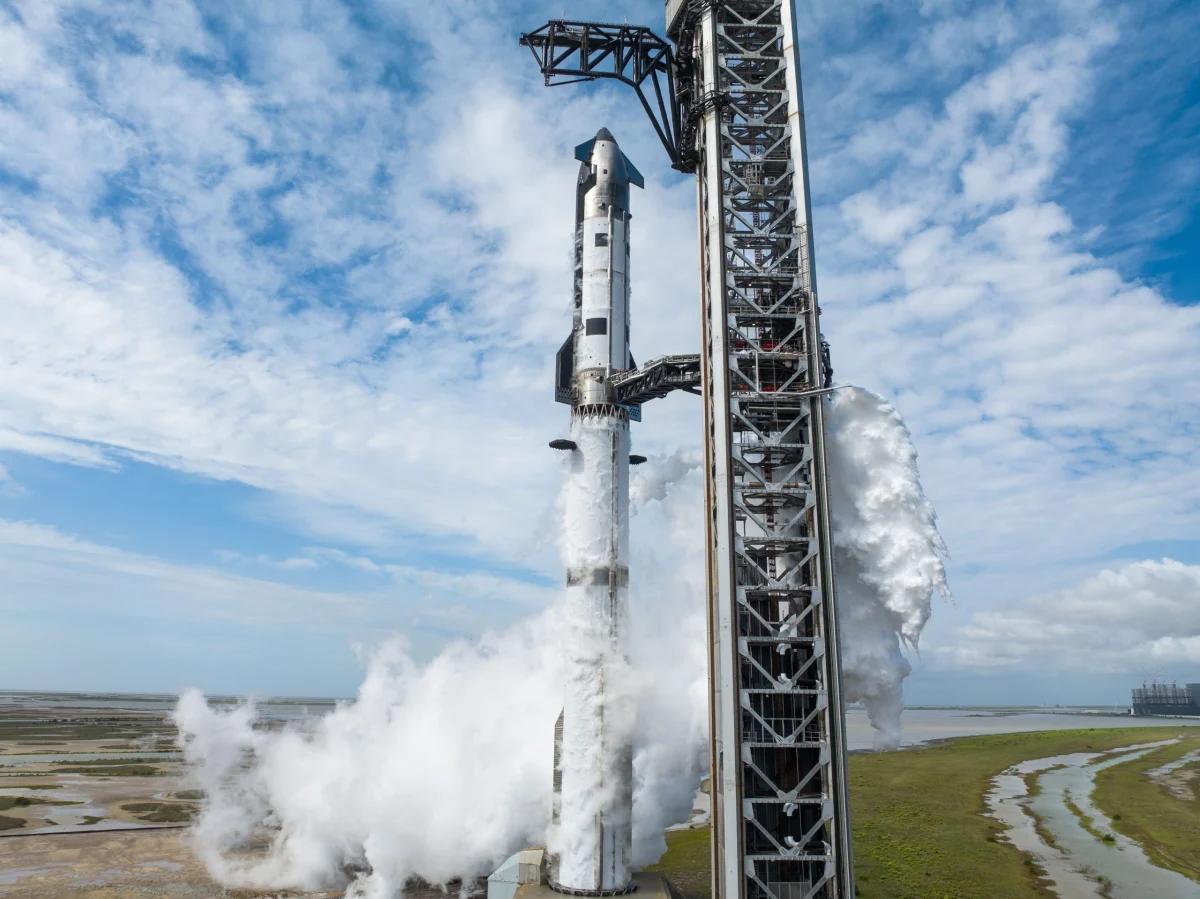
A critical test flight for SpaceX’s advanced Starship rocket system was unexpectedly put on hold at its Starbase facility in Boca Chica, Texas, just moments before its scheduled liftoff. The postponement of what was to be the inaugural flight of the third-generation Starship hardware introduces a momentary pause in a program already under intense scrutiny, particularly as the aerospace giant navigates the sensitive period leading up to its highly anticipated initial public offering (IPO). The company, a dominant force in commercial spaceflight, indicated a swift turnaround, eyeing a potential re-attempt as early as the following day, contingent on addressing the identified technical issue.
Initial Delay and Immediate Outlook
The scrub occurred with the countdown clock dipping below T-40 seconds, a point at which the immense Starship and its Super Heavy booster were fully fueled and poised for ascent. Multiple attempts to recycle the countdown, each met with further delays, ultimately led to the decision to stand down for the day. Elon Musk, CEO of SpaceX, clarified the cause via social media, stating that a "hydraulic pin holding the [launch] tower arm in place did not retract." This seemingly minor mechanical issue with ground support equipment underscored the intricate ballet of systems that must perform flawlessly for any launch attempt, especially for a vehicle of Starship’s unprecedented scale and complexity. The company’s engineers are now racing against the clock to resolve the anomaly, aiming for a swift resolution to enable a launch window the very next day, emphasizing SpaceX’s characteristic agile development and rapid iteration philosophy.
The Ambitious Vision of Starship
Starship represents the zenith of SpaceX’s ambitious endeavors: a fully reusable, two-stage super heavy-lift launch system designed to transport both crew and cargo to Earth orbit, the Moon, Mars, and beyond. Comprising the Starship spacecraft and the Super Heavy rocket booster, the colossal vehicle stands nearly 400 feet tall when stacked, making it the most powerful rocket ever conceived. Its development journey has been characterized by an iterative, rapid-prototyping approach, a stark contrast to traditional aerospace programs. From the early "Starhopper" prototypes to a series of high-altitude flight tests with varying degrees of success and spectacular "rapid unscheduled disassemblies" (RUDs), each test has provided invaluable data, informing design improvements and refining operational procedures. This latest attempt, the 12th integrated flight test of the Starship system, follows the previous flight in October 2025, during which significant progress was observed, even amidst a partial mission failure. The program’s ultimate goal is to drastically reduce the cost of space access, thereby enabling human settlement on other planets and facilitating a future where space travel is commonplace.
A Critical Juncture for SpaceX’s Financial Future
The timing of this launch attempt, and its subsequent delay, is particularly resonant given SpaceX’s imminent financial milestone. The company recently filed for an IPO, signaling its intent to go public within weeks. This transition from a private entity to a publicly traded company places SpaceX under an entirely new level of scrutiny from investors, analysts, and the wider market. Demonstrating tangible, consistent progress on its flagship Starship program is paramount during this period. The success of Starship is not merely a technical triumph; it is a vital component of SpaceX’s long-term business strategy and a key driver of its valuation. Investors will be closely watching for evidence that the massive investment in Starship development is yielding a reliable, operational system capable of delivering on its promises.
A significant portion of SpaceX’s recent financial success, as highlighted in its IPO filing, stems from its Starlink satellite internet constellation, which generated $11 billion in revenue last year. Starlink’s continued expansion and profitability are intrinsically linked to Starship’s readiness. The ability to deploy thousands of next-generation Starlink satellites efficiently and economically is crucial for maintaining market leadership and achieving global broadband coverage. While previous Starship launches have demonstrated the capacity to deploy dummy Starlink payloads, the ultimate objective remains to launch operational satellites with the new rocket system, a capability essential for scaling the constellation and further enhancing SpaceX’s revenue streams. Any delays or significant setbacks in the Starship program could potentially temper investor enthusiasm and impact the company’s valuation as it enters the public market.
Engineering Evolution: Starship V3’s Enhancements
The third iteration of the Starship vehicle, designated V3, represents a significant leap in design and operational capability. Engineers at Starbase have spent months meticulously refining both the flight hardware and the intricate ground infrastructure. A cornerstone of these upgrades lies in the third-generation Raptor engines, which power both the Super Heavy booster and the Starship upper stage. These enhanced engines are designed to deliver increased thrust in a more streamlined and efficient package, critical for achieving the high performance required for ambitious missions.
Beyond the engines, the V3 Super Heavy booster itself features several design modifications aimed at improving reliability and reusability. Notably, it incorporates changes to facilitate easier "catch" operations by the massive Mechazilla launch tower – a system designed to grab the descending booster mid-air using its robotic arms, eliminating the need for traditional landing legs. The V3 booster also sports one fewer grid fin, a seemingly minor adjustment that reflects extensive aerodynamic analysis and optimization for recovery.
Crucially, SpaceX has implemented a range of design improvements aimed at bolstering the vehicle’s overall reliability. A significant focus has been placed on preventing the accumulation of leaking propellant within certain sections of the Starship upper stage, an issue that has manifested in previous test flights. Such leaks posed operational challenges and potential safety concerns, and their mitigation is vital for achieving the goal of making the entire Starship system fully reusable, akin to the company’s highly successful Falcon 9 workhorse rocket. This modular, fully reusable architecture is central to SpaceX’s vision of drastically lowering launch costs and increasing flight frequency.
It is important to note that this particular V3 flight, even if successful, is not intended to demonstrate the full spectrum of Starship’s capabilities. The mission profile does not include the recovery of either the Super Heavy booster or the Starship upper stage. Instead, both components are slated to perform controlled "soft landings" in designated ocean zones – the booster in the Atlantic and the Starship vehicle in the Indian Ocean. Furthermore, the flight path will not achieve a true Earth orbit, meaning that further missions will be required to fully prove Starship’s capability to reliably deliver commercial payloads into orbital trajectories. These initial tests are designed to validate the fundamental performance characteristics and the integrity of the upgraded hardware in a flight environment.
Beyond the Launch Pad: Strategic Implications and Future Trajectories
The successful development and deployment of Starship carry profound strategic implications for the entire space industry and beyond. If it achieves its design goals, Starship could fundamentally reshape the economics of space access, rendering existing launch systems comparatively expensive and less capable. This potential disruption has spurred renewed competition among established players like United Launch Alliance (ULA) and emerging entities such as Blue Origin, all striving to develop their own next-generation heavy-lift systems. The "new space race" is not just about reaching space, but about making it affordable and accessible on an unprecedented scale.
Starship’s role extends beyond commercial ambitions; it is also integral to national space programs. NASA has selected Starship as the Human Landing System (HLS) for its Artemis program, tasked with returning astronauts to the Moon. This contract underscores the strategic importance of Starship’s success for the United States’ lunar exploration goals, placing immense pressure on SpaceX to deliver a reliable and safe system within NASA’s ambitious timeline. The vehicle’s massive payload capacity and in-orbit refueling capabilities are envisioned as key enablers for establishing a sustainable human presence on the Moon and, eventually, Mars.
Culturally, Starship represents a bold step towards humanity’s multi-planetary future, a vision championed by Elon Musk. Its development captures the public imagination, inspiring a new generation of scientists, engineers, and explorers. The sheer audacity of its goals, from colonizing Mars to enabling rapid point-to-point travel on Earth, pushes the boundaries of technological innovation and human endeavor.
In conclusion, the momentary delay of Starship V3’s inaugural flight is a reminder of the inherent complexities and challenges of pioneering new frontiers in aerospace engineering. While such postponements can be frustrating, especially with the added pressure of an impending IPO, they are a routine and often necessary part of the rigorous testing process for groundbreaking technology. SpaceX’s history has been one of iterative development, learning from setbacks, and pushing forward with unwavering ambition. The eyes of the financial markets, the global space community, and indeed the world, remain fixed on Starbase, awaiting the next attempt for this colossal rocket to begin its journey towards fulfilling its monumental promises.