Amir Mahmud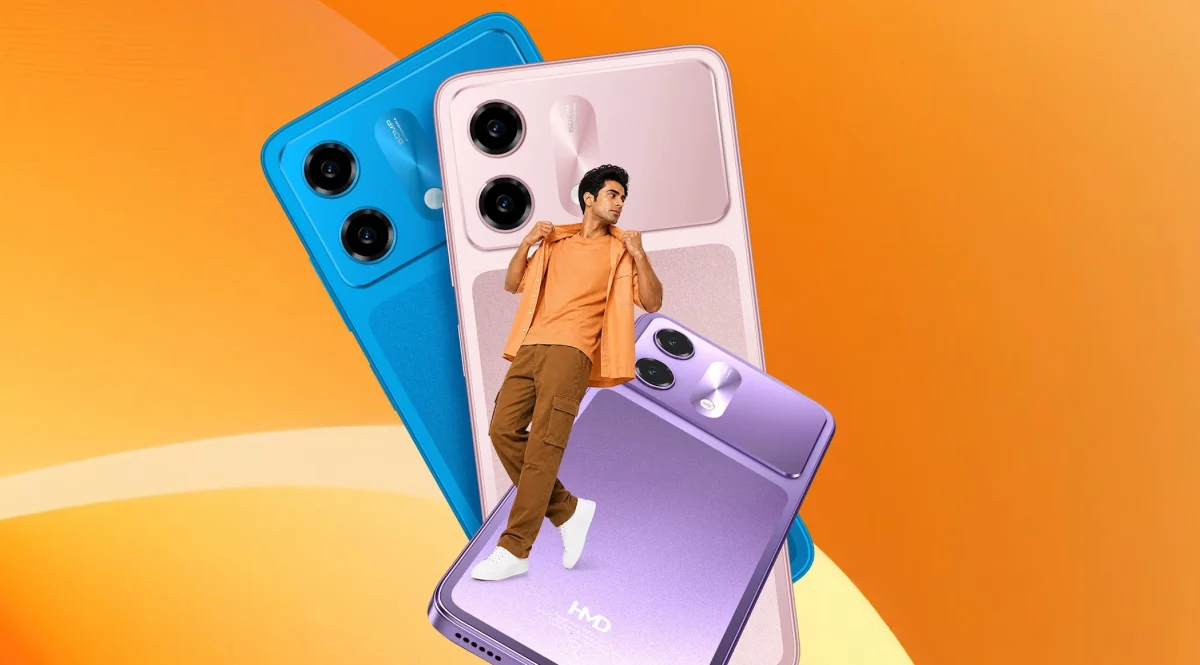
Finnish mobile device manufacturer HMD Global has embarked on a strategic partnership with Indian artificial intelligence firm Sarvam AI, launching its latest smartphone, the Vibe 2 5G, preloaded with Sarvam’s indigenous AI chatbot, Indus. This collaboration, initially unveiled at the India AI summit in New Delhi in February, represents a concerted effort by both entities to penetrate and cater to the unique linguistic and technological landscape of the Indian market. It signifies a pivotal move towards embedding culturally and linguistically relevant AI directly into consumer hardware, particularly in a region renowned for its digital diversity and rapid technological adoption.
A Strategic Alliance for Digital Inclusion
The partnership between HMD Global and Sarvam AI is more than a simple product bundling; it’s a strategic maneuver designed to unlock new growth avenues in one of the world’s most dynamic mobile markets. For HMD, which has faced intense competition in the global smartphone arena, this alliance offers a distinct differentiator. By integrating a locally developed AI solution, HMD aims to resonate more deeply with Indian consumers, many of whom prefer interactions in their native languages. For Sarvam AI, preloading Indus onto HMD devices provides an invaluable distribution channel, circumventing the challenges of app discovery and adoption in a crowded digital ecosystem. This approach is particularly critical for emerging AI platforms seeking to build a user base against global giants like ChatGPT.
The vision extends beyond initial adoption, as HMD’s CEO and Vice President for India and APAC, Ravi Kunwar, articulated in an interview. The immediate goal is to ensure the Indus app reaches consumers and encourages initial engagement. Following this foundational phase, the focus will shift towards enhancing user traction and fostering long-term stickiness. This phased approach underscores the understanding that successful AI integration in diverse markets requires careful nurturing and adaptation, moving from mere presence to indispensable utility.
The Vibe 2 5G and Indus AI: A Closer Look
The newly launched HMD Vibe 2 5G positions itself in the highly competitive mid-range smartphone segment. Priced at approximately ₹10,999 (around $114), the device features a robust 6,000mAh battery, a specification often sought after by Indian users who prioritize extended usage times. While the hardware offers a compelling proposition, the true innovation lies in its software integration. The Indus chatbot, at the heart of this initiative, is powered by Sarvam’s sophisticated 105-billion-parameter model, an indicator of its advanced scale and learning capabilities.
A standout feature of the Indus app is its comprehensive support for 22 Indic languages, coupled with an impressive ability for mid-sentence code-switching. This functionality allows users to fluidly alternate between languages, such as Hindi and English, within a single conversation, mirroring natural communication patterns prevalent across India. This capability is crucial for an AI assistant to accurately interpret user queries and provide contextually relevant responses in a linguistically diverse environment. However, the current iteration of Indus has limitations, notably lacking offline usage capabilities and direct device integration for quick invocation via a shortcut. These aspects represent future development opportunities that could significantly enhance the user experience and utility, especially in areas with inconsistent internet connectivity.
HMD’s Journey in a Competitive Market
HMD Global’s re-entry into the mobile phone market, particularly under the Nokia brand legacy, has been marked by both opportunities and significant challenges. After acquiring the rights to use the Nokia brand for mobile phones in 2016, HMD positioned itself as a purveyor of reliable Android smartphones, often emphasizing durability, clean Android experiences, and timely software updates. However, the Indian smartphone market is arguably one of the most cutthroat globally. It is dominated by a handful of aggressive Chinese manufacturers like Xiaomi, Vivo, Oppo, and Realme, alongside Samsung, all vying for market share with aggressive pricing, rapid innovation, and extensive distribution networks.
In this fiercely competitive landscape, HMD’s smartphone market share has remained relatively modest, to the extent that it doesn’t even appear in the top 15 rankings, according to analyst firm IDC. This context highlights the imperative for HMD to find innovative ways to differentiate its offerings and capture consumer attention. The partnership with Sarvam AI is a clear strategy to carve out a niche by offering a uniquely localized and relevant user experience, moving beyond generic Android functionality to culturally specific intelligence. This approach signals HMD’s recognition that success in India requires more than just hardware; it demands a deep understanding of local needs and preferences.
Sarvam AI: Pioneering Localized Intelligence
Sarvam AI emerges as a leading force in India’s burgeoning artificial intelligence ecosystem. The company’s focus on developing AI models tailored to the Indian context aligns perfectly with the national "Made in India" initiative and the broader push for digital self-reliance. The India AI summit, where the partnership with HMD was announced, served as a testament to the country’s ambition to become a global leader in AI innovation, particularly in applications that address local challenges and opportunities.
Sarvam’s commitment to supporting multiple Indic languages and understanding code-switching distinguishes it from many global AI models, which often prioritize English. This linguistic inclusivity is not merely a technical feature but a fundamental aspect of digital empowerment, ensuring that the benefits of AI are accessible to a broader segment of the Indian population, regardless of their proficiency in English. Beyond its consumer-facing Indus app, Sarvam has also been active in enterprise partnerships, focusing particularly on voice-based solutions. This dual approach—consumer accessibility and enterprise utility—positions Sarvam AI as a versatile player with significant potential to drive AI adoption across various sectors. The company’s impressive trajectory is further underscored by reports suggesting a substantial funding round of $300 million at a $1.5 billion valuation, signaling strong investor confidence in its vision and capabilities.
The Critical Role of Feature Phones
While the Vibe 2 5G represents HMD’s smartphone offering, the potential integration of Sarvam AI into feature phones could prove to be a more transformative development for both companies. In 2025, HMD held a 4% share of India’s feature phone market, a segment that, despite the rise of smartphones, remains remarkably robust. Millions of Indians, particularly in rural and semi-urban areas, still rely on feature phones as their primary communication devices due to their affordability, durability, and long battery life. These devices often serve as the first point of entry into the digital world for many.
Introducing an advanced, localized AI chatbot to feature phones could democratize access to intelligent digital assistance on an unprecedented scale. Imagine users in remote villages being able to access information, government services, or even simple conversational AI in their native dialect, all through a basic, affordable device. This move could significantly bridge the digital divide, offering capabilities previously confined to high-end smartphones. It represents a potent distribution strategy in a market where English-language AI tools have limited penetration and where the sheer volume of feature phone users presents an enormous, untapped opportunity for AI adoption. The strategic foresight behind targeting this segment reflects a deep understanding of India’s diverse socio-economic realities and the potential for inclusive technological growth.
Navigating the AI Adoption Landscape in India
The initial download figures for the Indus app—approximately 293,000 times in India across platforms over nearly three months—highlight the significant challenge of user acquisition, especially when compared to global benchmarks like ChatGPT, which recorded 43.9 million downloads in India during a similar period. This disparity underscores the nascent stage of Indus’s journey and the formidable task of building widespread adoption. However, these early numbers do not necessarily detract from the long-term strategic value of the HMD-Sarvam partnership.
The strategy of bundling a regional AI assistant with affordable hardware, particularly feature phones, offers one of the most direct and effective distribution pathways in a market as vast and linguistically intricate as India. The traditional app store model, while effective for tech-savvy users, presents barriers for many others, including those with limited digital literacy or access to high-end devices. Preloading AI directly onto devices bypasses these hurdles, making the technology immediately available and discoverable. This approach is a critical experiment for investors and operators observing how AI adoption can be seeded and scaled in emerging markets, offering valuable insights into consumer behavior and preferences in a localized AI context. The success of this model could redefine how AI services are introduced and integrated into the daily lives of millions.
Broader Implications and Future Trajectories
The HMD-Sarvam AI collaboration is a microcosm of a larger global trend: the localization of artificial intelligence. As AI becomes more ubiquitous, the demand for models that understand and interact in local languages and cultural contexts will only grow. India, with its vast linguistic diversity and tech-hungry population, serves as an ideal testing ground for such initiatives. The lessons learned from this partnership could inform AI deployment strategies in other multilingual emerging markets across Africa, Southeast Asia, and Latin America.
Looking ahead, the evolution of the Indus app will be crucial. Enhancing features like offline access and deeper device integration could transform it from a novel chatbot into an indispensable personal assistant. Furthermore, the potential for Sarvam AI to integrate beyond mere conversational interfaces into device functionalities—such as intelligent camera features, smart battery management, or personalized user interfaces—presents exciting possibilities. For HMD, successfully leveraging localized AI could be the key to re-establishing a stronger foothold in the Indian market, differentiating itself from competitors who often offer generic, globally-focused AI solutions. For Sarvam AI, this partnership is a significant step towards realizing its ambition of becoming a dominant force in India’s AI landscape, potentially paving the way for further collaborations and broader market penetration.
Conclusion
The alliance between HMD Global and Sarvam AI signifies a bold step towards an era of more localized and inclusive artificial intelligence. By preloading the Indus chatbot onto its new Vibe 2 5G smartphone and planning integration into feature phones, HMD is making a clear statement about its commitment to the Indian market. This strategy, while facing the challenge of initial user adoption against established global players, holds immense potential for digital empowerment and market differentiation. As both companies navigate the complexities of AI integration and user engagement in a diverse landscape, their partnership will serve as a critical case study for how localized AI can drive innovation, foster digital inclusion, and reshape the future of mobile technology in emerging economies.

 Azin Asro