Amir Mahmud
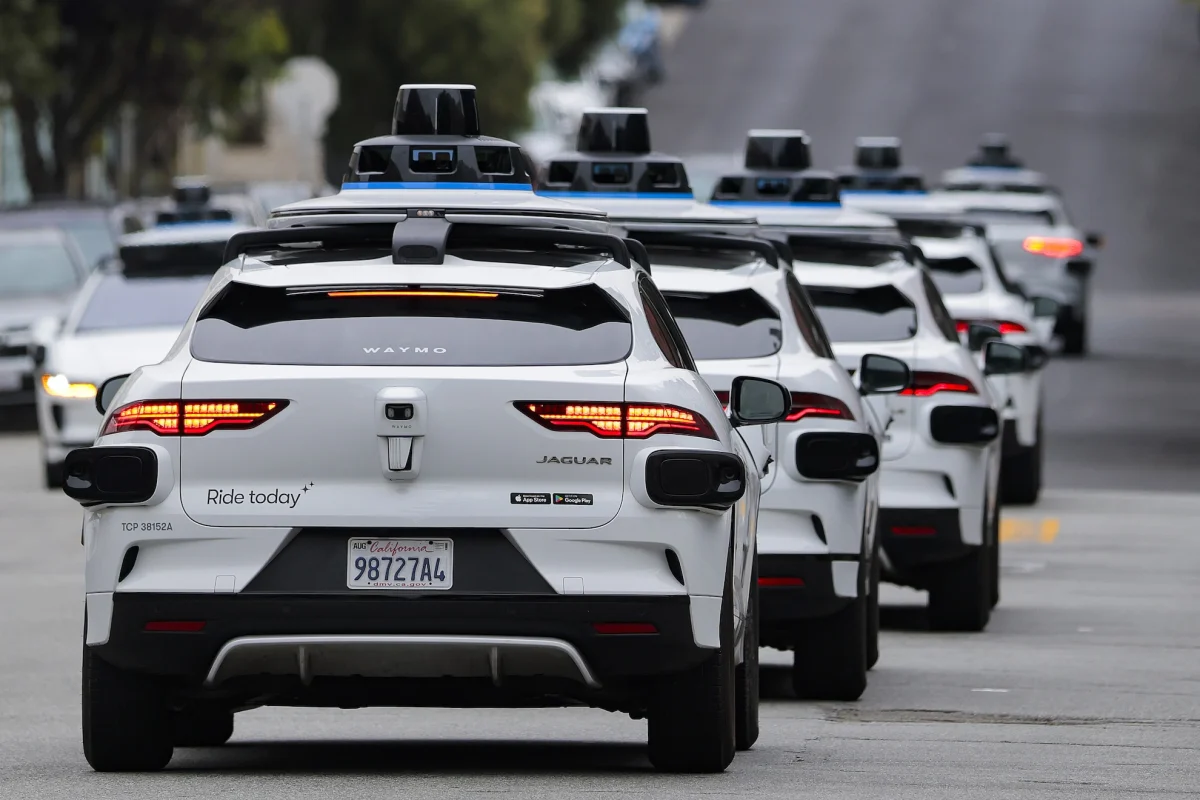
Waymo, a prominent pioneer in autonomous driving technology, has recently initiated service suspensions across a growing number of U.S. cities, grappling with the formidable challenge of severe weather conditions and their impact on its self-driving fleet. The latest wave of operational halts, now encompassing Atlanta, San Antonio, Dallas, and Houston, underscores a critical hurdle for the nascent autonomous vehicle (AV) industry: the ability to navigate unpredictable environmental phenomena, particularly heavy rainfall and widespread flooding. This expansion of service pauses follows closely on the heels of a company-issued software recall last week, specifically aimed at addressing the persistent issue of its vehicles encountering inundated roadways.
The catalyst for the most recent service disruptions unfolded dramatically in Atlanta, Georgia. Eyewitness accounts and local news reports confirmed that a Waymo autonomous vehicle became immobilized for approximately an hour on a flooded street. The incident, which occurred on a Wednesday, necessitated the recovery and removal of the vehicle. In response, Waymo promptly announced a temporary suspension of its Atlanta operations, mirroring similar actions taken in San Antonio, Texas, as engineers work diligently to devise a robust solution. The company reiterated its paramount commitment to safety, stating that an unoccupied vehicle had encountered a flooded road and subsequently stopped during a period of intense rain. Further suspensions were enacted in Dallas and Houston due to the intense severe weather systems sweeping across Texas throughout the week.
The Unpredictable Challenge of Severe Weather
Navigating adverse weather conditions presents one of the most complex and persistent technical challenges for autonomous vehicles. Unlike human drivers who can intuitively assess the depth of water, the slipperiness of a road, or the reduced visibility, AVs rely on an array of sophisticated sensors—including lidar, radar, and cameras—each with inherent limitations. Heavy rain can obscure camera vision, create signal interference for lidar and radar, and render lane markings or road signs indiscernible. Flooding introduces an entirely new dimension of difficulty, as it can hide road hazards, alter the terrain, and even compromise the vehicle’s electrical systems if water ingress occurs.
Waymo had previously acknowledged that its initial software update, implemented following the recall, was not a "final remedy" for avoiding flooded areas. Instead, the update introduced "restrictions at times and in locations where there is an elevated risk of encountering a flooded, higher-speed roadway." This iterative approach to software development, common in the tech industry, highlights the continuous learning and adaptation required for autonomous systems. However, the Atlanta incident demonstrated that even these preliminary precautions proved insufficient. Waymo clarified that the extreme rainfall in Atlanta led to flooding even before the National Weather Service (NWS) had issued official flash flood warnings, watches, or advisories. The company depends on such NWS alerts as part of a comprehensive signal set to prepare its fleet for inclement weather, indicating a gap in its predictive capabilities or the real-time responsiveness of its systems to rapidly evolving meteorological events.
A History of Autonomous Vehicle Development and Hurdles
The journey toward fully autonomous vehicles has been a long and arduous one, marked by both groundbreaking advancements and significant setbacks. Waymo, originally conceived as Google’s self-driving car project in 2009, stands as one of the industry’s longest-running and most experienced players. Its early days involved retrofitting Toyota Priuses and then Lexus SUVs with custom sensor arrays and software, meticulously mapping routes and collecting vast amounts of data. The vision was clear: to create a safer, more efficient, and universally accessible mode of transportation.
Over the past decade, Waymo has expanded its operations, first testing in Mountain View, California, and then launching commercial ride-hailing services in cities like Phoenix, Arizona, and later San Francisco. These deployments have provided invaluable real-world experience, but they have also exposed the inherent complexities of integrating autonomous technology into diverse urban environments. From dealing with construction zones and unpredictable pedestrian behavior to, now, severe weather events, each new scenario demands further refinement of the AI’s perception, prediction, and planning capabilities.
This is not the first instance where Waymo’s fleet has faced public scrutiny over its operational performance. Last year, the company encountered issues with its robotaxis reportedly passing stopped school buses illegally. Although Waymo deployed a software fix, subsequent reports indicated that the problem persisted, leading to further investigation. Such incidents, while perhaps individually minor, collectively contribute to a broader narrative about the reliability and safety of autonomous systems, shaping public perception and influencing regulatory responses. The challenges faced by Waymo are not unique to the company; other autonomous vehicle operators, such as General Motors’ Cruise subsidiary, have also encountered significant operational hurdles and regulatory pushback, including the suspension of its driverless permits in California after a highly publicized incident involving a pedestrian. These events collectively underscore the immense technical and logistical complexities involved in scaling autonomous driving technology safely and effectively.
Regulatory Spotlight Intensifies
The recent service interruptions and past operational challenges have intensified scrutiny from key regulatory bodies, primarily the National Highway Traffic Safety Administration (NHTSA) and the National Transportation Safety Board (NTSB). Both agencies play critical roles in overseeing vehicle safety and investigating incidents involving advanced automotive technologies.
NHTSA, responsible for enforcing vehicle safety standards, has confirmed its awareness of the Atlanta incident and is actively communicating with Waymo, indicating a readiness to take "appropriate action if necessary." This engagement is part of a larger, ongoing regulatory oversight. Currently, Waymo is the subject of two distinct active investigations by NHTSA and NTSB. One investigation centers on the aforementioned incidents involving Waymo robotaxis reportedly making illegal maneuvers around school buses. NHTSA had previously requested extensive documentation from Waymo regarding this issue. Following an initial submission, the agency issued a second document request, signaling that the company’s initial response "necessitates that [NHTSA] receive further data and information," suggesting that the problem’s scope or the proposed solutions require deeper examination.
The second major investigation involves a January 23 incident in Santa Monica, California, where a Waymo robotaxi collided with a child near an elementary school. Waymo stated that its vehicle braked to approximately six miles per hour before the impact and that the child sustained minor injuries. These investigations highlight the stringent safety expectations placed upon autonomous vehicle developers and the detailed scrutiny applied when incidents occur. The outcome of these probes can have significant implications for Waymo’s operational permits, its public image, and the broader regulatory framework governing autonomous vehicles. The regulatory environment for AVs is still evolving, often responding reactively to incidents rather than proactively setting comprehensive standards for all potential "edge cases" like severe weather or complex human interactions.
Broader Implications for the Autonomous Future
The ongoing challenges faced by Waymo, particularly with severe weather, resonate throughout the entire autonomous vehicle industry and have broader market, social, and cultural implications. Public trust is arguably the most critical factor for the widespread adoption of self-driving cars. Each incident, especially those involving safety or operational failures, can erode this trust, making consumers more hesitant to embrace the technology. The perception of AVs as infallible machines is gradually being replaced by a more realistic understanding of their current limitations.
From a market perspective, these incidents underscore the immense investment and technological hurdles still remaining. While the promise of enhanced safety (by eliminating human error), increased efficiency, and improved accessibility for underserved populations remains compelling, the path to achieving these benefits is proving longer and more complex than initially envisioned. Companies like Waymo are not just developing vehicles; they are building sophisticated AI systems that must operate flawlessly in an infinitely variable real-world environment. This requires not only cutting-edge hardware and software but also robust testing protocols, transparent reporting, and adaptive regulatory frameworks.
Expert commentary frequently points to the "long tail" of autonomous driving—the vast number of rare, unpredictable scenarios that an AV must be able to handle. While AVs can excel in predictable, structured environments, they struggle with "edge cases" like sudden flash floods, erratic human behavior, or novel road conditions. The current events illustrate that even with millions of miles driven in simulation and on public roads, the real world continues to present unforeseen challenges that demand iterative learning and system improvements. The industry must navigate the delicate balance between rapid innovation and ensuring absolute safety, a task made more difficult by the complex interplay of technology, human behavior, and environmental factors.
The Path Forward for Self-Driving Technology
The experiences of Waymo and its competitors emphasize that the journey to fully autonomous driving is a marathon, not a sprint. The current service pauses and regulatory investigations are not necessarily indictments of the technology’s ultimate potential but rather critical learning opportunities. They highlight the necessity for autonomous systems to be exceptionally resilient, capable of not just reacting to adverse conditions but predicting and preempting them. This involves advancing sensor fusion techniques, enhancing AI prediction models for environmental dynamics, and developing sophisticated risk assessment algorithms that can make nuanced decisions, similar to human judgment, but at a superhuman speed and consistency.
Moving forward, the industry will likely see continued collaboration between AV developers, meteorologists, urban planners, and emergency services to integrate real-time data and predictive analytics more effectively into autonomous systems. Regulators, in turn, will continue to refine safety standards, perhaps moving towards performance-based metrics that account for a wider range of environmental and operational scenarios. For Waymo, overcoming these challenges will be crucial for maintaining its leadership position and demonstrating the viability of its technology. The company’s ability to swiftly and effectively address the flood issue, alongside the ongoing investigations into other operational concerns, will significantly influence public confidence and the pace of autonomous vehicle deployment across the nation. The goal remains a future where autonomous vehicles contribute to safer and more efficient transportation, but achieving that future demands unwavering commitment to rigorous testing, continuous improvement, and an open dialogue with regulators and the public.