Amir Mahmud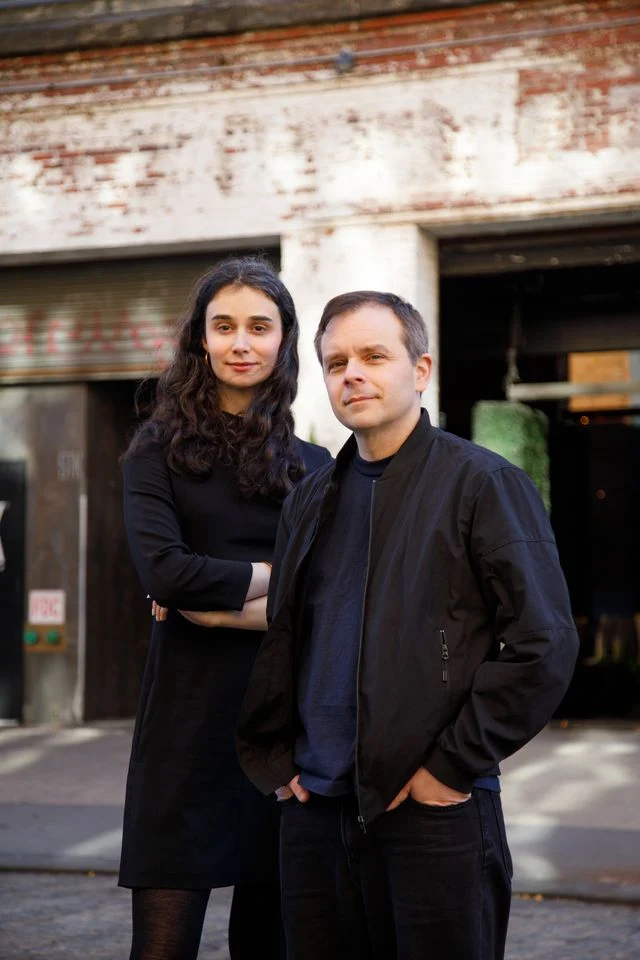
In a significant stride towards redefining a centuries-old craft, Patina, an innovative fragrance technology company, has successfully raised $2 million in seed funding. The investment, backed by notable firms including Betaworks and True Ventures, signals growing confidence in Patina’s ambitious mission to modernize an industry that has seen remarkably little fundamental innovation in nearly half a century. The startup is leveraging advanced molecular design, machine learning, and pioneering scent research to unlock new frontiers in olfaction, challenging the traditional paradigms of scent creation and production.
A Scent of Disruption: Challenging a Stagnant Industry
For decades, the global fragrance and flavor industry has been dominated by a select few multinational corporations, often referred to as the "Big Four" (Givaudan, Symrise, IFF, and Firmenich). These behemoths have historically controlled the creation and supply of most synthetic scent molecules and natural extracts, acting as the silent architects behind countless perfumes, cosmetics, and flavored products found in consumer goods worldwide. Their business model revolved around specialized labs developing and selling these fundamental building blocks to fragrance houses and cosmetics brands, which then blended them into finished products. This established ecosystem, while efficient in its own right, fostered an environment where groundbreaking innovation in the creation of new molecules became rare, leading to a reliance on established palettes and methodologies.
The history of perfumery itself stretches back millennia, with ancient civilizations using natural resins, flowers, and spices for ceremonial and personal adornment. The advent of modern chemistry in the late 19th and early 20th centuries revolutionized the field, introducing synthetic molecules that expanded the perfumer’s palette beyond natural constraints. Iconic fragrances like Chanel No. 5, launched in 1921, famously incorporated aldehydes, a class of synthetic compounds, marking a pivotal moment. However, after this initial burst of synthetic innovation, the industry largely settled into a pattern of refining existing molecules and blending techniques rather than fundamentally reimagining the process of scent discovery. The subjective and often imprecise language used to describe smells—terms like "floral," "woody," or "citrus"—further complicated systematic scientific progress, creating inconsistencies across regions and languages and hindering a deeper, biological understanding of olfaction.
The Genesis of Olfactory Innovation: Patina’s Vision
Patina emerged from a unique confluence of artistic intuition and scientific rigor, spearheaded by its co-founders, Sean Raspet and Laura Sisson. Raspet, an artist and perfumer with a profound fascination for human sensory perception, had dedicated years to a creative pursuit of developing novel scent and flavor molecules. His artistic practice evolved into a deep-seated obsession with the very mechanisms of smell and taste. Complementing his vision is Laura Sisson, whose background in food science and software engineering provided a robust foundation in data modeling and systems design. Sisson’s journey into the world of senses began with the discovery of an entire scientific field dedicated to modeling human perception, igniting her own fascination.
Their paths serendipitously converged in 2024 at a scent art gallery in New York, an environment perfectly suited for their shared interests. Raspet was exhibiting his innovative molecular creations, while Sisson, then an engineer, was developing olfactory learning models. This fortuitous meeting quickly blossomed into a collaborative research effort. "We started collaborating on research, and it became clear that the timing was right to finally build the tools to understand scent at the biological level," Raspet remarked, encapsulating the genesis of Patina. "That felt like a company."
The company launched last year with a foundational project: Sense1. This ambitious model is designed to replicate the intricate scent receptors within the human nose, with the ultimate goal of creating what the founders describe as "the first universal code of smell and taste." By operating at the receptor level, Patina aims to move beyond the subjective lexicon of traditional perfumery. Instead of relying on vague descriptors, Sense1 seeks to map the precise molecular interactions that trigger specific olfactory perceptions. This approach not only promises a more objective and consistent understanding of scent but also opens the door to creating "never-before-smelled molecules" and accurately reconstructing the chemical profiles of the world’s rarest natural ingredients, bypassing the need for their physical extraction.
Reshaping the Scent Palette: From Rare Extracts to Novel Creations
The demand for Patina’s innovative approach is underscored by significant shifts in both consumer preferences and global supply chains. Consumers today are increasingly discerning, seeking "newer, safer, and more expressive perfumes." This reflects a broader cultural movement towards personalization, transparency, and a deeper connection with the products they consume. The "safer" aspect points to growing concerns about allergens, synthetic ingredients, and the rise of the "clean beauty" movement, prompting brands to seek innovative solutions that align with these values.
Simultaneously, the traditional supply chain for natural fragrance ingredients faces escalating pressures. Climate change, habitat destruction, geopolitical instability, and ethical sourcing concerns are making many natural materials—such as rose oil, sandalwood, vanilla, and oud—increasingly difficult and expensive to produce. The cultivation of these plants often requires vast tracts of land, significant water resources, and labor-intensive processes, all of which contribute to a substantial carbon footprint. For instance, producing a single kilogram of rose oil can require several tons of rose petals, demanding immense agricultural input.
Patina’s synthetic alternatives offer a compelling solution to these challenges. By simulating the smell of natural materials at a biological level, their molecules can mimic the complex profiles of, for example, rose oil, without the environmental strain of plant extraction. These replications are "less carbon-intensive than the original plant extract, consuming significantly less water and petrochemicals," as Raspet highlighted. This not only provides a sustainable alternative but also ensures consistency and availability, buffering brands from the volatility of natural harvests and geopolitical disruptions. The ability to create entirely novel molecules also allows perfumers to transcend existing palettes, crafting scents that are truly unique and cater to the evolving desires for expressive and personalized fragrances.
The AI Revolution in Fragrance: Beyond Human Limitations
Artificial intelligence and machine learning are the bedrock of Patina’s disruptive strategy. These technologies are enabling breakthroughs that were considered improbable just a few years ago. By leveraging sophisticated algorithms, Patina can analyze vast datasets of molecular structures and their corresponding olfactory properties. Machine learning models can predict how a specific molecule will interact with human scent receptors, effectively accelerating the discovery and design of new compounds. This allows for the rapid iteration and optimization of scent molecules, dramatically shortening the development cycle from years to mere weeks.
Beyond creation, AI is also transforming other critical aspects of the scent industry. One significant impact is the phasing out of animal testing. Historically, new fragrance compounds were often tested on animals to assess safety and potential skin reactions. AI-powered predictive models can now simulate human-skin reactions with remarkable accuracy, providing an ethical and efficient alternative to animal testing, aligning with global efforts to promote cruelty-free product development. Furthermore, the Patina team believes AI is unlocking fundamental breakthroughs in understanding how the senses function at a molecular level—a complex scientific frontier that has long eluded researchers. By dissecting the intricate "language" of olfaction, AI is helping to decode the very essence of how we perceive smell and taste.
While Patina is a burgeoning startup, it operates within a competitive landscape that includes both innovative new players and established giants. Startups like Osmo are also exploring AI in olfaction, indicating a broader industry shift. Simultaneously, legacy incumbents such as Givaudan and Symrise, with their immense resources and decades of expertise, are undoubtedly investing heavily in similar AI and molecular design capabilities to maintain their market leadership. Patina’s unique proposition lies in its foundational approach to creating a "universal code" and its emphasis on empowering a broader ecosystem of creators.
Intellectual Property and Democratizing Scent Creation
A crucial aspect of Patina’s potential impact revolves around intellectual property (IP). The current IP framework in the fragrance industry is complex: while individual fragrance molecules can be patented, the overall formulas or compositions of perfumes generally cannot. This structure has historically benefited large fragrance houses, as they possess the resources to invest in the extensive research and development required to discover and patent new molecules. This dynamic effectively created a closed system where innovation in raw materials was concentrated among a few powerful players, making it challenging for smaller brands or independent perfumers to develop truly proprietary and legally protected signature scents. Without the ability to patent a blend, any successful fragrance could be reverse-engineered and replicated, diluting its uniqueness and market value.
Patina’s approach, powered by AI, offers a paradigm shift. By making the creation of custom scent ingredients faster and more affordable, smaller companies and independent perfumers can now develop and, crucially, patent their own unique molecules. This democratizes innovation, allowing a wider range of creators to "develop and protect their signature style," as Raspet articulates. This shift could foster a more vibrant and diverse fragrance market, moving beyond a reliance on the existing, limited palette of molecules controlled by the industry giants. It empowers creators at all scales to build true proprietary value into their products, fostering genuine innovation rather than mere reformulation.
The Future of Scent: A "Pantone for Smell"
Patina’s long-term vision is profoundly ambitious: to create a "Pantone for scent." This analogy refers to the globally recognized Pantone Matching System, which provides a standardized, universal language for color across design and manufacturing industries. Applying this concept to olfaction would mean establishing a universal code of primary scent molecules from which any smell or flavor could be precisely constructed, communicated, and replicated.
Such a system would revolutionize not only the fragrance and flavor industries but also potentially extend into numerous other sectors. Imagine a world where chefs can precisely specify flavor profiles, where environmental monitors can detect specific airborne compounds with unprecedented accuracy, or where virtual reality experiences can incorporate fully immersive, digitally rendered scents. This "universal code" could enable precise communication between creators and manufacturers, facilitate global standards, and unlock entirely new applications for scent in fields like therapeutics, health diagnostics, and personalized consumer experiences.
The recent funding has already catalyzed Patina’s growth, enabling the team to transition from Raspet’s backyard operations to a dedicated office in Bushwick, Brooklyn, and to hire a team of chemists. This capital will be crucial for launching new molecules, forging new partnerships, and critically, gathering the vast amounts of receptor activation data necessary to train and refine their AI models. "All models need data to learn from, and we’ve been able to fund collaborations with startups and academic labs to gather this receptor activation data," Raspet explained, emphasizing the importance of ongoing research. He further noted that "more computationally detailed simulation of interactions of molecules with odor receptors will be a huge unlock for scaling."
The information to understand scent at its most fundamental level, Raspet believes, "has been there the whole time, waiting for the technology to catch up and a team with the right combination of expertise and obsession to unlock it." With Patina poised as the "underlying intelligence layer," these long-held aspirations of a truly scientific and universally understood language of smell are now on the cusp of becoming a reality, promising to fundamentally redefine our sensory world.