Amir Mahmud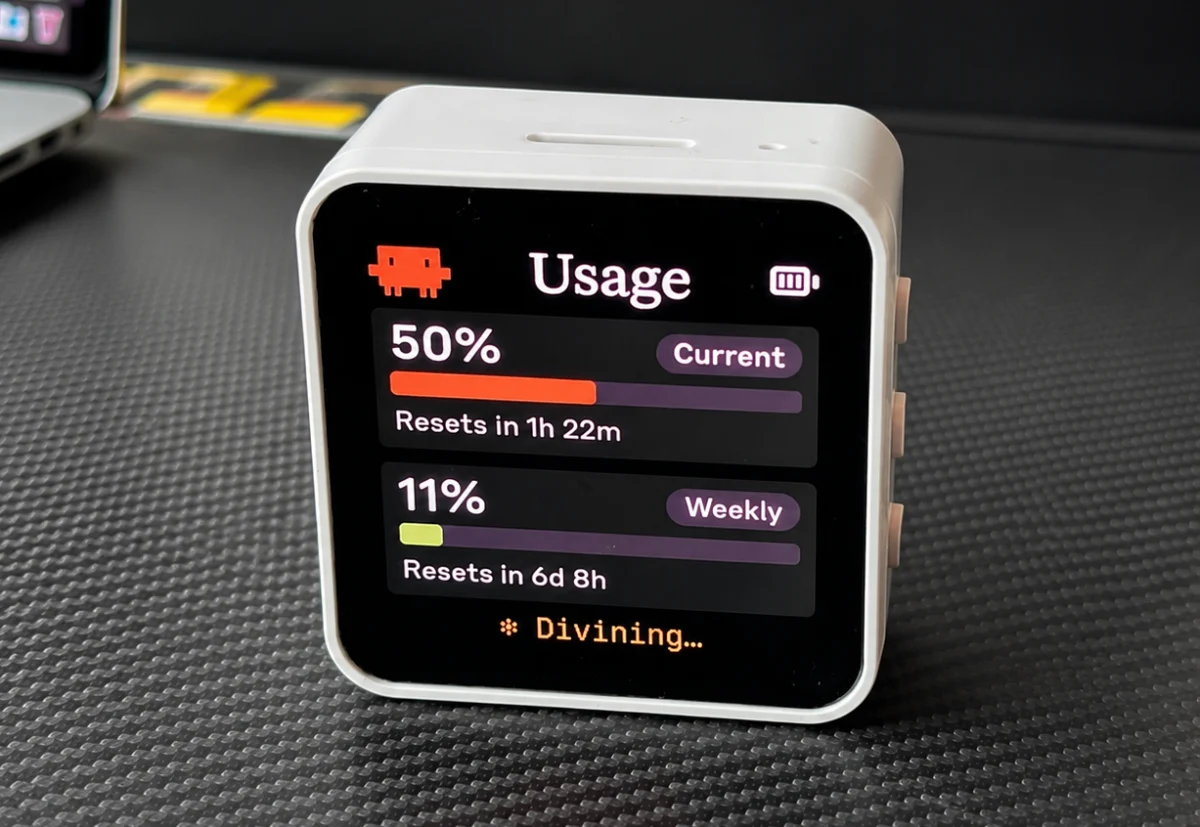
The landscape of software development is undergoing a significant transformation, with artificial intelligence increasingly woven into the fabric of daily coding practices. A new open-source hardware project, dubbed the "Clawdmeter," exemplifies this shift, offering developers a tangible, real-time visualization of their Claude Code utilization. This innovative desktop dashboard not only provides a fun, retro-inspired display for AI usage statistics but also underscores the growing phenomenon of "tokenmaxxing," where engineers aim to optimize their interaction with AI models as a measure of productivity.
The AI-Powered Coding Evolution and the Rise of Tokens
The integration of AI into software development tools is no longer a futuristic concept but a present-day reality. Platforms like Anthropic’s Claude Code, alongside competitors such as GitHub Copilot and Google’s Gemini, have revolutionized how developers write, debug, and optimize code. These AI assistants leverage large language models (LLMs) to provide suggestions, complete code snippets, and even generate entire functions based on natural language prompts. This paradigm shift has led to increased efficiency for many, enabling rapid prototyping and reducing the cognitive load associated with complex coding tasks.
At the heart of these AI interactions are "tokens," the fundamental units of text that LLMs process. A token can be a word, part of a word, or even a punctuation mark. Every query sent to an AI model, and every response received, consumes a certain number of tokens. For developers utilizing AI coding assistants, token usage is not merely an abstract metric; it directly translates to computational cost, API limits, and the efficiency of their interactions. As AI models become more sophisticated and deeply integrated into workflows, monitoring these tokens has become crucial for power users. This necessity has given birth to the "tokenmaxxing" trend, a practice where software engineers meticulously track and attempt to maximize their token consumption, often viewing it as an indicator of their proficiency in leveraging AI tools. While ostensibly a measure of engagement with cutting-edge technology, the trend also sparks conversations about the true definition of productivity in an AI-augmented environment.
Introducing the Clawdmeter: A Tangible Link to Digital Productivity
While tracking AI usage statistics is possible through various software interfaces, command-line tools, or web-based dashboards, the Clawdmeter introduces a distinct, tactile dimension to this monitoring. This compact device, designed to sit unobtrusively on a desk, translates abstract token data into an engaging visual experience. Instead of navigating menus or parsing text logs, users are greeted with dynamic pixel-art animations of a stylized "Clawd" sprite, which intensify in activity as AI usage climbs. This visual feedback loop transforms a mundane metric into an interactive display, making the digital more tangible.
The Clawdmeter’s primary function is to offer at-a-glance information regarding a user’s Claude Code token consumption, displaying both session-specific and weekly utilization data through simple, clear charts. Beyond mere statistics, the device also enhances the user experience by incorporating physical buttons that serve as shortcuts for Claude Code’s functionalities. For instance, dedicated buttons can send "Space" and "Shift+Tab" commands via Bluetooth, facilitating access to Claude Code’s voice mode or allowing users to cycle through different operational modes, such as "Normal," "Accept Edits," "Plan Mode," and "Auto Mode." This thoughtful integration of hardware controls streamlines interaction with the AI, adding a layer of convenience often missing in purely software-based tools. The device connects wirelessly to a laptop, reading Claude Code’s OAuth token to make API calls and retrieve usage numbers directly from response headers, ensuring accuracy and real-time updates.
The Genesis of an Open-Source Innovation
The inspiration behind the Clawdmeter comes from Hermann Haraldsson, a software developer based in Reykjavik, Iceland. Haraldsson embarked on this project with a dual motivation: a long-standing desire to experiment with embedded devices and a practical need to visualize his AI usage. Despite not specializing in embedded development, Haraldsson found an invaluable partner in Claude itself. He recounts how the AI guided him through the complexities of the project over a mere few days, demonstrating the democratizing power of AI in programming. This collaborative process between human ingenuity and artificial intelligence underscores a significant shift in how development tasks, even those outside one’s core expertise, can be approached and accomplished.
Haraldsson emphasized that much of his development time was dedicated to refining the user experience, meticulously finessing the device’s aesthetics, including font choices, color palettes, and the nuanced animations. This attention to detail highlights a growing appreciation for design and user interface in developer tools, acknowledging that even functional instruments can benefit from an appealing and engaging presentation. The Clawdmeter is built around readily available, small lithium-ion battery-powered displays, such as the Waveshare ESP32-S3-Touch-AMOLED-2.16, which leverages Bluetooth for connectivity. Upon activation, it displays charming pixel-art animations, and a central button allows users to cycle through different animation styles or switch to detailed usage charts. The tactile satisfaction of pressing a physical button to navigate information, rather than clicking a mouse or tapping a screen, harks back to an earlier era of personal technology.
Beyond Metrics: Social, Cultural, and Psychological Dimensions
The Clawdmeter’s rapid popularity, evidenced by hundreds of GitHub stars and numerous forks shortly after its release, points to something deeper than mere utility. It taps into several cultural and psychological currents prevalent in the tech community.
Nostalgia and Gamification
One significant draw is a sense of nostalgia. In an increasingly virtualized world, where software dominates, there’s a latent longing for dedicated hardware devices. Haraldsson himself noted this sentiment, likening it to the bygone era of Walkmans and iPods, specialized gadgets for specific functions. A Reddit user humorously encapsulated this feeling by describing the Clawdmeter as a "hardware Tamagotchi for my context window." This comparison is particularly apt, as it highlights the emotional connection users form with interactive, pixelated companions that require monitoring and engagement. The device injects a playful, almost gamified element into the often-solitary and abstract work of coding. The "dopamine loop" Haraldsson described – seeing the device "going crazy" with activity as usage climbs – illustrates how immediate, visual feedback can create a rewarding psychological experience, subtly encouraging continued engagement with AI tools.
Community and Customization in Open Source
As an open-source project, the Clawdmeter embodies the collaborative spirit of the developer community. Its availability on platforms like GitHub means anyone can "fork" the project, modify its code, add new features, create custom animations, or even design entirely new screens to suit their specific needs and interests. This open-ended nature fosters innovation and allows for a diverse ecosystem of adaptations. The enthusiastic reception and active engagement from the developer community are testaments to the power of open source in driving creativity and collective problem-solving. This model of shared development ensures that the Clawdmeter is not a static product but a dynamic platform, constantly evolving through community contributions.
The Broader Implications of "Tokenmaxxing"
The rise of the Clawdmeter and the "tokenmaxxing" trend it facilitates also prompt a critical examination of productivity metrics in the age of AI. While maximizing token usage might indicate deep engagement with AI tools, it doesn’t automatically equate to higher quality code, more innovative solutions, or genuine productivity. Some analysts suggest that an overemphasis on token consumption could inadvertently lead to developers generating verbose prompts or excessive AI-generated content simply to hit usage targets, rather than focusing on efficiency and concise problem-solving. This could create a performative aspect to AI adoption, where the appearance of using AI extensively takes precedence over its strategic and impactful application.
Conversely, for many, leveraging AI to its fullest extent genuinely enhances their output, allowing them to tackle more complex problems or complete tasks faster. The Clawdmeter, in this context, serves as a transparent feedback mechanism, allowing developers to understand their interaction patterns and potentially optimize their prompts for more efficient token usage, thereby managing costs and API limits more effectively. The device could be seen as a tool for self-reflection, encouraging developers to analyze how they use AI, not just how much.
The Future of AI Dashboards and Developer Tools
The Clawdmeter represents more than just a quirky gadget; it signifies a broader trend in the tech industry: the blurring lines between physical and digital experiences, even in the highly abstract realm of software development. As AI continues to embed itself deeper into professional workflows, there is a growing demand for intuitive, accessible, and even enjoyable ways to monitor and interact with these powerful tools.
The success of the Clawdmeter could pave the way for similar physical dashboards tailored to other AI models, development environments, or even broader professional metrics. Imagine a small desktop device displaying real-time CI/CD pipeline status, server health, or even project progress visualized through engaging animations. Furthermore, Haraldsson’s experience highlights AI’s role in democratizing not just software development but also hardware prototyping. With AI capable of guiding individuals through complex embedded programming tasks, the barrier to entry for creating custom hardware solutions is significantly lowered, empowering more creators to bring their ideas to life.
In conclusion, the Clawdmeter stands as a fascinating artifact of our current technological moment. It is a playful nod to retro hardware, a testament to the power of open-source collaboration, and a practical tool for monitoring AI usage. More profoundly, it serves as a catalyst for discussion about how we measure productivity, embrace new technologies, and navigate the evolving relationship between human creativity and artificial intelligence in the modern developer’s toolkit. It embodies the blend of utility, novelty, and community that defines much of contemporary tech culture, offering a tangible pulse on the accelerating pace of the AI revolution.