Azin Asro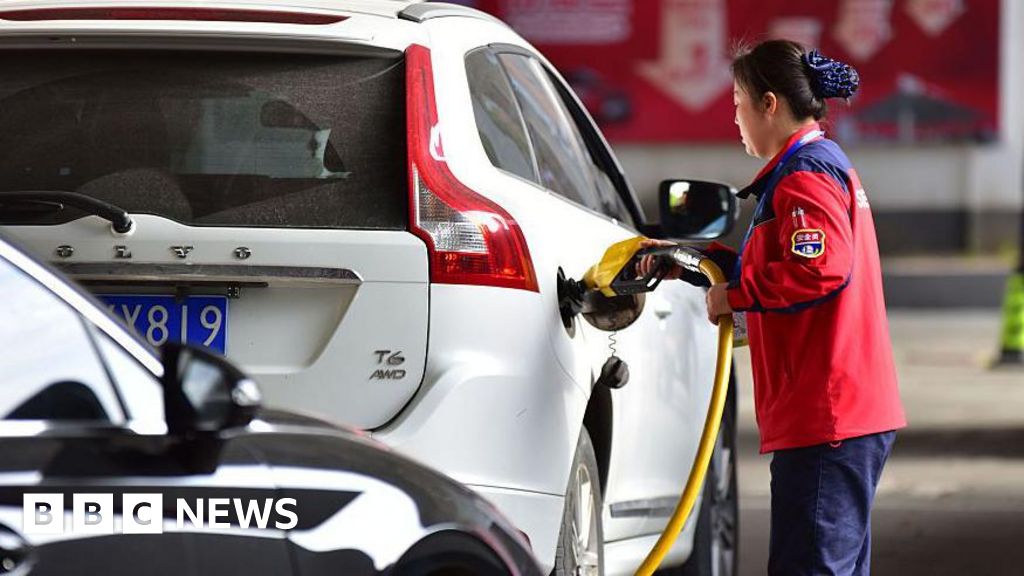
Global crude oil benchmarks experienced a dramatic surge, reaching their highest levels since 2022, following reports that the United States military is poised to present President Donald Trump with a range of new strategic options concerning the ongoing conflict with Iran. The development immediately sent ripples through international energy markets, highlighting the profound interconnectedness between geopolitical stability and global economic health. The potential for escalated military engagement in a region critical to the world’s energy supply has rekindled fears of significant disruptions, propelling prices upward and sparking widespread concern among policymakers and consumers alike.
The Catalyst: Proposed Military Briefing and Escalating Tensions
The sharp upward trajectory in oil prices was primarily triggered by a report from news outlet Axios, citing anonymous sources, which indicated that US Central Command (CENTCOM) has developed and prepared a briefing for President Trump on prospective military actions against Iran. This comes at a time when diplomatic efforts to resolve the protracted impasse with Tehran appear to have stalled, and the crucial Strait of Hormuz remains largely inaccessible for commercial shipping. The reported options include a proposal for a series of "short and powerful" strikes aimed at Iran, potentially targeting key infrastructure, with the objective of breaking the current negotiating deadlock. A second, equally significant plan reportedly focuses on securing and reopening a segment of the Strait of Hormuz for international commercial navigation, an endeavor that could necessitate the deployment of ground troops. These potential military maneuvers represent a stark escalation in the US posture towards Iran, moving beyond sanctions and naval deterrence to contemplate direct kinetic action, with immediate and far-reaching implications for global energy security.
Historical Context of US-Iran Relations
The current state of heightened tension between the United States and Iran is deeply rooted in a complex history spanning decades. Relations dramatically shifted following the 1979 Iranian Revolution, which saw the overthrow of the US-backed Shah and the establishment of an Islamic Republic hostile to American influence. Subsequent flashpoints have included the Iran-Iraq War (1980-1988), which saw tacit US support for Iraq, and persistent concerns over Iran’s nuclear ambitions. The 2015 Joint Comprehensive Plan of Action (JCPOA), or Iran nuclear deal, momentarily offered a path to de-escalation, exchanging sanctions relief for restrictions on Iran’s nuclear program. However, the Trump administration’s unilateral withdrawal from the JCPOA in 2018, followed by the re-imposition of stringent sanctions, significantly exacerbated hostilities. This move was predicated on the belief that the deal did not adequately address Iran’s ballistic missile program or its regional proxy activities, which Washington views as destabilizing. Since then, a series of tit-for-tat actions, including attacks on shipping, drone incidents, and cyber warfare, have characterized a relationship perpetually on the brink of wider conflict. The "Iran war" referenced in reports is often a term used to encompass this broader proxy conflict and simmering tension, rather than a full-scale declared war between the two nations, though the threat of direct confrontation has always loomed.
The Strategic Importance of the Strait of Hormuz
At the heart of the current geopolitical standoff and its profound impact on energy markets lies the Strait of Hormuz, a narrow waterway situated between the Persian Gulf and the Arabian Sea. This maritime chokepoint is arguably the world’s most critical oil transit pathway, through which approximately one-fifth of global oil consumption, alongside a substantial portion of liquefied natural gas (LNG), typically passes. Its strategic significance cannot be overstated; any disruption, closure, or threat to shipping in the Strait sends immediate shockwaves across international commodity exchanges. For decades, Iran has periodically threatened to close the Strait in response to perceived aggressions or economic pressures, leveraging its geographic position as a powerful deterrent. The current closure, or effective closure, of the Strait for commercial shipping, as mentioned in the original report, signifies a major escalation, severely impeding the flow of crude oil and other crucial energy resources to global markets. The US assertion that it would blockade Iranian ports if Tehran continued to threaten vessels underscores the critical nature of this maritime corridor and the high stakes involved for both nations and the international community.
Escalation and Market Volatility
The market’s immediate response to the briefing reports was sharp and decisive. Brent crude, the international benchmark, saw its price soar by nearly 7% at one point, surpassing $126 per barrel, a level not observed since the initial months of Russia’s full-scale invasion of Ukraine. Similarly, US-traded West Texas Intermediate (WTI) crude experienced a significant increase, climbing by 2.3% to approximately $109 per barrel. These dramatic price movements reflect the market’s sensitivity to potential supply disruptions from the Middle East. Oil traders, operating on the principle of anticipatory pricing, swiftly factored in the increased risk premium associated with military action in a region vital for global energy supplies.
Futures contracts, which are agreements to buy or sell an asset at a predetermined price on a future date, were particularly volatile. While the current Brent futures contract for June delivery was nearing its expiration, the more actively traded July contract also registered a substantial gain, reflecting sustained market anxiety. The consensus among energy analysts is that even a remote possibility of the conflict escalating can have "outsized implications" on global energy supplies, as articulated by Professor Yeow Hwee Chua of Nanyang Technological University. This inherent sensitivity is due to the inelastic nature of oil demand in the short term, meaning that even small supply shocks can lead to disproportionately large price increases.
Economic Repercussions and Inflationary Pressures
The rising cost of crude oil quickly translates into higher prices at the pump for consumers and increased operational expenses for businesses globally. Naveen Das, a senior oil analyst at Kpler, noted that an oil price approaching $125 per barrel is a critical threshold where businesses and politicians begin to "get a bit more jittery." This nervousness stems from the broad "knock-on effect" that elevated oil prices have on various aspects of daily life. Transportation costs for goods and services invariably rise, impacting supply chains and consumer prices. Industries heavily reliant on oil and its derivatives, such as aviation, shipping, petrochemicals, and manufacturing, face compressed margins and potential slowdowns.
The most significant concern for many economies is the inflationary impact. Higher energy costs directly contribute to inflation, eroding purchasing power and potentially necessitating tighter monetary policies from central banks, which could further dampen economic growth. Will Walker-Arnott, an investment manager at Raymond James, highlighted the mounting pressure on the Trump administration, questioning how long it could withstand the "economic heat" generated by these rising prices. This concern was underscored by reports that President Trump had already met with energy executives to explore strategies for mitigating the impact of the ongoing conflict on US consumers, signaling the administration’s awareness of the economic and political ramifications of sustained high energy prices.
Historical Parallels and Global Energy Shocks
The current market turmoil echoes historical periods of geopolitical instability that led to significant global oil shocks. The 1973 Arab oil embargo, the 1979 Iranian Revolution, the 1990 Gulf War, and more recently, the 2022 Russian invasion of Ukraine, all demonstrate how regional conflicts in major oil-producing areas can rapidly destabilize global energy markets. In each instance, concerns over supply interruptions, whether real or perceived, triggered substantial price increases, leading to economic recessions, stagflation, and shifts in international energy policy.
The current situation in the Middle East adds another layer of complexity. Unlike previous crises, the global economy is still navigating the aftermath of recent supply chain disruptions and persistent inflationary pressures. A fresh energy crisis could severely undermine ongoing recovery efforts and push several economies into recession. The role of major oil producers, particularly the OPEC+ alliance, in managing global supply becomes even more critical during such volatile times, although their ability to fully offset significant disruptions from the Persian Gulf remains a subject of debate.
The Geopolitical Chessboard and Diplomatic Challenges
The reported military options emerge against a backdrop of stalled peace talks, which have likely focused on a broader resolution to US-Iran tensions, including discussions around Iran’s nuclear program, its regional activities, and the lifting of sanctions. The current "deadlock" suggests that diplomatic avenues have, at least for the moment, failed to yield progress. The introduction of military options, while potentially aimed at creating leverage for future negotiations, also carries the inherent risk of unintended escalation.
International actors, including European powers, China, and Russia, are closely monitoring the situation. Many nations have a vested interest in de-escalation and the preservation of global energy stability. The prospect of direct US military action against Iran could lead to a fragmented international response, with some allies expressing concern over regional destabilization, while others might align with Washington’s more assertive stance. The challenge for diplomacy will be to find a credible path to de-escalation once military options have been put on the table, a task made more difficult by the deep-seated mistrust and conflicting objectives between the principal parties.
An Uncertain Path Forward
As the world awaits further developments regarding the reported briefing and potential US actions, the global energy landscape remains exceptionally volatile. The specter of military conflict in the Middle East has once again underscored the fragility of global supply chains and the profound economic consequences of geopolitical instability. The decisions facing the Trump administration are fraught with risk, balancing the desire to exert pressure on Iran with the imperative to avoid a wider, potentially devastating regional conflict that could trigger a global economic crisis. For consumers and businesses worldwide, the immediate future promises continued uncertainty and the likelihood of elevated energy costs, making the prospect of de-escalation a deeply desired outcome for the stability of both markets and international relations.







 Amir Mahmud