 Amir Mahmud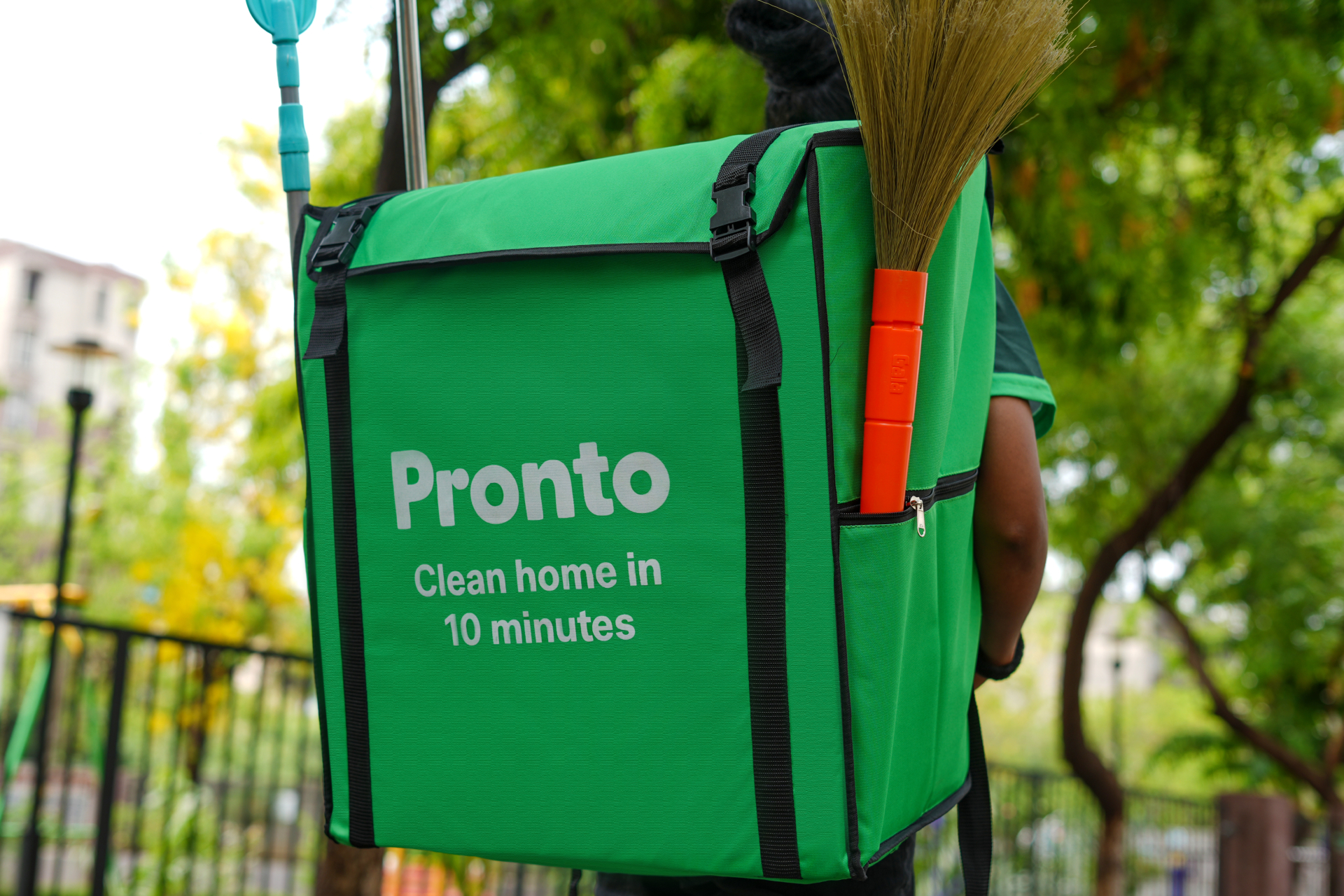
Pronto, a rapidly ascending Indian startup specializing in instant home-help services, is reportedly nearing the finalization of a significant funding round led by prominent tech investor Lachy Groom. Sources close to the deal indicate that this investment would catapult the Bengaluru-based company’s post-money valuation to approximately $200 million, injecting an estimated $20 million in fresh capital into its operations. This development underscores a remarkable acceleration in investor confidence, marking a doubling of Pronto’s valuation in a matter of weeks, following a $100 million valuation achieved during its $25 million Series B round led by Epiq Capital in early March.
The Rise of Pronto: A New Paradigm for Domestic Services
Founded in 2025, Pronto has quickly established itself as a pivotal player in India’s burgeoning on-demand economy. The company’s core offering involves connecting urban households with a managed network of vetted professionals for a variety of domestic tasks, ranging from routine cleaning to more specialized chores, all delivered with an emphasis on speed and reliability. This model seeks to formalize and professionalize a sector traditionally dominated by informal arrangements, addressing a significant demand for trustworthy and efficient household assistance in India’s rapidly urbanizing landscape.
The operational growth figures for Pronto are particularly striking. The platform reportedly processed approximately 500,000 orders last month and is currently managing an impressive 24,000 to 25,000 daily bookings. This represents a substantial increase from about 18,000 daily bookings recorded in March and a staggering leap from roughly 1,000 daily orders just one year prior. Such exponential growth illustrates the immense market appetite for structured home services and Pronto’s successful strategy in capturing this demand.
Lachy Groom’s Strategic Vision and India’s Tech Horizon
Lachy Groom, an investor known for his discerning early-stage bets and his background as an early employee at Stripe, brings considerable credibility and strategic insight to Pronto’s cap table. His involvement signals a strong vote of confidence in the startup’s business model and its potential for long-term scalability. Groom’s investment philosophy often leans towards companies that demonstrate robust product-market fit and the ability to disrupt traditional industries through technology, qualities that Pronto appears to embody.
India has emerged as a hotbed for venture capital activity, particularly in sectors leveraging digital platforms to address consumer needs. The nation’s vast population, increasing internet penetration, and a growing middle class with rising disposable incomes create fertile ground for on-demand services. Investors like Groom are increasingly looking towards these markets for opportunities to back companies poised for significant expansion, recognizing the unique dynamics and massive potential within the Indian economy.
Expanding Footprint: Reaching Across Urban India
Pronto’s expansion strategy has been aggressive and effective. In March, founder Anjali Sardana highlighted the company’s rapid geographical reach, growing from operations in a single city to ten major urban centers. These include key metropolitan areas such as Delhi NCR (National Capital Region), Bengaluru, and Mumbai. Furthermore, the startup has scaled its presence from just five micromarkets to over 150, demonstrating a nuanced approach to penetrate local communities. Despite this broad expansion, a significant portion of its activity, approximately half of total bookings, remains concentrated within the National Capital Region, indicating a strong core market while other regions mature.
The company’s workforce also reflects its rapid growth, with over 4,500 active professionals currently on its platform. A notable demographic feature of Pronto’s workforce is that approximately 99% of its service providers are women. Sardana noted last month that despite continuous onboarding efforts, demand for services continued to outpace the availability of new workers, with bookings growing roughly 20% week over week. This highlights both the high demand for Pronto’s services and the ongoing challenge of scaling its talent pool while maintaining service quality.
Historical Context: The Evolution of Domestic Work in India
The domestic help sector in India has a long and complex history. Traditionally, it has been largely informal, characterized by word-of-mouth referrals, variable wages, and often, a lack of standardized terms of employment or worker protections. Millions of individuals, predominantly women from socio-economically disadvantaged backgrounds, have historically relied on domestic work for their livelihoods, frequently facing issues related to job security, fair wages, and dignified working conditions.
The advent of digital platforms like Pronto represents a significant shift. Inspired by the global gig economy trend seen in ride-hailing and food delivery, these platforms aim to formalize the sector by providing structured employment opportunities, standardized service offerings, and transparent pricing. This modernization effort seeks to professionalize domestic work, offering both service providers and consumers a more reliable and equitable experience. Before digital platforms, individuals would typically rely on local networks, agencies, or direct arrangements, which often lacked accountability and consistent quality.
Market, Social, and Cultural Impact
The rise of platforms like Pronto carries substantial market, social, and cultural implications for India.
Market Impact: The professionalization of domestic services creates a new market segment, driving economic activity and job creation. By aggregating demand and supply through technology, these platforms unlock efficiencies and expand the reach of services. The formalization also contributes to a more organized labor market, potentially leading to better economic data and policy insights.
Social Impact:
- Worker Empowerment: For the 99% women workforce on Pronto’s platform, formalization can offer a pathway to improved economic stability. This includes potential for higher, more consistent wages, access to training, and a degree of safety and respect often absent in informal arrangements. Platforms can also provide mechanisms for conflict resolution and a sense of community among workers. By offering flexible work options, these platforms can empower women to balance work with family responsibilities, increasing female labor force participation.
- Consumer Convenience and Trust: Urban households, particularly those with dual-income earners, face increasing time constraints. On-demand home services offer unparalleled convenience, allowing tasks to be delegated reliably. The managed network model, often involving background checks and quality assurances, builds a level of trust that traditional informal arrangements sometimes lack.
- Addressing the "Care Economy": The growth of home services platforms is also a reflection of the evolving "care economy," where essential household and personal care tasks are increasingly outsourced. This trend frees up time for individuals to focus on professional careers or personal pursuits, contributing to broader societal productivity.
Cultural Impact: The acceptance and integration of professional home services signify a cultural shift. There is a growing willingness among Indian households to pay for convenience and quality in domestic help, moving away from purely informal relationships towards a more transactional, professional model. This shift can challenge traditional perceptions of domestic work, elevating its status as a skilled service. However, it also raises questions about the changing nature of employer-employee relationships and the potential for new forms of dependency.
Challenges and Analytical Commentary
While the growth of Pronto is impressive, the sector is not without its challenges. One critical area for analytical commentary revolves around the sustainability of such rapid growth rates. Maintaining quality control, ensuring worker satisfaction, and managing logistics across a rapidly expanding geographical footprint can be complex. The gig economy model itself often faces scrutiny regarding worker classification, benefits, and fair labor practices. While formalization offers benefits, companies must continuously navigate the balance between flexibility for workers and providing adequate social security nets.
Another aspect is the competitive landscape. India’s home services market has seen several players emerge, each vying for market share. Differentiating services, building strong brand loyalty, and achieving operational efficiency are crucial for long-term success. Pronto’s focus on a "managed network" suggests an effort to maintain higher quality and reliability compared to purely aggregator models, which could be a key differentiator.
Investor appetite, as evidenced by Lachy Groom’s involvement and the company’s valuation jump, reflects a strong belief in the market’s potential. However, the path to profitability in on-demand services, especially those requiring significant on-ground operations and worker management, can be long and capital-intensive. The $200 million valuation for a company founded just last year highlights the current fervor in venture capital for promising Indian startups, but also places a high expectation on Pronto to continue its trajectory of exponential growth and eventual profitability.
The Road Ahead: Scaling and Sustainability
Before this latest funding round, Pronto had already secured approximately $40 million from a diverse group of investors including Epiq Capital, Glade Brook Capital, General Catalyst, and Bain Capital Ventures. This robust investor backing positions the company strongly for its next phase of development. The fresh capital is expected to be deployed towards further geographical expansion, enhancing technology infrastructure, and scaling its worker onboarding and training programs to meet the ever-increasing demand.
The immediate future for Pronto will likely focus on solidifying its market position in existing cities while carefully expanding into new territories. Ensuring a consistent supply of well-trained professionals and maintaining high service standards will be paramount to sustaining its growth trajectory. As the company continues to grow, it will also need to address the evolving regulatory landscape surrounding gig economy workers in India and strive to create a model that is both economically viable and socially responsible. The success of Pronto, therefore, will not only be measured by its financial metrics but also by its ability to positively impact the lives of thousands of domestic workers and millions of households across India.










 Azin Asro
