 Amir Mahmud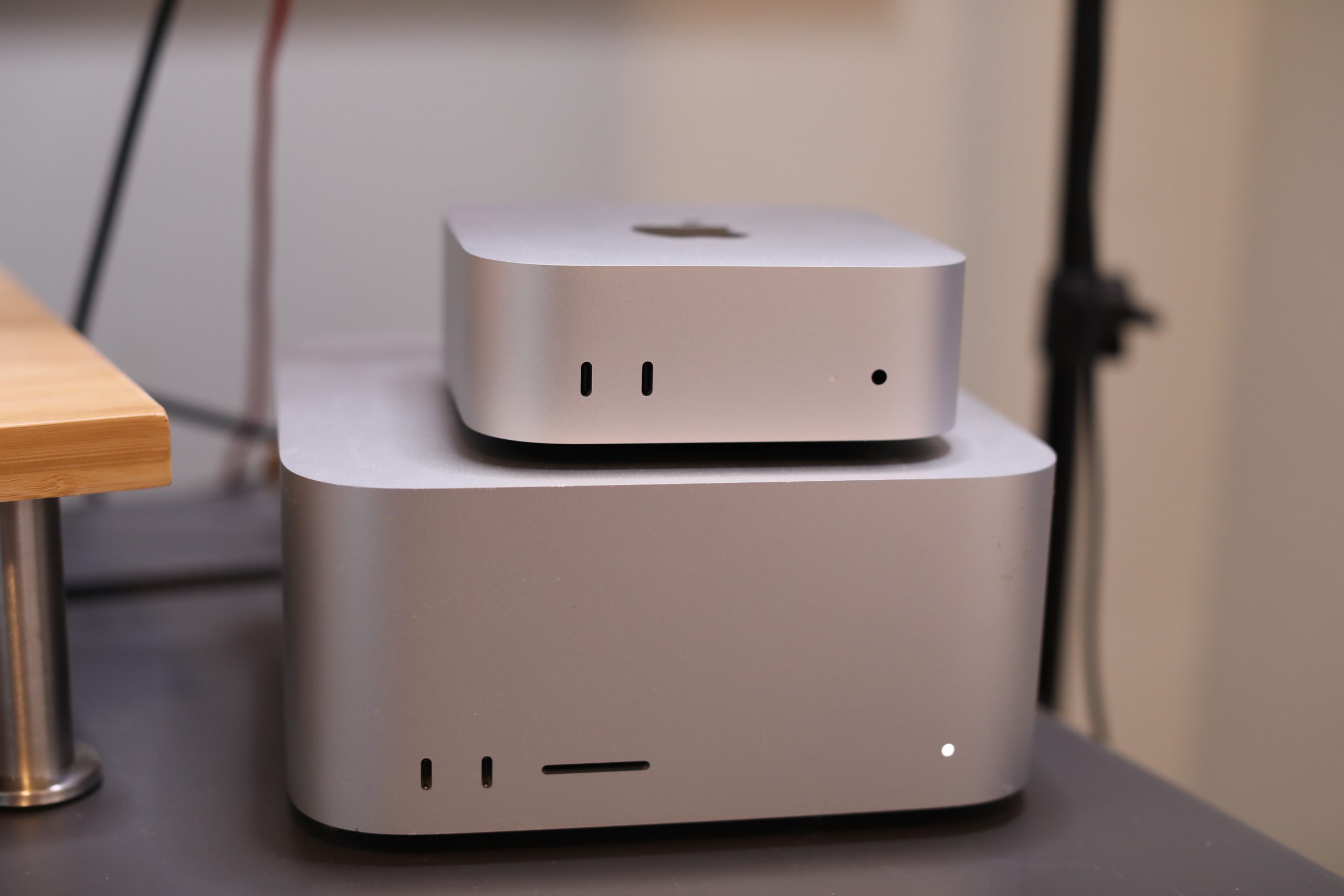
The digital marketplace is currently witnessing a significant surge in demand and corresponding price inflation for Apple’s compact Mac mini computers, particularly models equipped with the M4 chip. These devices have become highly sought-after tools for enthusiasts and developers keen on running sophisticated artificial intelligence models directly on their personal hardware, leading to a critical shortage across Apple’s official retail channels and a burgeoning, high-priced secondary market. Reports from earlier this week confirmed that the foundational M4 Mac mini, featuring 16GB of unified memory and 256GB of solid-state storage, initially priced at $599, has completely sold out on Apple’s online storefront, with no availability for immediate delivery or in-store collection. This scarcity has since expanded to encompass various other configurations of the entry-level machine, irrespective of the selected memory capacity. Technology news outlets have highlighted that this marks an unusual instance of the base model becoming entirely unavailable. Meanwhile, models offering greater storage capacities, specifically 512GB and above, are now quoting extended shipping timelines, with deliveries not expected until June.
The Rise of Local AI and Apple’s Role
The unexpected and rapid depletion of Mac mini inventory is directly linked to the accelerating trend of "on-device" or "local" artificial intelligence processing. As AI models become more efficient and accessible, a growing community of users is opting to run these powerful algorithms on their personal machines rather than relying solely on cloud-based services. This shift is driven by several factors, including enhanced data privacy, reduced latency, and potentially lower long-term operational costs, as users avoid continuous subscription fees associated with cloud computing resources. The Mac mini, especially with Apple’s custom silicon, has emerged as a preferred platform for these applications. Developers and hobbyists are leveraging its capabilities to run a diverse array of AI tools, ranging from specific frameworks like OpenClaw and its derivatives such as ZeroClaw, to more general-purpose AI platforms from prominent companies like Anthropic and OpenAI, and even specialized local models designed for particular tasks. Perplexity Computer is another example of an AI application designed to run locally, further fueling the demand for capable hardware. Beyond its raw processing power, the Mac mini offers distinct advantages for this continuous, resource-intensive workload: its notoriously quiet operation and robust design make it exceptionally reliable for 24/7 usage, a crucial factor for running persistent AI processes, unlike many laptop computers that are not designed for such prolonged, high-load operation.
A History of Innovation: The Mac Mini’s Journey
To fully appreciate the current situation, it’s helpful to consider the Mac mini’s historical trajectory within Apple’s product ecosystem. Introduced in 2005, the Mac mini was conceived as Apple’s most affordable and compact desktop computer, designed to attract users who already owned a display, keyboard, and mouse, perhaps from a Windows PC, and wanted to transition to the macOS environment. Over the years, it has maintained its distinct identity as a "headless" desktop, serving various niches from home media servers to developer workstations. A pivotal moment in its evolution arrived in late 2020 with the introduction of the M1 chip, marking Apple’s transition from Intel processors to its proprietary Apple Silicon architecture. This shift brought unprecedented performance gains, significantly improved power efficiency, and a unified memory architecture that proved particularly adept at handling demanding tasks like video editing, software compilation, and, crucially, artificial intelligence workloads. Subsequent iterations, including the M2 and now the M4 (as per the article’s context, implying the latest powerful chip in the mini), have only further enhanced these capabilities, solidifying the Mac mini’s reputation as a surprisingly potent machine for its size and price point. This history underscores how a product originally designed for entry-level access has, through technological advancement, found itself at the forefront of a new computing paradigm driven by AI.
Unpacking the Supply Chain Conundrum
The confluence of escalating demand for local AI hardware and pre-existing global supply chain pressures has created what many describe as a "perfect storm" for the Mac mini. A significant contributing factor to the current shortage is an industry-wide crunch in memory components. The semiconductor industry, which forms the backbone of all modern electronics, has faced persistent challenges, including manufacturing bottlenecks, geopolitical tensions, and fluctuating demand patterns. Memory chips, essential for all computing devices, have seen particular strain, impacting production across various sectors, from smartphones to data centers. When a product like the Mac mini, which relies heavily on integrated memory for its Apple Silicon architecture, experiences a sudden spike in demand, any underlying supply chain vulnerabilities are amplified.
Adding another layer of complexity, reports from financial news outlets like Bloomberg have indicated that Apple is preparing for a refresh of its Mac mini product line. Historically, Apple’s product refreshes typically involve introducing updated models with newer chips and improved features. While such updates can sometimes lead to temporary fluctuations in inventory as older models are phased out and new ones are introduced, they have not, in the past, typically resulted in such comprehensive and widespread shortages of the base model configurations. This suggests that the current supply issues are not merely a function of an impending refresh but are exacerbated by the extraordinary demand stemming from the AI boom, placing unprecedented strain on Apple’s production capabilities and component procurement. Apple has not yet responded to requests for comment regarding the current shortages or their underlying causes.
The Secondary Market Surge: eBay as a Barometer
With official channels depleted, the vacuum created by the Mac mini shortage has been eagerly filled by the secondary market, with platforms like eBay becoming a primary hub for desperate buyers. This dynamic is a familiar one in the world of consumer electronics, often seen during the launch of popular gaming consoles or high-demand graphics cards during cryptocurrency mining booms. On eBay, various configurations of the M4 Mac mini are now readily available, albeit at significantly inflated prices compared to their original retail cost. The market clearly reflects a willingness among consumers to pay a substantial premium to acquire these machines immediately.
As of a recent analysis, the M4 base models, specifically those with 16GB of RAM and 256GB of SSD storage, were observed selling for between $715 and $795 for new or "open box" units. Even "excellent" refurbished versions were commanding prices as high as $979. "Lightly used, pre-owned" Mac minis with the same specifications were frequently listed around the $700 mark, representing a premium of over $100 compared to the original $599 price of a new base model. One particularly telling listing for a brand-new M4 Mac mini with the 16GB RAM/256GB storage configuration was advertised at $925, accompanied by a stark red warning: "Last one." While diligent searching or successful auction bidding might occasionally yield a more reasonably priced unit, the prevailing market sentiment suggests that elevated prices will persist until Apple’s supply chain can adequately meet the burgeoning demand.
Broader Implications: Accessibility, Innovation, and Economics
The Mac mini shortage carries broader implications for the accessibility of cutting-edge AI technology and the economics of the tech market. For many individual developers, researchers, and small businesses, the Mac mini represents an affordable entry point into local AI development. Its relatively low initial cost, combined with the powerful Apple Silicon, makes it a more accessible option than investing in high-end workstations or incurring continuous cloud computing expenses. The current scarcity and inflated prices threaten to create a barrier to entry, potentially slowing down independent innovation and concentrating AI development resources in the hands of larger entities that can afford premium prices or have direct access to supply.
Moreover, the situation underscores the growing importance of hardware in the AI revolution. While software and algorithms often capture headlines, the underlying silicon that powers these innovations is equally critical. The market’s response demonstrates a clear shift in consumer priorities, where specific hardware capabilities, particularly those optimized for AI, are driving purchasing decisions and even influencing secondary market values. This could prompt other manufacturers to develop their own compact, AI-optimized hardware, fostering greater competition and potentially more diverse options for consumers in the future.
The ripple effect of this demand extends beyond the Mac mini itself. As the compact desktop became unavailable, an increase in demand for the more powerful Mac Studio has also been noted. This professional-grade desktop, designed for even more intensive creative and computational tasks, has also begun to show signs of strain, with several configurations now reported as sold out and delivery estimates extending several months into the future. Interestingly, other Apple products, such as the MacBook Pro with high RAM configurations and the newer MacBook Neo, are still shipping within a few weeks. This distinction highlights that the core issue isn’t a universal shortage across all Apple products but rather a highly specific, intense demand concentrated on the Mac mini, and now the Mac Studio, likely due to their form factor and performance characteristics that make them ideal for static, on-device AI deployments.
Looking Ahead: What’s Next for Apple and AI Hardware?
The current market dynamics present both challenges and opportunities for Apple. On one hand, the overwhelming demand for its Mac mini and Mac Studio indicates a strong market validation for its Apple Silicon architecture in the burgeoning field of local AI. On the other hand, failing to meet this demand risks frustrating customers and potentially driving them to alternative solutions if available.
As the industry-wide memory crunch eventually eases and Apple proceeds with its anticipated product refreshes, the supply situation for the Mac mini is expected to stabilize. However, the underlying demand for powerful, energy-efficient, and quiet machines capable of running advanced AI models locally is unlikely to wane. This trend could influence Apple’s future product strategies, potentially leading to increased production capacities for its desktop lines, or even the development of new hardware specifically tailored for AI inference and training at the edge. The current frenzy around the Mac mini serves as a powerful indicator of how quickly the landscape of personal computing is evolving, with artificial intelligence now a central driver of hardware innovation and consumer purchasing behavior.









 Azin Asro
