 Amir Mahmud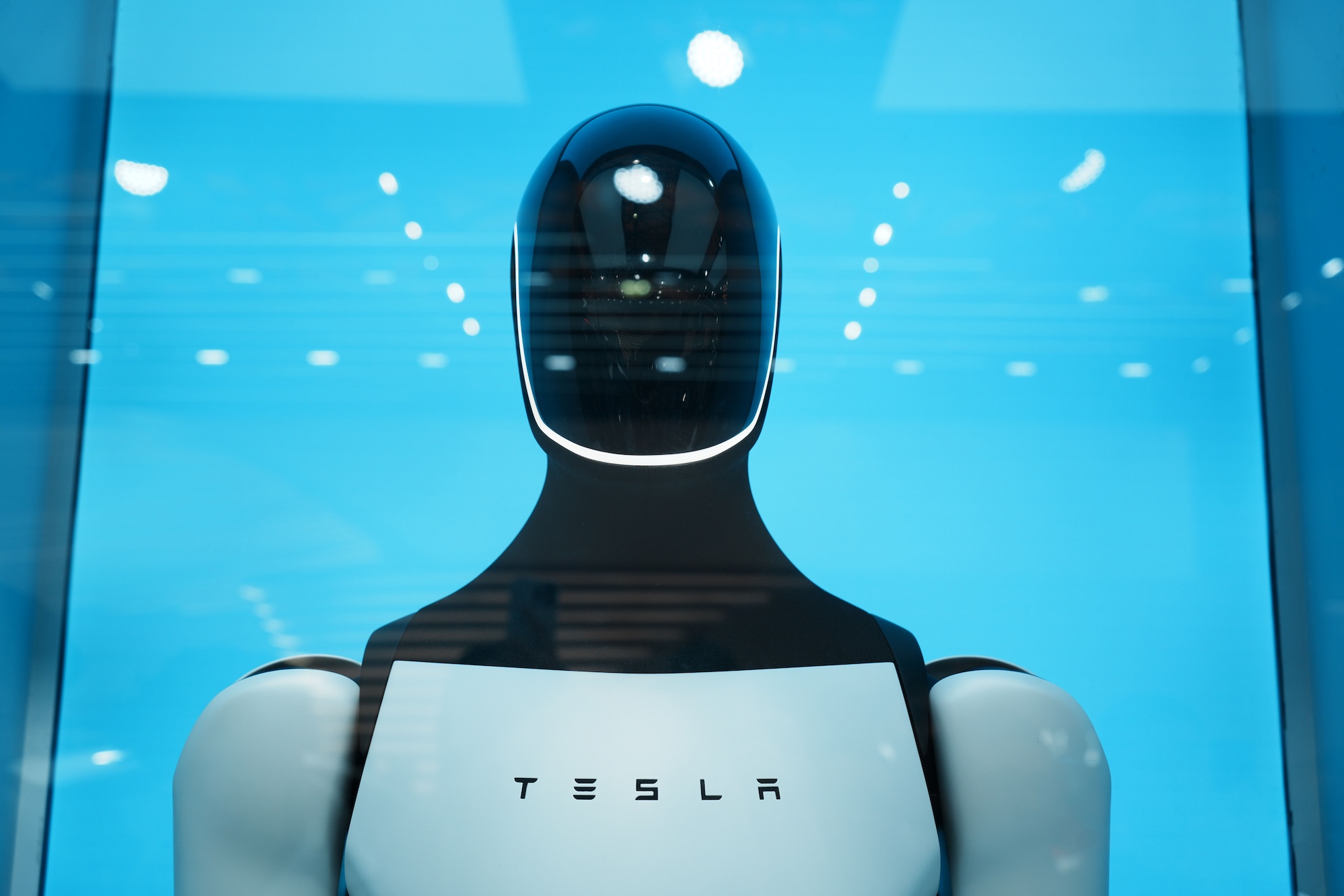
Tesla, the electric vehicle pioneer, is charting an aggressive new course, signaling a substantial increase in its capital expenditures to $25 billion by 2026. This significant financial commitment, revealed during the company’s first-quarter earnings call, far exceeds its historical annual spending and underscores a strategic pivot towards becoming a dominant force in artificial intelligence (AI) and robotics, alongside its established automotive and energy ventures. This announcement, delivered by CEO Elon Musk, positions the company for an era of profound transformation, aiming to solidify its technological leadership across multiple burgeoning sectors.
A Monumental Capital Commitment
The projected $25 billion capital expenditure (capex) for 2026 represents a dramatic escalation from previous years, more than tripling Tesla’s average annual investment in physical assets. For context, the company’s annual capex stood at approximately $8.9 billion in 2023, $11.3 billion in 2024, and an estimated $8.5 billion in 2025. This latest figure also marks a $5 billion increase from the company’s earlier projection in January, which anticipated expenditures exceeding $20 billion for 2026. The upward revision suggests an accelerated and broadened scope for the initiatives driving this spending spree. While the quarterly capital expenditure for the first quarter remained consistent with previous periods at $2.5 billion, the forward-looking guidance indicates an impending surge in investment activity.
Capital expenditure, a critical metric for evaluating a company’s long-term growth strategy, refers to funds used by a company to acquire, upgrade, and maintain physical assets such as property, plants, buildings, technology, or equipment. For Tesla, this massive investment is not merely about scaling existing operations but about fundamentally redefining its core business identity and future revenue streams. The company’s leadership views this substantial outlay as a necessary and "well justified" step towards realizing a "substantially increased future revenue stream," according to statements made by Elon Musk.
The Strategic Pivot: AI and Robotics at the Core
At the heart of Tesla’s augmented capex plan lies an emphatic declaration of its ambition to transcend its identity as primarily an electric vehicle manufacturer. The bulk of this capital is earmarked for initiatives that firmly place AI and robotics at the forefront of the company’s future. This vision is not entirely new; Tesla has long integrated advanced AI into its autonomous driving software (Full Self-Driving, or FSD) and has been developing humanoid robots like Optimus. However, the scale of this new investment signifies a profound intensification of these efforts.
A significant portion of the funds will be directed towards enhancing Tesla’s core AI technologies. This includes substantial investments in AI training infrastructure, which encompasses the high-performance computing necessary to process vast datasets for neural network training, crucial for advancing autonomous capabilities. Furthermore, the company plans to deepen its expertise in chip design, a critical component for achieving vertical integration and optimizing performance for its specialized AI hardware. This focus on proprietary silicon aims to reduce reliance on external suppliers and provide a competitive edge in processing complex AI algorithms, from vehicle autonomy to robot locomotion.
The development and scaling of the Optimus humanoid robot represent another cornerstone of this strategic shift. Tesla has been showcasing prototypes of Optimus, articulating a vision where these robots could eventually perform a wide range of tasks in industrial, commercial, and even domestic settings. The increased capital will support both the research and development phases and, more critically, the establishment of large-scale manufacturing capabilities for Optimus. The company has already begun clearing ground near its Austin Gigafactory for a dedicated Optimus manufacturing facility, a clear indicator of its commitment to mass production. Initial plans involve increasing internal production of Optimus for testing within Tesla’s own operations, with a stated goal of making the robots "useful outside of Tesla sometime next year." This timeline, while ambitious, reflects the company’s intent to rapidly commercialize its robotics advancements.
Moreover, the capex increase is tied to the expansion of Tesla’s robotaxi operations. This initiative envisions a future where autonomous vehicles, operating without human drivers, provide on-demand transportation services. Achieving this requires not only highly advanced self-driving software but also a robust fleet of purpose-built or adapted vehicles and the underlying infrastructure to manage such a service. Investments in compute infrastructure and data centers are paramount for supporting the vast data processing needs of a global robotaxi network, from real-time navigation and traffic management to predictive maintenance and customer service.
Manufacturing Expansion and Supply Chain Fortification
Beyond the ambitious AI and robotics initiatives, a considerable portion of the capital expenditure will bolster Tesla’s traditional manufacturing capabilities and fortify its global supply chain. This includes the expansion and ramp-up of its existing manufacturing and research and development (R&D) production lines. Facilities like the Fremont, California, factory are expected to see significant investment, particularly as the company transitions its production focus. While the Model S and Model X are being phased out, Fremont is slated to play a crucial role in the initial production of the Optimus humanoid robot. This repurposing of existing facilities highlights Tesla’s agile approach to manufacturing, adapting its production lines to meet evolving strategic priorities.
The Austin Gigafactory, already a hub for vehicle production, is poised for further expansion, especially with the ground cleared for the dedicated Optimus manufacturing facility. These investments in physical infrastructure are crucial for increasing production capacity across all of Tesla’s product lines, from electric vehicles and energy storage solutions to its emerging robotics offerings.
Furthermore, Tesla plans to significantly strengthen its supply chain "across the board," a critical move to mitigate risks and ensure the steady flow of essential components. This encompasses key areas such as battery production, energy systems, and AI silicon. Given the global complexities and geopolitical sensitivities surrounding raw materials and advanced semiconductor manufacturing, Tesla’s emphasis on supply chain resilience is a strategic imperative. By investing in internal production capabilities and securing long-term supply agreements, the company aims to enhance its operational independence and reduce vulnerability to external disruptions, a lesson learned by many industries during recent global events. Vertical integration, a hallmark of Tesla’s strategy, is being further entrenched through these investments, allowing greater control over quality, cost, and innovation cycles.
Industry Trends and Competitive Landscape
Tesla’s massive capital commitment is not occurring in a vacuum; it reflects a broader trend among technology behemoths racing to dominate the burgeoning fields of AI and advanced computing. Elon Musk himself noted that Tesla is not an outlier in this regard. Other tech giants are also pouring unprecedented sums into similar strategic areas. Amazon, for instance, has projected an astounding $200 billion in capital expenditures by 2026, targeting a diverse portfolio including AI, proprietary chips, robotics, and its low Earth orbit satellite constellation (Project Kuiper). Similarly, Google is slated to spend between $175 billion and $185 billion in capital expenditures in 2026, a substantial increase from its $91.4 billion spend the previous year, with a significant portion directed towards AI infrastructure and data centers.
This "AI capex race" underscores the industry-wide conviction that artificial intelligence will be the defining technology of the coming decades. Companies are aggressively investing to build the foundational infrastructure – compute power, data centers, and specialized hardware – necessary to develop, train, and deploy advanced AI models and applications. Tesla’s strategy positions it not merely as an automotive competitor but as a direct rival to these tech titans in the race for AI supremacy. The company’s unique blend of hardware manufacturing, software development, and real-world data collection from its vast fleet of vehicles provides a distinct advantage in training AI for physical world applications, from autonomous driving to humanoid robotics. The cultural and social impact of this race could be profound, accelerating the integration of AI into daily life, transforming industries, and potentially reshaping labor markets globally.
Financial Implications and Investor Outlook
While Tesla’s ambitious investment plan signals strong confidence in its future, it comes with immediate financial implications that warrant careful consideration. The company, which recently enjoyed a brief 4% share price bump partly due to an unexpected $1.4 billion in free cash flow in the first quarter, anticipates a shift into negative free cash flow territory later this year. This projection, articulated by CFO Vaibhav Taneja, indicates that the sheer scale of the planned expenditures will temporarily consume more cash than the company generates from its operations.
Free cash flow, a measure of a company’s financial flexibility, is crucial for funding growth and returning value to shareholders. A period of negative free cash flow, even if strategic, can sometimes cause investor concern. However, Tesla’s robust cash reserves provide a substantial buffer. At the end of the first quarter, the company reported an impressive $44.7 billion in cash, cash equivalents, and short-term investments, providing ample liquidity to finance these multi-year investment plans.
Despite the anticipated short-term impact on free cash flow, the company’s leadership maintains that this aggressive investment strategy is the "right strategy to position the company for the next era." Initial market reaction saw Tesla shares erase their earlier gains in after-hours trading as Musk and Taneja detailed these plans to investors. This mixed reaction highlights the delicate balance between investor expectations for immediate profitability and the long-term vision of transformative growth. Some analysts may view the increased capex as a sign of aggressive future-proofing and a commitment to innovation, potentially yielding substantial returns down the line. Others might express caution regarding the execution risks associated with such large-scale, capital-intensive projects and the potential for delayed returns on investment.
Potential Risks and Rewards
Tesla’s bold $25 billion capex plan carries both immense potential rewards and significant inherent risks. The rewards, if realized, could be transformative. By establishing itself as a leader in AI and robotics, Tesla could unlock entirely new revenue streams far beyond vehicle sales. Successful deployment of Optimus robots and a widespread robotaxi network could fundamentally disrupt industries, from logistics and manufacturing to transportation, positioning Tesla at the forefront of the next technological revolution. Furthermore, advancements in AI and chip design could create synergistic benefits, enhancing its core EV business with more advanced autonomous capabilities and efficient manufacturing processes. The company’s vertical integration strategy, amplified by these investments, could yield unparalleled control over its product ecosystem and cost structure.
However, the path to realizing these rewards is fraught with challenges. The execution of such ambitious, multi-faceted projects on a global scale demands exceptional operational discipline and technological prowess. Developing market-ready humanoid robots and fully autonomous robotaxis involves overcoming complex technical hurdles, regulatory challenges, and societal acceptance barriers. Competition in both AI and robotics is intensifying, with numerous well-funded companies and research institutions vying for leadership. Moreover, the sheer volume of capital being deployed raises questions about efficiency and potential overspending if projects do not yield expected returns. A prolonged period of negative free cash flow, even with strong cash reserves, could put pressure on the company’s financial performance and potentially impact investor confidence if tangible progress is not demonstrated.
Looking Ahead: Tesla’s Vision for the Future
Tesla’s decision to dramatically increase its capital expenditures to $25 billion by 2026 marks a pivotal moment in its corporate trajectory. It signifies a strategic reorientation, solidifying its commitment to evolving beyond an automotive manufacturer into a comprehensive AI and robotics powerhouse. This substantial investment is a testament to Elon Musk’s long-held vision of Tesla as a company that not only builds sustainable transportation and energy solutions but also drives the frontier of artificial intelligence and automation.
The coming years will be critical in determining whether this audacious bet pays off. The company’s ability to effectively deploy this capital, execute its ambitious projects, and navigate the competitive landscape will shape not only its own future but also potentially influence the broader technological and economic landscape. As Tesla pours billions into the infrastructure of tomorrow, the world watches to see if this colossal investment will indeed usher in the "next era" of innovation and growth, solidifying its place as a multifaceted technological leader.







 Azin Asro
