Amir Mahmud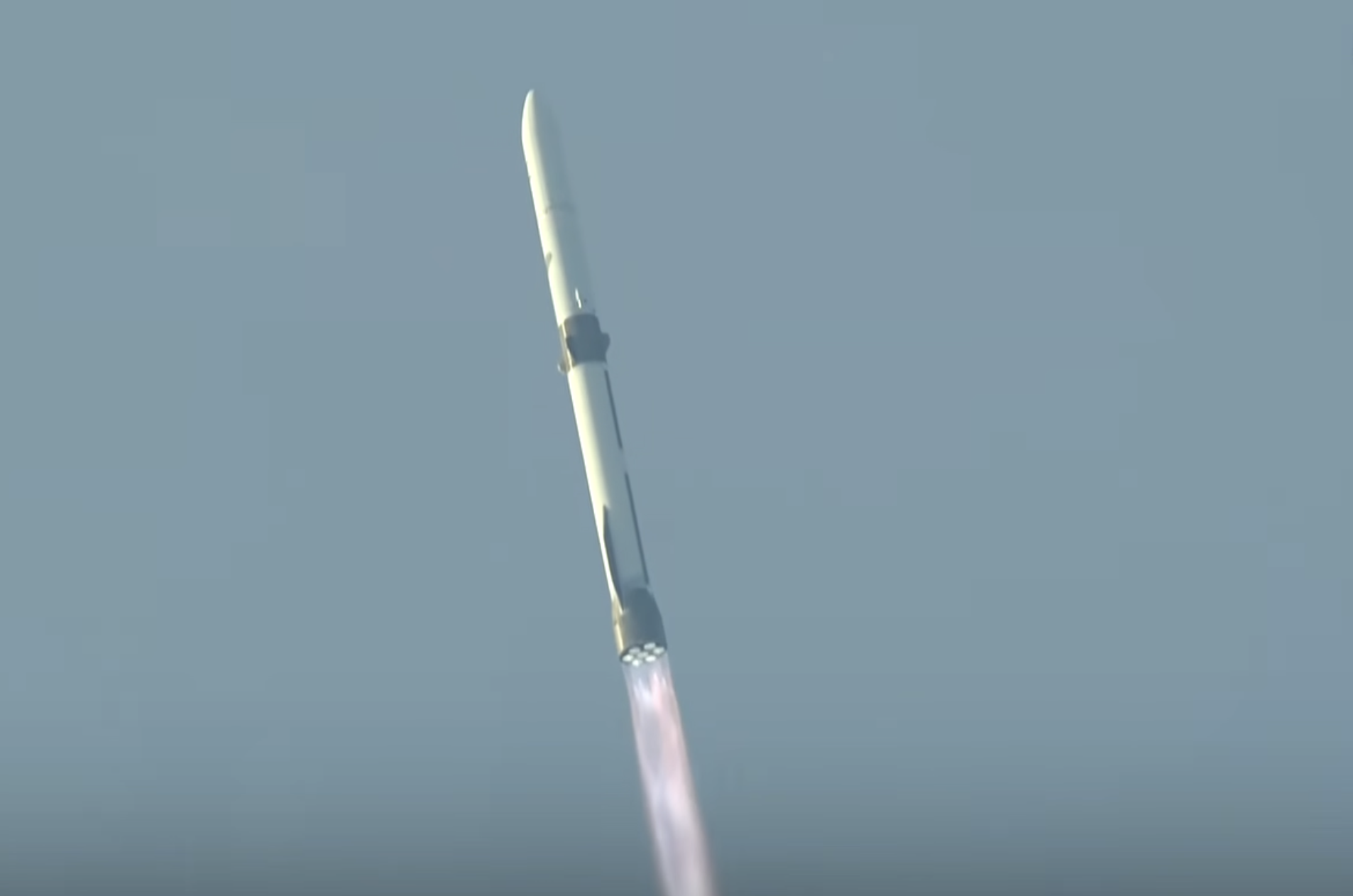
Blue Origin, the aerospace company founded by Amazon’s Jeff Bezos, has achieved a pivotal milestone, successfully reusing its New Glenn heavy-lift rocket for the first time. This landmark accomplishment, occurring on the vehicle’s third orbital mission, positions the company as a more formidable contender in the increasingly competitive commercial space launch sector, directly challenging the long-standing dominance of rivals like SpaceX. The successful reflight of the New Glenn’s first stage demonstrates a critical validation of the design and operational procedures that underpin the future economics of space access.
The Quest for Reusability: A Paradigm Shift in Spaceflight
The ability to reuse rocket components has long been considered the holy grail of affordable space travel. Historically, rockets were largely expendable, with multi-million dollar stages designed to be used once and then discarded into the ocean or burned up in the atmosphere. This "single-use" model made space launches incredibly expensive, limiting access and hindering the pace of exploration and commercialization. The high cost of manufacturing new rocket stages for every mission was a significant barrier to entry and a bottleneck for increased launch cadences.
The concept of reusable spacecraft isn’t entirely new; NASA’s Space Shuttle program, initiated in the 1970s, aimed for reusability with its orbiter and solid rocket boosters. However, the Shuttle system proved to be incredibly complex, labor-intensive, and expensive to refurbish between flights, never achieving the economic benefits initially envisioned. Its reusability was partial and costly, failing to fundamentally alter the financial landscape of space access.
A true paradigm shift began in the early 21st century with the advent of private aerospace companies, most notably SpaceX, led by Elon Musk. SpaceX’s Falcon 9 rocket, which first launched in 2010, embarked on an ambitious program to recover and reuse its first stage. After years of iterative development, including numerous spectacular failures and incremental successes, SpaceX achieved its first successful orbital-class first-stage landing in December 2015. This was followed by the first reflight of a Falcon 9 first stage in March 2017, a moment that irrevocably changed the trajectory of the space industry. SpaceX’s ability to routinely land and re-launch its Falcon 9 boosters has drastically reduced launch costs, increased manifest flexibility, and enabled an unprecedented pace of operations, allowing the company to capture a substantial share of the global launch market.
Blue Origin, while often perceived as a latecomer to the orbital reusability race compared to SpaceX, has also been a proponent of reusability from its inception. Its suborbital New Shepard vehicle, designed for space tourism and scientific research, has been successfully landing its booster vertically since 2015, demonstrating propulsive landing capabilities that served as a testbed for the larger New Glenn. This experience, accumulated over dozens of flights, provided invaluable data and engineering expertise for the more complex task of landing an orbital-class heavy-lift rocket. The New Glenn reflight is thus not an isolated event but the culmination of years of dedicated research and development, building upon Blue Origin’s internal capabilities and lessons learned from the broader industry.
New Glenn’s Design and Strategic Importance
New Glenn is Blue Origin’s answer to the demand for heavy-lift launch capabilities. Named after Mercury Seven astronaut John Glenn, the rocket stands approximately 322 feet (98 meters) tall, making it one of the tallest operational rockets in the world. Its first stage is powered by seven BE-4 engines, developed and manufactured by Blue Origin itself. These engines are critical, as they are fueled by liquid natural gas (methane) and liquid oxygen (LOX), a propulsion combination favored for its performance, ease of handling, and potential for in-situ resource utilization on celestial bodies like Mars. The BE-4 engines are also used on United Launch Alliance’s (ULA) Vulcan Centaur rocket, highlighting their significance beyond Blue Origin’s internal projects.
The design of New Glenn emphasizes reusability from the outset. Its first stage is engineered for vertical propulsive landings, returning to an autonomous drone ship positioned downrange in the ocean. This design choice mirrors SpaceX’s Falcon 9, acknowledging the efficiencies gained by recovering the most expensive part of the rocket. The second stage, which carries the payload to its final orbit, is expendable in the current configuration, though future iterations might explore partial reusability for the upper stage as well.
New Glenn’s strategic importance for Blue Origin cannot be overstated. It represents the company’s entry into the high-stakes heavy-lift market, a segment crucial for deploying large satellite constellations, launching deep-space probes, and supporting human exploration missions. Blue Origin envisions New Glenn as a cornerstone of its "road to space" philosophy, which aims to enable a future where millions of people live and work in space. This vision involves developing lunar landers (Blue Moon), future orbital habitats, and other space infrastructure, all of which will rely on reliable and cost-effective heavy-lift transport.
The development journey for New Glenn has spanned over a decade, marked by significant engineering challenges and a patient, methodical approach that sometimes drew criticism for its perceived slow pace. The company officially announced New Glenn in 2016, but work on its underlying technologies, including the BE-4 engine, began much earlier. Delays in engine development and manufacturing, along with the complexities of building a new heavy-lift rocket from scratch, pushed its maiden flight several times. However, the successful first flight a little over a year ago, followed by this reusability milestone, signals that Blue Origin is now accelerating its operational tempo.
The Successful Missions: A Step-by-Step Account
The recent reflight was the culmination of a deliberate flight test and operational cadence. New Glenn’s inaugural flight took place over a year ago, validating the fundamental design and launch capabilities of the new system. This initial mission paved the way for more complex operations.
The second New Glenn mission, occurring in November, represented a significant step forward. During this flight, the New Glenn booster successfully deployed two robotic NASA spacecraft destined for a mission to Mars. Crucially, following payload deployment, the first stage executed a flawless propulsive landing on a custom-designed autonomous drone ship stationed in the Atlantic Ocean. This marked the first successful recovery of an orbital-class New Glenn booster, proving the reusability concept in practice. The recovery of the booster allowed Blue Origin engineers to inspect the vehicle, analyze its performance, and prepare it for its second flight.
The third mission, which included Sunday’s successful reflight, utilized the very same booster recovered from the November mission. This feat, the re-launch of an already flown first stage, is what truly signifies the reusability milestone. The primary objective of this mission was to send a communications satellite into space for AST SpaceMobile, a company developing a space-based cellular broadband network. Following liftoff, the New Glenn first stage performed its ascent, separated from the upper stage, and then executed a precision propulsive landing back on its drone ship, approximately ten minutes after takeoff. This second successful recovery of the same booster is a clear demonstration of New Glenn’s operational reusability, a critical step towards achieving the economic benefits promised by such a design. While the upper stage continued its trajectory to deploy the AST SpaceMobile satellite into its specific orbit, the focus for Blue Origin and the industry was firmly on the successful return of the first stage.
Intensifying the Commercial Space Race
Blue Origin’s achievement significantly intensifies the commercial space race. SpaceX has largely dominated the global orbital launch market for years, thanks in no small part to the cost advantages and increased cadence offered by its reusable Falcon 9 and Falcon Heavy rockets. The ability of New Glenn to offer similar reusability directly challenges SpaceX’s economic stronghold and creates a more competitive environment for launch services.
The demand for heavy-lift capabilities is surging, driven by several factors. The proliferation of mega-constellations for satellite internet, such as Amazon’s own Project Kuiper (which is expected to rely heavily on New Glenn for deployment), OneWeb, and SpaceX’s Starlink, requires frequent and cost-effective launches of hundreds, if not thousands, of satellites. Additionally, government space agencies like NASA are increasingly turning to commercial providers for critical missions, including the Artemis program’s ambitious return to the Moon. National security launches, which require assured access to space, also represent a lucrative market segment.
Beyond SpaceX, other players are also vying for a share of this market. United Launch Alliance (ULA), a joint venture between Boeing and Lockheed Martin, recently introduced its Vulcan Centaur rocket, which also features Blue Origin’s BE-4 engines and aims for future reusability of its engines (though not the entire first stage in the same manner as New Glenn or Falcon 9). European providers like Arianespace are deploying the Ariane 6, while various nations, including China with its Long March series, are continually advancing their capabilities.
The entry of another robust, reusable heavy-lift vehicle into the market will inevitably drive down launch costs across the board. This downward pressure benefits customers, stimulates innovation, and expands the range of economically viable space activities. It fosters an environment where space is no longer solely the domain of national governments but increasingly accessible to commercial enterprises, researchers, and even private individuals. This shift has profound social and cultural implications, accelerating scientific discovery, creating new economic opportunities in space, and potentially inspiring a new generation to pursue careers in STEM fields. Geopolitically, it also means a more diversified access to space, which could have implications for national security and international collaboration.
Future Trajectories and Challenges
With this reusability milestone achieved, Blue Origin’s trajectory is set for an accelerated pace of operations. The company is actively preparing its first robotic Blue Moon lander for an attempted launch later this year, a mission that will undoubtedly rely on New Glenn’s capabilities. Furthermore, Amazon’s ambitious Project Kuiper, which aims to deploy a constellation of over 3,200 broadband satellites, represents a massive and ongoing demand for New Glenn launches. The success of New Glenn’s reusability is paramount to making Project Kuiper economically feasible.
However, challenges remain. Blue Origin will need to demonstrate its ability to scale manufacturing and launch cadence rapidly to meet the burgeoning demand. Maintaining the high reliability standards expected in the space industry, especially with reusable components, is critical. Furthermore, the company faces continued competition from SpaceX’s Starship, an even larger, fully reusable launch system currently under development, which aims to push the boundaries of cost-effectiveness and payload capacity even further. Regulatory hurdles, complex supply chains, and the inherent risks of spaceflight will also require constant vigilance and innovation.
Despite these challenges, Blue Origin’s successful reflight of New Glenn marks a significant step forward in the company’s long-term vision. It solidifies its position as a major player in the commercial space industry and signals a new era where access to space becomes more routine, more affordable, and ultimately, more transformative for humanity. The promise of a future where space exploration and utilization are within reach for a broader spectrum of endeavors moves closer to reality with each such technical achievement.