Amir Mahmud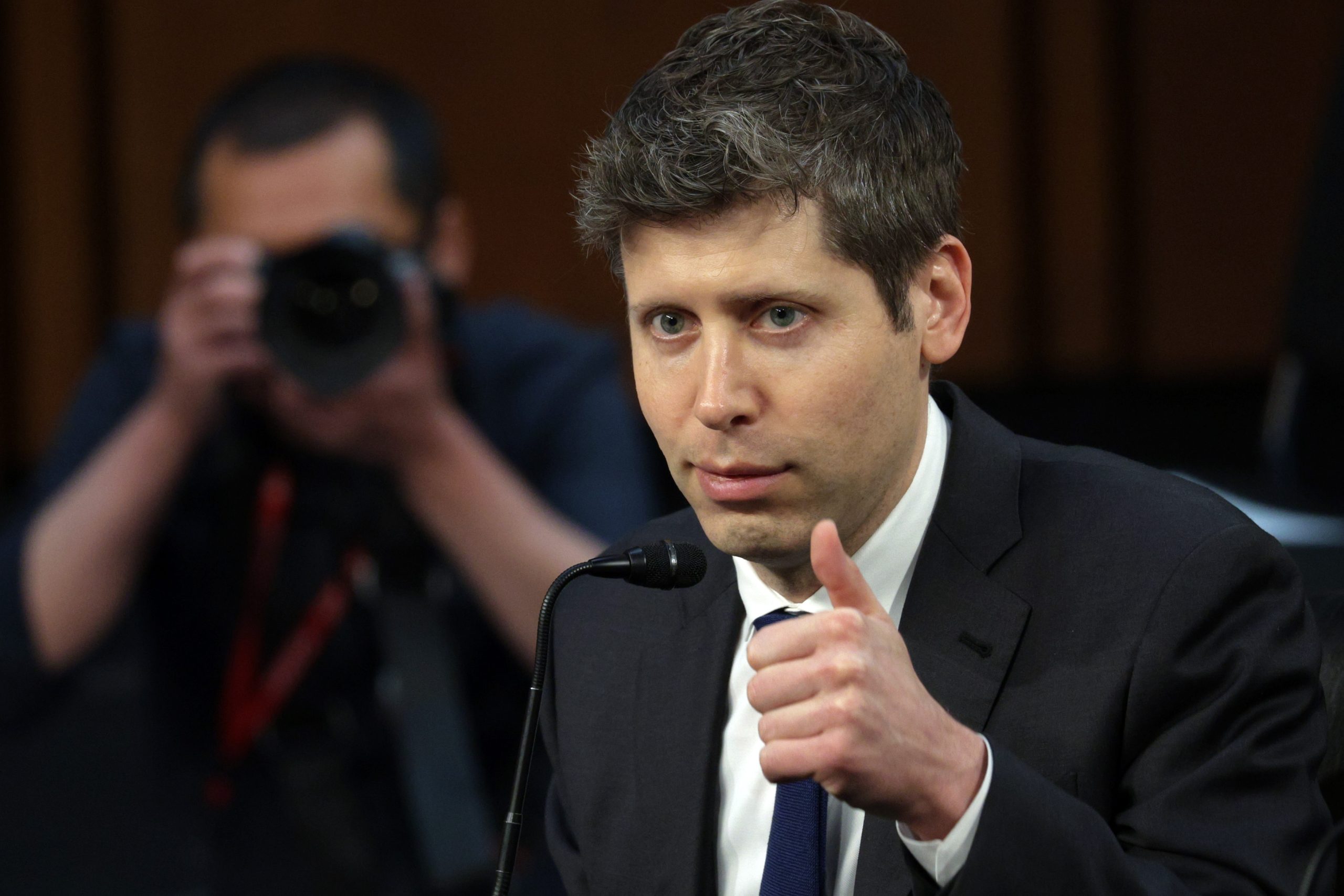
A recent social media post by Sam Altman, chief executive of artificial intelligence powerhouse OpenAI, ignited a torrent of online reactions, ranging from sharp criticism to satirical memes. On March 17, 2026, Altman took to X (formerly Twitter) to express "so much gratitude to people who wrote extremely complex software character-by-character," adding that "it already feels difficult to remember how much effort it really took. Thank you for getting us to this point." While seemingly a heartfelt acknowledgment of foundational programming work, the sentiment quickly unraveled for many observers, landing instead as a prime example of perceived tone-deafness amidst a rapidly evolving and often turbulent tech industry.
The Genesis of a Digital Firestorm
The core of the online backlash stemmed from a stark juxtaposition: Altman’s company, OpenAI, is at the forefront of developing generative AI technologies, particularly large language models (LLMs) that are increasingly capable of generating code. These very advancements are widely cited as a contributing factor in a wave of recent layoffs and a perceived reduction in demand for entry-level programming roles across the technology sector. Just prior to Altman’s post, major tech entities such as Amazon, Block, and Atlassian had announced significant workforce reductions, with Meta also reportedly considering extensive layoffs. Many of these organizational shifts were framed, at least in part, by executives as strategic realignments to prioritize AI development and integration.
The irony, therefore, was palpable to many within the developer community and beyond. OpenAI’s powerful AI models, including those capable of assisting with or even generating significant portions of code, were themselves trained on immense datasets comprising existing human-written software. This means the very "character-by-character" effort Altman lauded is the intellectual bedrock upon which the current generation of AI tools stands, tools that are now altering the landscape for the very creators he thanked. Critics interpreted his message as implying that the "genuinely difficult-to-master craft" of coding was now akin to an antiquated technology, appreciated for its historical role but increasingly rendered obsolete by the innovations it inadvertently fueled.
A Shifting Landscape: AI and the Tech Workforce
The period leading up to Altman’s tweet had been marked by significant upheaval in the technology job market. Following a pandemic-driven hiring spree, many tech companies began to recalibrate their workforces in late 2024 and throughout 2025. Factors contributing to these layoffs included economic uncertainties, rising interest rates, and a re-evaluation of growth strategies. However, a recurring narrative in executive communications surrounding these reductions has been the increasing role of artificial intelligence. Companies articulated a shift towards leaner, more AI-centric operations, suggesting that AI tools could enhance productivity and reduce the need for certain human roles, particularly in areas like software development and content creation.
For developers, especially junior ones, this narrative has created considerable anxiety. Reports indicated a tightening market for entry-level programming jobs, with some educational institutions and coding bootcamps observing a downturn in recruitment interest for their graduates. The perception is that AI-powered coding assistants and generative tools are beginning to handle routine coding tasks, thereby elevating the bar for human programmers to focus on more complex, creative, or architectural challenges. While this could lead to an evolution of developer roles, the immediate impact for many has been a sense of insecurity and displacement.
The Foundations of AI: Human Labor
To fully grasp the context of the backlash, it is crucial to understand how modern AI models, particularly large language models like those developed by OpenAI, are built. These systems require vast quantities of data for training. For code-generating AIs, this data includes billions of lines of publicly available source code from repositories like GitHub, open-source projects, and proprietary datasets. Every function, every class, every algorithm, and every comment within that colossal training corpus was originally conceived and meticulously typed by human programmers.
This process highlights a fundamental paradox of AI development: its remarkable capabilities are not born from a vacuum but are rather a distillation and sophisticated recombination of immense human intellectual effort. The very efficiency and automation that AI promises often stand on the shoulders of countless hours of human labor, much of which was performed without direct compensation or explicit consent for its use in training commercial AI systems. This raises complex ethical and legal questions regarding intellectual property, fair use, and the economic implications for creators whose work forms the bedrock of new, disruptive technologies.
Echoes of Disruption: Historical Parallels
The current debate surrounding AI and job displacement is not unprecedented; it echoes historical patterns of technological disruption. Throughout history, new inventions have consistently transformed labor markets, automating tasks previously performed by humans and sometimes eliminating entire categories of jobs. The Industrial Revolution, for instance, saw textile workers replaced by machinery, leading to significant social and economic upheaval but also paving the way for new industries and roles. The advent of personal computers and sophisticated software in the late 20th century automated numerous clerical and administrative tasks, fundamentally changing office work.
However, each wave of automation has also been accompanied by the creation of new jobs requiring different skills. While AI may reduce the need for some types of coding, it simultaneously creates demand for AI engineers, data scientists, prompt engineers, AI ethicists, and professionals capable of integrating and managing AI systems. The critical distinction in the current era, some analysts argue, is the speed and breadth of AI’s capabilities, potentially impacting white-collar knowledge work more profoundly and rapidly than previous technological shifts.
The Developer’s Dilemma: Anxiety and Adaptation
For many developers, particularly those who have dedicated years to honing their craft, Altman’s tweet felt like a dismissive wave goodbye from the very industry leader whose products benefit most from their past efforts. The immediate emotional response was one of frustration, resentment, and a feeling of being undervalued. The underlying anxiety about job security is compounded by the perception that the technology they helped create is now being weaponized against their livelihoods.
Yet, beyond the initial anger, the tech community is also grappling with adaptation. Industry experts suggest that the future of software development will likely involve a symbiotic relationship between humans and AI. Developers may transition from writing boilerplate code to overseeing AI-generated code, debugging complex systems, designing innovative architectures, and focusing on high-level problem-solving that AI still struggles with. The emphasis shifts from "character-by-character" coding to "concept-by-concept" engineering, requiring a new suite of skills focused on AI interaction, validation, and ethical deployment.
Internet Culture Responds: Memes as Modern Critique
The internet’s response to Altman’s tweet was swift and multifaceted. While some direct replies conveyed raw anger, expressing sentiments like, "You’re welcome. Nice to know that our reward is our jobs being taken away," much of the collective reaction channeled through the pervasive language of internet memes. Memes, in this context, served as a powerful vehicle for collective expression, critique, and catharsis. They allowed individuals to process complex emotions and societal anxieties through humor and shared cultural references.
The satirical replies often highlighted the perceived disconnect between tech leadership and the ground-level workforce. One popular meme format reimagined Altman’s tweet as a prelude to an unfavorable outcome, with one user quipping, "Dear devs You will lose your jobs forever and be forced to work in the coal mines But you can rest easy knowing sam Altman is grateful." Another suggested a "billion dollar app idea: AI that reads billionaire tweets before they post them and says ‘this is going to make you sound incredibly out of touch, are you sure?’" These responses underscored a broader cultural critique of immense wealth and power in the tech sector, particularly when perceived as lacking empathy for those affected by technological disruption. The rapid virality of these memes demonstrated the collective resonance of the sentiment and the power of digital platforms to amplify public discourse.
Navigating the Future: Ethical Considerations and Leadership
The incident surrounding Sam Altman’s tweet serves as a microcosm of the larger societal conversation surrounding artificial intelligence. It brings to the fore critical questions about the ethical responsibilities of AI developers and leaders. As AI continues its rapid ascent, impacting economies, labor markets, and daily life, the way its creators communicate with the public, and particularly with the communities most affected, becomes paramount.
There is a growing expectation for tech leaders to not only champion innovation but also to demonstrate a nuanced understanding of its societal consequences. Transparent communication, acknowledging both the benefits and potential pitfalls of AI, and actively engaging in solutions for job transition and skill development, are increasingly seen as essential components of responsible leadership in the AI era. The future of technology, and indeed society, will likely depend on a delicate balance between pushing the boundaries of innovation and ensuring that human well-being remains at the core of technological progress. The digital firestorm sparked by a simple thank-you note underscores the deep complexities and sensitivities inherent in this ongoing transformation.