Amir Mahmud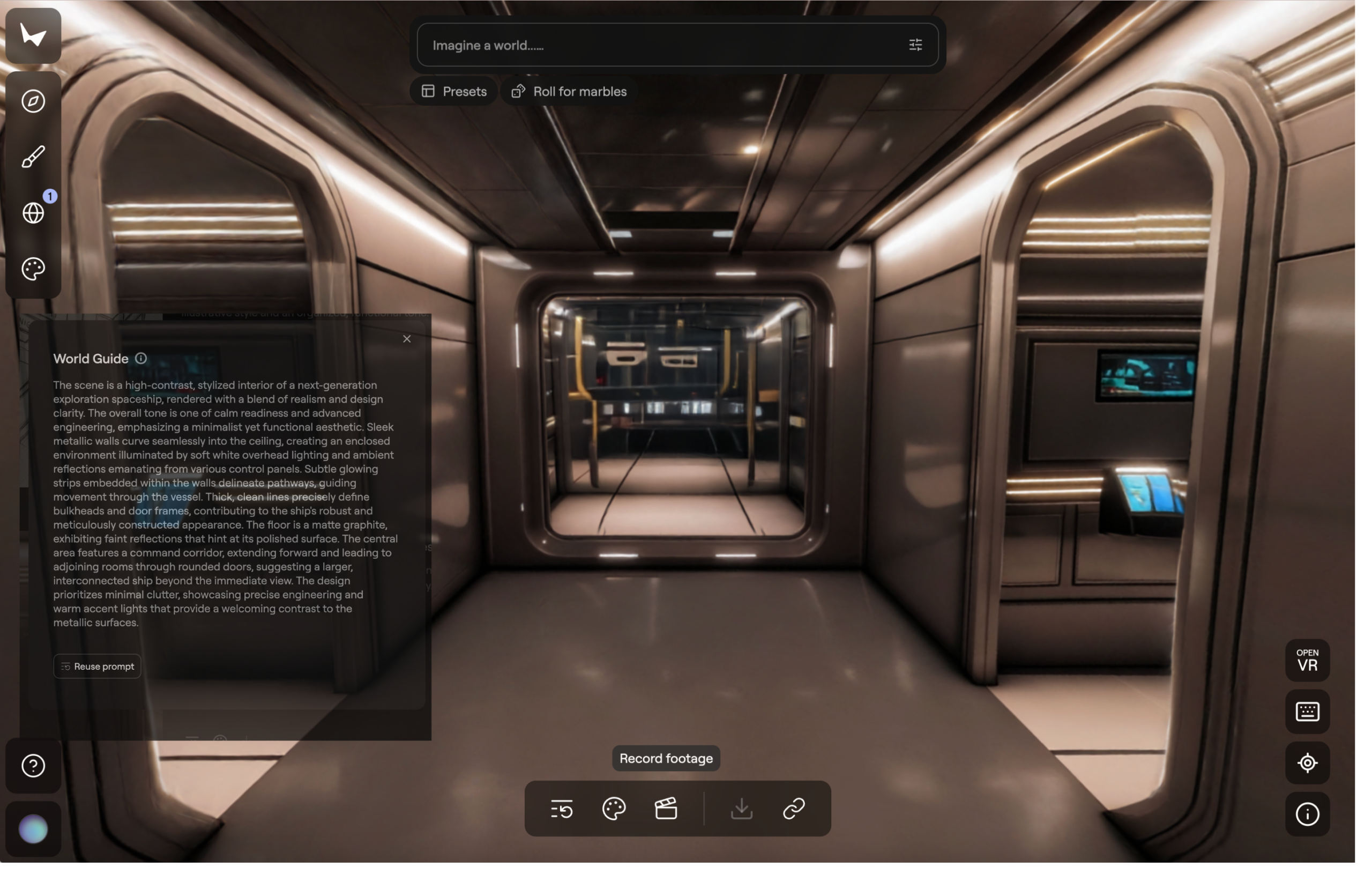
Software design titan Autodesk has committed a substantial $200 million investment to World Labs, an artificial intelligence startup founded by renowned AI researcher Fei-Fei Li. This significant financial backing is set to forge a collaborative path between the two entities, exploring how World Labs’ innovative "world models"—AI systems capable of generating and reasoning about immersive 3D environments—can seamlessly integrate with Autodesk’s established suite of design tools. The initial phase of this strategic partnership is slated to focus on applications within the dynamic media and entertainment sector, hinting at a transformative future for digital content creation.
The Architects of Innovation: World Labs and Autodesk
World Labs, which emerged from stealth operations in 2024, quickly made headlines with an initial funding round securing $230 million, valuing the company at $1 billion. Industry reports suggest that the startup is now in discussions to raise further capital at an impressive $5 billion valuation, underscoring the fervent investor confidence in its groundbreaking technology. The investment from Autodesk is reportedly part of a larger, undisclosed funding round for World Labs, further cementing its commercial appeal and technological promise.
At the helm of World Labs is Fei-Fei Li, a distinguished figure in the field of artificial intelligence. A professor at Stanford University and co-director of the Stanford Institute for Human-Centered AI, Li is widely recognized for her pivotal contributions to computer vision, most notably her role in co-creating ImageNet, a vast visual database that revolutionized deep learning. Her vision for World Labs centers on developing "physical AI" that can understand and interact with the geometric, physical, and dynamic principles governing our world, moving beyond the text-centric limitations of many current AI systems.
World Labs’ flagship product, "Marble," introduced in November 2025, exemplifies this vision. Marble empowers users to generate editable and downloadable 3D environments, offering an unprecedented level of control and flexibility in virtual world creation. These "world models" represent a leap forward in AI capabilities, allowing systems not just to describe or predict but to construct and simulate complex digital realities, complete with an inherent understanding of how objects and forces behave within them.
Conversely, Autodesk stands as a venerable giant in the realm of 3D computer-aided design (CAD) software. Its comprehensive portfolio, including industry-standard applications like AutoCAD, Revit, Maya, and Fusion 360, underpins critical workflows across a multitude of sectors. From architecture, engineering, and construction (AEC) to manufacturing and media and entertainment, Autodesk’s platforms are indispensable for designers, engineers, and creators globally. For a company so deeply rooted in the digital representation and creation of the built world, an investment in advanced spatial AI is not merely strategic but a natural and necessary evolution of its core business.
A Strategic Alliance for the Future of Design
The collaboration between Autodesk and World Labs extends beyond a financial transaction. As part of the agreement, Autodesk will assume an advisory role, providing guidance and expertise to the nascent AI firm. The partnership is designed for deep integration, with both companies committing to collaborate at the "research and model level." This signifies a joint effort to push the boundaries of what is possible when sophisticated generative AI meets established design infrastructure.
Fei-Fei Li articulated the shared ambition in a recent statement, emphasizing that Autodesk has historically empowered individuals to think spatially and address real-world challenges. She noted, "Together, we share a clear purpose: building physical AI that augments human creativity and puts more powerful tools in the hands of designers, builders, and creators." This statement underscores a mutual commitment to enhancing human capabilities rather than replacing them, leveraging AI as an intelligent co-pilot in the creative process.
Daron Green, Autodesk’s chief scientist, provided further insight into the nascent stages of the partnership. While the precise mechanics of integration are still being ironed out, Green outlined compelling potential use cases. He envisioned scenarios where a customer might initiate a design concept using a world-model-based sketch within World Labs—for instance, sketching an office layout—and subsequently transition to Autodesk’s tools for meticulous detailing of specific elements, such as the design of individual desks. Conversely, designers could take an object meticulously crafted in an Autodesk platform and seamlessly integrate it into a dynamically generated environment created through World Labs’ prompts, instantly contextualizing and visualizing its placement. Green clarified that the agreement explicitly excludes data sharing, a crucial detail safeguarding intellectual property for both entities.
The Frontier of Immersive Experiences: Entertainment as a Starting Point
The initial focus of this collaborative endeavor is squarely on media and entertainment use cases. This strategic choice is not coincidental; the entertainment industry, particularly gaming, virtual reality (VR), augmented reality (AR), and film visual effects (VFX), exhibits a voracious demand for sophisticated 3D content generation and immersive experiences. The ability to rapidly prototype, iterate, and populate complex digital worlds with realistic dynamics holds immense value for content creators striving for unparalleled realism and interactivity.
World models, with their capacity to understand and simulate physical environments, are uniquely positioned to revolutionize this sector. This trend is not isolated; other prominent AI research entities, including Google DeepMind and Runway, are also actively developing their own world models with an initial go-to-market strategy centered on gaming and interactive entertainment. The convergence of these efforts highlights a collective recognition of the entertainment industry as a fertile ground for demonstrating the power and potential of generative spatial AI.
Autodesk already boasts a strong foothold within the media and entertainment landscape, with its Maya and 3ds Max software being industry staples for 3D animation, modeling, simulation, and rendering. The company has also been actively developing and training models for character animation, a domain closely related to the principles of world modeling. Green elaborated on this synergy, explaining that Autodesk’s character models already embody an understanding of physical constraints, such as an animal responding to terrain or time. He envisioned a powerful combination where World Labs’ environmental generation could be integrated, allowing designers to "not just animate the dog, but give it a world within which it can now interact," thereby creating richer, more dynamic narratives and experiences.
Beyond Entertainment: Broader Industry Implications
While entertainment serves as the initial proving ground, the broader implications of this partnership, and the advancement of world models, extend far into Autodesk’s other core markets: architecture, engineering, construction, and manufacturing.
In the Architectural, Engineering, and Construction (AEC) sector, world models could herald a new era of generative design and simulation. Imagine architects rapidly prototyping entire building complexes or even urban districts, with AI systems instantly assessing structural integrity, energy efficiency, and environmental impact based on real-world physics. Urban planners could simulate traffic flows, pedestrian movements, and even microclimates within proposed developments, leading to more sustainable and human-centric designs. The traditionally siloed workflows of AEC could be integrated into a holistic, dynamic digital twin, enabling real-time collaboration and optimization from conceptualization to construction.
For manufacturing and product design, the potential is equally transformative. Engineers could leverage world models to simulate product performance under diverse operational conditions, conducting virtual stress tests and optimizing designs without the need for expensive physical prototypes. Entire factory layouts, complex machinery, or even supply chain logistics could be designed and optimized within intelligent, dynamic virtual environments, identifying inefficiencies and potential bottlenecks before a single component is fabricated. This could drastically reduce development cycles and bring more innovative, robust products to market faster.
This collaboration also aligns with Autodesk’s broader strategic push to embed advanced AI capabilities across its entire software portfolio. A key initiative in this effort is the development of "neural CAD," a pioneering form of generative AI model. Unlike traditional CAD, which relies on explicit geometric instructions, neural CAD models are trained on vast datasets of geometric data, enabling them to "reason" about components and entire systems. This allows them to generate functional 3D models, not merely static images, with an intrinsic understanding of how these designs would operate in the physical world.
Autodesk has already begun integrating its neural CAD models into its product design and architecture offerings, marking a significant step towards more sophisticated spatial intelligence. However, World Labs’ world models offer a crucial extension to this capability. While neural CAD excels at generating detailed individual design files, world models promise to provide the holistic digital representations of the physical world into which these individual designs can be placed, interacted with, and understood in a broader context. Green envisions a future where diverse AI systems—including large language models (LLMs) for semantic understanding, world models for environmental context, and neural CAD for precise object generation—will converge and collaborate, leading to unprecedented improvements in design and engineering solutions for Autodesk’s diverse customer base.
Market Dynamics and the Future of Spatial AI
The investment by Autodesk in World Labs is a clear indicator of the burgeoning significance of generative AI in 3D content creation and simulation. The market for spatial AI is poised for exponential growth, driven by advancements in computational power, improved algorithms, and the increasing demand for immersive digital experiences and highly accurate digital twins of physical assets.
However, this frontier also presents challenges. The computational demands for training and running sophisticated world models are immense, requiring significant infrastructure. Data acquisition and curation for these models are complex, and ethical considerations surrounding bias in generated content, intellectual property rights, and the potential for misuse of highly realistic simulations will require careful navigation.
Despite these hurdles, the opportunities are profound. World models have the potential to democratize 3D content creation, making sophisticated design tools accessible to a broader audience. They can dramatically accelerate design cycles across industries, fostering innovation at an unprecedented pace. Furthermore, they promise to unlock entirely new forms of simulation, interaction, and understanding, potentially transforming how we design our cities, engineer our products, and even train AI agents themselves. The long-term social and cultural impact could be immense, blurring the lines between physical and digital realities and fundamentally altering human-computer interaction.
As Fei-Fei Li articulated, "If AI is to be truly useful, it must understand worlds, not just words." She emphasized that worlds are governed by geometry, physics, and dynamics, and the reconciliation of the semantic, spatial, and physical realms represents the "next great frontier of AI." This partnership between Autodesk and World Labs is not merely an investment; it is a collaborative leap towards realizing this ambitious vision, setting the stage for a new paradigm in how humanity designs, builds, and interacts with both digital and physical realities.