Amir Mahmud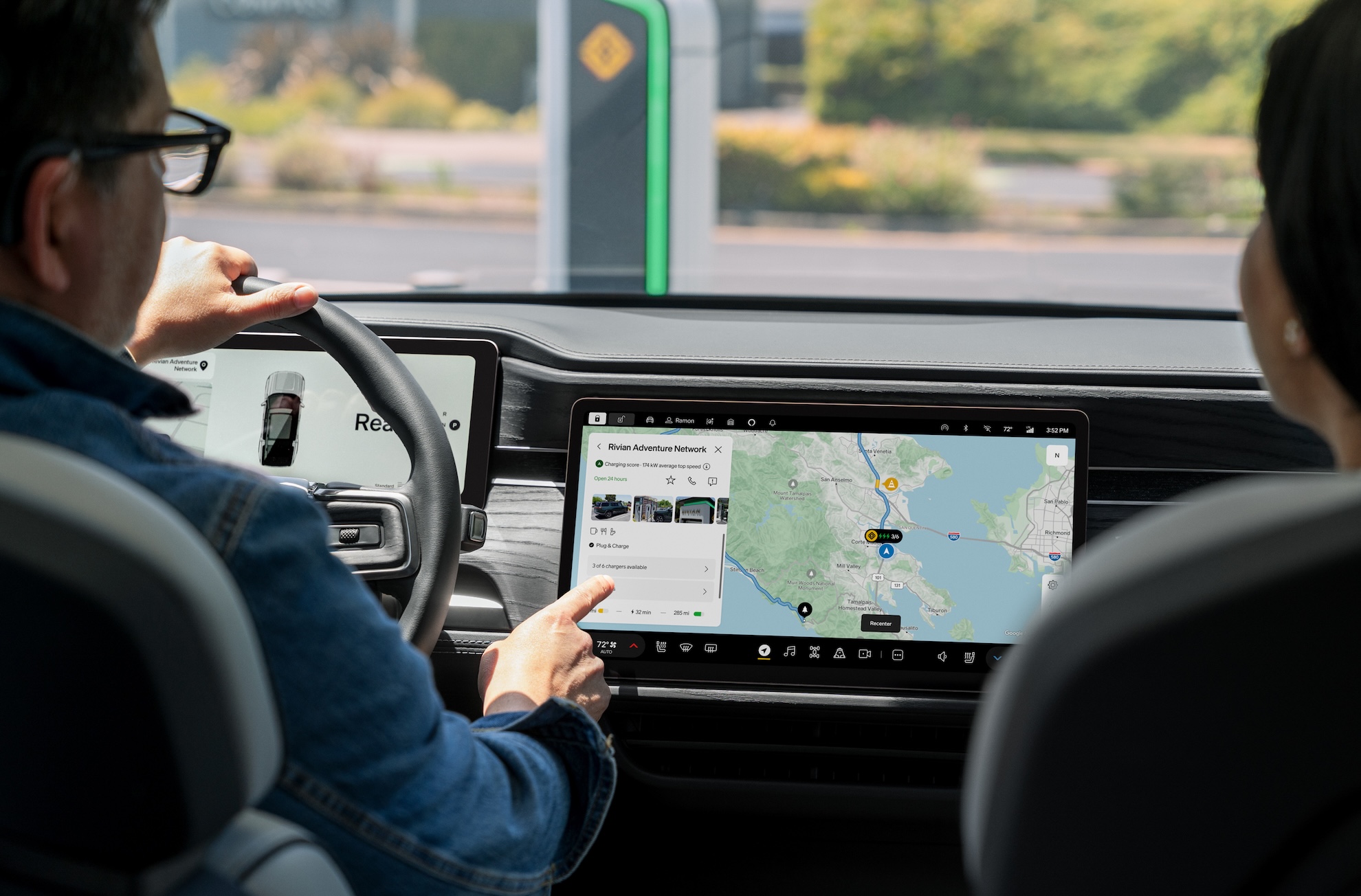
In a pivotal year for the electric vehicle (EV) manufacturer, Rivian Automotive, Inc. defied a challenging automotive sales environment in 2025, reporting an 8% increase in its total annual revenue. While the company is primarily recognized for its distinctive electric trucks and SUVs, this financial growth was unexpectedly spearheaded not by vehicle deliveries, but by a substantial surge in its software and services division, signaling a significant strategic pivot within the evolving automotive industry.
A Strategic Financial Pivot
Rivian disclosed its 2025 financial results, revealing a total revenue of $5.38 billion, an appreciable increase from the $4.97 billion recorded in the preceding year. However, a closer examination of the figures uncovers a more complex narrative beneath the surface of overall growth. The company’s core automotive revenue experienced a 15% decline, settling at $3.8 billion for the year. This contraction was attributed to a combination of factors, including a $134 million reduction in regulatory credit sales and lower overall vehicle deliveries, although these headwinds were somewhat mitigated by higher average selling prices for its existing R1T truck and R1S SUV models.
In stark contrast to the automotive segment’s performance, Rivian’s software and services revenue demonstrated remarkable vitality, soaring more than threefold to reach $1.55 billion for the year. This exponential growth was predominantly fueled by a strategic joint venture (JV) established with the Volkswagen Group. The "services" component of this revenue stream, which Rivian does not itemize individually, encompasses a range of offerings such as vehicle repair, trade-in programs, and routine maintenance services. Nevertheless, the substantial majority of this newfound revenue originated from software, specifically from the aforementioned collaboration with Volkswagen. This divergence highlights a critical inflection point for Rivian, as it navigates the demanding landscape of EV manufacturing and seeks diversified revenue streams beyond vehicle sales.
The Volkswagen Partnership: A Game-Changer
The technology joint venture between Volkswagen and Rivian, forged in late 2024, was conceived as a monumental alliance, potentially valued at up to $5.8 billion. This partnership is structured around a series of milestone-based payments, with Rivian successfully achieving a key benchmark in 2025, which triggered a $1 billion payout to the company through a share sale. The essence of this collaboration lies in Rivian’s commitment to supply Volkswagen Group with its proprietary electrical architecture and comprehensive software technology stack.
This strategic alignment saw Rivian receive an initial $1 billion convertible note in 2024, followed by another $1 billion payment in July 2025, underscoring the immediate financial benefits of the partnership. Looking ahead, Rivian is poised to continue receiving significant capital injections from Volkswagen Group through 2027. Claire McDonough, Rivian’s Chief Financial Officer, elaborated during the company’s earnings call that an additional $2 billion in capital is anticipated in 2026. Approximately $1 billion of this sum is contingent upon the successful completion of rigorous winter testing, which was already underway at the time of the announcement. The remaining $1 billion is structured as nonrecourse debt, with its receipt expected in October of the same year. This influx of capital from Volkswagen represents a crucial financial lifeline for Rivian, providing essential liquidity and validation for its technological prowess, particularly as the company continues its capital-intensive journey toward sustained profitability.
Rivian’s Software Stack: A Valuable Asset
The decision by Volkswagen, one of the world’s largest automotive conglomerates, to invest heavily in Rivian’s software and electrical architecture speaks volumes about the perceived quality and potential of Rivian’s technological ecosystem. In an industry increasingly defined by "software-defined vehicles," the underlying digital infrastructure is becoming as critical as the physical hardware. Rivian’s approach to software, which integrates everything from infotainment and advanced driver-assistance systems (ADAS) to battery management and over-the-air (OTA) update capabilities, offers a cohesive and modern platform.
For Volkswagen, this partnership represents a strategic acceleration of its own software development initiatives, which have historically faced challenges and delays. By leveraging Rivian’s established and proven technology, VW can potentially circumvent lengthy internal development cycles and significantly reduce time-to-market for its next-generation electric vehicles. This collaboration underscores a broader industry trend where traditional automakers are recognizing the value of external innovation, especially from nimble EV startups that have built their platforms from the ground up with software at their core. For Rivian, this not only provides much-needed capital but also establishes a high-margin revenue stream that is less susceptible to the volatile dynamics of vehicle production and sales. It validates the company’s long-term vision of being more than just a car manufacturer, positioning it as a technology provider within the automotive ecosystem.
Navigating the Broader EV Landscape
Rivian’s journey since its founding in 2009 has been characterized by ambition, innovation, and the inherent challenges of launching a new automotive brand. After initially exploring conventional sports cars and then autonomous EVs, the company pivoted to focus on electric adventure vehicles with the R1T pickup truck and R1S SUV, carving out a distinct niche in the premium segment. Major investments from industry giants like Amazon and Ford, coupled with its highly anticipated initial public offering (IPO) in 2021, propelled Rivian into the spotlight as a formidable challenger to established players. The substantial order for electric delivery vans (EDVs) from Amazon further solidified its position in the commercial sector.
However, the period leading up to 2025 saw Rivian, like many EV startups, grapple with significant hurdles. Production ramp-up issues, supply chain disruptions, and the immense capital expenditure required to scale manufacturing facilities have historically plagued new entrants in the automotive space. Simultaneously, the broader EV market began to exhibit signs of maturation, with intense competition, nascent price wars, and a perceived deceleration in adoption rates within certain consumer segments. Against this backdrop, Rivian’s decision to lean into its software capabilities through the Volkswagen partnership proved to be a prescient move, providing a crucial buffer against the capital-intensive nature of vehicle manufacturing and the fluctuating demands of the consumer market. It reflects a growing understanding across the industry that sustainable success in the EV era will require diverse revenue streams and a strong technological foundation.
The Path to Profitability and the R2’s Promise
Despite the significant financial stopgap provided by the Volkswagen joint venture, Rivian’s long-term financial success in 2026 and beyond will largely hinge on the successful rollout and market reception of its next-generation EV, the R2. This new SUV, engineered to be more cost-effective to produce and more accessible in price for consumers, is slated to enter the market by June 2026. The "cheaper to build" aspect is particularly vital for Rivian, which has historically faced the challenge of losing money on every vehicle it manufactures.
The company has dedicated considerable effort to reducing its cost of goods sold (COGS) per unit. Significant progress has been made with the introduction of its second-generation R1T and R1S models. CFO Claire McDonough highlighted that in the fourth quarter of 2025, the company achieved a COGS of $92,000 per unit, representing a $4,000 improvement compared to the third quarter of that year. This marks a notable reduction from the $99,000 COGS per unit reported in the fourth quarter of 2024. Furthermore, Rivian’s total automotive cost of revenue decreased year-over-year from $1.4 billion in Q4 2024 to $898 million in Q4 2025. Conversely, the cost of revenue associated with software experienced a steady increase throughout 2025, reflecting the growing investment and operational expenses in this burgeoning segment.
The R2 SUV, which will initially launch as a dual-motor all-wheel-drive model, is anticipated to further drive down manufacturing costs through optimized design and production processes. Rivian plans to release more comprehensive details about the R2, including its final specifications, on March 12, creating anticipation for a vehicle that could significantly broaden its market appeal.
Rivian’s guidance for 2026 underscores its confidence in the demand for the R2 and its capability to scale production. The company projects vehicle deliveries between 62,000 and 67,000 units in 2026, which could represent an impressive bump of up to 59% from the 42,247 vehicles delivered in 2025. The 2025 delivery figures included both its R1 consumer vehicles and its electric delivery vans (EDVs). CEO RJ Scaringe also indicated expected growth in EDV sales for 2026, driven by the planned introduction of an all-wheel-drive version and a larger battery pack variant, primarily for its key customer, Amazon. These enhancements are designed to unlock specific use cases within Amazon’s extensive logistics network, with Rivian working closely with the e-commerce giant to define requirements.
Future Outlook and Industry Implications
While Rivian is not yet forecasting profitability on an adjusted basis, it is signaling substantial improvements on this front. The company reported a net loss of $3.6 billion in 2025 but projects a significantly reduced adjusted net loss of between $1.8 billion and $2.1 billion for 2026. Capital expenditures for the year are estimated to range from $1.95 billion to $2.05 billion, reflecting ongoing investments in manufacturing expansion and product development.
Rivian’s experience in 2025 offers a compelling case study for the broader automotive industry. It highlights the increasing importance of software and digital services as vital, high-margin revenue streams that can provide stability and growth even when core hardware sales face headwinds. The strategic partnership with Volkswagen not only validates Rivian’s technological investments but also demonstrates a growing trend of collaboration among automakers to share the immense costs and risks associated with developing next-generation EV platforms. As the automotive sector continues its transformative shift towards electrification and digitalization, companies like Rivian are redefining what it means to be a car manufacturer, increasingly blending hardware innovation with a robust, scalable software ecosystem. The success of the R2 and the continued evolution of its software division will be crucial determinants of Rivian’s long-term trajectory in this dynamic landscape.