Amir Mahmud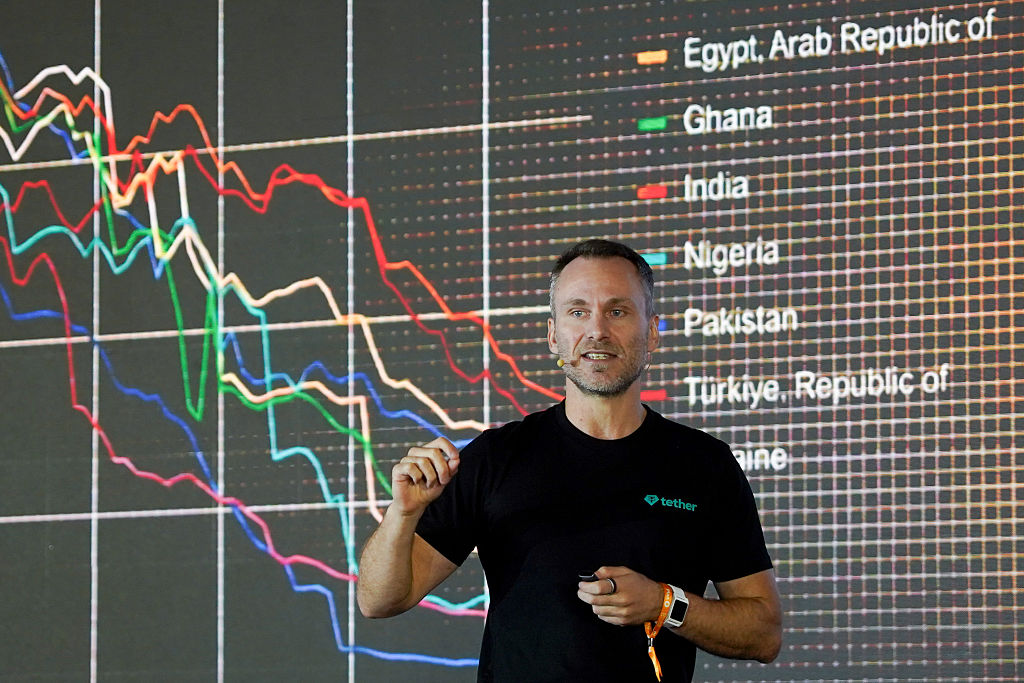
Paolo Ardoino, the chief executive of Tether, has recently embarked on an extensive media campaign, engaging with prominent financial news outlets such as Fortune, Bloomberg, Reuters, and TechCrunch. This high-profile visibility signals a pivotal moment for Tether, the issuer of the world’s largest stablecoin, USDT, as it seeks to redefine its image and expand its influence beyond the volatile cryptocurrency markets. The concerted media effort underscores a strategic shift, moving away from a historically reclusive stance to a more open, compliant, and diversified global enterprise.
A New Regulatory Chapter: USAT’s Debut
At the heart of Tether’s renewed public engagement is the recent launch of USAT, a new stablecoin explicitly designed to adhere to burgeoning U.S. federal regulations. Issued through Anchorage Digital Bank, a federally chartered institution, USAT marks a significant departure for Tether, which has traditionally operated largely outside direct U.S. regulatory frameworks. This move positions USAT as a direct competitor to established players like Circle’s USDC, which has long been a favorite among institutional investors due to its perceived regulatory compliance and transparency.
The introduction of USAT coincides with a broader acceleration in the stablecoin sector. Major financial institutions, including Fidelity Investments, JPMorgan Chase, and PayPal, have recently unveiled their own stablecoin offerings or initiatives, signaling a growing recognition of these digital assets within traditional finance. Stablecoins, which are cryptocurrencies designed to maintain a stable value relative to a fiat currency (typically the U.S. dollar) or other assets, serve as crucial bridges between the volatile crypto ecosystem and conventional financial systems. Their utility spans international remittances, decentralized finance (DeFi) applications, and a hedge against hyperinflation in unstable economies. Tether’s decision to embrace U.S. regulation with USAT represents a calculated attempt to capture a larger share of the U.S. market and attract institutional adoption, an area where it previously faced significant skepticism.
The USDT Phenomenon: Financial Inclusion and Market Dominance
Despite its controversial past, Tether’s flagship product, USDT, has achieved unparalleled market dominance. With a market capitalization exceeding that of all other stablecoin competitors combined and circulating globally at approximately $187 billion, USDT has cemented its position as a cornerstone of the digital economy. The platform boasts an impressive user base of some 536 million individuals, exhibiting a growth rate akin to major social media platforms, adding approximately 30 million new users each quarter.
Ardoino champions USDT as a groundbreaking tool for financial inclusion, particularly for populations grappling with severe currency devaluation and limited access to traditional banking services. He highlights the dramatic depreciation of local currencies in countries like Argentina, where the peso has lost over 94% of its value against the U.S. dollar in five years, and Haiti, where average daily wages are barely above a dollar. For individuals in these regions, USDT offers a stable, accessible digital dollar, enabling them to preserve wealth, conduct transactions, and participate in a global economy previously out of reach. This perspective frames Tether not merely as a tech company but as a force for social impact, providing financial stability to hundreds of millions worldwide who have been historically underserved by conventional financial systems. The ability to bypass cumbersome and expensive traditional banking channels for international transfers and savings represents a profound cultural and economic shift in these communities.
Addressing the Shadows: Compliance and Countering Illicit Activity
Tether’s journey to mainstream acceptance has been fraught with challenges, largely stemming from persistent allegations of opacity and insufficient reserves in its early years. For a significant period, Ardoino and his company largely avoided direct engagement with U.S. authorities, operating from offshore locations as regulatory scrutiny intensified. Publications like The Economist even labeled Tether a "money launderer’s dream," citing instances of its alleged use in facilitating illicit financial activities, including those involving Russian operatives and drug gangs. These accusations painted a picture of a company operating in the shadows, potentially enabling nefarious actors.
Ardoino, however, strongly refutes the notion that Tether is a haven for criminals. While acknowledging that any widely used tool can be misused, he dismisses the amounts highlighted in critical reports as "a drop in the ocean" compared to the vast majority of legitimate transactions. He emphasizes Tether’s proactive stance in collaborating with law enforcement, revealing that the company now works with nearly 300 agencies across over 60 countries. Ardoino contends that Tether’s blockchain technology offers superior traceability compared to physical cash. He asserts that while billions in cash can circulate untraced, Tether has demonstrated the ability to swiftly freeze funds in cooperation with agencies like the U.S. Department of Justice, FBI, and Secret Service, adhering to sanctions enforced by the Office of Foreign Assets Control (OFAC). According to Ardoino, Tether has frozen approximately $3.5 billion in tokens, a substantial portion of which belonged to victims of scams and hacks. He cites an example from 2023 where Tether proactively identified and froze $225 million tied to a "pig-butchering scam," highlighting its effectiveness where traditional financial systems reportedly failed. This commitment to compliance and anti-money laundering (AML) efforts represents a concerted effort to shed its historical reputation and establish credibility with global regulators.
The Stability Question: Debates Over Reserves and Risk
The fundamental promise of a stablecoin rests on its ability to maintain a consistent peg to its underlying asset, typically the U.S. dollar, backed by adequate reserves. Tether’s reserve management has been a frequent subject of debate and scrutiny. Just months prior to Ardoino’s media tour, S&P Global Ratings downgraded USDT’s stability assessment to "weak," reigniting concerns about its backing. Ardoino, however, dismisses S&P’s assessment, drawing a comparison to the rating agency’s failure to foresee the 2008 subprime mortgage crisis, implying a lack of credibility.
The inherent fragility of stablecoins was starkly illustrated in May 2022 with the catastrophic collapse of TerraUSD (UST), an algorithmic stablecoin that lost its dollar peg and wiped out $40 billion in value almost overnight. This event triggered widespread panic across the crypto markets, leading many hedge funds to bet against Tether, anticipating a similar fate. During this tumultuous period, Tether faced immense pressure, successfully redeeming $7 billion in 48 hours and a total of $20 billion (approximately 25% of its reserves) within 20 days. Ardoino proudly states that no traditional bank could withstand such a rapid outflow, asserting Tether’s resilience. He also subtly critiques competitors, alluding to Circle’s USDC briefly losing its dollar peg during the Silicon Valley Bank collapse in 2023 due to a $3 billion exposure to the failed institution. This incident allowed Tether to position itself as a more robust and reliable alternative, capable of weathering systemic shocks.
Currently, Tether claims to hold $30 billion in excess reserves beyond what is required to back all outstanding USDT tokens, a significant buffer intended to instill confidence. These substantial reserves are managed by Cantor Fitzgerald, a prominent Wall Street firm led by Howard Lutnick. Lutnick has publicly vouched for Tether’s legitimacy, a stance that raises questions given his dual role as U.S. Commerce Secretary, creating a potential financial interest that intersects with his influence over American commerce policy. Ardoino uses this robust reserve strategy to argue that Tether is inherently safer than traditional fractional reserve banking systems, where only a small percentage of deposits are held in reserve, and the vast majority is lent out. He contends that Tether’s full backing ensures its stability even in extreme market downturns, like a hypothetical collapse of Bitcoin.
The Profit Engine and Policy Implications
Tether’s colossal reserves, largely invested in U.S. Treasury bills and other low-risk assets, generate substantial profits through yield. In 2025, Tether reportedly earned over $15 billion in profit, a figure it does not share with USDT holders, unlike interest-bearing savings or checking accounts in traditional finance. Ardoino explains this strategy by distinguishing between the needs of its primary global user base and typical American consumers. For users in countries experiencing severe inflation, the core value proposition of USDT is capital preservation, not yield generation. A 4% annual interest rate, for instance, would be negligible for someone whose local currency loses 3% of its value daily. He posits that while U.S. dollar stablecoins function as savings accounts for much of the world, Americans tend to view them more akin to checking accounts, where interest is less expected.
This business model could be further solidified by legislative developments. The CLARITY Act, a piece of legislation currently making its way through Congress, proposes to prohibit stablecoin issuers from paying interest to holders. This measure, supported by banking groups keen to prevent deposits from migrating from traditional banks to stablecoin platforms, would effectively codify Tether’s existing practice. For competitors like Circle, who have explored or offered yield programs, such legislation could eliminate a key competitive differentiator.
Beyond the Digital Dollar: Diversification into Gold, AI, and Infrastructure
Ardoino’s ambitions for Tether extend far beyond its dominant stablecoin offerings. The company has aggressively diversified its portfolio, venturing into various sectors. In 2020, Tether launched Tether Gold (XAUT), a token backed by physical gold, which now boasts $2.6 billion in circulation. Beyond this, Tether has become a colossal private gold holder, accumulating approximately 140 tons of gold valued at around $24 billion, a position that Ardoino likens to becoming "one of the biggest gold central banks in the world." He sees this as an opportunity to leverage blockchain technology to re-establish gold’s historical role as a liquid currency, not just a store of value.
More recently, Tether has made a significant foray into artificial intelligence (AI) with the launch of Qvac, a decentralized AI platform. Inspired by Isaac Asimov’s "The Last Question," Qvac aims to democratize access to powerful AI tools for the billions of people globally who cannot afford subscription-based centralized AI services. Ardoino envisions Qvac running locally on smartphones, predicting that within three to five years, advanced smartphone technology will be ubiquitous in regions like Africa and South America, enabling up to 80% of potential AI use cases. This initiative ties back to Tether’s broader financial inclusion narrative, aiming to empower the digitally underserved.
The scope of Tether’s investments reveals a strategy resembling that of a sovereign wealth fund. Fortune reported that Tether has committed over $1 billion to Neura, a German AI robotics firm, and $775 million to the social media platform Rumble, alongside hundreds of millions more invested in satellites, data centers, and agriculture. Even a stake in the Juventus soccer club highlights the breadth of its diversified holdings. Ardoino insists these seemingly disparate investments are interconnected, all serving the company’s motto: "to be the stable company." He describes an interlocking ecosystem where agriculture can be digitalized, gold markets revolutionized, and telecommunications made peer-to-peer. This grand vision positions Tether as a foundational pillar for a future where stability, powered by blockchain and decentralized technologies, underpins various essential services, ultimately aiming to change the lives of hundreds of millions.
Navigating the Geopolitical Landscape
The political landscape surrounding cryptocurrencies, particularly stablecoins, remains dynamic and often contentious. Past U.S. administrations have viewed Tether with suspicion, and the potential for future regulatory shifts or political challenges persists. Ardoino acknowledges these risks but expresses optimism that Tether’s mission of financial inclusion will resonate across the political spectrum. He believes that bringing 536 million people into the dollar economy is a goal that both Republicans and Democrats should support, framing the ongoing dialogue as a matter of "education" for policymakers.
Tether’s Enduring Vision
Paolo Ardoino’s recent media blitz and the unveiling of Tether’s ambitious diversification strategy signal a company determined to shed its controversial past and secure its future as a central player in the global digital economy. From its origins as a somewhat opaque stablecoin issuer, Tether is aggressively transforming into a multifaceted technology conglomerate, intertwining financial stability with advancements in AI, infrastructure, and even traditional industries. Its journey underscores the evolving nature of the cryptocurrency landscape, where innovation, regulation, and market influence constantly reshape the contours of finance and technology. As Tether continues to expand its reach and redefine its identity, its ability to navigate complex regulatory environments, manage public perception, and deliver on its expansive vision will determine its ultimate legacy.