Amir Mahmud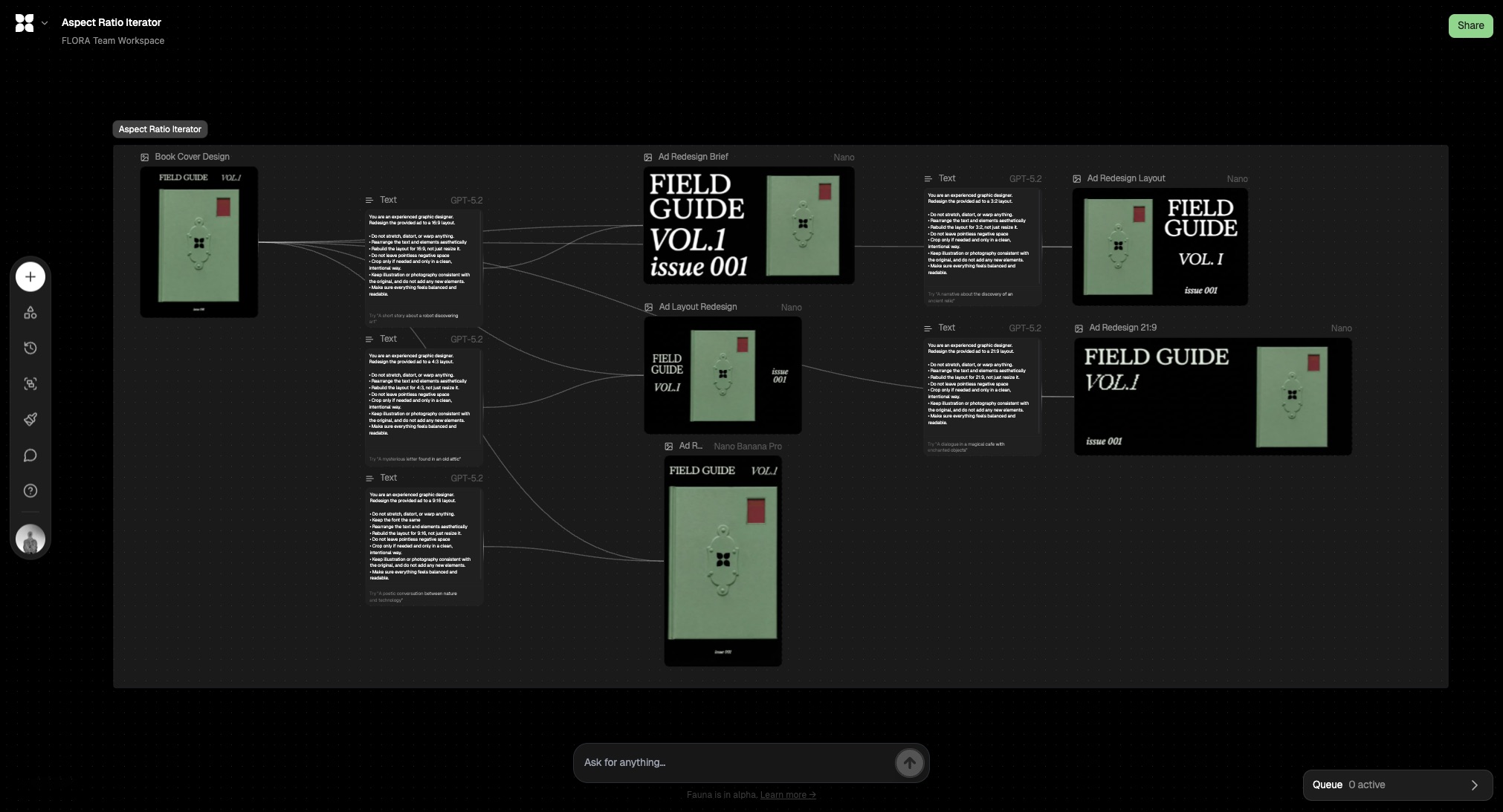
Flora, an emerging leader in the realm of AI-powered design tools, has announced a significant milestone: the successful closure of a $42 million Series A funding round. This substantial investment, spearheaded by Redpoint Ventures, positions the startup to accelerate its mission of revolutionizing creative workflows through its distinctive node-based interface. The platform, already adopted by prominent entities such as e-commerce giant Alibaba, fintech firm Brex, renowned creative agency Pentagram, and entertainment powerhouse Lionsgate, is quickly gaining traction among professionals seeking to harness generative artificial intelligence in their design processes. The funding brings Flora’s total capital raised to $52 million, underscoring strong investor confidence in its innovative approach.
The Dawn of Generative Design
The landscape of design software has undergone a profound transformation, moving from the static, pixel-by-pixel manipulation tools of the late 20th century to the dynamic, collaborative cloud platforms that defined the 2010s. Now, the advent of generative artificial intelligence marks another pivotal shift, fundamentally altering how creative professionals conceive, iterate, and produce visual and multimedia content. For decades, companies like Adobe have dominated the creative suite, providing comprehensive tools for graphic design, video editing, and illustration. More recently, platforms like Figma and Canva disrupted the industry by offering intuitive, cloud-native solutions that fostered real-time collaboration and accessibility.
However, the explosion of generative AI models in the mid-2020s introduced an entirely new paradigm. These models, capable of producing novel content from simple text prompts or multimodal inputs, challenged the traditional linear workflows inherent in most existing design software. While established players such as Adobe, Figma, and Canva have rapidly integrated AI features into their product offerings—ranging from AI-assisted content generation to smart editing capabilities—a growing sentiment among newer startups is that truly leveraging the full potential of generative AI requires a re-imagination of the user interface itself. This perspective posits that merely bolting AI onto existing frameworks might limit the exploration of AI’s most powerful capabilities, advocating instead for "AI-native" tools designed from the ground up to accommodate the non-linear, iterative nature of generative processes.
Flora’s Distinctive Approach: Node-Based AI Creativity
Flora distinguishes itself in this evolving market through its innovative application of a node-based interface, a paradigm long familiar to professionals in complex creative fields like visual effects, 3D animation, and game development. In these sectors, node-based editors are prized for their ability to manage intricate systems, visualize dependencies, and enable non-destructive experimentation. Flora brings this powerful architectural concept to generative AI, creating a dynamic canvas where users can orchestrate and visualize the entire creative workflow.
The platform allows designers to initiate creative projects using a variety of multimodal inputs, including images, text prompts, or video. Each input or subsequent modification generates a new "node" on Flora’s infinite canvas. These nodes are not isolated elements; rather, they are mapped in relation to one another, forming a tractable flow of interconnected ideas and iterations. This visual mapping offers an unprecedented level of clarity and control over the generative process. For instance, a designer embarking on a marketing video project might begin by feeding reference images and descriptive text prompts into Flora. The system then generates initial concepts, represented as distinct nodes. From any one of these nodes, the designer can "branch out," introducing new prompts or parameters to explore contrasting styles, moods, or content variations. This non-linear exploration allows for rapid prototyping and comparison, enabling designers to quickly identify the most effective creative direction without losing sight of previous iterations.
This node-based methodology is particularly potent in the context of generative AI because it naturally accommodates the iterative and exploratory nature of AI-driven content creation. Instead of laboriously undoing and redoing work, designers can effortlessly experiment with multiple generative outcomes simultaneously, comparing and refining various branches of their creative concept. This approach transforms the creative process from a linear path to a sprawling, interconnected network of possibilities, empowering designers to manage complexity and harness the vast generative power of AI with unprecedented fluidity and insight. The analytical commentary suggests that by externalizing the creative thought process onto a visual canvas, Flora not only streamlines iteration but also fosters a deeper understanding of how AI models respond to different inputs, ultimately enhancing the designer’s ability to guide and refine AI-generated content.
A Visionary Founder’s Journey
At the heart of Flora’s innovative vision is its CEO and founder, Weber Wong, whose unique background provides a compelling foundation for the company’s trajectory. Wong’s career path is a testament to the convergence of disparate disciplines that often fuels groundbreaking innovation. He began his professional life in the venture capital world, gaining invaluable insight into market dynamics and technological trends as an investor at Menlo Ventures. This experience provided him with a keen understanding of emergent opportunities and the mechanics of scaling a tech enterprise.
However, Wong’s intellectual curiosity led him to a pivotal transition: he enrolled in New York University’s prestigious Interactive Telecommunications Program (ITP). The ITP is renowned for its interdisciplinary curriculum, which deliberately fuses technology with art, design, and media. This environment proved to be fertile ground for the genesis of Flora, as Wong’s time at ITP allowed him to explore the creative potential of nascent technologies without the immediate pressures of market commercialization. It was during this period, in 2024, that Flora’s alpha version was first conceptualized and launched as part of a course project, demonstrating the practical application of his theoretical explorations. A more stable, public-facing version of the tool was subsequently released in 2025, marking its official entry into the competitive design software market.
Wong articulates his foundational insight as a realization that the "generative computing paradigm" necessitates a completely new creative interface. He draws a compelling parallel to the era of personal computing, where companies like Adobe emerged to provide tools for precise control over every pixel to create individual pieces of media. In the current era, where AI models can generate entire media assets autonomously, Wong argues that the creative opportunity shifts from pixel-level control to designing the entire creative workflow itself. This vision posits Flora not merely as another design tool, but as a meta-tool for orchestrating diverse AI models and creative processes within a single, coherent environment.
Navigating a Rapidly Evolving Market
Flora enters a market that is not only highly competitive but also undergoing rapid and continuous evolution due to the relentless pace of AI innovation. The emergence of generative AI has created a vibrant ecosystem of "AI-first" startups, each vying to capture a share of the burgeoning creative technology market. This competitive intensity is underscored by recent high-profile acquisitions and significant funding rounds within the sector. In a clear signal of market consolidation and strategic interest, OpenAI acquired Sequoia-backed AI design startup Visual Electric in October of the preceding year. Similarly, Figma, a key player in collaborative design, expanded its capabilities by acquiring node-based editor Weavy around the same time. Further illustrating the robust investor appetite, Krea, another startup utilizing a node-based editor, successfully raised an impressive $83 million in April, achieving a valuation of $500 million.
These developments highlight a dual trend: on one hand, established technology giants are aggressively integrating AI capabilities into their existing platforms to maintain relevance and competitive edge; on the other, nimble startups are pioneering entirely new paradigms tailored specifically for generative AI workflows. Flora’s success in securing significant funding amidst such intense competition speaks to the perceived uniqueness and strategic value of its node-based approach. The analytical commentary suggests that Flora’s differentiation lies in its dedicated focus on an "orchestration layer" for AI models, rather than simply generating content. This positions it not necessarily as a direct competitor to every AI feature within Adobe or Figma, but as a distinct platform for managing complex, multi-modal generative projects. The market recognizes that while generative AI offers immense potential, managing the sheer volume of iterations and variations it produces is a significant challenge that dedicated tools like Flora are designed to address.
Democratizing Design and Future Horizons
One of Flora’s core tenets is the democratization of design, making sophisticated generative AI capabilities accessible to a broader audience beyond highly specialized creative professionals. While the tool’s advanced features cater to agencies and enterprise clients, its intuitive design aims to empower business owners, individual content creators, and even casual users to leverage AI for their visual and multimedia needs. Flora’s pricing structure, starting at $16 per month for annual plans and scaling for larger organizations, reflects this commitment to accessibility.
However, the introduction of novel design paradigms, particularly those leveraging complex AI, often presents challenges in user adoption. Weber Wong acknowledges that for tools like Flora to achieve widespread popularity, there must be a significant focus on user education. To address this, Flora is deploying creative professionals to work directly with client organizations, providing guidance and training to help users effectively integrate Flora into their existing workflows and unlock its full potential. This hands-on approach is crucial for bridging the gap between innovative technology and practical application, ensuring that users can confidently navigate the new possibilities offered by generative AI.
With the newly secured $42 million, Flora has outlined ambitious plans for strategic growth and product development. A significant portion of the funding will be allocated to scaling its enterprise sales capabilities, allowing the company to reach a wider base of corporate clients and creative agencies. Simultaneously, Flora intends to intensify its marketing efforts to enhance brand awareness and articulate its unique value proposition in a crowded market. On the product front, the company is committed to building better creative controls, giving designers more granular command over AI-generated outputs. Crucially, Flora also plans to integrate traditional editing capabilities directly into its platform. This strategic move aims to eliminate the need for users to switch between Flora and other software to finalize their projects, thereby offering a more seamless and integrated end-to-end creative experience. The startup currently maintains a lean team of 25 individuals but plans to aggressively expand its headcount, potentially doubling or tripling its workforce by the end of the year, to support these ambitious growth initiatives.
Investor Confidence and Strategic Growth
The substantial investment in Flora underscores a strong belief among its backers in the company’s vision and market potential. Alex Brad of Redpoint Ventures, the lead investor in the Series A round, expressed particular enthusiasm for Flora’s elegant design and its remarkable ease of use, which allows anyone to quickly grasp its functionalities. Brad drew a compelling parallel between Flora’s mission and Figma’s historical impact on product design, noting that Flora is similarly democratizing the design process and expanding participation through its approachable and collaborative platform. This endorsement from a leading venture capital firm highlights Flora’s potential to not only innovate technologically but also to reshape industry practices.
From a broader market perspective, Brad emphasized Flora’s capacity to influence a wide array of creative processes across diverse industries. He identified significant opportunities in sectors such as fashion, advertising, photography, and branding, where the demand for rapid content generation, iterative design, and efficient workflow management is constantly growing. The ability of Flora’s platform to streamline these processes and empower creative professionals to explore vast possibilities with AI positions it as a transformative tool for these industries.
The Series A round saw participation from a distinguished group of investors, reflecting widespread confidence in Flora’s future. Notable individuals and firms included Guillermo Rauch, CEO of Vercel; Justin Kan, co-founder of Twitch; Emery Wells, CEO of Frame.io; Mike Volpi, General Partner at Hanabi Capital; Menlo Ventures; a16z Games; Fal co-founders Gorkem Yurtseven, Burkay Gur, and Batuhan Taskaya; Long Journey Ventures; Cyan Banister; Matt Hartman, Managing Partner at Factorial Capital; and Gabe Whaley, founder of MSCHF. This diverse coalition of strategic investors, combining industry leaders with experienced venture capitalists, not only provides financial backing but also offers invaluable strategic guidance and network access, further strengthening Flora’s position as it embarks on its next phase of growth. With total funding now standing at $52 million, Flora is well-capitalized to execute its vision and solidify its place at the forefront of AI-powered creative innovation.