Amir Mahmud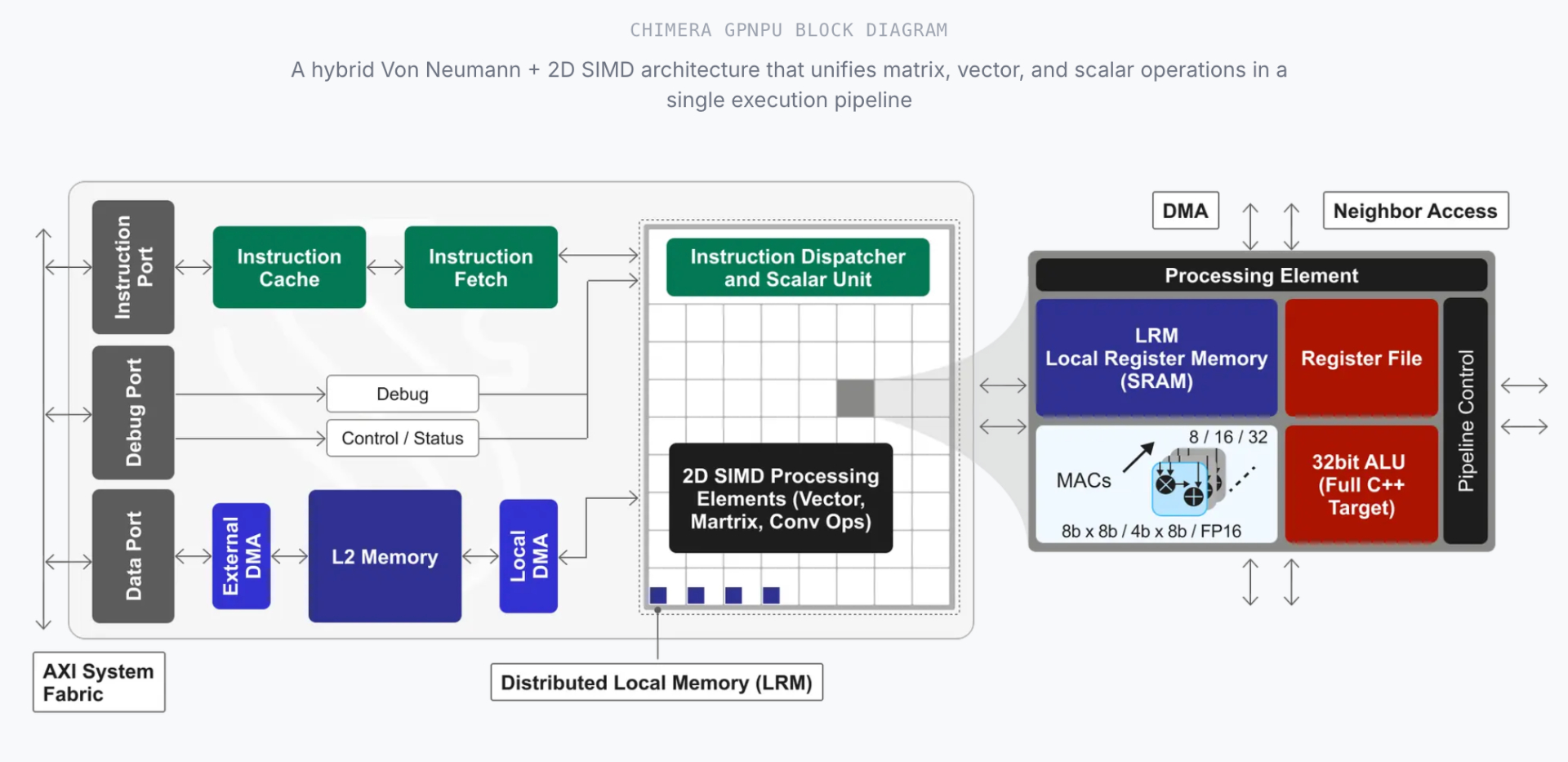
A significant transformation is underway in the artificial intelligence landscape, as companies and governments increasingly seek alternatives to centralized cloud infrastructure for AI operations. This paradigm shift, driven by a desire to curtail escalating costs and bolster national technological independence, is creating fertile ground for innovators like Quadric. The chip-IP startup, founded by individuals with a background in early bitcoin mining, is at the forefront of this movement, providing technology that enables sophisticated AI inference directly on devices, extending its reach from automotive applications into laptops and diverse industrial equipment. This strategic pivot is yielding substantial returns for the San Francisco-based company, which also maintains an office in Pune, India.
The Shifting Landscape of Artificial Intelligence
The journey of artificial intelligence has been marked by several pivotal moments, from its theoretical origins in the mid-20th century to the deep learning revolution of the 2010s. For years, the prevailing model for deploying advanced AI, particularly large language models (LLMs) and complex neural networks, has been through centralized cloud computing. Giants like Amazon Web Services, Microsoft Azure, and Google Cloud have built massive data centers, offering scalable compute power that allowed businesses to access cutting-edge AI without the prohibitive upfront investment in hardware. This cloud-centric approach, spearheaded by advancements in specialized processors like NVIDIA’s GPUs and supported by extensive software ecosystems like CUDA, facilitated the rapid development and deployment of AI applications across various sectors.
However, the advantages of cloud AI come with inherent challenges. The sheer volume of data processed and the continuous demand for high-performance computing translate into considerable operational expenses, encompassing not just compute time but also data transfer and storage. Furthermore, relying on remote servers introduces latency, a critical concern for applications requiring real-time responses, such as autonomous vehicles or industrial robotics. Perhaps most significantly, the centralized model raises questions of data privacy, security, and national sovereignty. For sensitive data or applications deemed critical infrastructure, the idea of processing information on servers potentially located in foreign jurisdictions or controlled by foreign entities has become a growing concern for governments and large corporations globally.
This confluence of factors has spurred a vigorous exploration of edge AI, or on-device inference. Edge AI involves deploying AI models directly onto local devices – be it a smartphone, a smart camera, a factory robot, or a personal computer – allowing them to perform computations without constant reliance on the cloud. This decentralized approach promises lower latency, enhanced data privacy, reduced network bandwidth consumption, and potentially significant cost savings in the long run.
Quadric’s Core Innovation and Business Model
Quadric is positioning itself as a key enabler of this edge AI revolution. Unlike traditional semiconductor companies that manufacture and sell physical chips, Quadric operates on an intellectual property (IP) licensing model. The company provides a programmable AI processor IP, which CEO Veerbhan Kheterpal describes as a "blueprint." This blueprint can be embedded by customers into their own silicon designs, alongside a comprehensive software stack and toolchain. This allows companies to run a wide array of AI models, including advanced vision and voice applications, directly on their devices.
The company’s origins trace back to veterans of 21E6, an early bitcoin mining firm. This background hints at a deep understanding of optimizing hardware for computationally intensive tasks, a skill set proving invaluable in the demanding world of AI processing. The shift from the fixed-function ASICs often seen in cryptocurrency mining to flexible, programmable AI IP demonstrates an adaptive vision for leveraging specialized hardware.
A central tenet of Quadric’s strategy is its emphasis on programmability. In an industry where AI model architectures, particularly transformer-based systems, can evolve dramatically in a matter of months, traditional hardware design cycles that span years present a significant bottleneck. Quadric addresses this by offering an IP solution that can adapt to new AI models through software updates, negating the need for costly and time-consuming hardware redesigns. This flexibility provides a crucial competitive advantage in a rapidly iterating technological landscape.
This approach differentiates Quadric from several market players. While companies like Qualcomm often integrate their AI acceleration technology directly into their proprietary processors, potentially locking customers into a specific hardware ecosystem, Quadric offers a more open, licensable solution. Similarly, while established IP suppliers such as Synopsys and Cadence provide neural processing engine blocks, Kheterpal suggests these can often be challenging for customers to program and integrate effectively. Quadric aims to bridge this gap by offering a fully programmable, integrated solution that prioritizes ease of deployment and future-proofing.
Strategic Growth and Market Traction
Quadric’s journey began with a focused entry into the automotive sector, where the demand for real-time, on-device AI for applications like advanced driver-assistance systems (ADAS) is paramount. The critical nature of these functions, where milliseconds of latency can have severe consequences, made automotive an ideal proving ground for edge inference technology. However, the widespread adoption of transformer-based models since 2023 has fundamentally reshaped the AI landscape, pushing inference capabilities into virtually every conceivable device. This expansion created a sharp business inflection for Quadric over the past 18 months, as more enterprises sought to run AI locally rather than exclusively relying on cloud services.
This strategic expansion has translated into significant financial success. The company reported licensing revenue between $15 million and $20 million in 2025, a substantial increase from approximately $4 million in 2024. Looking ahead, Quadric is targeting up to $35 million in the current year, driven by its royalty-based on-device AI business model. This impressive growth has propelled the company’s post-money valuation to between $270 million and $300 million, a considerable leap from around $100 million at its Series B funding round in 2022.
Such robust performance has naturally attracted significant investor interest. Quadric recently announced a $30 million Series C funding round, spearheaded by ACCELERATE Fund, managed by BEENEXT Capital Management. This latest injection of capital brings Quadric’s total funding to an impressive $72 million, underscoring investor confidence in the burgeoning edge AI market and Quadric’s position within it.
The company’s customer base now spans diverse industries, including prominent names like Kyocera, a global leader in printers, and Japan’s automotive supplier Denso, which develops chips for Toyota vehicles. The initial products incorporating Quadric’s technology are anticipated to hit the market this year, with laptops expected to be among the first devices to ship. With a global team of nearly 70 employees, including approximately 40 in the U.S. and around 10 in India, Quadric is strategically positioned for continued growth.
The Imperative of Sovereign AI and Distributed Architectures
Beyond commercial deployments, Quadric is actively engaging with markets exploring "sovereign AI" strategies. This concept refers to a nation’s ability to develop, control, and deploy its own AI capabilities and infrastructure, minimizing reliance on foreign, particularly U.S.-based, cloud providers and technology. The drivers behind sovereign AI are multifaceted, encompassing national security concerns, data privacy regulations, economic independence, and the desire to foster domestic technological ecosystems.
The rising costs associated with centralized cloud AI infrastructure and the logistical challenges many countries face in building hyperscale data centers are further fueling interest in this localized approach. Quadric’s technology facilitates "distributed AI" setups, where inference tasks are performed on local servers within offices or directly on end-user devices, rather than routing every query to a remote cloud data center. This model offers greater control, reduced data egress costs, and potentially more resilient operations in areas with inconsistent internet connectivity.
Quadric is actively exploring customer opportunities in regions like India and Malaysia, recognizing their strategic interest in building domestic AI capabilities. Rahul Garg, CEO of Moglix, is cited as a strategic investor assisting Quadric in shaping its "sovereign" approach in India. This regional focus aligns with broader global trends. The World Economic Forum recently highlighted the trend of AI inference moving closer to users, decentralizing from purely centralized architectures. Similarly, a November report from EY emphasized the increasing traction of sovereign AI, noting how policymakers and industry groups are pushing for domestic control over compute, models, and data, rather than relying solely on foreign infrastructure.
Market Impact and Broader Implications
The shift toward on-device AI, championed by companies like Quadric, carries profound implications across economic, social, and technological spheres. Economically, it promises significant cost reductions for businesses by minimizing reliance on expensive cloud subscriptions and data transfer fees. This can democratize access to advanced AI capabilities, making them more affordable for small and medium-sized enterprises.
Socially, the move to edge AI enhances data privacy and security, as sensitive information can be processed locally without needing to be transmitted to external servers. This is particularly relevant for applications handling personal health data, financial transactions, or classified information. It also improves accessibility, enabling AI functionalities in remote areas with limited internet infrastructure or in scenarios where continuous connectivity is not feasible. The ability to perform real-time inference on devices can also lead to more responsive and personalized user experiences.
Technologically, the development of programmable IP that can adapt to evolving AI models is crucial. It mitigates the risk of hardware obsolescence in a fast-paced environment and encourages innovation at the silicon level. The competition it introduces to the established chipmaking giants can also spur further advancements in energy efficiency and performance for AI accelerators. While edge devices still consume power, the overall energy footprint of distributed AI systems, when compared to the continuous, massive energy demands of hyperscale data centers, could potentially offer sustainability benefits.
Navigating a Rapidly Evolving AI Ecosystem
The core challenge for chipmakers today is the exponential pace of AI model evolution, which far outstrips traditional hardware design cycles. While developing a new semiconductor can take several years, generative AI model architectures can shift in a matter of months. Quadric’s programmable processor IP is a direct response to this disparity, offering a future-proof solution through software updates rather than requiring expensive and time-consuming hardware redesigns. This flexibility is a powerful selling point in a market constantly seeking agility.
However, Quadric, despite its impressive growth and funding, remains in the early stages of its full buildout. While it has secured a handful of key licensing agreements, its longer-term success and profitability will heavily depend on translating these initial deals into high-volume shipments and consistent recurring royalties. The competitive landscape for AI hardware IP is also intense, with established players and new entrants vying for market share. Factors such as ease of integration for customers, the robustness of its software toolchain, and the ability to scale its support infrastructure will be critical for Quadric’s sustained trajectory.
Nevertheless, the foundational trend towards decentralized AI is undeniable, driven by a powerful combination of economic necessity, strategic imperative, and technological advancement. Quadric’s innovative approach to providing adaptable, programmable AI processing at the edge positions it as a significant player in shaping the next phase of artificial intelligence deployment, moving intelligence closer to its source and ultimately, to the user.