Amir Mahmud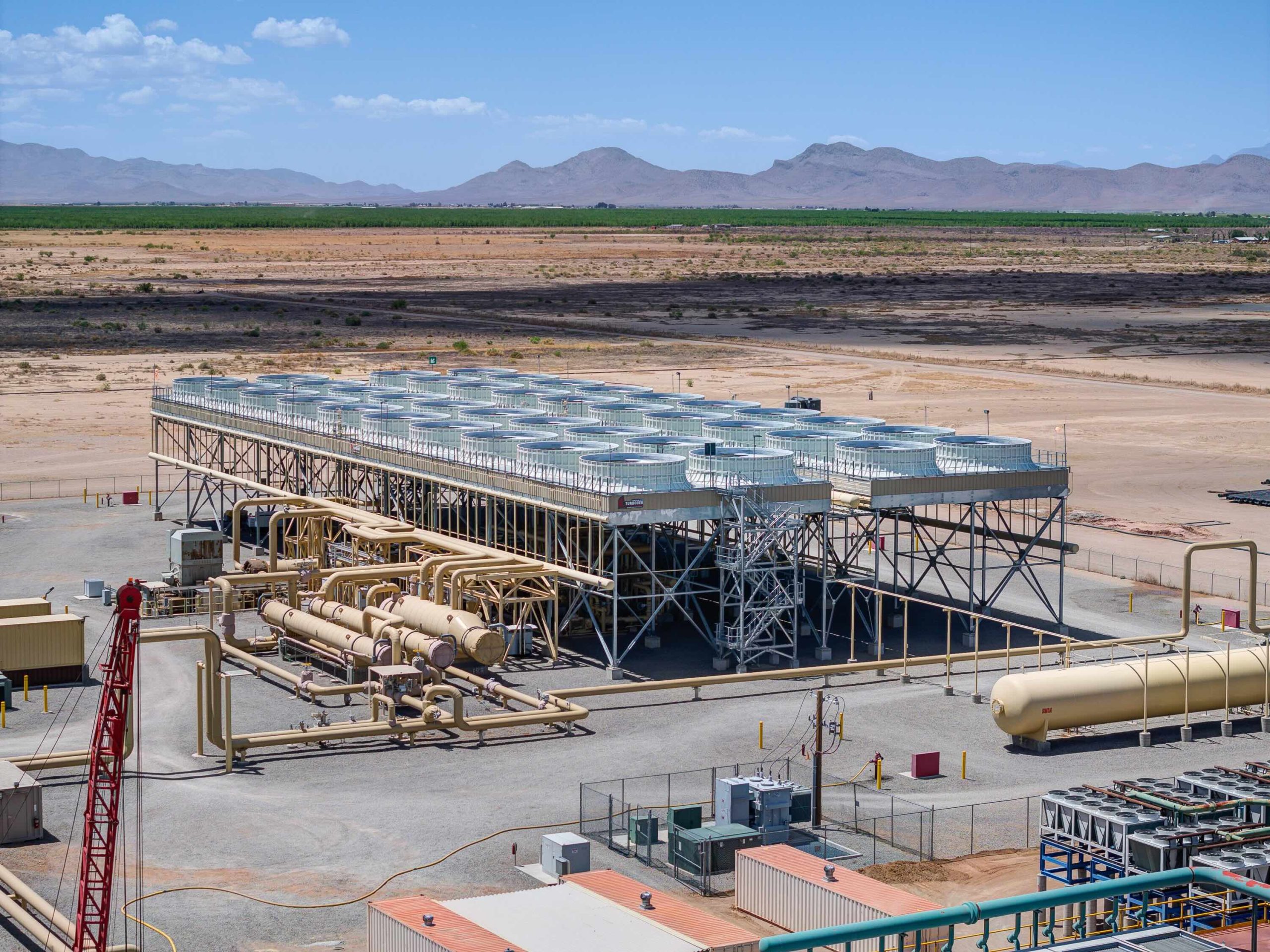
The global energy landscape is undergoing a profound transformation, driven by an urgent need to transition away from fossil fuels towards sustainable, low-carbon alternatives. Among the diverse portfolio of renewable sources, geothermal power has long been recognized for its immense, yet often underestimated, potential. While the U.S. Department of Energy (DOE) currently projects that geothermal resources could contribute up to 60 gigawatts (GW) to the nation’s electricity supply by 2050, representing nearly 10% of current demand, a pioneering company named Zanskar posits that this figure dramatically undervalues the true scope of accessible energy. Carl Holland, co-founder and CEO of Zanskar, argues that conventional approaches to geothermal exploration have overlooked an astounding terawatt (TW) of potential capacity, a claim that, if validated, could redefine the future of energy generation.
Background on Geothermal Energy
Geothermal energy harnesses the Earth’s internal heat, a clean and continuously available power source. Its utilization dates back millennia, with ancient civilizations employing hot springs for bathing and heating. Modern geothermal electricity generation began in Lardarello, Italy, in 1904, marking the first successful conversion of geothermal steam into electricity. In the United States, the Geysers in California has been a prominent conventional geothermal field since the 1960s, evolving into the largest complex of its kind globally.
Fundamentally, geothermal systems extract heat from the Earth’s crust. There are primarily two categories: conventional and enhanced. Conventional geothermal relies on naturally occurring reservoirs of hot water or steam within permeable rock formations, typically found in tectonically active regions or areas with shallow magma chambers. These systems often manifest, but not always, through surface indicators like hot springs, geysers, or fumaroles. In contrast, enhanced geothermal systems (EGS) involve engineered reservoirs where water is injected into hot, dry rock deep underground, fracturing it to create artificial permeability and then circulating the water to extract heat before returning it to the surface as steam to drive turbines. The DOE’s optimistic projections largely hinge on advancements in EGS technology, which has attracted significant investment and innovation from companies like Fervo Energy and Sage Geosystems, promising to unlock heat resources in regions previously deemed unsuitable for geothermal development.
Despite its advantages as a baseload, dispatchable power source—meaning it can provide continuous, on-demand electricity unlike intermittent solar or wind—conventional geothermal has experienced relative stagnation. In the U.S., its installed capacity hovers around 4 GW, a modest increase of approximately one gigawatt over the past decade. This limited growth has largely been attributed to the perceived scarcity of easily discoverable, naturally fractured hotspots and the high costs associated with exploration drilling, which often yields dry holes. Traditional exploration methods, frequently relying on visible surface manifestations of geothermal activity, have proven insufficient for identifying the vast majority of deep, hidden systems. This reliance on surface "tells" has historically constrained the industry’s ability to scale, leading to an underestimation of the broader resource base.
Zanskar’s Paradigm Shift in Exploration
Zanskar’s groundbreaking approach challenges these long-standing assumptions, asserting that the conventional geothermal sector has been dramatically underestimated due to outdated exploration methodologies. Carl Holland suggests that the sheer number of undiscovered conventional geothermal systems, coupled with the enhanced productivity achievable through modern drilling techniques, could expand the total accessible resource by an order of magnitude or more. This shift transforms geothermal from a niche player to a potential terawatt-scale opportunity, a profound re-evaluation of its role in the global energy mix.
The core of Zanskar’s innovation lies in its sophisticated application of artificial intelligence and machine learning. Historically, geothermal prospectors would seek obvious surface clues—hot springs, volcanic activity, or steam vents—to pinpoint potential drilling sites. However, Holland points out that an overwhelming 95% of geothermal systems lack such visible "tells." Many significant discoveries have, in fact, been accidental, stumbled upon during drilling for other resources. Recognizing this critical gap, Zanskar has developed a proprietary system designed to systematically identify these "blind" geothermal resources.
The company employs supervised machine learning models, trained on extensive datasets that include geological surveys, seismic data, gravity measurements, magnetic anomalies, and even historical accidental discoveries. This data-driven approach allows the AI to discern subtle patterns and correlations that human geologists might miss, indicating the presence of subsurface heat reservoirs and permeable rock structures. This process transforms geothermal exploration from a largely intuitive and surface-dependent endeavor into a precise, data-intensive science. Once the AI identifies promising anomalies, Zanskar dispatches field teams for rigorous on-site validation, employing a suite of geophysical and geochemical surveys to confirm the potential of a given location, thereby reducing the risk of costly dry wells.
Beyond initial discovery, Zanskar leverages another advanced AI methodology for development planning: Bayesian evidential learning (BEL). This technique integrates existing geological data and expert knowledge to construct a series of probabilistic hypotheses about a site’s characteristics and potential productivity. The BEL models then work to systematically falsify these hypotheses, refining their understanding and assigning probabilities to various development scenarios. Where data gaps exist, Zanskar has developed a specialized geothermal simulator to fill in the blanks, providing a comprehensive, data-informed development strategy. This iterative process significantly reduces exploration risk and optimizes drilling strategies, making development more efficient and cost-effective than traditional, more speculative methods.
Early Successes and Substantial Investment
Zanskar’s innovative strategy has already yielded tangible results, demonstrating the efficacy of its AI-driven exploration. The startup successfully revived a dormant power plant in New Mexico, showcasing its ability to optimize existing assets and bring previously underutilized resources back online. More significantly, its advanced techniques have led to the discovery of two entirely new geothermal sites, collectively boasting over 100 megawatts (MW) of combined potential. These initial successes, as articulated by Zanskar CTO Joel Edwards, represent a perfect track record, having validated three out of three explored sites. This early validation is crucial for a sector traditionally plagued by high exploration failure rates, offering a powerful proof of concept for Zanskar’s technology.
This compelling evidence of capability has attracted significant financial backing, underscoring investor confidence in Zanskar’s vision and technology. The company recently closed a robust $115 million Series C funding round. This substantial investment was led by Spring Lane Capital, with broad participation from a diverse consortium of investors including the All Aboard Fund, Carica Sustainable Investments, Clearvision Ventures, Cross Creek, GVP Climate, Imperative Ventures, Lowercarbon Capital, Munich Re Ventures, Obvious Ventures, Orion Industrial Ventures, Safar Partners, StepStone Group, Susquehanna Sustainable Investments, Tranquillion, Union Square Ventures, University Growth Fund, and UP.Partners. Such a wide array of backers signals a strong belief across the investment community that Zanskar is poised to disrupt the geothermal market, moving it towards a new era of accelerated discovery and development.
Market Impact and Broader Implications
The potential implications of Zanskar’s approach extend far beyond individual project successes. Geothermal energy offers unique advantages in the renewable portfolio. Unlike solar and wind, which are intermittent and require costly energy storage solutions to ensure grid stability, geothermal provides baseload power, operating continuously regardless of weather conditions or time of day. This dispatchability makes it an invaluable asset for grid reliability and resilience, capable of firming up electricity supplies and reducing dependence on fossil fuel peaker plants, which are typically expensive and carbon-intensive.
Unlocking a terawatt of geothermal potential in the U.S. would represent a transformative shift for the nation’s energy independence and decarbonization efforts. A terawatt is equivalent to 1,000 gigawatts, an astronomical figure when compared to current U.S. total electricity generation capacity of roughly 1,200 GW from all sources. Such a vast, domestically sourced energy supply could significantly reduce reliance on imported fuels, enhance national energy security, and provide a stable, low-carbon foundation for the future grid. Furthermore, geothermal power plants have a relatively small physical footprint compared to large-scale solar or wind farms, requiring less land for equivalent power output. They also typically involve closed-loop systems, minimizing water usage and environmental impact, making them an environmentally sound option for power generation.
However, the journey from discovery to large-scale deployment is fraught with challenges. While Zanskar’s AI minimizes exploration risk, the capital-intensive nature of drilling and plant construction remains a significant hurdle. Holland acknowledges the critical need to transition from venture capital funding, which supports early-stage development, to project finance. Project finance typically offers lower-cost capital, essential for the long development cycles and large upfront investments characteristic of energy infrastructure projects. Successfully securing such financing will be crucial for Zanskar to navigate the "valley of death" that has claimed many promising climate tech startups—the difficult phase between proving a technology and achieving commercial scale. Zanskar’s current pipeline of confirmed sites, capable of supporting at least one gigawatt of generating capacity, is a strategic asset in attracting these larger institutional investors, offering tangible assets and proven potential.
The Path Ahead
Zanskar’s initial focus on the U.S. West, a region known for its favorable geological conditions and existing geothermal infrastructure, is a strategic first step. The company aims to confirm at least ten sites to solidify its position and attract the necessary project finance, creating a robust portfolio that demonstrates consistent, scalable success. While Carl Holland remains cautiously optimistic about the inherent complexities of geothermal development, he is confident that Zanskar is on the correct trajectory. "We now know this is the future of exploration," he asserts, believing that this innovative methodology will rapidly transform the geothermal industry within a short timeframe.
The integration of artificial intelligence into geothermal exploration and development represents more than just an incremental improvement; it signifies a potential paradigm shift. By systematically identifying previously hidden resources and optimizing development plans, Zanskar is not merely expanding the geothermal resource base but fundamentally altering the economics and scalability of this crucial renewable energy source. If successful, Zanskar’s vision of a terawatt-scale geothermal future could play a pivotal role in achieving global decarbonization goals, providing a reliable, clean, and domestically abundant power supply for generations to come, fostering energy independence and environmental stewardship simultaneously.