Amir Mahmud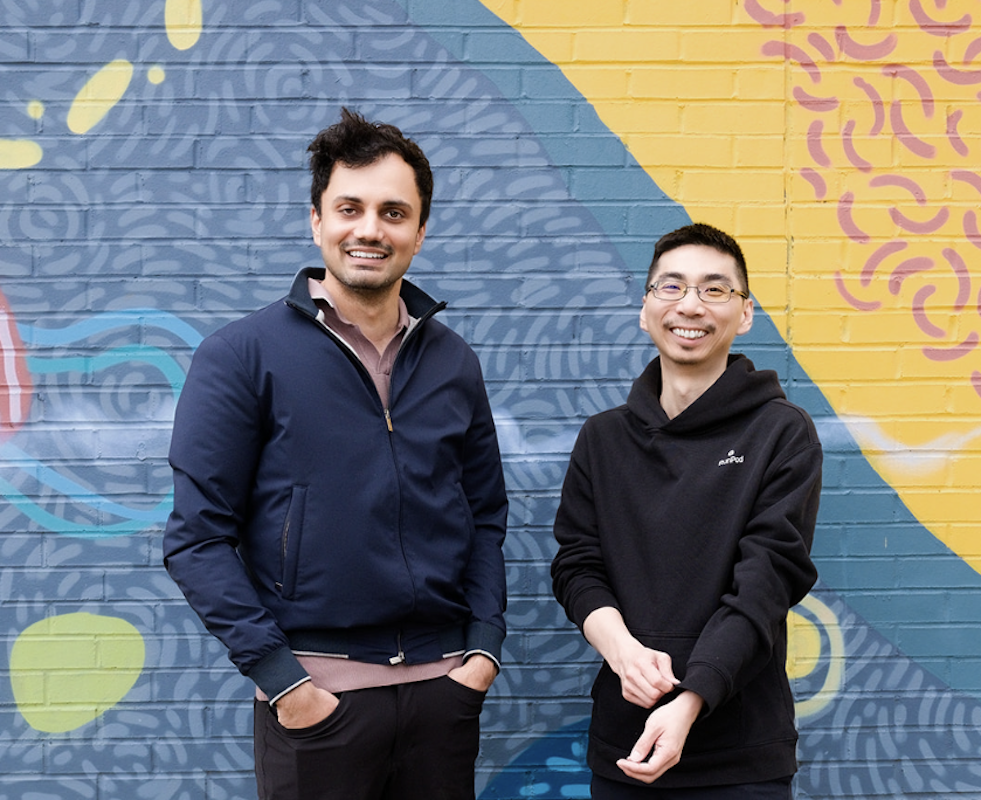
In a testament to ingenuity, timing, and an unconventional approach to market entry, Runpod, an AI application hosting platform launched just four years ago, has achieved an impressive annual recurring revenue (ARR) run rate of $120 million. This significant milestone underscores the explosive demand for specialized computing infrastructure crucial to the burgeoning artificial intelligence sector and highlights the company’s unique journey from a cryptocurrency mining hobby to a formidable player in the AI cloud landscape. Founded by former Comcast corporate developers Zhen Lu and Pardeep Singh, Runpod’s story is a compelling narrative of identifying a critical technical bottleneck, leveraging grassroots community engagement, and executing a shrewd bootstrapping strategy in a capital-intensive industry.
The Unforeseen Pivot: From Crypto Basements to AI Frontiers
The genesis of Runpod can be traced back to late 2021, a period when the cryptocurrency boom was still in full swing, but the seeds of the AI revolution were quietly being sown. Zhen Lu and Pardeep Singh, friends and colleagues at Comcast, shared a common passion for technology that led them to invest approximately $50,000 of their personal savings into building specialized computer setups in their respective New Jersey basements. Their objective was to mine Ethereum, the second-largest cryptocurrency by market capitalization, a pursuit that promised potential financial returns but ultimately proved to be more of a learning experience than a lucrative venture.
However, the landscape for Ethereum mining was rapidly shifting. The much-anticipated "Merge," a monumental upgrade to the Ethereum network, was on the horizon, promising to transition the blockchain from a power-intensive Proof-of-Work consensus mechanism to a more energy-efficient Proof-of-Stake model. This transition, which ultimately occurred in September 2022, effectively rendered GPU-based Ethereum mining obsolete. Faced with a substantial investment in high-performance Graphics Processing Units (GPUs) that were no longer viable for their initial purpose, Lu and Singh found themselves at a crossroads. The mining endeavor, despite its initial appeal, had also become "boring," as Lu described, prompting a critical re-evaluation of how to utilize their powerful hardware and salvage their investment.
Identifying a Critical Gap in the AI Ecosystem
Their professional backgrounds as developers at Comcast had already exposed them to machine learning projects, giving them a prescient understanding of the nascent AI field. With their GPU-laden rigs sitting idle, the pivot to AI seemed natural. Yet, as they embarked on repurposing their mining equipment into AI servers, they encountered a significant obstacle: the existing software ecosystem for developing applications on GPUs was remarkably inefficient and cumbersome. This experience predated the mainstream explosion of generative AI tools like OpenAI’s ChatGPT and even earlier iterations such as DALL-E 2, highlighting their foresight in recognizing a fundamental problem before it became widely apparent.
Lu vividly characterized the developer experience with GPU software stacks as "hot garbage," a sentiment that resonated deeply with Singh. This frustration became the catalyst for Runpod. They realized that merely having powerful hardware wasn’t enough; developers needed an intuitive, streamlined platform to harness that power effectively for AI workloads. Their vision was to create a platform that would abstract away the complexities of GPU management, offering speed, easily configurable hardware—including a serverless option that automated setup—and robust developer tools like APIs, command-line interfaces, and integrations for popular development environments such as Jupyter notebooks.
The Reddit Launchpad: A Grassroots Marketing Phenomenon
With a working prototype of their AI app hosting platform developed, the next challenge for the first-time founders was market penetration. Lacking traditional marketing expertise or a budget for extensive campaigns, Lu turned to an unconventional but highly effective strategy: Reddit. In early 2022, they posted in several AI-focused subreddits, offering free access to their nascent AI servers in exchange for crucial feedback. This grassroots approach proved incredibly successful. The developer community on Reddit, known for its technical acumen and willingness to experiment, responded enthusiastically.
This strategy yielded invaluable beta testers who provided critical insights, helping refine the platform and identify early use cases. More importantly, these beta users quickly converted into paying customers. The efficacy of their product, combined with a direct line to early adopters, allowed Runpod to gain rapid traction. Within nine months of launching, Lu and Singh were able to quit their corporate jobs, having bootstrapped their way to over $1 million in revenue. This early success underscored the immense latent demand for accessible and efficient AI computing resources.
Bootstrapping Through Hypergrowth: Scaling Without Venture Capital
While hitting the $1 million revenue mark was a significant achievement, it also presented a new set of challenges. As their user base expanded, particularly with business clients, the casual nature of servers operating from "people’s basements" became untenable. Enterprise users demanded the reliability, security, and scalability of professional data centers. However, Lu and Singh, having initially focused on self-funded growth, had not considered raising venture capital.
Their solution was innovative and indicative of their bootstrapping ethos: they forged revenue-share partnerships with established data centers. This model allowed Runpod to rapidly expand its GPU capacity without incurring massive upfront capital expenditures or taking on debt, a principle they steadfastly adhered to, unlike some other AI cloud services that originated from crypto mining and later resorted to significant borrowing. This approach, while financially prudent, was not without its stresses. Singh highlighted the constant pressure to anticipate demand, stating that "if we don’t have the GPUs, the market sentiment, the user sentiment changes. Because when they don’t see capacity from you, they go somewhere else." Maintaining this delicate balance of supply and demand in a rapidly expanding market was a continuous tightrope walk.
The popularity of their platform continued to surge, particularly after the public launch of OpenAI’s ChatGPT in late 2022. This event catalyzed a widespread interest in generative AI, driving an unprecedented demand for GPU compute power. Runpod’s active presence on community platforms like Reddit and Discord became a significant driver of their user base, further cementing their reputation within the developer community.
The AI Infrastructure Gold Rush and Runpod’s Niche
The explosion of AI models has created a modern-day gold rush, and GPUs are the indispensable pickaxes and shovels. The market for AI infrastructure has become intensely competitive, with hyperscale cloud providers like Amazon Web Services (AWS), Microsoft Azure, and Google Cloud Platform vying for dominance alongside specialized AI cloud services such as CoreWeave and Core Scientific. These providers offer varying levels of service, from raw compute power to fully managed AI development environments.
Runpod carved out a distinct niche by maintaining its "dev-centric" philosophy. While the hyperscalers offer a broad range of services, Runpod focused intently on the specific needs of AI developers: providing highly configurable, high-performance GPUs with a straightforward user experience and a robust set of development tools. This focus has resonated deeply, attracting a diverse clientele ranging from individual developers and small startups to Fortune 500 enterprise teams with multi-million dollar annual expenditures. Prominent customers now include innovators like Replit, Cursor, OpenAI itself, Perplexity, Wix, and Zillow, showcasing the platform’s versatility and reliability.
The company’s commitment to accessibility and ease of use addresses a significant market need. Many developers, especially those new to AI, find the complexity and cost of setting up and managing GPU infrastructure daunting. Runpod’s serverless options and intuitive interface lower this barrier to entry, democratizing access to powerful AI computing resources and fostering a vibrant ecosystem of innovation.
Attracting Strategic Capital and Charting the Future
Despite their bootstrapping success, the scale of Runpod’s growth and the strategic importance of its mission eventually drew the attention of the venture capital community. Radhika Malik, a partner at Dell Technologies Capital, discovered Runpod through their Reddit presence and initiated contact. Lu, a first-time founder, openly admitted to not knowing how to pitch to an investor. Malik, however, proved to be an invaluable mentor, guiding him through the nuances of venture capital thinking and maintaining a relationship.
This mentorship eventually blossomed into a significant investment. In May 2024, Runpod successfully closed a $20 million seed funding round, co-led by the venture capital arms of two industry giants, Intel Capital and Dell Technologies Capital. The round also saw participation from notable angel investors, including Nat Friedman (former GitHub CEO) and Julien Chaumond, the co-founder of Hugging Face. Chaumond’s involvement was particularly organic, as he was already a user of the Runpod platform and reached out to the founders via their support chat, a testament to the product’s quality and utility.
The involvement of Intel and Dell’s VC arms is highly strategic, given their deep roots in hardware and enterprise technology. Their investment not only provides capital but also lends credibility and potential for strategic partnerships in a rapidly evolving hardware-dependent industry.
Today, Runpod boasts a staggering 500,000 developers across its global cloud infrastructure, spanning 31 regions. This extensive reach and robust customer base position the company strongly for its next phase of growth. The founders are now actively planning for a Series A funding round, confident that their proven business model and impressive traction will command a healthy valuation.
Looking ahead, Zhen Lu articulates a bold vision for Runpod, seeing it not merely as an infrastructure provider but as a foundational platform for the next generation of software development. He believes that while coding itself will never disappear, the role of programmers is evolving dramatically. The future, he contends, lies in developers becoming "AI agent creators and operators," designing and managing autonomous AI systems. "Our goal is to be what this next generation of software developers grows up on," Lu states, underscoring Runpod’s ambition to remain at the forefront of AI innovation and empower the builders of tomorrow’s intelligent world. This journey from a basement crypto mining experiment to a pivotal AI infrastructure company exemplifies the dynamic and often unpredictable paths to success in the rapidly accelerating technology landscape.