Amir Mahmud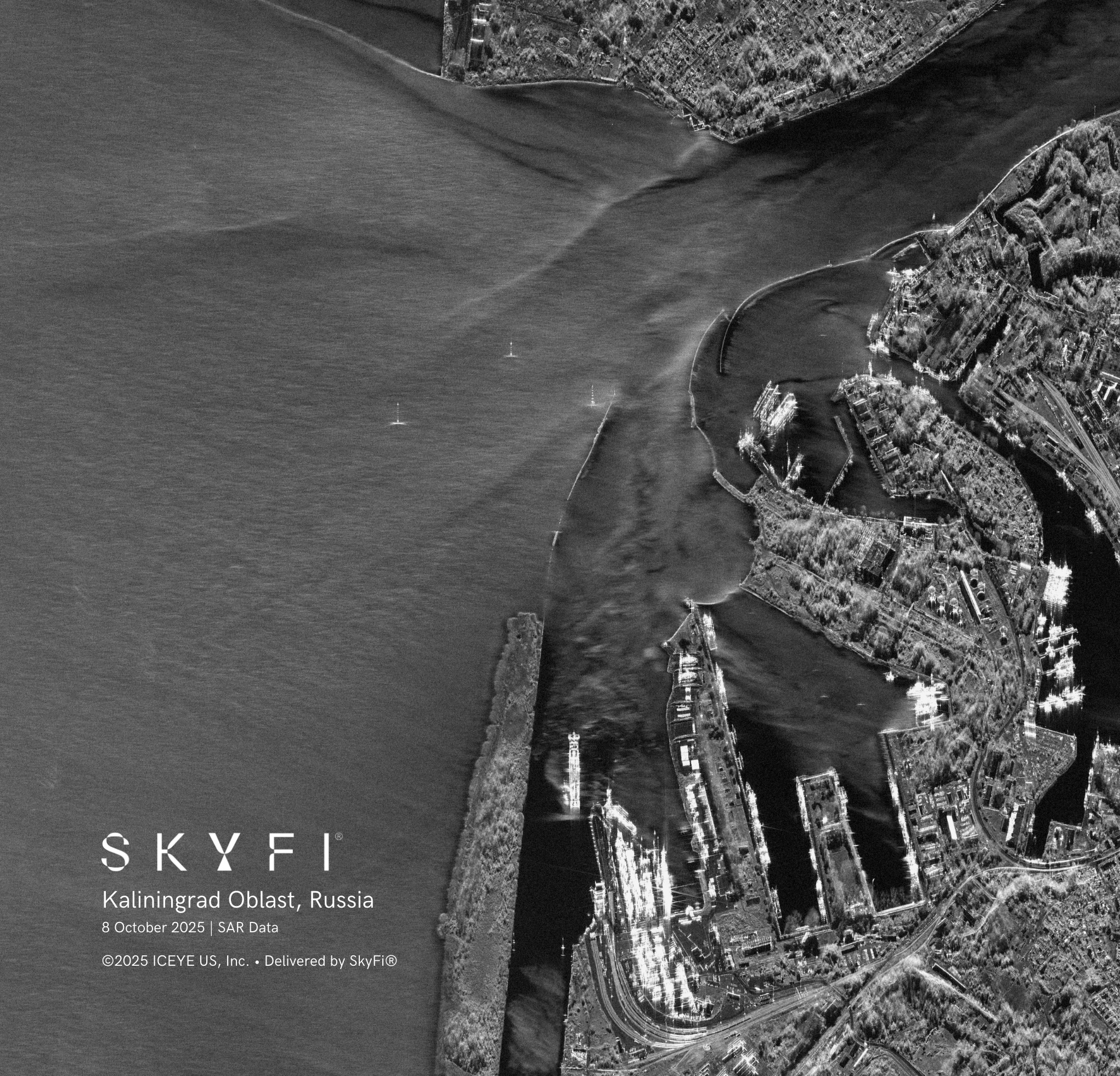
A significant investment of $12.7 million in Series A funding has been secured by SkyFi, an Austin-based startup poised to revolutionize how businesses and governments access and utilize satellite imagery. This capital infusion underscores a growing trend in the geospatial industry: the shift from merely acquiring vast amounts of satellite data to delivering precise, actionable insights. By acting as a sophisticated marketplace for over 50 geospatial imagery partners, SkyFi has carved out a crucial niche, providing a streamlined pathway for diverse sectors, including finance, defense, infrastructure, and insurance, to harness the power of Earth observation.
The Dawn of Commercial Earth Observation
For decades, the realm of satellite imagery was largely the exclusive domain of national governments and military intelligence agencies. High costs, complex technical requirements, and restricted access meant that Earth observation data remained largely inaccessible to commercial entities and the general public. However, the last two decades have witnessed a profound transformation, often dubbed the "NewSpace" era. This revolution has been driven by several key factors: advancements in miniaturization, leading to the proliferation of CubeSats and small satellites; significant reductions in launch costs; and the rapid development of sophisticated sensor technologies.
Today, thousands of satellites, ranging from shoebox-sized CubeSats to larger, more specialized platforms, continuously orbit our planet. This ever-expanding "constellation" captures an unprecedented volume and variety of images in near real-time, from high-resolution optical photographs to synthetic aperture radar (SAR) data that can penetrate clouds and darkness, and multispectral imagery providing insights into vegetation health and material composition. The challenge, until recently, was not a lack of data, but rather the cumbersome and specialized processes required to access, process, and interpret it. This fragmentation of data sources and the technical barriers to entry created a significant bottleneck for potential users outside of specialized fields.
SkyFi’s Vision: From Raw Data to Actionable Intelligence
SkyFi recognized this critical gap and developed a platform designed to demystify and democratize access to this wealth of orbital information. CEO Luke Fischer aptly describes SkyFi’s service as a "Getty Images" for geospatial data, a metaphor that highlights its role as a centralized, user-friendly portal. Through its website and mobile application, the company not only provides easy access to an extensive archive of imagery but also offers the unique capability for users to "task" satellites – essentially commissioning a satellite to capture new images of a specific location at a precise time. This on-demand functionality represents a significant leap forward, moving beyond historical archives to real-time situational awareness.
Fischer emphasizes that while the speed of data delivery is important, the true value lies in the "speed of delivery of answers to customers." This philosophy underpins SkyFi’s strategic pivot towards offering advanced analytics and insights alongside raw imagery. In an increasingly data-rich world, imagery itself is becoming a commodity. The competitive edge, therefore, shifts to the ability to extract meaningful intelligence, patterns, and predictions from that data. SkyFi’s platform aims to provide these "answers," transforming complex satellite imagery into digestible, actionable information for a broad spectrum of users, from seasoned analysts to casual observers.
Strategic Investment Fueling Growth and Impact
The $12.7 million Series A funding round is a strong validation of SkyFi’s vision and its execution. The diverse composition of its investors reflects the broad appeal and multi-faceted applications of its technology. The round was co-led by Buoyant Ventures, a climate-focused fund, and IronGate Capital Advisors, which specializes in "dual-use" companies – those whose technologies serve both commercial and defense sectors. Additional investors include DNV Ventures, the investment arm of the venerable 160-year-old maritime company DNV; Beyond Earth Ventures, a firm dedicated to space-focused investments; and TFX Capital, known for its defense-related space investments.
The presence of Buoyant Ventures highlights the immense potential of satellite intelligence in addressing global climate challenges. From monitoring deforestation and tracking glacier melt to assessing water resources and verifying carbon sequestration efforts, precise and timely geospatial data is indispensable for environmental research, policy-making, and climate action. DNV Ventures’ involvement, conversely, points to the maritime industry’s growing reliance on satellite insights for everything from optimizing shipping routes and monitoring port activity to detecting illegal fishing and ensuring offshore asset security.
The significant investor demand, which saw SkyFi’s initial funding target of $8 million rise to $12.7 million, further underscores the robust market for defense-related technology, particularly within the space sector. As Fischer noted, 2025 was a record year for defense-related investments, signaling a strategic imperative for nations to leverage cutting-edge space capabilities for national security and intelligence gathering. IronGate Capital Advisors and TFX Capital’s participation specifically caters to this dual-use potential, where innovations developed for commercial markets can also serve critical defense and intelligence needs.
Market Impact Across Diverse Sectors
The ability to translate satellite images into actionable insights holds transformative potential across numerous industries:
- Finance: Hedge funds and investment firms utilize satellite imagery to gain predictive insights into economic activity. By monitoring parking lot occupancy at retail chains, tracking construction progress, or observing commodity flows at ports and refineries, analysts can anticipate market trends and make more informed investment decisions. This "alternative data" provides a unique edge in a competitive financial landscape.
- Defense and Intelligence: For government agencies, SkyFi’s platform offers enhanced situational awareness, enabling the monitoring of geopolitical hotspots, tracking troop movements, assessing damage after conflicts, and bolstering border security. The ability to task satellites for specific, real-time imagery is invaluable for rapid response and strategic planning.
- Infrastructure and Urban Planning: Urban planners can monitor city growth, assess traffic patterns, and plan new developments. Infrastructure companies can track construction progress, inspect remote assets like pipelines and power lines for damage, and manage large-scale projects more efficiently. Satellite data provides a cost-effective alternative to traditional ground surveys in many cases.
- Insurance: Following natural disasters such as hurricanes, wildfires, or floods, insurers can rapidly assess damage to properties and infrastructure, accelerating claims processing and improving disaster response coordination. For ongoing risk management, imagery can identify potential hazards or changes in property conditions.
- Agriculture: Farmers can monitor crop health, identify areas affected by pests or disease, and optimize irrigation and fertilization, leading to improved yields and resource efficiency.
- Logistics and Supply Chain: Companies can track cargo movements, monitor port congestion, and optimize logistics networks by observing global shipping and transportation patterns.
Technological Edge and the Power of Feedback
SkyFi’s competitive advantage stems from its sophisticated software-first approach and its extensive network of data providers. Fischer notes that while convincing satellite imagery providers to grant access was initially challenging, it has now become "table stakes." This shift has allowed SkyFi to amass what he describes as the "largest virtual constellation of assets," meaning unparalleled access to a diverse array of data streams and sensor types from various global partners.
Crucially, SkyFi leverages the continuous flow of customer requests and interactions to refine its analytical offerings. This feedback loop, which Fischer honed during his time leading Uber’s Elevate division, is central to the company’s strategy. Just as Uber gathered data on global movement patterns to inform its product expansions (bikes, scooters, drone delivery), SkyFi accumulates insights into "what people are looking at in the world [and] what they’re asking of that data." This unique vantage point allows SkyFi to anticipate market needs and build increasingly sophisticated and relevant analytical tools, ensuring that its insights directly address customer pain points.
The software-first model provides a significant advantage over competitors burdened by the substantial capital expenses associated with owning and operating their own satellite hardware. This agility allows SkyFi to focus entirely on data aggregation, processing, and insight generation, scaling its services without the immense overhead of launching and maintaining a satellite fleet. While some sophisticated customers, such as hedge funds, possess the internal capacity to perform their own analytics on raw imagery, the vast majority increasingly seek SkyFi’s ready-made insights, valuing efficiency and immediate applicability.
Democratizing Earth Intelligence for a Connected Future
With this fresh injection of capital, SkyFi plans to expand its analytical capabilities, onboard more data providers, and further enhance its user experience. The company’s overarching goal is to democratize access to Earth intelligence, making it approachable and useful for a wider audience. Fischer’s anecdote about his teenage daughters using the platform on their iPhones for school homework vividly illustrates this commitment to user-friendliness and accessibility. This vision extends beyond commercial and governmental clients, hinting at a future where sophisticated geospatial insights could become an everyday tool, empowering individuals and organizations of all sizes to understand and interact with their world more effectively.
SkyFi stands at the forefront of a burgeoning industry, transforming complex orbital data into a powerful engine for decision-making across the globe. By bridging the gap between raw satellite imagery and actionable intelligence, the company is not only driving innovation but also fostering a new era of global awareness and strategic insight.