Amir Mahmud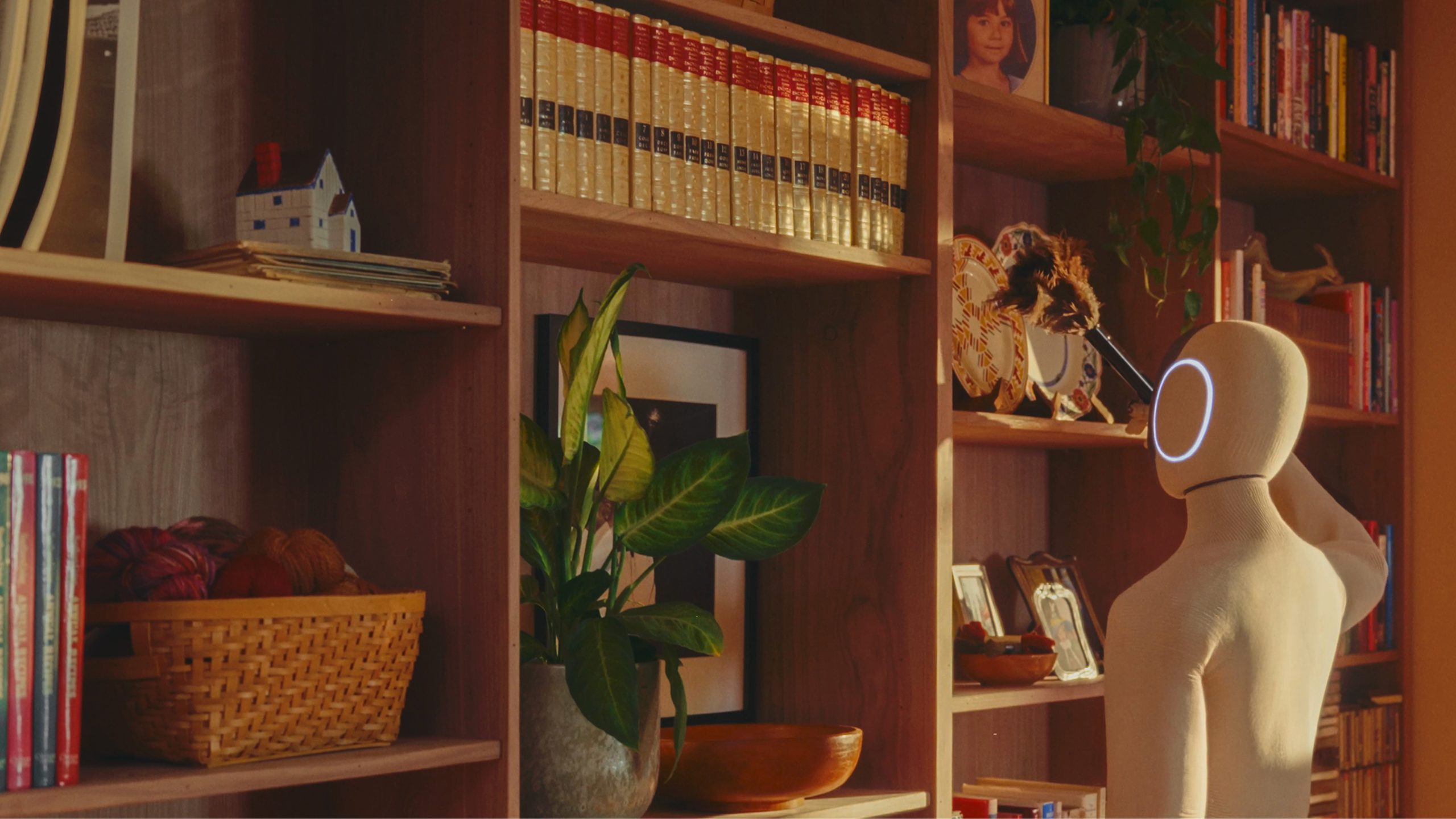
The robotics firm 1X, renowned for its Neo humanoid robot, has introduced an innovative artificial intelligence framework designed to revolutionize how autonomous machines perceive and interact with the physical world. This new system, dubbed the "1X World Model," represents a significant leap forward in empowering robots to learn dynamically and independently, moving beyond predefined programming to interpret and respond to novel environmental cues. By enabling a deeper understanding of real-world physics and object interactions, this development lays critical groundwork for the widespread deployment of versatile humanoid robots in various sectors, including residential settings.
The Dawn of Autonomous Learning
At its core, the 1X World Model is a sophisticated, physics-based AI architecture that utilizes a blend of video input and natural language prompts to instill new capabilities in the Neo robots. This innovative approach allows the humanoids to acquire new skills and adapt to unforeseen scenarios without explicit prior training for every conceivable task. Unlike conventional robotic systems that rely heavily on pre-programmed instructions or extensive supervised learning for specific actions, the World Model empowers Neo to derive actionable insights from observational data, effectively teaching itself by understanding the underlying dynamics of its surroundings.
Bernt Børnich, founder and CEO of 1X, articulated the ambitious vision behind this release, stating, "After years of developing our world model and making Neo’s design as close to human as possible, Neo can now learn from internet-scale video and apply that knowledge directly to the physical world." He further added, "With the ability to transform any prompt into new actions — even without prior examples — this marks the starting point of Neo’s ability to teach itself to master nearly anything you could think to ask." While such declarations often carry an aspirational tone, underscoring the long-term goal of general-purpose intelligence, the immediate implication is a more robust and adaptable learning paradigm for robots.
A crucial clarification from 1X highlights the iterative nature of this learning process. The current iteration of the World Model doesn’t instantly enable a Neo bot to perform a completely novel task purely from a video and a single prompt, such as spontaneously learning to parallel park a car. Instead, the system operates by capturing video data linked to specific prompts, processing this information within the World Model, and then feeding those enhanced insights back into the broader network of Neo bots. This continuous feedback loop refines the robots’ collective understanding of the physical world, gradually expanding their repertoire of know-how. Furthermore, this mechanism provides users with valuable insight into Neo’s internal decision-making process and how it interprets a given prompt, offering a pathway to fine-tune and accelerate the models toward true generalized learning.
Neo’s Journey: From Concept to Consumer
The unveiling of the 1X World Model arrives as the Norwegian robotics company, 1X Technologies (formerly Halodi Robotics), is strategically positioning its Neo humanoids for broader accessibility, with a particular focus on the consumer home market. Founded with a vision to integrate friendly, helpful robots into daily life, 1X has steadily advanced its technology since its inception. While specific funding details were not provided in conjunction with this announcement, the company has attracted significant investor interest in the past, reflecting the growing confidence in the humanoid robotics sector.
The Neo robot itself is designed with a sleek, approachable form factor, embodying 1X’s philosophy of creating machines that can seamlessly integrate into human environments. The company initiated pre-orders for its Neo humanoids in October, with plans to commence shipments within the current year. Although 1X has refrained from disclosing exact figures or a precise shipping timeline, a spokesperson confirmed that pre-orders have significantly surpassed initial expectations, signaling a robust market appetite for advanced home robotics. This strong demand underscores a potential shift in public perception, from viewing robots as industrial tools to seeing them as personal assistants or companions. The transition from industrial prototypes to consumer-ready products presents substantial engineering and logistical challenges, from ensuring safety and reliability in unstructured home environments to managing production at scale and providing intuitive user experiences.
A Paradigm Shift in Robotics Training
The introduction of a world model represents a pivotal conceptual shift in how robots are trained and developed. Historically, robots were primarily programmed for specific, repetitive tasks within controlled industrial environments. Each new task required meticulous coding and calibration by human experts. The advent of machine learning began to offer more flexibility, allowing robots to learn from large datasets, but often still within constrained parameters. The 1X World Model, by focusing on a "physics-based" understanding, aims to equip robots with an intrinsic comprehension of cause and effect, object permanence, and material properties – elements crucial for truly autonomous interaction in dynamic, unpredictable settings.
This approach addresses one of the most persistent challenges in robotics: the "sim-to-real" gap. Training robots extensively in simulations is cost-effective and safe, but transferring those learned behaviors to the messy, unpredictable real world often results in performance degradation. A robust world model, by providing a deeper, more generalized understanding of physical interactions, can help bridge this gap. Instead of learning specific movements for specific objects, the Neo robots can potentially infer how to interact with novel objects based on their perceived physical properties and the observed dynamics from diverse video data. This capability promises to dramatically accelerate development cycles and reduce the need for constant human supervision in training, moving toward a future where robots can adapt and generalize much like humans do. The ability to gain "insight into how Neo is thinking of behaving or reacting to a certain prompt" is not merely a diagnostic tool; it’s a critical feedback mechanism for refining the underlying AI, pushing towards a future where robots can anticipate and respond to prompts for actions they’ve never directly performed before.
The Broader Landscape of Humanoid Robotics
1X operates within an increasingly competitive and rapidly evolving landscape of humanoid robotics. Prominent players such as Tesla with its Optimus robot, Boston Dynamics known for its agile Atlas and quadrupedal Spot robots, Figure AI, and Agility Robotics with its bipedal Digit, are all vying for leadership in this nascent field. Each company brings a distinct philosophy and technical emphasis. Boston Dynamics, for instance, has long focused on advanced locomotion and dynamic stability, while Tesla aims for a general-purpose, cost-effective humanoid for both industrial and domestic applications. Figure AI emphasizes a human-like form factor and dexterity for warehouse and manufacturing tasks.
1X’s strategy, centered on an approachable design and a sophisticated world model for self-learning, particularly targets the home environment. This differentiates it from some competitors that initially focus on heavy industry or logistics. The race is not just about building a robot that can walk and manipulate objects, but about developing one that can understand, learn, and adapt autonomously within complex, unstructured environments. The success of 1X’s World Model will be measured by its ability to endow Neo with the cognitive flexibility to perform a wide array of tasks reliably and safely in a domestic setting, distinguishing itself through its intelligence and adaptability rather than sheer physical prowess alone. The emphasis on learning from "internet-scale video" suggests a strategy to leverage the vast amount of human behavioral data available online, an approach that could dramatically accelerate the acquisition of practical skills.
Market Dynamics and Societal Implications
The emergence of increasingly capable humanoid robots, driven by advancements like 1X’s World Model, holds the potential for profound market and societal transformations. Economically, these robots could significantly impact labor markets, particularly in sectors facing labor shortages or requiring repetitive, strenuous, or hazardous tasks, such as manufacturing, logistics, healthcare, and elder care. The domestic market represents an enormous untapped potential, offering assistance with household chores, companionship, and support for individuals with mobility challenges. The commercialization of robots like Neo could spawn entirely new industries focused on robot maintenance, software development, accessory design, and specialized services.
Socioculturally, the integration of humanoids into daily life will inevitably reshape human-robot interaction. Public perception, often shaped by science fiction, will gradually evolve as people encounter robots in practical, helpful roles. Ethical considerations, however, will become paramount. Questions surrounding job displacement, the fair distribution of economic benefits, data privacy (especially for robots operating in private homes), and the potential for algorithmic bias embedded in AI models will require careful navigation. The challenge will be to ensure that these advanced technologies are developed and deployed in a manner that maximizes societal benefit while mitigating potential risks, fostering public trust and acceptance. The vision of "robots as companions" rather than mere "tools" brings with it a complex set of psychological and ethical considerations regarding autonomy, emotional connection, and responsibility.
The Road Ahead: Challenges and Potential
Despite the significant strides made by companies like 1X, the journey toward fully autonomous, general-purpose humanoid robots is still unfolding. Numerous challenges remain. On the hardware front, improving battery life, reducing manufacturing costs, enhancing dexterity to match human capabilities, and ensuring robustness for varied tasks are critical. Software development faces hurdles in achieving true generalization across an infinite number of real-world scenarios, developing fail-safe mechanisms for unexpected situations, and creating intuitive human-robot interfaces. Regulatory frameworks will need to evolve to address safety standards, liability, and the ethical implications of autonomous decision-making. Public acceptance, too, will be a gradual process, requiring transparent development and demonstration of clear benefits.
However, the potential rewards are immense. The long-term vision includes a future where intelligent robots can augment human capabilities across a spectrum of tasks, freeing individuals from mundane or dangerous work, enhancing productivity, and improving quality of life. The 1X World Model represents a foundational step in this direction, offering a scalable and adaptable learning mechanism that could unlock unprecedented levels of robotic autonomy. As the iterative process of feeding real-world data back into these sophisticated models continues, the capabilities of humanoids like Neo are poised to expand exponentially, bringing humanity closer to a future envisioned in science fiction, where intelligent machines seamlessly coexist and collaborate with people.