Amir Mahmud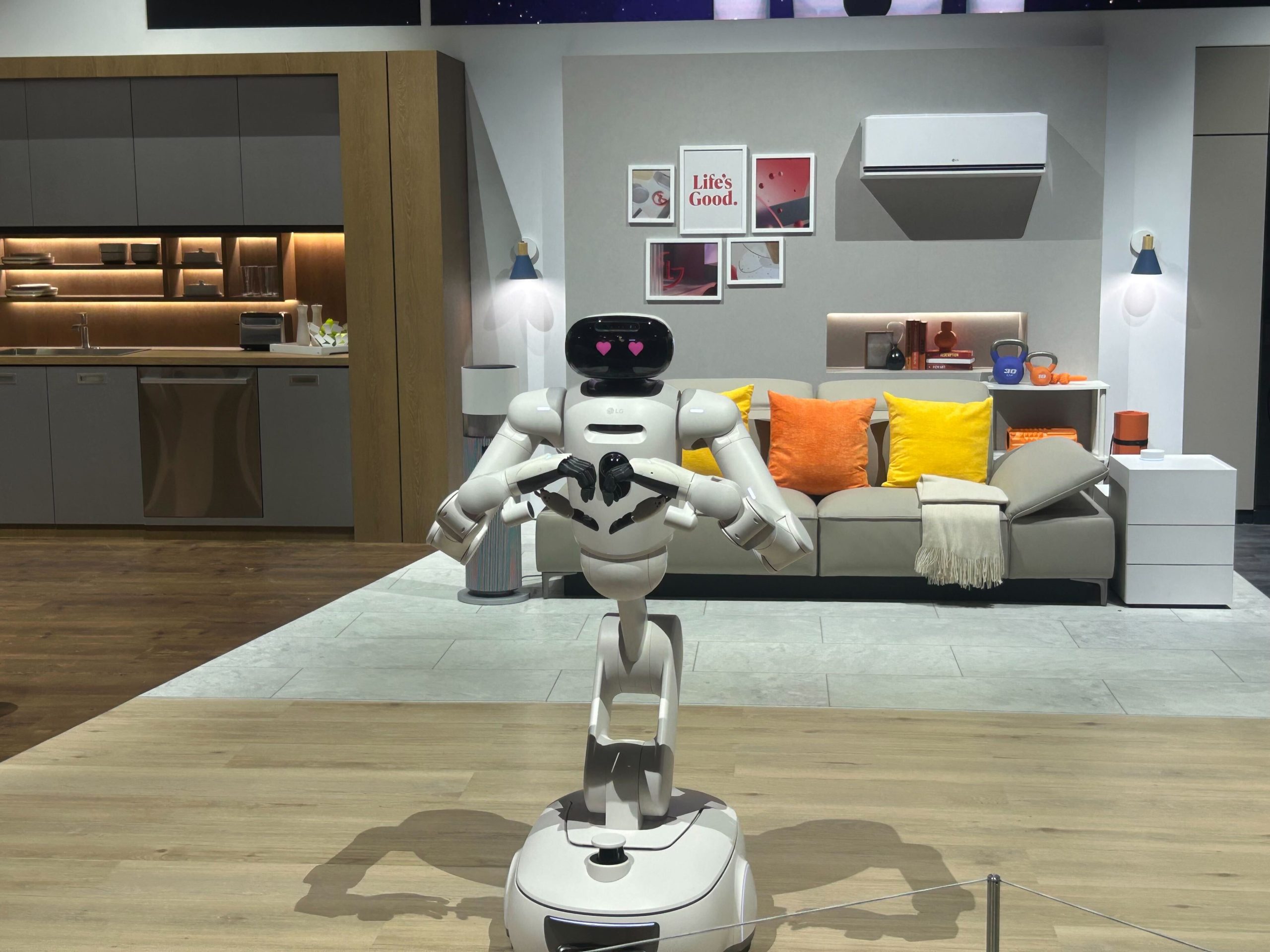
The annual Consumer Electronics Show (CES) in Las Vegas once again served as a global stage for technological innovation, with electronics giant LG introducing its latest endeavor in domestic automation: CLOiD. Billed as an AI-powered home robot, this new entrant aims to fundamentally transform household chores, promising a future where mundane tasks are seamlessly handled by artificial intelligence, freeing up human time and energy. LG articulates a grand vision for CLOiD, foreseeing its evolution into an "ambient-care agent" that will proactively support and enhance daily living.
A Vision of Domestic Automation
CLOiD made its debut during LG’s keynote address at the bustling convention, subsequently offering live demonstrations on the exhibition floor. Attendees witnessed the robot, often accompanied by a human presenter, executing various domestic functions for an eager audience. The device is designed with autonomous mobility, allowing it to navigate a home environment independently. It integrates an array of sophisticated cameras and sensors, which, when paired with LG’s proprietary ThinQ smart home application, are intended to gather situational and environmental data. This data is then leveraged to generate proactive suggestions aimed at improving the user’s quality of life.
Communication is a core feature, as CLOiD is equipped with speakers, enabling verbal interaction with its human counterparts. LG details that the robot operates on a vision-language model, a sophisticated AI system capable of converting visual inputs—images and videos—into structured, language-based understanding. Furthermore, a vision-language action program translates verbal commands into physical actions, echoing the functionality of advanced digital assistants like Siri but with a robotic embodiment. This combination of perception, comprehension, and action is central to LG’s ambition for CLOiD as a truly assistive household presence.
The Robot’s Capabilities and Current Limitations
The introduction of CLOiD arrives amidst a growing trend of domestic robots entering the consumer market. Previous iterations include Amazon’s Astro, designed primarily for home security and pet monitoring, and Enabot’s EBO X, a similar mobile security and companionship device. CLOiD, however, distinguishes itself with a more complex physical design. Unlike its predecessors, which often resemble squat, rolling automatons, CLOiD features a substantial upper body and two articulated arms. This physical configuration clearly signifies an intent for more direct and intricate interaction with its environment, including the manipulation of objects.
Despite this advanced physical design, the live demonstrations at CES offered a nuanced perspective on CLOiD’s current capabilities. Observers noted that while the robot appeared affable and well-designed, its operational speed and dexterity were notably deliberate. During one presentation, CLOiD was seen carefully retrieving a shirt from a basket and placing it into a dryer. In another instance, it gingerly picked up a croissant and transferred it to an oven. A particularly illustrative moment involved the robot being asked to prepare breakfast; it slowly maneuvered to a refrigerator, waited for the automatic door to open, and then paused for an extended period before finally selecting a carton of milk.
This measured pace, while perhaps a function of early development, highlighted a significant gap between the futuristic vision and the immediate reality. While a human might perform these tasks with considerably greater speed, LG’s overarching philosophy behind CLOiD, encapsulated in its "Zero Labor Home" model, posits that speed is secondary to the complete automation of effort. The premise is that users can engage in other activities, such as personal grooming or professional calls, while CLOiD methodically handles household chores in the background. The core value proposition is the elimination of human labor, not necessarily the acceleration of tasks.
A History of Home Robotics: From Fiction to Reality
The concept of robots assisting in the home is not new, deeply rooted in science fiction and popular culture. From Rosie the robot maid in "The Jetsons" to more recent portrayals, the idea of an automated domestic helper has captivated imaginations for decades. In the real world, the journey of home robotics began with far simpler, specialized devices. The Roomba, introduced by iRobot in 2002, revolutionized floor cleaning, demonstrating the viability of autonomous robots for single-purpose tasks. This success paved the way for other specialized robots, such as robotic lawnmowers and pool cleaners.
However, the leap from specialized task robots to a general-purpose domestic assistant capable of diverse interactions with an unstructured home environment represents a monumental technological challenge. Early attempts at more generalized home robots, often showcased at tech expos, frequently struggled with basic navigation, object recognition, and manipulation. The field has seen a significant acceleration in recent years due to advancements in artificial intelligence, particularly in machine learning, computer vision, and natural language processing. These developments have enabled robots like CLOiD to aspire to a broader range of functionalities, moving beyond simple movement and into more complex interaction and understanding. The evolution of smart home ecosystems, with interconnected devices and centralized control via applications, also provides a fertile ground for such robots to integrate and perform their functions more effectively.
Market Landscape and Consumer Expectations
The market for home automation and robotics is experiencing robust growth, driven by increasing consumer demand for convenience, efficiency, and smart living solutions. Reports indicate a significant expansion in the smart home device sector, with projections for continued double-digit growth. Within this landscape, domestic robots represent a high-potential, albeit challenging, segment. While consumers have readily adopted smart speakers and robot vacuums, the acceptance of more complex, anthropomorphic robots like CLOiD introduces new considerations.
One significant factor is cost. Advanced robotics, with their intricate sensors, actuators, and AI processing units, typically come with a high price tag, potentially limiting widespread adoption in early stages. Furthermore, consumer expectations, often shaped by sophisticated portrayals in media, can be difficult for current technology to meet. The "slow and steady" approach observed in CLOiD’s demonstration, while functionally aiming for zero labor, might not align with a consumer’s expectation of rapid, seamless automation.
Beyond functionality, social and cultural impacts are also crucial. The presence of a robot assistant in the home raises questions about privacy and data security, given the array of cameras and sensors. There are also discussions around the psychological effects of interacting with an intelligent, assistive machine, and how this might alter human routines and relationships within the home. The "uncanny valley" effect, where robots that are almost, but not quite, human-like can evoke feelings of unease, is another consideration for design and user acceptance. The utility of such a robot must convincingly outweigh these potential concerns for broad market penetration.
The "Zero Labor Home" Philosophy
LG’s "Zero Labor Home" model is a bold declaration of intent, aiming to liberate individuals from the burdens of domestic chores. This philosophy extends beyond simple automation; it envisions a future where the home environment proactively manages itself, anticipating needs and executing tasks without explicit human intervention. For instance, CLOiD might detect low milk levels in the refrigerator and suggest adding it to a shopping list, or it might initiate a laundry cycle based on learned patterns of clothing accumulation.
This ambitious vision taps into a deep-seated desire for more free time and less stress in modern life. As work-life boundaries blur and demands on personal time intensify, the promise of a truly autonomous home assistant becomes increasingly attractive. However, achieving this vision requires not only technological prowess but also a profound understanding of human habits, preferences, and the inherent unpredictability of domestic life. The robot must be adaptable, resilient to errors, and capable of learning from its environment and interactions.
Broader Ecosystem Integration
CLOiD is not an isolated product but a central component of LG’s broader AI home ecosystem. The company utilized its CES presence to showcase a range of other smart home innovations designed to synchronize with CLOiD and be controllable via the ThinQ app. These included an AI-powered oven capable of identifying ingredients and recommending recipes, and an AI-enabled refrigerator that responds to voice commands. The return of the LG Wallpaper TV, lauded for its ultra-thin profile and immersive display, further highlighted LG’s commitment to integrated, high-tech living spaces.
This ecosystem approach is a strategic move. By positioning CLOiD as the intelligent hub that interacts with and orchestrates these various smart appliances, LG enhances the value proposition of its entire product line. A robot that can load a smart washing machine, retrieve ingredients from a smart fridge for a smart oven, and even tidy up around a smart TV creates a compelling narrative of seamless, interconnected living. However, this also means the success of CLOiD is intertwined with the perceived value and reliability of the entire LG smart home suite.
Challenges and the Road Ahead
The current status of CLOiD, as indicated by disclaimers at the CES presentation, suggests it remains "under development" and "not been released for commercial use." Specifics regarding its availability to the public, including a release date or pricing, were not provided by LG representatives at the event. This positions CLOiD, for now, more as a strategic showcase of LG’s technological capabilities and future aspirations than a ready-to-market consumer product.
The challenges ahead are substantial. Moving from controlled demonstration environments to the chaotic reality of diverse homes requires significant advancements in robotics. This includes improving dexterity for handling a wider variety of objects, enhancing perception to navigate dynamic environments, and refining AI algorithms for more intelligent decision-making and error recovery. Furthermore, ensuring safety, reliability, and user-friendliness will be paramount. The journey from a promising prototype to a ubiquitous home companion is often long and fraught with unforeseen hurdles.
Ultimately, CLOiD represents LG’s ambitious stride into the future of home automation. While its current performance may invite questions about immediate practicality, its unveiling at CES effectively served as a powerful advertisement for LG’s broader AI-driven smart home ecosystem. The vision of a "Zero Labor Home" powered by an intelligent, ambient-care agent remains a compelling narrative, but the true test will be how quickly and effectively LG can bridge the gap between this futuristic aspiration and the tangible reality of a commercially viable, truly assistive home robot.