Amir Mahmud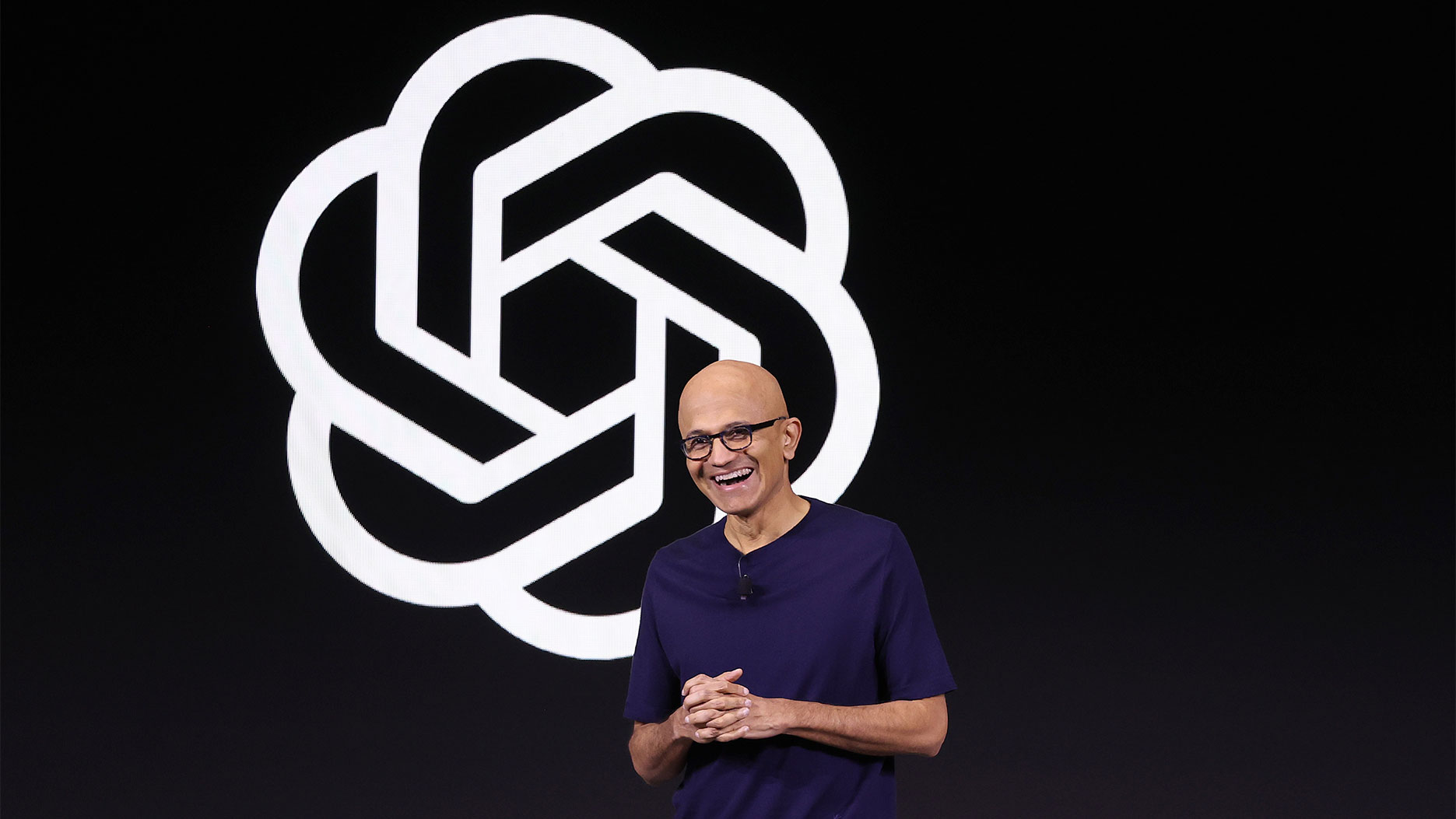
In a significant pronouncement that seeks to reframe the ongoing discourse around artificial intelligence, Microsoft CEO Satya Nadella has publicly urged the industry and society to move past the perception of AI-generated content as mere "slop." His recent remarks, shared on his personal blog, coincide with Merriam-Webster naming "slop" its word of the year, underscoring a pervasive public sentiment regarding the quality of some AI outputs. Nadella champions a vision where AI is viewed not as a replacement for human intellect or labor, but rather as "bicycles for the mind," a powerful analogy suggesting tools that amplify human capabilities and potential.
The "Bicycle for the Mind" Philosophy
Nadella’s carefully chosen phrase, "bicycles for the mind," harks back to an iconic statement by Apple co-founder Steve Jobs. Jobs famously recounted a study that measured the energy efficiency of various species, noting that humans ranked "pretty low" on the list, behind many animals. However, when a human rode a bicycle, their efficiency dramatically improved, surpassing that of a condor. Jobs used this anecdote to illustrate that computers, for the mind, could serve as similar amplifiers, enabling humans to achieve far more than they could alone. By invoking this analogy, Nadella positions AI as the next evolutionary step in cognitive tools, designed to enhance human productivity, creativity, and problem-solving, rather than to diminish or displace them.
He elaborated on this concept, advocating for "a new concept that evolves ‘bicycles for the mind’ such that we always think of AI as a scaffolding for human potential vs a substitute." This perspective is a direct challenge to the prevailing anxieties surrounding AI, particularly the fear of widespread job displacement. Nadella’s argument emphasizes the necessity of developing "a new equilibrium" in our "theory of the mind" that acknowledges humans are now equipped with these advanced cognitive amplifier tools in their interactions and work.
The "Slop" Conundrum: Quality and Perception
Merriam-Webster’s selection of "slop" as its word of the year for 2025 highlights a critical issue in the public’s current relationship with AI. The term, traditionally referring to watery, unappetizing food or carelessly produced liquid waste, has been repurposed to describe the deluge of low-quality, often nonsensical, or unoriginal content generated by large language models and other generative AI systems. This includes everything from poorly written articles and generic marketing copy to visually distorted images and uninspired digital art.
The proliferation of "slop" has raised legitimate concerns about content authenticity, the potential for misinformation, and the overall degradation of online information quality. Users frequently encounter AI-generated text that lacks nuance, factual accuracy, or genuine human insight, leading to frustration and skepticism. Nadella’s call to move beyond this perception is not merely a linguistic preference but a strategic imperative for the tech industry. For AI to truly integrate into the fabric of daily life and work, it must overcome the stigma of producing subpar output and demonstrate consistent value as a sophisticated aid.
Contrasting Narratives: Augmentation Versus Replacement
The debate over AI’s role as either an augmentative tool or a replacement for human labor has intensified with the rapid advancements in generative AI. Nadella’s stance squarely places Microsoft in the "augmentation" camp, aligning with their product strategy that focuses on "Copilots" – AI assistants integrated into existing software like Microsoft 365, GitHub, and Windows. These tools are designed to assist users with tasks, suggest improvements, and automate repetitive processes, thereby freeing up human workers for more complex and creative endeavors.
However, this philosophy stands in stark contrast to the messaging from some segments of the AI industry. Many AI agent startups, for instance, explicitly market their products on the premise of replacing human labor, often pitching their solutions as a cost-cutting measure by eliminating the need for human employees. This "stop hiring humans" rhetoric is a powerful sales tool for businesses looking to optimize operational expenses, but it simultaneously fuels public anxiety about job security.
Prominent figures in the AI community have also sounded alarms regarding potential job losses. Dario Amodei, CEO of Anthropic, a leading AI safety and research company, has repeatedly warned of significant employment impacts. He suggested that AI could displace a substantial portion of entry-level white-collar jobs, potentially leading to unemployment rates as high as 10-20% within the next five years. Such predictions, often amplified by media, contribute to a narrative of impending economic disruption and widespread human obsolescence in the workforce.
Navigating the Nuance of AI’s Impact on Employment
Disentangling the true impact of AI on employment requires careful analysis, moving beyond sensational headlines and broad generalizations. While fears of job displacement are understandable, current research suggests a more nuanced reality.
One oft-cited study, MIT’s ongoing Project Iceberg, aims to quantify the economic impact of AI on the workforce. The project estimates that AI is currently capable of performing approximately 11.7% of human paid labor tasks. Crucially, the researchers emphasize that this figure represents the percentage of tasks that can be offloaded to AI, not the percentage of jobs that can be entirely replaced. For example, the study points to tasks like automated paperwork for nurses or AI-written computer code, which enhance efficiency rather than eliminating the need for nurses or programmers altogether. This distinction is vital: a tool that automates 10% of a job’s tasks makes the human worker more efficient, potentially increasing their value, rather than rendering them redundant.
Indeed, while some sectors face undeniable challenges, other data presents a counter-narrative. A 2026 economic forecast report by Vanguard found that "the approximately 100 occupations most exposed to AI automation are actually outperforming the rest of the labor market in terms of job growth and real wage increases." This suggests that rather than being replaced, individuals in these roles who master AI tools are becoming more valuable, leveraging the technology to enhance their productivity and output. This phenomenon creates a "skills premium" where proficiency in AI tools becomes a critical differentiator in the labor market.
Nevertheless, certain job categories have already felt the impact. Corporate graphic artists, marketing bloggers, and entry-level junior coders are frequently cited examples. Generative AI tools can produce basic designs, marketing copy, and simple code snippets rapidly and at low cost, thereby commoditizing skills that once required significant human effort. This does not necessarily mean the end of these professions but signals a shift towards higher-level, more strategic, and creative work that AI cannot yet replicate. Highly skilled artists, writers, and programmers who integrate AI into their workflows often produce superior results, demonstrating that AI is a powerful assistant, not a substitute for human creativity and expertise.
The Paradox of Corporate Actions and AI Narratives
Adding a layer of complexity to Nadella’s message is the reality of corporate actions within the tech industry. Microsoft itself, despite advocating for AI as an amplifier, laid off over 15,000 employees in 2025. These layoffs occurred even as the company reported record revenues and profits, with Nadella publicly citing "AI transformation" as a core business objective. While he did not explicitly state that internal AI efficiency directly led to job cuts, the timing and messaging contributed to the broader public perception that AI was a factor in corporate downsizing.
This pattern was not unique to Microsoft. Research from Challenger, Gray & Christmas indicated that AI was cited as a reason for nearly 55,000 layoffs across the U.S. tech sector in 2025, impacting companies like Amazon, Salesforce, and others actively investing in AI. This creates a paradox: companies simultaneously champion AI as a tool for human empowerment while undergoing significant workforce reductions, often linking these strategic shifts to the pursuit of AI-driven efficiency.
Neutral analysis suggests that these layoffs are often multi-faceted, driven by a combination of factors including market corrections, a re-prioritization of investments towards high-growth areas like AI, and a strategic winding down of less profitable ventures. While AI may not be directly replacing thousands of individual roles in a one-to-one fashion, the strategic shift towards an "AI-first" operating model can lead to organizational restructuring that reduces overall headcount, particularly in areas deemed less critical or automatable. The "AI transformation" becomes a convenient, overarching narrative for broader business changes.
Cultural Implications and the Future of Work
Beyond economic impacts, the "slop" phenomenon also has significant cultural implications. While the term often carries negative connotations, the widespread availability of AI-generated content has also spawned new forms of entertainment. AI-created memes, short-form videos, and even deepfakes (when used innocuously) provide novel avenues for amusement and creative expression. However, this same technology raises serious ethical questions, particularly concerning deepfakes used for malicious purposes, the spread of misinformation, and the blurring of lines between authentic human expression and synthetic mimicry.
The challenge for society will be to develop "AI literacy" – the ability to critically evaluate and discern AI-generated content, understand its limitations, and appreciate its potential. Education and public discourse will be crucial in shaping how individuals interact with AI tools, ensuring they are used responsibly and effectively.
Nadella’s vision of AI as "bicycles for the mind" offers an optimistic pathway forward, one that emphasizes human agency and collaboration with intelligent systems. It calls for a collective effort to develop AI ethically, integrate it thoughtfully, and educate the workforce to leverage its power. As 2026 unfolds, the industry and society will continue to grapple with these complex questions, ultimately defining whether AI becomes a force for widespread human flourishing or a catalyst for unprecedented disruption. The future of work, creativity, and human potential hinges on finding that equilibrium where AI truly serves as a scaffold for humanity, rather than its substitute.