Amir Mahmud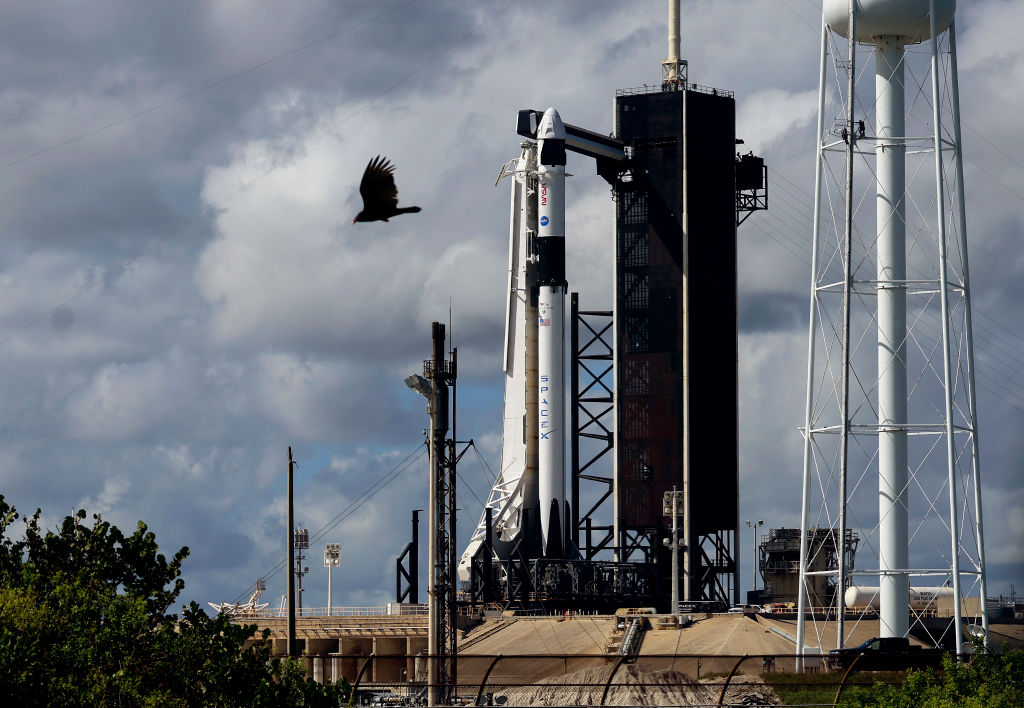
Space Exploration Technologies Corp., widely known as SpaceX, is reportedly on the cusp of a landmark financial achievement, engaging in discussions for a secondary share sale that could catapult its valuation to an astonishing $800 billion. This figure, as reported by the Wall Street Journal, would effectively double its previous valuation of $400 billion and firmly establish the aerospace giant as America’s most valuable private company, surpassing other tech behemoths like OpenAI. The potential transaction underscores a significant shift in how high-growth, innovative companies are valued within private markets, reflecting both SpaceX’s technological dominance and the evolving landscape of global capital.
The Trajectory of a Trailblazer
Founded in 2002 by visionary entrepreneur Elon Musk, SpaceX embarked on an ambitious mission to revolutionize space technology, ultimately aiming to enable human life on other planets. In its nascent years, the company faced immense skepticism and technical hurdles, including multiple failures of its early Falcon 1 rocket. Yet, through perseverance and a relentless focus on innovation, SpaceX steadily built a reputation for disrupting the traditionally conservative and government-dominated aerospace sector.
A pivotal moment arrived with the successful launch of the Falcon 9 rocket in 2010, marking a new era of reliable and comparatively affordable access to space. The subsequent development of the Dragon spacecraft, which began resupplying the International Space Station (ISS) for NASA in 2012, further cemented SpaceX’s credibility. However, it was the company’s groundbreaking achievement in rocket reusability, beginning with the first successful Falcon 9 booster landing in 2015, that truly revolutionized the industry. This innovation drastically reduced launch costs and turnaround times, making space more accessible than ever before.
By 2020, SpaceX had progressed to launching astronauts for NASA with its Crew Dragon spacecraft, ending America’s nine-year reliance on Russian rockets for human spaceflight. Simultaneously, the company began deploying its Starlink satellite constellation, an ambitious project aimed at providing global broadband internet from low Earth orbit. These milestones illustrate a clear trajectory of continuous innovation, overcoming technical challenges, and consistently expanding its operational capabilities and market reach. The company’s valuation has mirrored this ascent, growing from an estimated $1.4 billion in 2012 to the hundreds of billions seen today, reflecting investor confidence in its diverse and rapidly expanding portfolio.
Unpacking the Astronomical Valuation
The reported $800 billion valuation is not merely a number; it is a profound indicator of investor sentiment and the perceived future potential of SpaceX’s multi-faceted enterprises. This valuation is being discussed in the context of a secondary share sale, a mechanism where existing shares held by employees or early investors are sold to new investors, rather than the company issuing new shares directly. Such sales provide liquidity for long-term shareholders without requiring the company to go public, thus avoiding the intense regulatory scrutiny and quarterly reporting pressures associated with public markets.
Several key drivers underpin this extraordinary valuation:
- Dominance in Commercial Launch: SpaceX has become the undisputed leader in the global commercial launch market. Its Falcon 9 and Falcon Heavy rockets are highly sought after for their reliability, unprecedented reusability, and competitive pricing. This dominance attracts a wide array of clients, from commercial satellite operators to government agencies, providing a steady and growing revenue stream.
- Starlink’s Global Reach: With over 8 million subscribers globally as of late last year, Starlink represents a massive, rapidly expanding business unit with significant recurring revenue potential. The service is transforming connectivity in remote and underserved regions, and its strategic importance has been highlighted in geopolitical contexts, such as providing critical internet access in conflict zones. The sheer scale and growth potential of Starlink, with plans for tens of thousands of satellites, position it as a major global telecommunications player.
- Starship and Lunar/Mars Ambitions: Beyond its current operational successes, SpaceX’s ambitious Starship program offers a compelling vision for the future. Starship, a fully reusable super heavy-lift launch vehicle, is designed to transport both cargo and humans to the Moon, Mars, and beyond. While still in its developmental and testing phases, the long-term potential of Starship to revolutionize deep-space travel, lunar colonization, and even point-to-point travel on Earth, fuels investor imagination and significantly contributes to the company’s "moonshot" premium.
- Strategic Government Partnerships: Robust contracts with NASA and the Department of Defense (DoD) provide stable revenue streams and validate SpaceX’s technological prowess and reliability. These partnerships are crucial for funding large-scale projects and ensuring a baseline of demand for its launch services.
- The Elon Musk Factor: The leadership and vision of Elon Musk continue to play a significant role. His ability to articulate audacious goals, attract top engineering talent, and inspire a fervent following contributes to the company’s brand appeal and investor confidence, despite occasional controversies surrounding his other ventures.
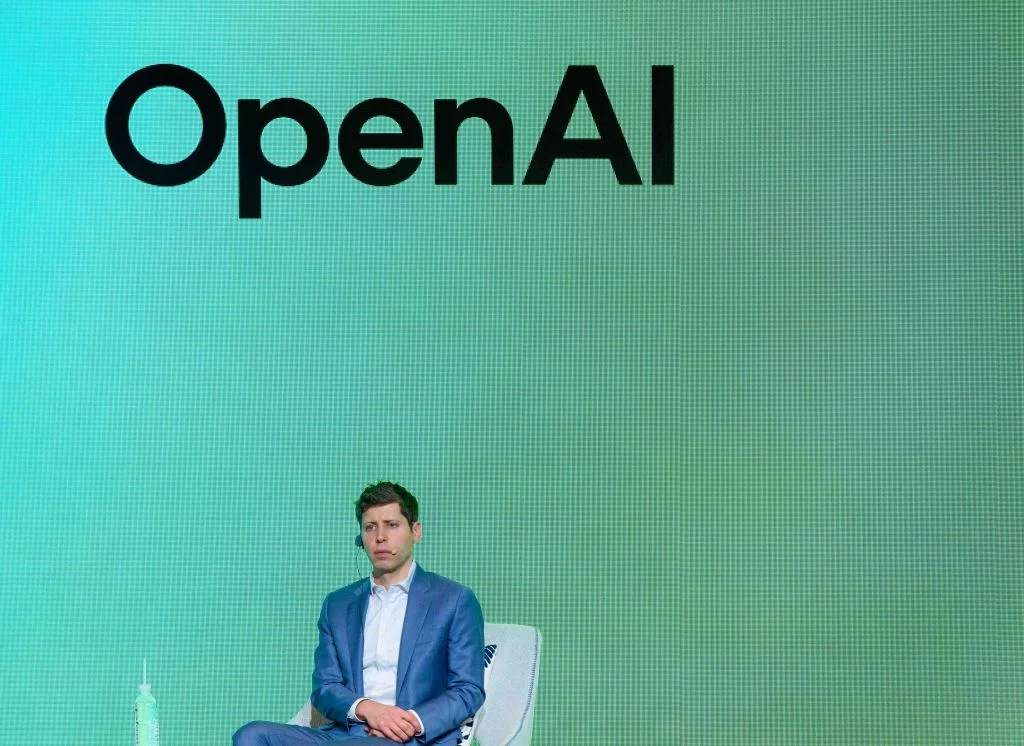
This valuation places SpaceX far ahead of other prominent private companies, including OpenAI, which recently reached a $500 billion valuation, and Anthropic, which saw its valuation surge to $350 billion following major investments. It signifies a growing trend where private market valuations rival or even exceed those of many established public companies.
Reshaping the Private Investment Landscape
The $800 billion valuation for SpaceX is not an isolated event but rather indicative of broader transformations within the private investment landscape. For years, the conventional path for high-growth startups was to eventually go public through an Initial Public Offering (IPO). However, a confluence of factors has led many companies, especially those requiring substantial long-term capital and facing complex technical challenges, to remain private for much longer.
One primary reason is the availability of vast pools of private capital. Institutional investors, sovereign wealth funds, and sophisticated venture capital firms are increasingly willing to inject large sums into private companies, chasing the high-growth returns traditionally found in the public markets. These investors often seek to participate in companies with disruptive technologies and significant market potential before they are exposed to the public market’s quarterly earnings demands and regulatory burdens.
Secondary sales, like the one SpaceX is reportedly pursuing, are a crucial component of this new paradigm. They offer a mechanism for early investors and employees to realize returns on their investments without the company having to undertake a full IPO. This provides essential liquidity and helps retain talent by allowing employees to cash out some of their equity.
The impact of SpaceX’s model extends beyond its financial valuation. Its success has fundamentally reshaped the aerospace industry. By drastically lowering launch costs and increasing launch frequency, SpaceX has democratized access to space, enabling a proliferation of new satellite applications, scientific missions, and commercial ventures. Traditional aerospace contractors, once dominant, have been compelled to innovate more rapidly and adopt more agile development processes to compete. This competitive pressure has spurred a new generation of space startups focused on everything from small satellite launch to in-orbit servicing and space tourism.
Societally, Starlink’s expansion holds profound implications. It is bridging the digital divide, connecting remote communities that previously lacked reliable internet access. Its deployment in crisis zones has also highlighted its potential as a critical communication infrastructure during emergencies and conflicts. However, the proliferation of large satellite constellations also raises concerns about space debris, orbital traffic management, and the impact of thousands of satellites on astronomical observations, prompting calls for international cooperation and regulatory frameworks.
Culturally, SpaceX, largely through Musk’s ambitious rhetoric and high-profile launches, has reignited public interest in space exploration. It has inspired a new generation to pursue careers in STEM fields and demonstrated that audacious goals once confined to science fiction are within reach.
Challenges and Future Horizons
Despite its unprecedented success and towering valuation, SpaceX faces significant challenges and uncertainties on its future trajectory.
One key analytical question revolves around the sustainability and justification of such a colossal private market valuation. While SpaceX’s assets and revenue streams are substantial, the $800 billion figure represents an extraordinary multiple of its current earnings, heavily factoring in speculative future growth, particularly from Starship and the full global rollout of Starlink. Some analysts caution that the current trend of "mega-valuations" in private markets could create an environment where valuations outpace tangible revenues and profitability, raising concerns about potential market corrections.
Competition is also intensifying across all of SpaceX’s key business areas. In the launch sector, established players like United Launch Alliance (ULA) are modernizing, and new entrants such as Blue Origin, Rocket Lab, and Relativity Space are bringing innovative launch vehicles to market. For satellite internet, Amazon’s Project Kuiper and OneWeb are formidable competitors, backed by significant capital and technological expertise. This increased competition could put pressure on SpaceX’s pricing and market share in the long run.
The Starship program, while promising, represents a massive technological and financial undertaking. Its development has faced numerous delays and technical hurdles, including several explosive test failures. Successfully achieving its full operational capability and proving its economic viability for lunar and Martian missions will require sustained investment and overcoming significant engineering challenges. Furthermore, the regulatory environment for such ambitious space endeavors, including launch licensing, orbital debris mitigation, and international space law, is still evolving and could pose additional constraints.
The path to profitability for Starlink, given the massive capital expenditure required for satellite manufacturing and deployment, is another critical consideration. While subscriber numbers are growing, the ongoing operational costs and competitive pricing strategies will dictate its long-term financial health.
Ultimately, whether SpaceX ever chooses to go public remains a subject of intense speculation. For a company of its scale and strategic importance, an IPO would be one of the largest in history, profoundly impacting global stock markets. However, given its current access to private capital and Musk’s stated preference for long-term vision over short-term quarterly pressures, an IPO may not be imminent.
In conclusion, SpaceX’s reported $800 billion valuation is a testament to its unparalleled technological innovation, market dominance, and audacious vision. It reflects a paradigm shift in how private companies are valued and funded, while simultaneously reshaping the aerospace industry and influencing global connectivity. As it navigates technical challenges, intensifying competition, and the complexities of scaling its ambitious projects, SpaceX remains a pivotal force, continuing to push the boundaries of human endeavor in space and on Earth.