Amir Mahmud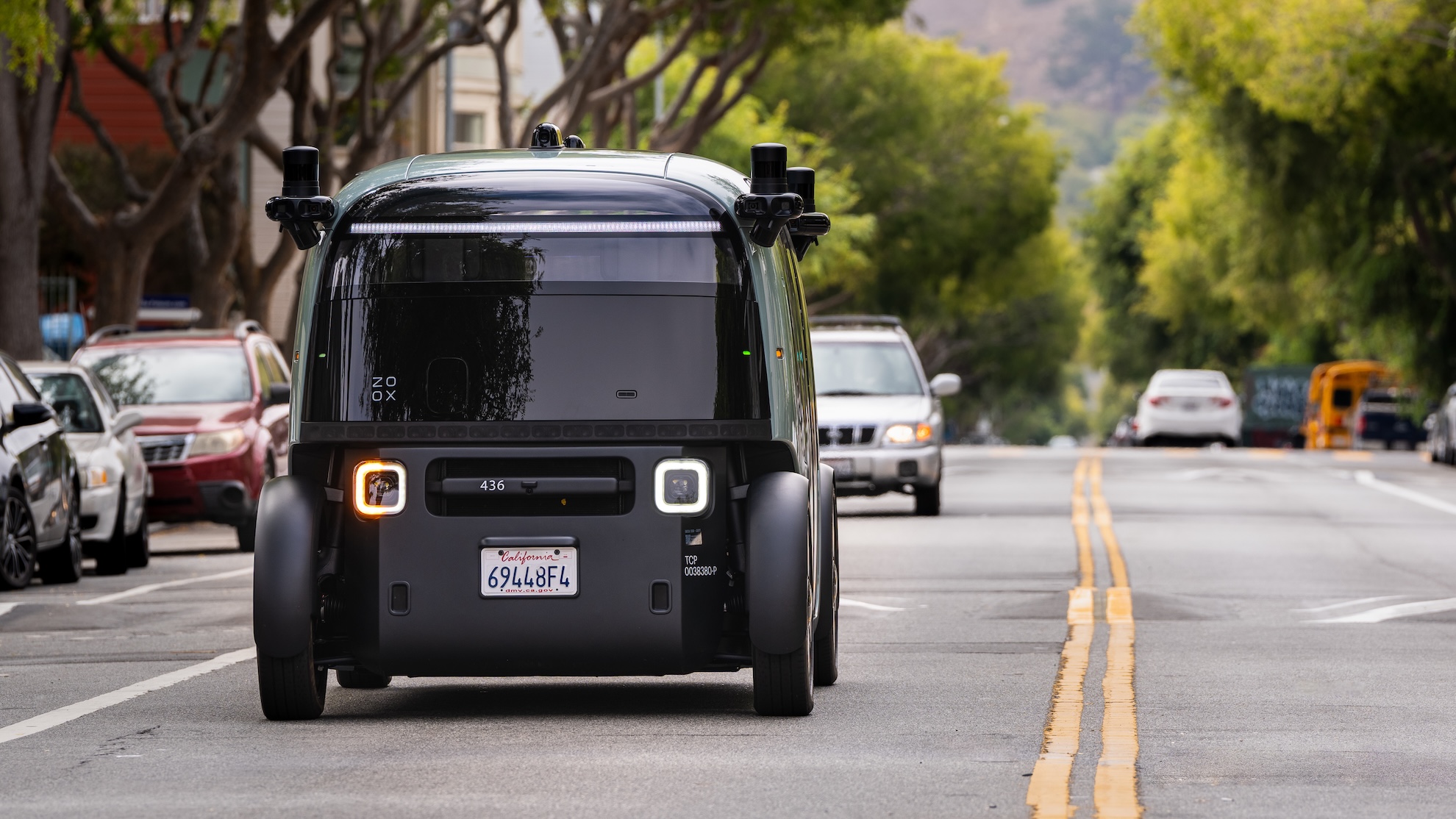
The Amazon-backed autonomous vehicle developer, Zoox, has initiated a voluntary software recall, addressing critical concerns that its proprietary autonomous driving system could cause vehicles to deviate from intended lane paths or obstruct pedestrian crossings. This recall, formally documented with the National Highway Traffic Safety Administration (NHTSA), encompasses 332 vehicles operating with the affected software, highlighting the intricate challenges inherent in deploying self-driving technology in dynamic urban environments. While no collisions directly linked to these specific software anomalies have been reported, the company acknowledges that such maneuvers inherently elevate the risk of an accident, underscoring the stringent safety thresholds demanded of autonomous systems.
The Specifics of the Software Anomaly
The core of the recall centers on a series of undesirable vehicle behaviors primarily observed near intersections. According to Zoox, its robotaxis, which currently provide free public rides in designated zones of San Francisco and Las Vegas, exhibited tendencies that, while occasionally mirrored by human drivers, fall short of the company’s rigorous safety and operational standards. One identified issue involved vehicles making late or wide turns, leading them to partially cross into opposing travel lanes. Another concern was the robotaxi’s tendency to stop within crosswalks, particularly when attempting to avoid blocking the main flow of an intersection at a red light. These actions, though perhaps minor in isolation, collectively represent a significant deviation from expected safe driving practices and can create unpredictable situations for other road users, including pedestrians, cyclists, and conventional vehicle drivers.
The initial identification of this issue dates back to August 26, when a Zoox robotaxi executed a wide right turn, momentarily encroaching into an oncoming lane before pausing. This incident triggered an internal investigation and intensified data monitoring efforts by Zoox. Over the subsequent months, between August 26 and December 5, the company identified a total of 62 similar instances of lane crossings or obstructions near intersections. This systematic data analysis and subsequent reporting to federal regulators underscore the iterative and data-driven nature of autonomous vehicle development, where every observed anomaly contributes to refining the system’s intelligence and safety protocols.
Timeline of Identification and Resolution
The journey from initial detection to formal recall illustrates the continuous feedback loop critical for autonomous vehicle safety. Following the August 26 incident, Zoox engaged in extensive monitoring of its fleet’s operational data. This proactive approach allowed the company to quantify the frequency and nature of the problematic maneuvers. Recognizing the gravity of the situation, Zoox entered into ongoing discussions with NHTSA, providing detailed insights into the occurrences, their potential severity, and the underlying root causes. These conversations are a standard part of the regulatory oversight process, ensuring that companies developing cutting-edge technologies remain accountable to public safety standards.
In response to its findings and in collaboration with NHTSA, Zoox rapidly developed and deployed targeted software improvements. The first significant update was implemented on November 7, followed by another in mid-December. These updates were designed to directly address the algorithms governing vehicle positioning, turn execution, and intersection management. The company has publicly stated its confidence in these revisions, asserting that they have successfully mitigated the identified issues. This rapid iteration and deployment capability is a hallmark of software-driven systems, allowing for swift responses to identified vulnerabilities, a contrast to traditional vehicle recalls which often involve physical components and extensive logistical challenges. The software recall officially affects vehicles that operated on public roads between March 13 and December 18, encompassing the period during which the anomalous behaviors were observed prior to the full implementation of the corrective updates.
Broader Context: The Autonomous Vehicle Landscape
The recall by Zoox unfolds within a rapidly evolving yet highly scrutinized autonomous vehicle (AV) industry. The vision of self-driving cars, once a distant futuristic concept, has progressed significantly since early research initiatives in the mid-20th century and more pronounced development efforts by companies like Google (now Waymo) in the early 2000s. Today, numerous companies are vying for leadership in this transformative sector, including Waymo, Cruise (GM’s AV unit), Mobileye, Aurora, and Zoox. These entities are investing billions in sophisticated sensor arrays, artificial intelligence, and machine learning algorithms to achieve varying levels of autonomy, from advanced driver-assistance systems (ADAS) to fully driverless (Level 4 and Level 5) capabilities.
The commercial deployment of robotaxis, particularly in dense urban areas, represents a significant milestone for the industry. However, it also brings heightened public and regulatory scrutiny. The promise of AVs includes potentially reducing traffic accidents caused by human error, improving traffic flow, and offering enhanced mobility options for diverse populations. Yet, the path to widespread adoption is fraught with technological hurdles, public skepticism, and a complex regulatory environment that often struggles to keep pace with innovation. Each incident, even those without direct harm, becomes a data point in the larger narrative of AV safety and reliability.
Regulatory Oversight and Public Trust
NHTSA plays a pivotal role in ensuring vehicle safety across the United States, and its oversight extends to autonomous vehicles. The agency’s mandate is to protect the public from crashes, deaths, and injuries by enforcing safety standards and requiring recalls for defective products. For AVs, this involves not only traditional hardware components but also the complex software that dictates vehicle behavior. The voluntary nature of Zoox’s recall, coupled with its ongoing dialogue with NHTSA, reflects a collaborative effort to maintain safety standards in a nascent industry where precedents are still being established.
However, every recall or reported incident, regardless of its severity, contributes to the public’s perception of AV safety. Building and maintaining public trust is paramount for the widespread adoption of autonomous technology. Incidents like vehicles crossing into opposing lanes or blocking crosswalks, even if minor, can reinforce anxieties about the reliability of AI-driven systems. In a social and cultural landscape where stories of technological failures often gain rapid traction, the industry faces the challenge of demonstrating consistent, verifiable safety improvements to overcome inherent human skepticism towards machines taking control of critical functions like driving. Other AV companies have also faced regulatory challenges and public pushback, underscoring that Zoox’s experience is part of a broader industry learning curve. For instance, recent events involving another prominent robotaxi operator led to the suspension of its driverless deployment permit in a major city, illustrating the high stakes involved in maintaining operational safety and public confidence.
Safety First: Zoox’s Stance and Previous Recalls
Zoox has consistently articulated a commitment to safety and transparency, reiterating that these principles are foundational to its operations. The company’s public statement regarding the current recall emphasized this ethos, noting a desire to be open with both the public and regulators about its continuous refinement and improvement processes. This commitment, however, is being tested as the company navigates a series of software recalls within a relatively short timeframe.
This latest recall is not an isolated event for Zoox. The company has encountered several software-related challenges in the past year. In March, Zoox issued a recall affecting 258 self-driving cars due to unexpected hard braking incidents. That particular recall followed a preliminary investigation by NHTSA, which was initiated after two separate reports of motorcyclists colliding with the rear of Zoox vehicles. Subsequently, in May, Zoox filed two more software recalls. These addressed concerns regarding the system’s ability to accurately predict the movements and intentions of other road users, a complex task that requires sophisticated predictive modeling and real-time data processing. The pattern of these recalls highlights the iterative nature of AV development and the constant need to identify and rectify software glitches as the technology encounters an ever-wider array of real-world driving scenarios. Each recall, while indicating a problem, also signifies the company’s process of identification and correction, crucial steps in advancing safety.
Technological Hurdles in Autonomous Driving
The incidents prompting Zoox’s recall underscore the profound technological hurdles that autonomous vehicle developers must overcome. While AVs excel in structured, predictable environments, real-world urban driving is anything but. It is characterized by "edge cases"—unusual or rare situations that are difficult to program for and test exhaustively. These can range from a child chasing a ball into the street, to an illegally parked double-parked vehicle, to unexpected road debris, or, as in Zoox’s case, complex intersection dynamics involving multiple actors.
The challenge lies in the intricate interplay of perception, prediction, and planning. An AV must accurately perceive its surroundings through an array of sensors (cameras, lidar, radar), predict the likely actions of other road users (which can be irrational or unpredictable), and then plan a safe and efficient trajectory. Maneuvers like making a turn at a busy intersection require instantaneous calculations involving speeds, distances, intentions of other drivers and pedestrians, and adherence to traffic laws, all while accounting for potential unexpected events. Programming an AV to act "human-like" but "perfectly safe" is an immense task, as human drivers often make compromises or slight deviations for practical reasons that an AV’s strict rule-based programming might interpret differently, sometimes leading to suboptimal or unsafe outcomes.
Market Implications and Competitive Landscape
For Zoox, a subsidiary of Amazon since its acquisition in 2020 for an estimated $1.2 billion, these recalls carry significant market implications. Amazon’s strategic investment in Zoox was widely seen as a play not only for future ride-hailing services but also for potential applications in logistics and last-mile delivery. While software recalls are a normal part of the automotive industry, a series of them, particularly for a nascent technology, can impact investor confidence and potentially slow down commercialization timelines.
The autonomous vehicle market is intensely competitive, with companies pouring billions into R&D. Delays or setbacks for one player can create opportunities for others who demonstrate more consistent progress and reliability. The cost of developing and deploying AV technology is astronomical, and the pressure to commercialize is immense. Every recall, while a necessary safety measure, also represents a step back in terms of public perception and potentially in the race to profitability. Moreover, the broader social and cultural impact of AVs is still being debated, from their potential to revolutionize transportation and logistics to concerns about job displacement for professional drivers and ethical considerations in accident scenarios.
The Future of Urban Autonomy
Despite the challenges highlighted by Zoox’s recalls, the trajectory towards autonomous urban mobility appears set, albeit with a more cautious and iterative approach than initially envisioned by some enthusiasts. The strategy of deploying robotaxis in geofenced areas, like parts of San Francisco and Las Vegas, allows companies to gather vast amounts of real-world data in controlled, yet complex, environments. This data is then fed back into the system to refine algorithms, improve perception, and enhance decision-making capabilities.
The path forward for Zoox and the AV industry as a whole will likely involve a continued emphasis on data-driven development, rigorous testing, and transparent communication with regulators and the public. As the technology matures, the industry will need to demonstrate not just the absence of accidents but also a consistently smooth, predictable, and safe driving experience that inspires widespread confidence. The ultimate success of urban autonomy will hinge on its ability to seamlessly integrate into existing infrastructure and societal norms, proving its value while prioritizing safety above all else.
In conclusion, Zoox’s software recall over lane encroachment and crosswalk obstruction issues serves as a stark reminder of the complexities and continuous learning curve inherent in developing fully autonomous vehicles. While the company has acted swiftly to address the identified software anomalies, the incident, along with previous recalls, underscores the ongoing need for vigilance, transparency, and relentless refinement as the industry strives to bring a truly safe and reliable driverless future to fruition.