Amir Mahmud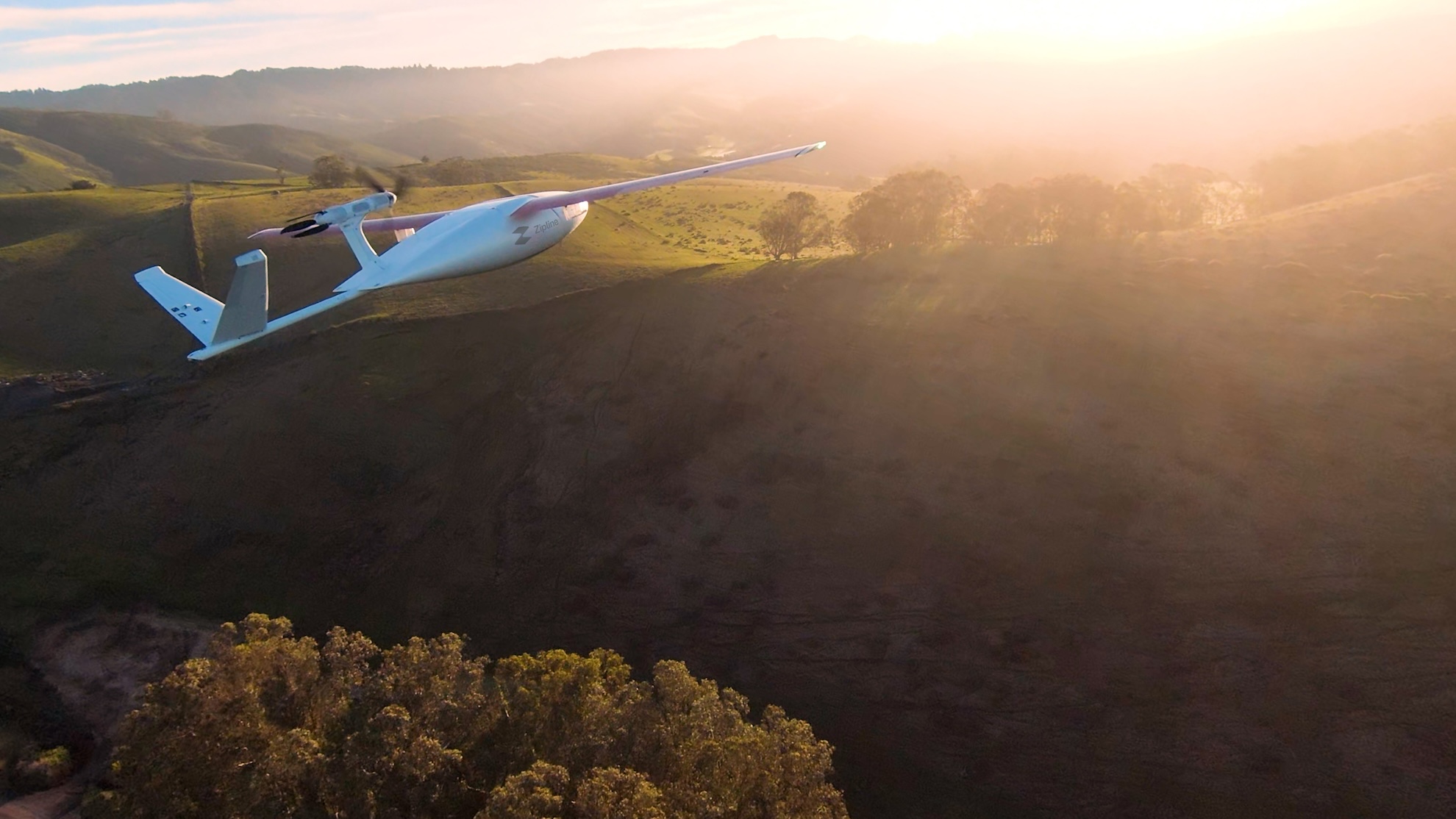
Zipline, a pioneering force in autonomous drone delivery and logistics, has successfully secured an additional $200 million in funding, significantly bolstering its recent Series H financing round. This latest capital infusion, which saw participation from prominent investors including crypto investment firm Paradigm, pushes the total for the round to an impressive $800 million. The substantial investment underscores growing confidence in Zipline’s innovative approach to last-mile logistics, affirming its market position with a valuation that reached $7.6 billion during an initial tranche announced in January. Original participants like Fidelity Management & Research Company, Baillie Gifford, Valor Equity Partners, and Tiger Global have also continued their support for the burgeoning enterprise.
Keller Rinaudo Cliffton, co-founder and CEO of Zipline, acknowledged the rapid pace of the company’s expansion in a recent public statement, noting that "things have moved a little faster than we expected." This accelerated trajectory reflects Zipline’s successful scaling of its operations and increasing demand for its services across diverse sectors and geographies. The fresh capital is earmarked to further propel the company’s ambitious expansion plans, particularly within the United States, as it seeks to transform traditional delivery paradigms.
A Decade of Innovation: From Blood Delivery to Global Logistics
Zipline’s journey began in 2014, founded with a vision to revolutionize access to critical supplies. The company carved out its initial niche by tackling one of the most pressing logistical challenges in underserved regions: the reliable delivery of medical products. Its groundbreaking work commenced in Rwanda, where Zipline deployed its autonomous drones to deliver blood and other essential medical supplies to remote hospitals and clinics. This pioneering initiative not only demonstrated the viability and life-saving potential of drone technology but also established Zipline’s reputation as a leader in humanitarian logistics.
The decision to start in Africa was strategic. Many African nations face significant infrastructural hurdles, including poor road networks and limited access to conventional transport, which often impede the timely delivery of vital medical supplies. Zipline’s drones offered a bypass to these challenges, enabling rapid, on-demand delivery that could mean the difference between life and death. This early success provided a robust proving ground for its technology and operational model, demonstrating the drones’ resilience, reliability, and efficiency in challenging environments. Over the years, Zipline has expanded its footprint across five African countries, diversifying its payload to include not only health products but also retail, food, and agricultural goods, showcasing the versatility of its autonomous platform.
The Competitive Landscape of Autonomous Delivery
The drone delivery sector, while still in its nascent stages, is rapidly attracting significant investment and innovation. Zipline operates within a dynamic competitive landscape that includes tech giants like Amazon with its Prime Air initiative, Alphabet’s Wing, and established logistics behemoths such as UPS Flight Forward and FedEx. Each player brings a unique strategy to the table, ranging from quadcopter designs optimized for urban last-mile delivery to Zipline’s fixed-wing aircraft, which are better suited for longer-range, high-speed transport.
Zipline’s distinctive approach, utilizing a catapult launch system and a parachute drop for deliveries, sets it apart from competitors that often rely on vertical take-off and landing (VTOL) drones that hover to deposit packages. This method allows Zipline’s drones to achieve greater speed and range, making them particularly effective for covering significant distances quickly. The company’s integrated ecosystem, encompassing not just the aircraft but also proprietary launch and landing systems and sophisticated logistics software, provides an end-to-end solution that is designed for scalability and efficiency.
The regulatory environment remains a significant factor shaping the industry’s growth. Aviation authorities worldwide, including the Federal Aviation Administration (FAA) in the United States, are gradually developing frameworks to safely integrate unmanned aerial vehicles into national airspace. Zipline has been actively engaged in working with these bodies to secure necessary certifications and operational approvals, a testament to its commitment to safe and compliant operations. The ability to navigate these complex regulatory waters is a key differentiator and a critical enabler for widespread commercial deployment.
Fueling U.S. Expansion and Evolving Consumer Habits
With the new capital, Zipline is intensifying its focus on the United States market, planning to expand its services into at least four new states this year. Major metropolitan areas like Houston, Phoenix, and Seattle have already been identified as key expansion targets. This aggressive push into the domestic market builds upon the momentum generated by its home delivery service, which commenced last year and has experienced remarkable growth.
Cliffton highlighted the extraordinary performance of the U.S. home delivery service, noting that delivery volume growth significantly exceeded internal forecasts in both January and February. The company anticipates an acceleration of this growth trajectory over the coming months. This surge is attributed to evolving consumer behaviors, with customers increasingly utilizing the drone delivery service multiple times a day and placing larger orders. The average amount of goods per basket has reportedly increased by over 20% in recent weeks, prompting Zipline to double the number of brands available on its app within the next month to meet diversifying consumer demand.
This shift reflects a broader societal trend towards on-demand convenience and a growing acceptance of autonomous technologies in daily life. Consumers are increasingly valuing speed and efficiency, and drone delivery offers a compelling proposition for quick, often same-day or even same-hour, fulfillment of orders ranging from groceries to essential retail items.
Global Footprint and Strategic Partnerships
Beyond its domestic ambitions, Zipline remains committed to strengthening its international presence. The company recently finalized a new national-scale contract in Rwanda, a testament to its enduring legacy and success in the country where its journey began. This new agreement will facilitate the launch of Zipline’s advanced Platform 2 autonomous drone delivery service in major Rwandan cities, expanding its impact beyond rural medical deliveries to urban consumer logistics. To support this expanded operation and its existing healthcare services, Zipline is also establishing a third distribution center in Rwanda, aiming to serve every single hospital and health facility throughout the nation.
Strategic partnerships have been a cornerstone of Zipline’s expansion strategy. In the U.S., its home delivery service initially launched with retail giant Walmart in Pea Ridge, Arkansas, and the Dallas-Fort Worth Metroplex. These collaborations extend to a dozen restaurant brands, demonstrating the versatility of Zipline’s platform across various commercial applications. Such partnerships are crucial for scaling operations, integrating into existing supply chains, and gaining consumer trust. By collaborating with established businesses, Zipline can leverage existing customer bases and infrastructure, accelerating market penetration and adoption.
The Technology Behind the Flight: Platform 1 and Platform 2
Zipline’s operational capabilities are powered by a sophisticated dual-platform drone system tailored for different logistical requirements. Its larger Platform 1 drones are designed for long-range enterprise, business, and government deliveries, capable of covering an impressive 120 miles round trip. These fixed-wing aircraft excel at transporting significant payloads over considerable distances, making them ideal for inter-facility transfers or supplying remote locations.
The newer Platform 2 drones, on the other hand, are engineered for last-mile home delivery. These more compact systems can carry payloads of up to eight pounds and deliver to customers within a 10-mile radius. The P2 platform features a unique "Zip" delivery system, where the drone hovers at a safe altitude and lowers the package precisely to the customer’s location using a tether, eliminating the need for complex landing pads or direct human interaction during delivery. This innovative design allows for quiet, precise, and highly localized deliveries, minimizing environmental impact and maximizing customer convenience. The development and deployment of these distinct platforms showcase Zipline’s commitment to continuous innovation and its ability to adapt its technology to diverse market needs.
Broader Implications: Transforming Logistics and Society
The success and expansion of companies like Zipline signal a transformative era for logistics and supply chain management. Drone delivery offers numerous advantages over traditional methods, including reduced delivery times, lower operational costs in certain scenarios, and a smaller carbon footprint due to their electric propulsion systems. In an increasingly interconnected world, where speed and efficiency are paramount, autonomous delivery systems are poised to become an integral part of modern infrastructure.
Beyond mere convenience, the societal impact of drone delivery is profound. In healthcare, it continues to bridge geographical divides, ensuring equitable access to vital medicines and supplies. Economically, it can unlock new opportunities for businesses, enabling them to reach broader customer bases and optimize their inventory management. Culturally, it shifts consumer expectations, making on-demand, rapid delivery a standard rather than a luxury. However, this revolution also brings new considerations, such as managing airspace congestion, addressing potential noise pollution, and ensuring data privacy and security.
Challenges and the Road Ahead
Despite its impressive growth and substantial funding, Zipline faces a complex path forward. Scaling operations globally while maintaining service quality and navigating disparate regulatory environments presents considerable challenges. Competition from well-funded rivals and the continuous evolution of drone technology will demand ongoing innovation and strategic agility. Public perception also plays a crucial role; ensuring safety, minimizing disruption, and communicating the benefits of drone delivery will be vital for widespread acceptance.
Yet, Zipline’s trajectory suggests a company well-positioned to meet these challenges. Its proven track record in diverse operating conditions, its dual-platform technological advantage, and its robust investor backing provide a strong foundation. As it expands its footprint in the U.S. and strengthens its global network, Zipline is not merely delivering packages; it is actively shaping the future of autonomous logistics, bringing closer a future where instant, equitable access to goods is a reality for communities worldwide. The recent $200 million injection is not just a financial boost; it’s a vote of confidence in a vision that seeks to redefine the very fabric of delivery and accessibility.