Amir Mahmud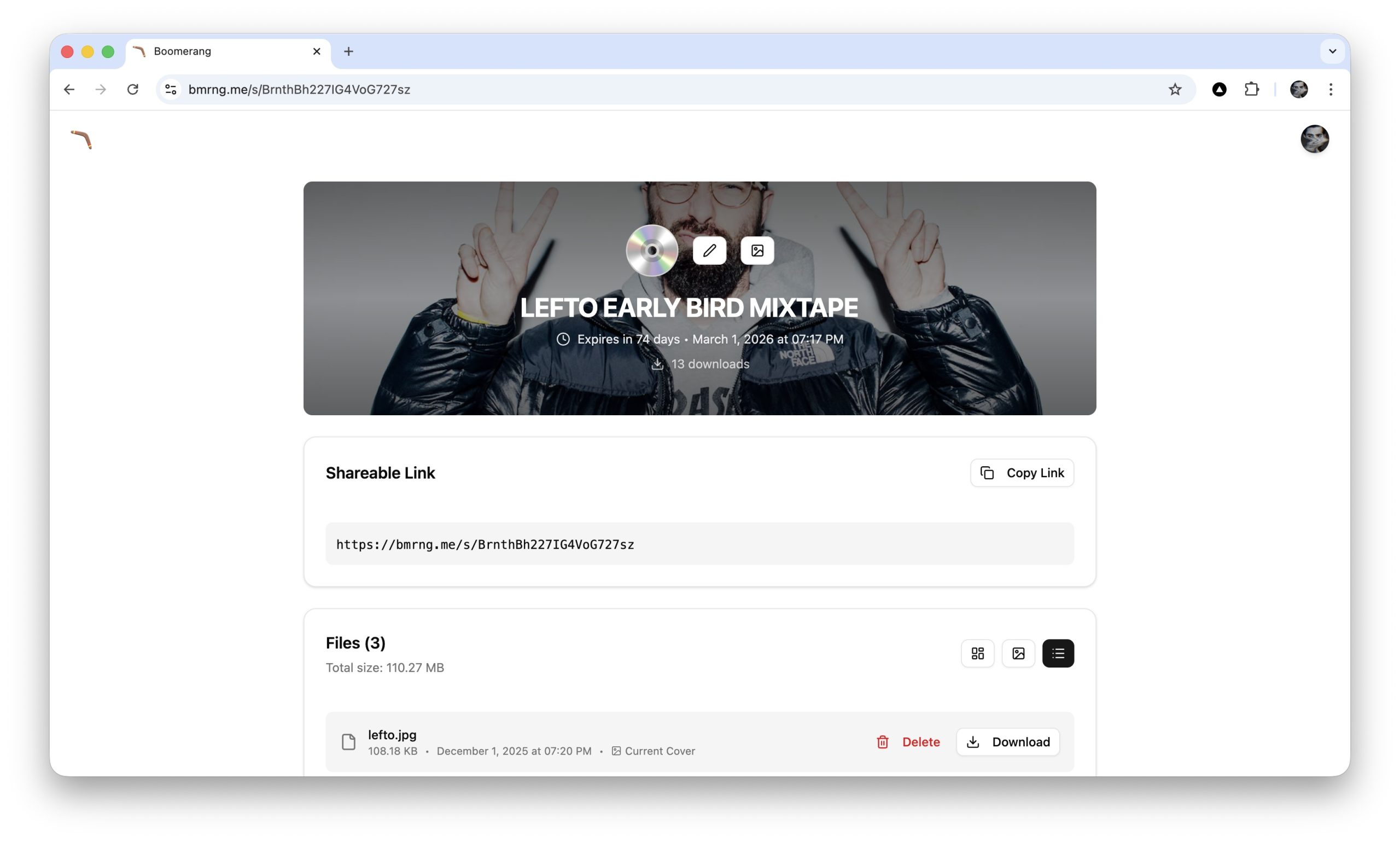
Nalden, a visionary entrepreneur who co-founded the widely recognized file transfer service WeTransfer in 2009 alongside Rinke Visser and Bas Beerens, has publicly expressed profound dissatisfaction with the company’s strategic direction following its acquisition by Bending Spoons last year. His candid critique underscores a growing concern among founders and users alike regarding the impact of private equity strategies on established digital services, ultimately propelling him to launch a new, minimalist file transfer platform named Boomerang.
The Genesis of Discontent: WeTransfer’s Transformation
WeTransfer emerged on the digital landscape over a decade ago, quickly distinguishing itself with an elegant, user-friendly interface that streamlined the often cumbersome process of sending large files. In an era when email attachment limits constrained professional workflows and creative collaborations, WeTransfer offered a refreshing solution: a simple web-based tool requiring no account registration for basic use, complemented by visually engaging full-screen advertisements. This approach resonated deeply with creatives, designers, and professionals who valued efficiency and aesthetic appeal, establishing WeTransfer as a household name in digital file sharing.
However, the path of many successful tech startups often leads to evolution, sometimes through acquisition. For WeTransfer, this pivotal moment arrived recently when it was acquired by Bending Spoons, an Italian technology company known for its strategy of acquiring popular apps and optimizing them for growth and profitability. This acquisition marked a significant turning point, and from Nalden’s perspective, signaled a departure from the core principles that initially defined WeTransfer’s success. He articulated his concerns to TechCrunch, stating that Bending Spoons’ approach appears to prioritize private equity strategies over a genuine focus on its user base. He observed that since his departure from WeTransfer in 2019, a series of updates and decisions had, in his estimation, fundamentally compromised the product’s original appeal and functionality.
The post-acquisition period saw several contentious changes that fueled Nalden’s critique. Reports emerged of confusing alterations to the transfer link experience, creating friction for users accustomed to WeTransfer’s intuitive flow. Perhaps more significantly, the company undertook a substantial restructuring, reportedly laying off 75% of its staff. Such drastic workforce reductions, while often presented as efficiency measures in corporate takeovers, can frequently lead to a loss of institutional knowledge, a decline in product development velocity, and a noticeable impact on user support and overall service quality.
The most widely publicized controversy, however, erupted this year concerning WeTransfer’s terms of service. The company faced a significant backlash from its user community when it was discovered that it had modified its terms to allow for the potential use of user content to train artificial intelligence models. This development touched a raw nerve among users, particularly those in creative industries, who often share sensitive or proprietary work through the platform. The implications for data privacy, intellectual property rights, and the ethical use of user-generated content in the burgeoning AI landscape are profound. Following widespread public outcry and a chorus of user complaints, WeTransfer was compelled to backtrack on these changes, illustrating the power of user sentiment and the critical importance of transparent data policies in the digital age.
A Philosophy of Simplicity: Boomerang’s Core Ethos
It was against this backdrop of perceived product degradation and user dissatisfaction that Nalden found himself approached by numerous creatives expressing their frustrations with WeTransfer’s trajectory. This wave of feedback solidified his conviction that there was an unmet need for a file transfer service that upheld the original values of simplicity, user-centric design, and privacy. This realization served as the catalyst for his new venture: Boomerang.
Boomerang, as envisioned by Nalden, is more than just another file transfer tool; it is a philosophical statement. It represents a deliberate counter-movement to the increasing complexity and feature bloat often observed in mature tech products. Nalden’s core question, "Why do tech companies always make things so complicated?", encapsulates his motivation. He aims to deliver a tool that prioritizes user experience, ease of use, and the straightforward act of sharing files quickly and efficiently. A cornerstone of this philosophy is the elimination of unnecessary barriers, specifically the requirement for users to sign up or verify their identity via email for basic transfers. This "no-login" approach harks back to the fundamental accessibility that characterized early internet services and was a key differentiator for WeTransfer in its formative years. By removing these friction points, Boomerang seeks to save users valuable time and effort, catering to a desire for frictionless digital interactions.
Navigating a Crowded Market: Features and Pricing
Boomerang enters a highly competitive market, but its differentiation strategy hinges on its commitment to simplicity and user choice. The service offers a tiered structure designed to accommodate various user needs, from casual transfers to more demanding professional requirements.
For casual users, Boomerang provides a straightforward, no-login experience. This tier allows for the transfer of files up to 1GB in size, with a total storage capacity of 1GB, and a seven-day expiration period for the shared content. This functionality directly addresses the need for quick, ephemeral sharing without the overhead of account management.
Users seeking slightly more robust features can opt to create a free account. This expands their capabilities to 3GB of total storage, with individual file uploads also capped at 3GB. Additional benefits include access to an upload history, the flexibility to add and delete files at any time, and the novel ability to customize page emojis during the file sending process, adding a touch of personalization to the minimalist interface.
For professionals and power users, Boomerang offers a premium paid tier at €6.99 per month. This subscription significantly enhances the service, providing 200GB of space per folder (referred to as "spaces") and a generous total storage of 500GB, with individual file upload limits extended to 5GB. Premium subscribers also gain access to advanced features such as custom covers for spaces, password protection for files, an extended expiry period of up to 90 days, and the capability to invite an unlimited number of users to access files within a specific space. This structured approach allows Boomerang to maintain its core philosophy while offering scalable solutions for different user segments.
The Broader Implications: Tech Acquisitions and User Trust
Nalden’s re-entry into the file transfer space with Boomerang is more than just a new product launch; it serves as a potent commentary on the broader dynamics of the technology industry. His explicit stance against incorporating advertising and his commitment to collecting minimal user data stand in stark contrast to the prevailing business models of many digital services, which often rely heavily on data monetization and ad revenue. He views the advertising business as inherently complex, leading to practices that can compromise user privacy and experience. Boomerang’s model is designed to be a direct, utility-driven service, akin to "buying a hammer" – a tool that simply works, without unnecessary embellishments or hidden agendas.
This philosophy also extends to the product’s aesthetic and development. Boomerang’s website and interface are intentionally barebones, a deliberate design choice that Nalden describes as "refreshing." He suggests that much of contemporary software design is geared towards impressing investors rather than serving the end-user. By stripping down the experience, Boomerang aims to offer a pure, unadulterated functionality. Interestingly, while eschewing user-facing AI features, Nalden notes that artificial intelligence plays a significant role in the building of the product itself, demonstrating a pragmatic approach to leveraging advanced technology behind the scenes without imposing it on the user experience.
The narrative of a founder returning to address perceived shortcomings in their original creation, especially after an acquisition, is not unprecedented in the tech world. It highlights the often-stark difference between a founder’s initial vision, driven by user needs and product philosophy, and the growth-oriented, profit-maximizing strategies typically employed by private equity firms. While private equity acquisitions can infuse capital and bring operational efficiencies, they can also lead to a dilution of the original product ethos, alienating loyal users and founders alike. The controversy surrounding WeTransfer’s AI content training policy is a microcosm of a larger societal debate about data ownership, privacy, and the ethical responsibilities of technology companies. In an era where digital trust is increasingly fragile, Boomerang’s emphasis on minimal data collection and a clear value proposition might resonate strongly with a user base fatigued by complex terms of service and intrusive data practices.
Looking Ahead: The Future of User-Centric Design
Boomerang’s current availability on the web, with plans for a dedicated Mac application, positions it to cater to a demographic that values seamless integration and native experiences. The success of Boomerang will depend not only on its technical capabilities but also on its ability to foster a community of users who share Nalden’s commitment to simplicity and privacy. In a digital landscape where services constantly evolve, often becoming more intricate, Boomerang presents an intriguing proposition: a return to foundational principles. It challenges the notion that more features always equate to better service and instead champions the enduring appeal of a tool designed simply to "just work." Nalden’s venture with Boomerang could signal a broader trend among users and developers to push back against feature creep and demand a more human-centered, less data-extractive approach to technology.