Amir Mahmud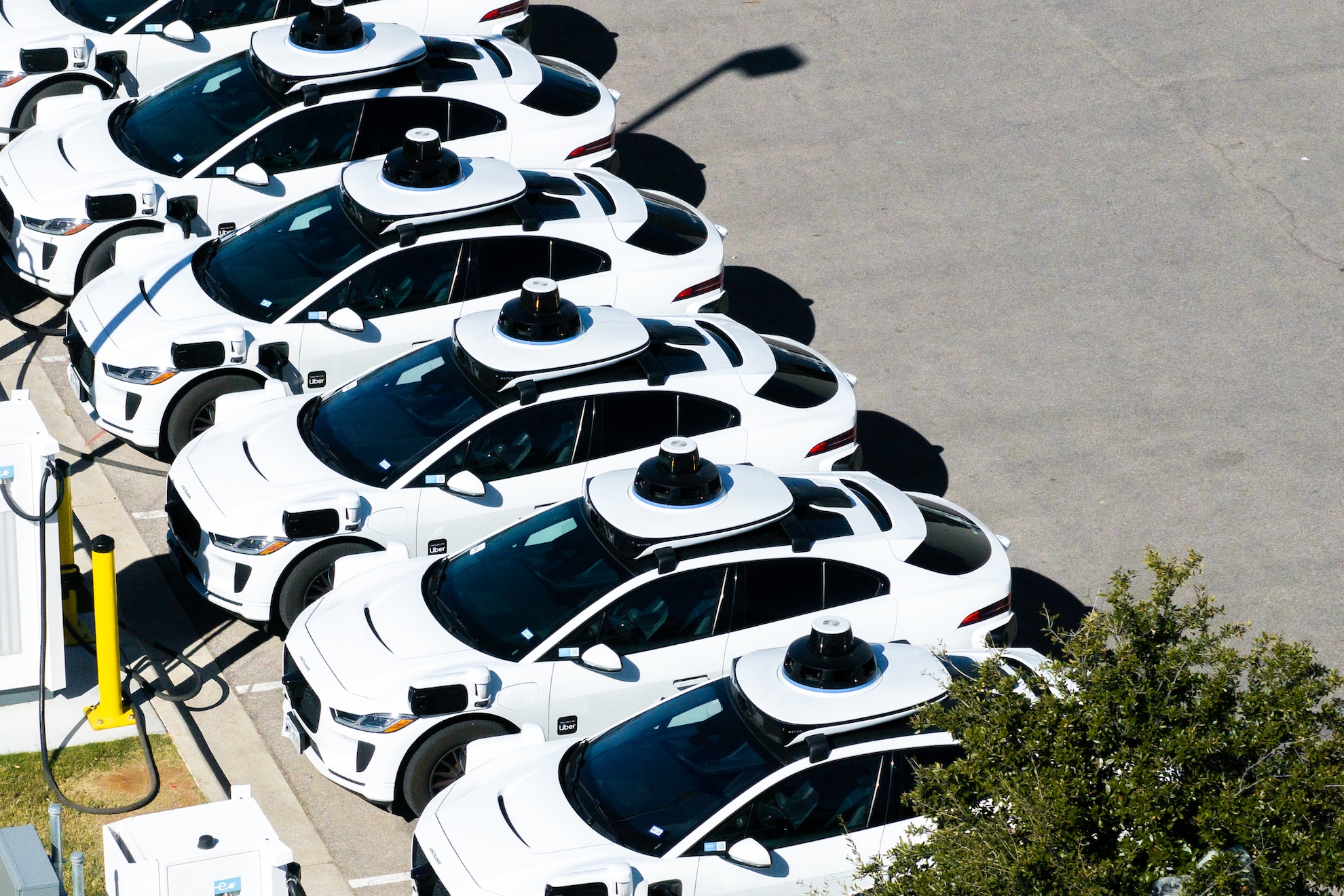
Alphabet-owned Waymo, a frontrunner in autonomous vehicle technology, has successfully closed a substantial $16 billion funding round, setting the stage for an aggressive international expansion of its robotaxi services. This significant capital infusion is earmarked to accelerate the deployment of Waymo’s driverless fleets into more than a dozen new metropolitan areas across the globe, including major hubs like London and Tokyo, within the current year.
A New Era of Expansion
The monumental funding initiative, which now values Waymo at an impressive $126 billion, was spearheaded by a consortium of prominent investment firms: Dragoneer Investment Group, DST Global, and Sequoia Capital. Alphabet, Waymo’s parent company, also participated robustly in the round, maintaining its strategic position as the majority investor. This continued backing from its corporate giant underscores a deep-seated confidence in Waymo’s trajectory and its potential to revolutionize urban transportation.
Beyond the lead investors, the financing round drew substantial contributions from a diverse group of high-profile backers. These included Andreessen Horowitz and Mubadala Capital, alongside Bessemer Venture Partners, Silver Lake, Tiger Global, and T. Rowe Price. Further demonstrating broad investor interest, additional participants comprised BDT & MSD Partners, CapitalG, Fidelity Management & Research Company, GV, Kleiner Perkins, Perry Creek Capital, and Temasek. This broad coalition of financial powerhouses reflects a growing belief in the commercial viability and long-term impact of autonomous ride-hailing at scale.
Waymo articulated that these newly acquired funds are crucial to sustaining its rapid growth, a momentum that has visibly intensified over the past year and shows no signs of abating. The company’s recent operational milestones include securing the capability to offer rides to and from San Francisco International Airport, a critical logistical achievement for any ride-hailing service. Furthermore, Waymo has systematically broadened its robotaxi footprint across Northern California and established a presence in several key U.S. metropolitan regions, notably Los Angeles, Austin, and Miami. This expansion trajectory signals a deliberate strategy to solidify its domestic market position before a wider international push.
The Road Traveled: A Decade of Autonomous Development
Waymo’s journey as a pioneer in self-driving technology spans more than a decade, originating as the secretive "Project Chauffeur" within Google. Launched in 2009, this ambitious initiative aimed to develop fully autonomous driving systems long before the concept was widely discussed or technologically feasible. For many years, the project progressed methodically, operating largely under the radar, meticulously testing its autonomous vehicle (AV) technology on public roads throughout Silicon Valley and the broader Bay Area. These early phases were characterized by extensive data collection, algorithm refinement, and occasional demonstrations to the public and media, slowly building a foundation of real-world experience.
A pivotal moment arrived in 2016 when Google formally spun out the project into a dedicated company, Waymo, signaling a clear intent to commercialize its technology. That same year, Waymo made its inaugural geographic leap, initiating testing operations in Phoenix, Arizona. The arid climate and predictable road layouts of Phoenix proved an ideal environment for advanced testing. It was here, in Phoenix, that Waymo achieved a significant industry first: the removal of human safety drivers from its vehicles in a public, fully autonomous ride-hailing service. Phoenix thus became Waymo’s premier robotaxi market, where the public could experience the novelty of summoning and riding in driverless Chrysler Pacifica minivans. This milestone marked a critical transition from purely experimental research to genuine commercial operation, albeit within a restricted geofence.
The company significantly accelerated its deployment efforts in August 2023, following the acquisition of the final necessary permits to operate a fully commercial robotaxi service in California, including the ability to charge for rides. This regulatory clearance unlocked a massive new market. Waymo initially launched a limited service in San Francisco, a complex urban environment that presented a formidable test for its AI drivers. This service quickly expanded to encompass much of the greater Bay Area, Silicon Valley, and more recently, the freeways connecting dozens of towns within the region. The expansion continued into Los Angeles, another sprawling and intricate urban landscape. Further demonstrating its strategic partnerships, Waymo entered Austin and Atlanta in 2025 through a collaboration with Uber, integrating its AVs into Uber’s expansive ride-hailing network. The current year commenced with an additional expansion into Miami, underscoring the company’s commitment to broad U.S. market penetration.
This aggressive geographic expansion has translated into impressive operational metrics. Waymo currently provides approximately 400,000 rides every week across its six major U.S. metropolitan operating areas. In 2025 alone, the company more than tripled its annual ride volume, reaching an impressive 15 million rides. Cumulatively, Waymo has now surpassed 20 million lifetime rides, a testament to the increasing reliability and public acceptance of its technology. In a recent blog post, the company confidently asserted, "We are no longer proving a concept. We are scaling a commercial reality, laying the groundwork for ride-hailing operations in over 20 additional cities in 2026, including Tokyo and London." This statement encapsulates Waymo’s shift from an R&D-focused entity to a commercially driven enterprise poised for global market leadership.
Fueling Global Ambition: The Investment Details
The $16 billion funding round positions Waymo with substantial financial firepower to execute its ambitious international strategy. Such a significant private investment in the autonomous vehicle sector, especially during a period of fluctuating tech valuations, signals robust investor confidence not just in Waymo specifically, but in the long-term potential of self-driving technology as a whole. This capital will primarily be channeled into several key areas: scaling its fleet size, investing in further technological advancements, expanding its operational infrastructure in new markets, and navigating complex regulatory landscapes globally.
For Waymo, scaling its fleet means manufacturing or acquiring a large number of specialized autonomous vehicles, which often involve bespoke sensor suites and computing platforms. Each new city requires mapping, data collection, and localization efforts, alongside the establishment of maintenance depots and charging infrastructure. The funds will also support the ongoing research and development necessary to enhance the Waymo Driver’s capabilities, particularly for diverse and challenging international driving environments with different road rules, signage, and driver behaviors.
Navigating the Future: Opportunities and Obstacles
While the narrative surrounding Waymo is largely one of impressive growth and technological prowess, the rapid expansion has inevitably led to heightened scrutiny and criticism. The deployment of autonomous vehicles, particularly in dense urban settings, is a complex undertaking, and Waymo’s robotaxis have encountered a number of operational missteps, creating challenges for residents and prompting regulatory concern.
Specific incidents have drawn significant attention. Some Waymo robotaxis have exhibited concerning behaviors, particularly in sensitive areas like school zones. These issues prompted formal investigations by key U.S. regulatory bodies. The National Highway Traffic Safety Administration’s (NHTSA) Office of Defects Investigation, alongside the National Transportation Safety Board (NTSB), opened probes into allegations of Waymo robotaxis engaging in illegal behavior around school buses, such as failing to stop when required. More recently, NHTSA launched another investigation after a Waymo robotaxi was involved in an incident where it struck a child near an elementary school in Santa Monica. The child sustained minor injuries, with the vehicle impacting at approximately 6 mph. These incidents underscore the critical balance between innovation and public safety, highlighting the ongoing challenges of deploying advanced AI systems in dynamic human environments.
The market impact of successful AV deployment is profound. It threatens to disrupt traditional ride-hailing models, potentially lowering costs and increasing efficiency. Beyond passenger transport, the technology holds immense promise for logistics, last-mile delivery, and even public transit systems. Socially, autonomous vehicles could offer increased mobility for individuals unable to drive, reduce traffic congestion in cities, and, over the long term, significantly enhance road safety by eliminating human error—the leading cause of accidents. However, there are also concerns about job displacement for professional drivers, the ethical implications of AI decision-making in critical situations, and the broader societal acceptance of driverless technology.
Culturally, the integration of robotaxis represents a significant shift in how people interact with transportation and technology. It challenges established norms and requires a leap of faith from the public. The success of Waymo and its competitors will hinge not only on technological capability but also on building trust and demonstrating consistent reliability and safety.
The Broader Vision: Transforming Urban Mobility
Waymo’s ambitious plan to expand into over 20 additional cities in 2026, including major global centers like Tokyo and London, highlights the company’s vision for transforming urban mobility worldwide. Each international market presents unique challenges, from varying traffic laws and road infrastructure to distinct cultural driving norms and regulatory frameworks. Successfully navigating these complexities will require significant localization efforts, partnerships with local entities, and careful adaptation of its technology.
The investment round positions Waymo not just as a technology provider but as a critical player in the future of smart cities. By offering efficient, accessible, and potentially safer transportation options, autonomous vehicles could reshape urban planning, reduce reliance on private car ownership, and contribute to more sustainable and livable environments. However, the path to widespread adoption remains laden with technical hurdles, regulatory intricacies, and the crucial task of winning over public opinion. The coming years will be critical in determining whether Waymo’s substantial financial backing and technological leadership can truly translate into a global autonomous mobility revolution.