Amir Mahmud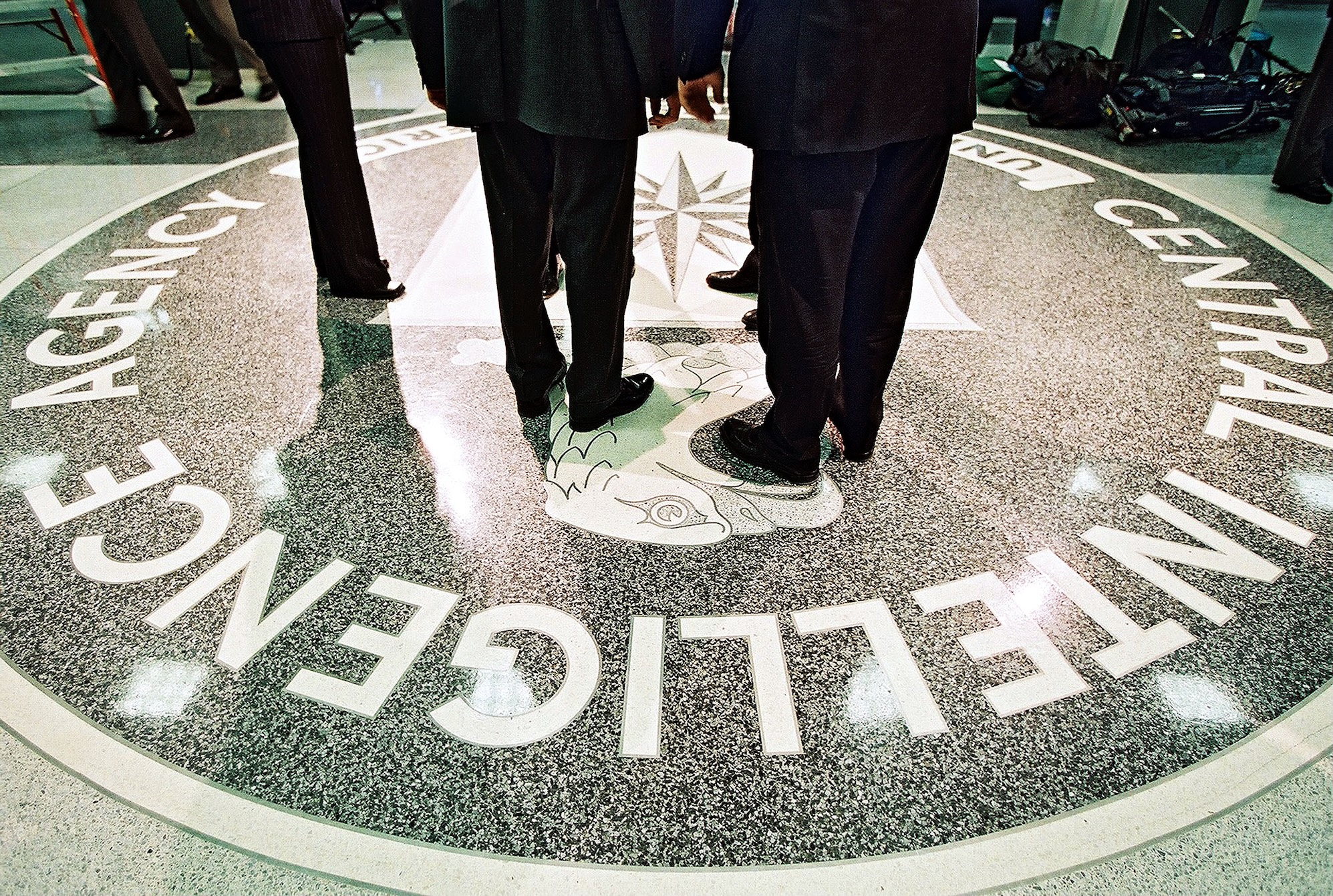
A prominent Democratic lawmaker, intimately familiar with some of the United States government’s most covert operations, has publicly voiced "deep concerns" regarding specific activities undertaken by the Central Intelligence Agency. Senator Ron Wyden, the longest-serving member of the influential Senate Intelligence Committee, issued his brief, two-line letter without divulging the exact nature of the CIA’s operations or the specific issues prompting his apprehension. This cryptic communication, however, aligns with a distinctive pattern established over recent years, where Senator Wyden has strategically hinted at potential wrongdoing or constitutional overreach within federal intelligence agencies—a practice often colloquially termed the "Wyden siren" by observers and civil liberties advocates.
Senator Wyden’s Vigilant Role
Senator Wyden’s unique position on the Senate Intelligence Committee grants him privileged access to highly classified information concerning ongoing government surveillance programs, including sophisticated cyber operations and other clandestine intelligence-gathering efforts. Tasked with the critical responsibility of overseeing the vast and often opaque intelligence community, he is one of a select few lawmakers permitted to review these sensitive materials. However, the very secrecy inherent in these programs simultaneously imposes strict legal restrictions on him, prohibiting the disclosure of specific details to nearly anyone outside a small circle of cleared Senate staff.
This delicate balance between oversight and secrecy has forged Wyden into a pivotal figure in the national discourse surrounding privacy and government surveillance. Known as a steadfast privacy hawk, his rare but pointed public statements on intelligence matters are meticulously scrutinized by civil liberties organizations, privacy advocates, and a concerned public eager for insights into the government’s clandestine capabilities. His pronouncements often serve as critical, albeit veiled, signals of potential abuses or controversial interpretations of legal authorities within the intelligence apparatus.
The CIA, in a statement released through a spokesperson, responded to Wyden’s warning with a notably defiant tone, remarking that it was "ironic but unsurprising that Senator Wyden is unhappy," and even branding his disapproval as a "badge of honor." This retort suggests a certain institutional resilience to external criticism and perhaps an underlying confidence in the legality or necessity of its actions, even those drawing the senator’s ire. Representatives for Senator Wyden, when approached for further clarification, declined to comment, citing the classified nature of the matter, reinforcing the veil of secrecy surrounding the core issue.
The "Wyden Siren": A History of Unveiling Secrets
The concept of the "Wyden siren" is not merely a journalistic moniker; it represents a recurring phenomenon in American intelligence oversight. It describes Senator Wyden’s characteristic approach to sounding an alarm without violating classification rules: issuing generalized warnings or asking pointed, often unanswerable, public questions that imply significant undisclosed issues. Historically, these warnings have often preceded major public revelations about the scope and nature of government surveillance.
One of the most notable instances occurred in 2011. At that time, Wyden publicly stated that the U.S. government was relying on a "secret interpretation" of the Patriot Act, warning of a dangerous "gap between what the public thinks the law says and what the American government secretly thinks the law says." He did not, and could not, elaborate on the specifics of this interpretation, leaving the public and many of his congressional colleagues in the dark.
This warning, initially met with skepticism by some and dismissed by others as mere political posturing, proved remarkably prescient. Just two years later, in 2013, former National Security Agency (NSA) contractor Edward Snowden exposed the vast extent of the government’s surveillance programs. Snowden’s leaks revealed that the NSA had been systematically collecting the call records—metadata, including numbers dialed, duration, and time—of hundreds of millions of American telephone subscribers on an ongoing, bulk basis. This massive data collection was, indeed, predicated on a secret interpretation of Section 215 of the Patriot Act, precisely as Wyden had warned. The revelations triggered a global uproar, prompting widespread debate about privacy, national security, and the unchecked power of intelligence agencies. Wyden’s earlier, cryptic statements were definitively vindicated, cementing his reputation as a credible, if constrained, watchdog.
Past Revelations and Their Resonance
Since the watershed Snowden disclosures, Senator Wyden has continued to deploy his unique method of indirect disclosure, consistently raising concerns about various facets of government surveillance:
- Collection of Communications Content: He has repeatedly questioned and highlighted issues surrounding how the U.S. government collects the actual content of individuals’ communications, often implying that the scope or methods might exceed public understanding or legal intent. This refers to the more intrusive collection of messages, emails, and conversations, rather than just metadata.
- Push Notification Demands: In a more recent example, Wyden revealed that the Justice Department had secretly barred major technology companies like Apple and Google from disclosing that federal authorities had been covertly demanding access to the contents of their customers’ push notifications. This highlighted a previously unknown vector for government surveillance, leveraging the ubiquitous messaging infrastructure of modern smartphones. The ability to intercept or demand data related to push notifications can provide significant insights into a user’s activities, app usage, and communications, blurring the lines between metadata and content.
- Threats to U.S. Phone Systems: Wyden has also drawn attention to a classified report compiled by the Cybersecurity and Infrastructure Security Agency (CISA) concerning national security threats to U.S. phone companies. He asserted that an unclassified version of this report, which CISA has resisted releasing, contains "shocking details" that the public deserves to know. This underscores his ongoing concern not just with direct government surveillance but also with vulnerabilities in critical infrastructure that could be exploited by adversaries, potentially impacting privacy and national security.
Each of these instances, while lacking granular detail due to classification, has served to pressure intelligence agencies for greater transparency and accountability, often forcing public and congressional dialogue on matters that would otherwise remain hidden.
The Intelligence Oversight Conundrum
The ongoing tension between national security imperatives and democratic principles of transparency and accountability lies at the heart of the "Wyden siren" phenomenon. Intelligence agencies operate in the shadows by necessity, gathering information on adversaries and protecting national interests through clandestine means. However, in a democratic society, these powerful agencies must also be subject to robust oversight to prevent abuses of power and safeguard civil liberties.
The Senate Intelligence Committee, alongside its House counterpart, is specifically designed to provide this oversight. Its members are granted access to highly sensitive information to ensure that intelligence activities are lawful, ethical, and effective. Yet, this oversight is inherently challenging. The classified nature of the information often means that committee members cannot fully explain their concerns to the public or even to other lawmakers, creating a trust deficit. When a lawmaker like Wyden issues a vague warning, it reflects the limitations of this oversight system – an attempt to inform the public and prompt action without betraying classified information.
The CIA’s "badge of honor" comment, while perhaps intended to deflect criticism, inadvertently highlights this systemic tension. It suggests that the agency perceives congressional scrutiny as an expected, perhaps even necessary, part of its operational landscape, but one that ultimately does not deter its mission. This stance can be interpreted as either a healthy confidence in their legal authority or a dismissive attitude towards the legitimate concerns of legislative oversight.
Implications for Public Trust and Technology
The recurring nature of the "Wyden siren" and the subsequent revelations have profound implications for public trust in government institutions. Each time the public learns that intelligence agencies have been operating under secret interpretations of law or engaging in undisclosed surveillance activities, it erodes confidence in the government’s commitment to transparency and constitutional safeguards. This erosion of trust can have long-lasting effects, fostering cynicism and making it harder for government agencies to gain public support for legitimate security measures.
For the technology sector, the impact is equally significant. Companies like Apple and Google find themselves caught between government demands for data and their users’ expectations of privacy. The revelation of secret demands for push notification data, for instance, places immense pressure on these companies to enhance their security protocols, encrypt communications end-to-end, and push back against government overreach where legally possible. It also fuels the trend of technology companies issuing "transparency reports," detailing the number and type of government data requests they receive, in an effort to rebuild user trust. This constant dance between compliance and protection shapes product development and public relations strategies across the industry.
Culturally, these debates reinforce the foundational American tension between liberty and security. The balance between protecting individual freedoms and ensuring collective safety is a perpetual challenge, and the "Wyden siren" serves as a regular reminder that this balance is constantly being negotiated, often behind closed doors. Civil liberties groups, such as the American Civil Liberties Union (ACLU) and the Electronic Frontier Foundation (EFF), play a crucial role in amplifying these concerns, translating complex legal and technical issues for the public, and advocating for legislative reforms that strengthen privacy protections.
Looking Ahead
As history has shown, when Senator Wyden sounds an alarm, it often signals an underlying issue of considerable magnitude. While the specific activities causing his current "deep concerns" about the CIA remain undisclosed, the pattern suggests that the intelligence community may again be operating in a manner that, in Wyden’s estimation, deviates from public understanding or acceptable legal boundaries. The CIA’s defiant response only adds to the intrigue, hinting at a potential disagreement over the scope of their authority or the interpretation of existing laws.
The public, the technology industry, and civil liberties advocates will now watch closely, anticipating what future disclosures might ultimately reveal about the latest "Wyden siren." The ongoing saga underscores the critical, yet often frustrating, role of congressional oversight in a democracy grappling with the complexities of modern intelligence gathering and the perpetual quest for balance between national security and individual rights.