Amir Mahmud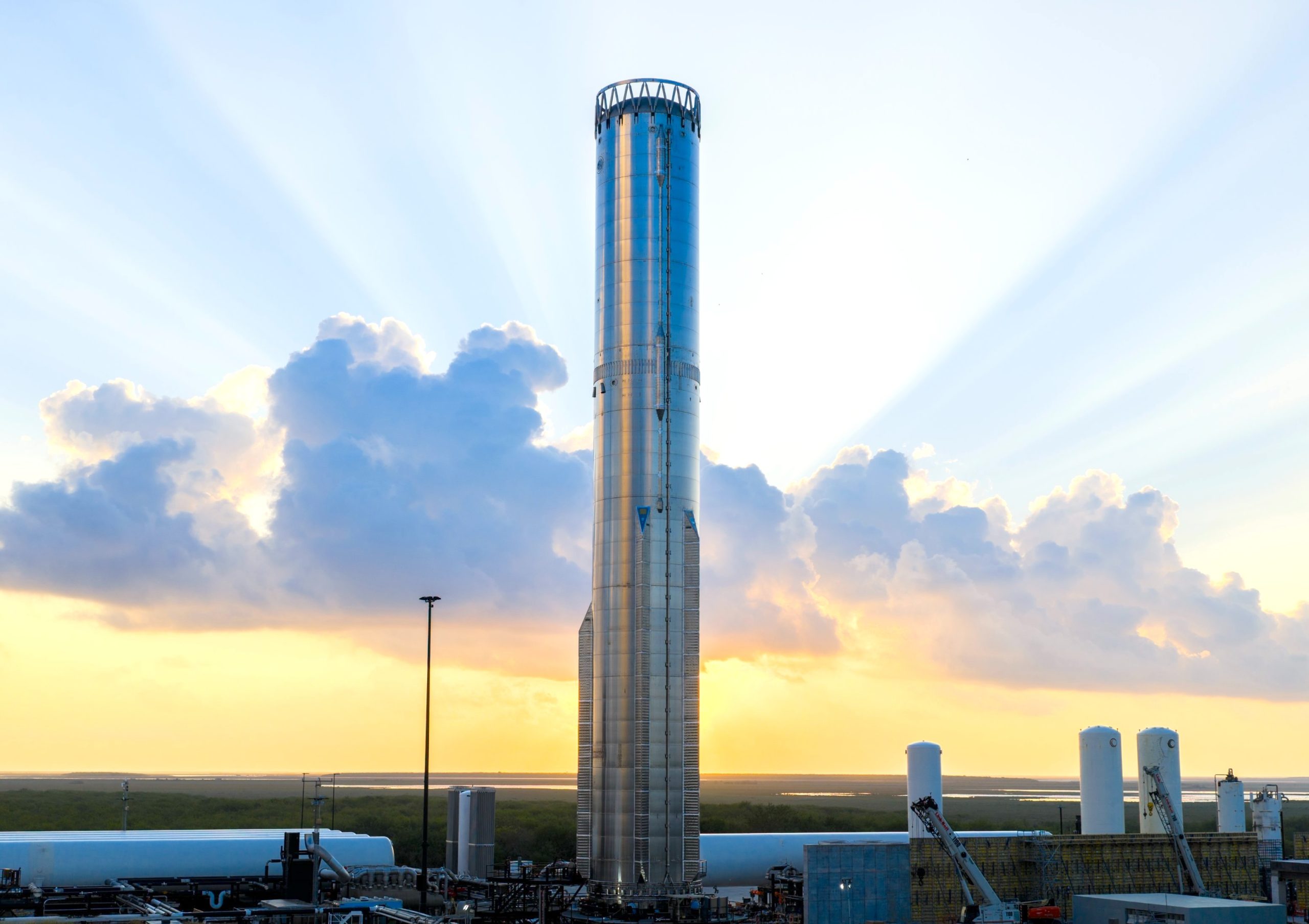
SpaceX’s ambitious development of its next-generation Starship rocket encountered an early setback this week when an advanced booster prototype, designated as a "Version 3" (V3) iteration, sustained substantial damage during pressure testing at its Starbase facility in South Texas. The incident, which occurred in the pre-dawn hours of Friday, marks a significant challenge for the private space company as it pushes forward with its plans for lunar and Martian exploration.
Live streams monitoring the Boca Chica development site captured the event around 4:00 a.m. local time, revealing a forceful expulsion that tore open a considerable portion of the booster’s lower section. Subsequent photographs shared by local observers provided a clearer view of the damage, indicating a structural compromise rather than the more typical fiery explosions associated with past rocket development phases. Notably, the incident transpired at a very preliminary stage of integration; the Super Heavy booster had not yet been outfitted with its Raptor engines, suggesting the anomaly was related to fundamental structural integrity or system operations. SpaceX subsequently confirmed via its official communication channels that the event occurred during "gas system pressure testing" and assured the public that no personnel were harmed, as the area had been appropriately cleared for hazardous operations. The company stated that its engineering teams would require time to thoroughly investigate the root cause before definitive conclusions could be drawn.
A New Era for Starship Faces Early Hurdle
This particular booster represents the vanguard of what SpaceX refers to as Starship V3, an evolution designed to be larger, more robust, and ultimately more capable than its predecessors. The V3 iteration is engineered to facilitate orbital docking maneuvers, a critical capability for SpaceX’s long-term vision of establishing a sustained human presence on the Moon and Mars. This docking functionality is paramount for the ambitious in-orbit refueling strategy, which is essential for Starship to achieve the necessary delta-v (change in velocity) to travel beyond low Earth orbit. The previous V2 design concluded its flight test campaign in October, paving the way for the V3’s introduction.
The Starship system, comprising the Starship upper stage and the Super Heavy booster, is envisioned as a fully reusable transportation system capable of carrying both cargo and crew to Earth orbit, the Moon, Mars, and potentially beyond. Its immense scale, standing nearly 400 feet tall when fully stacked, makes it the most powerful rocket ever conceived. The V3 upgrades aim to refine its structural integrity, optimize its propellant loading systems, and enhance its overall reliability, all crucial steps toward meeting the stringent safety and performance requirements for human spaceflight. This incident, however, underscores the inherent complexities and risks involved in pushing the boundaries of rocket technology.
The Iterative Development Approach
SpaceX has long championed an aggressive, iterative development philosophy, often characterized by rapid prototyping, testing to failure, and swift redesigns. This approach stands in stark contrast to the more conservative, incremental development cycles traditionally favored by government space agencies and established aerospace contractors, which typically involve extensive ground testing and fewer full-scale prototype failures. The company’s Starbase facility in Boca Chica, Texas, serves as a testament to this methodology, with a constant stream of prototypes being constructed, tested, and sometimes dramatically retired.
The history of Starship’s development is replete with such incidents. Earlier prototypes, like the SN series (Starship prototypes 8, 9, 10, and 11), famously performed "hop tests" to various altitudes, often culminating in spectacular explosions upon landing attempts or shortly thereafter. These failures, while visually dramatic, were consistently framed by SpaceX as invaluable learning opportunities, providing critical data to inform subsequent designs. Even the first full orbital test flight of the integrated Starship and Super Heavy system in April of 2023 ended with the vehicle intentionally self-destructing over the Gulf of Mexico after suffering multiple engine failures and losing control. A second orbital test flight in November 2023 also ended prematurely, though it demonstrated significant progress in stage separation.
The current incident, occurring during a gas system pressure test of a booster without engines, highlights a different facet of the development process. Such tests are fundamental for verifying the structural integrity of propellant tanks and plumbing systems under operational pressures, ensuring they can safely contain cryogenic propellants and high-pressure gases without rupture. While less visually spectacular than an in-flight explosion, a failure at this stage indicates a fundamental challenge in the structural or material design, or in the testing procedure itself, for this new V3 iteration. It suggests the engineering teams will need to delve into material science, welding techniques, and pressure system design to understand why the booster failed to contain the forces it was designed to withstand.
NASA’s Lunar Ambitions and Starship’s Critical Role
The implications of this setback extend beyond SpaceX’s internal development schedule, impacting broader national space exploration objectives. Starship has been selected by NASA as the Human Landing System (HLS) for its Artemis program, which aims to return humans to the Moon, including the first woman and person of color, and establish a long-term lunar presence. Starship is specifically slated to carry astronauts from lunar orbit to the surface as part of the Artemis III mission, currently targeting 2028.
A crucial prerequisite for Starship to fulfill its HLS role is demonstrating in-orbit propellant transfer capability. This involves a "tanker" version of Starship ferrying fuel to another Starship in Earth orbit, allowing the lunar-bound vehicle to fill up before departing for the Moon. This complex maneuver, which has never been performed on such a large scale, is essential because Starship cannot carry enough fuel from Earth to reach the Moon and return without refueling. SpaceX has been aiming for a very aggressive 2026 timeline to demonstrate this orbital refueling, a schedule that now faces increased scrutiny.
NASA’s acting administrator, Sean Duffy, has previously voiced concerns regarding the pace of Starship’s development for the Artemis program. His comments have suggested a potential willingness to consider alternative providers, such as Jeff Bezos’s Blue Origin, if SpaceX’s progress does not meet the agency’s expectations. The pressure on SpaceX is therefore not only internal to its rapid development cycle but also external, driven by the timelines and strategic goals of a major government client and the competitive landscape.
The Intensifying Private Space Race
The commercial space sector is experiencing an unprecedented boom, with multiple private companies vying for lucrative contracts and market share. This competitive environment adds another layer of significance to Starship’s development trajectory. Blue Origin, a direct competitor to SpaceX in the heavy-lift rocket segment, has been making notable strides with its New Glenn rocket. Just last week, New Glenn successfully completed its second launch, demonstrating the landing of its first-stage booster and delivering its inaugural commercial payload for NASA. This achievement underscores Blue Origin’s growing capabilities and its commitment to reusability, a core tenet of SpaceX’s business model.
Adding to the competitive pressure, Blue Origin recently unveiled plans for an even larger variant of New Glenn, explicitly designed to compete more directly with Starship’s immense capacity. This escalating rivalry between industry giants like SpaceX and Blue Origin highlights the high stakes involved in developing next-generation launch vehicles. The ability to reliably and cost-effectively launch heavy payloads and transport humans to deep space destinations is not just a technological feat but also a significant economic and strategic advantage. Delays or significant setbacks for one player can create opportunities for others to accelerate their own programs and capture market share. Other players like United Launch Alliance (ULA) also continue to evolve their launch capabilities, though perhaps with a different development philosophy. The public and private sectors are watching closely as these companies push the boundaries of what is possible in space.
Navigating the Path Forward
The impact of this latest Starship V3 incident on SpaceX’s ambitious roadmap remains to be fully assessed. While the company’s iterative development model accounts for such failures as part of the learning process, the timing and nature of this particular setback introduce new complexities. Any substantial delay in the testing program for the V3 booster could ripple through SpaceX’s broader schedule, potentially pushing back the critical orbital refueling demonstration in 2026 and, consequently, the target date for the Artemis III crewed lunar landing in 2028.
SpaceX’s engineering teams will now embark on a thorough investigation, analyzing telemetry data, structural components, and manufacturing processes to pinpoint the exact cause of the failure. This rigorous analysis is standard practice in aerospace engineering and is crucial for implementing effective corrective actions. The company’s historical resilience in the face of previous test anomalies suggests it will likely absorb this setback and integrate the lessons learned into future designs. However, the increasing external pressure from NASA and the intensifying competition from rivals like Blue Origin mean that each step forward, and each misstep, carries heightened significance. The world will be watching closely as SpaceX navigates this challenge and continues its pursuit of multi-planetary human presence.