Amir Mahmud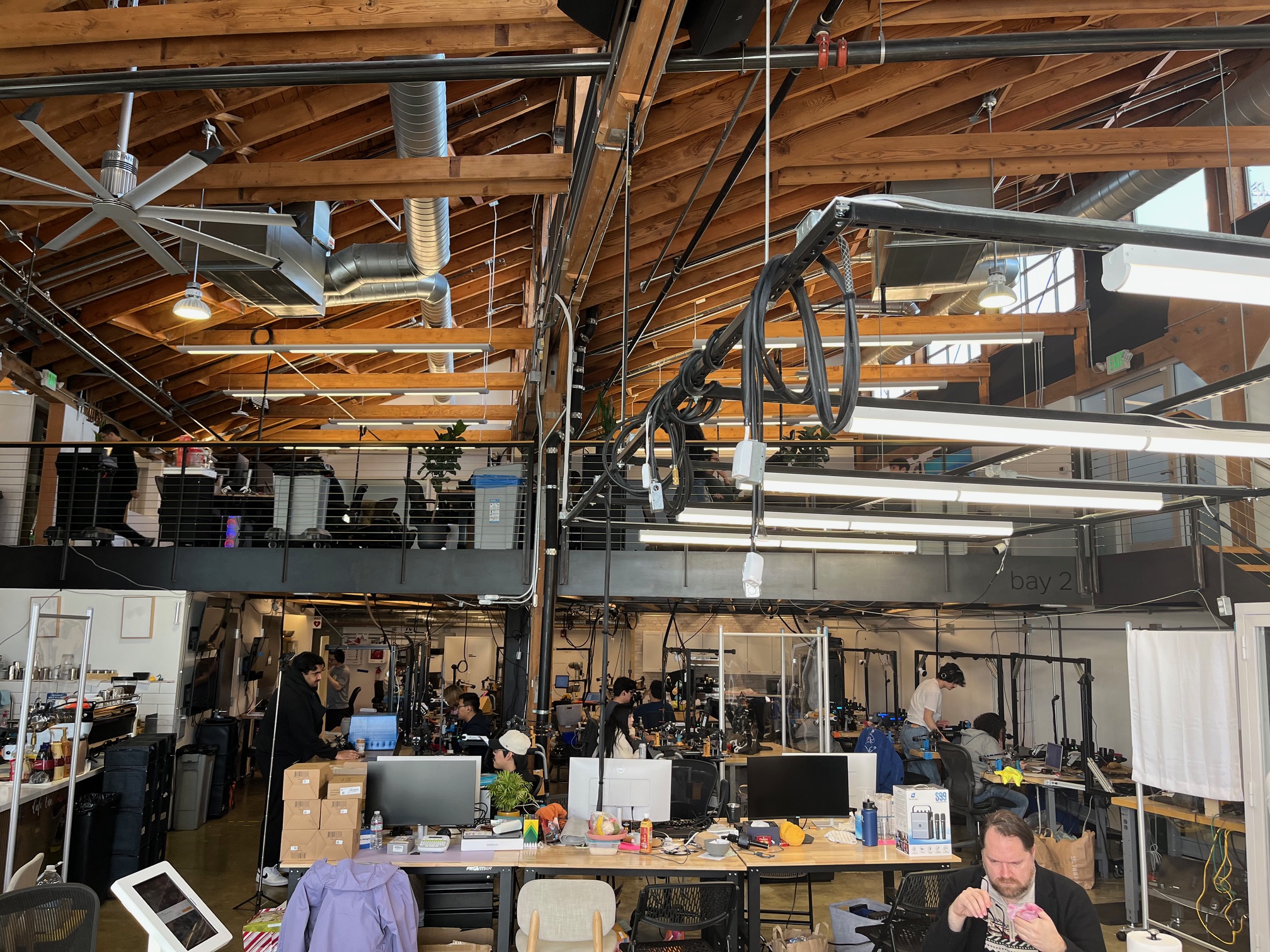
Deep within a nondescript San Francisco building, marked only by a subtle mathematical symbol on its door, a revolution in artificial intelligence is quietly unfolding. This unassuming locale serves as the operational heart for Physical Intelligence, a startup generating considerable buzz for its audacious mission: to develop the foundational "brains" that could empower robots to perform a vast array of tasks, much like large language models have transformed digital communication. The interior reveals a hive of activity, a raw, functional space where industrial concrete walls contrast with a pragmatic arrangement of blonde-wood tables. Here, amidst a sprawl of monitors, tangled wires, and spare robotic components, articulated arms are engaged in a captivating, if sometimes clumsy, ballet of domestic and industrial automation.
The Dawn of General-Purpose Robotics
The scene is a testament to the nascent stage of a profound technological shift. One robotic arm meticulously attempts to fold a pair of black trousers, its movements precise yet occasionally faltering, while another struggles with the complex manipulation required to turn a shirt inside out. Nearby, a third, seemingly more adept, efficiently peels a zucchini, depositing its shavings into a designated container with surprising consistency. These seemingly trivial chores belie the monumental ambition driving Physical Intelligence. For decades, industrial robotics has excelled at specialized, repetitive tasks within controlled environments, from welding car frames to assembling circuit boards. These machines are masters of their single domain, but largely incapable of adapting to novel situations or performing diverse functions without extensive reprogramming. The vision at Physical Intelligence, however, is to move beyond this narrow specialization, ushering in an era of truly versatile, adaptable robotic intelligence.
Sergey Levine, a co-founder of Physical Intelligence and an associate professor at UC Berkeley, articulates this aspiration with an analogy that resonates deeply in the current technological climate: "Think of it like ChatGPT, but for robots." This comparison draws a direct line between the generative capabilities of large language models, which can understand, create, and respond to human language across myriad contexts, and the potential for a similar generalized intelligence in physical machines. The shift from rule-based programming to data-driven learning represents a paradigm change, promising to unlock unprecedented flexibility and autonomy in robotic systems. Instead of engineers meticulously scripting every movement for every task, these robots learn from vast datasets, developing a foundational understanding of the physical world that allows them to generalize skills.
A Continuous Learning Ecosystem
The activity within the facility represents a crucial testing phase within a continuous, iterative learning loop. Data gathered from these robotic stations, and others strategically placed in diverse environments like warehouses and homes, feeds into the training of general-purpose robotic foundation models. Once a new model is developed, it returns to these testbeds for evaluation, refining its capabilities through real-world interaction. The faltering pants-folder and the persistent shirt-turner are not failures, but rather experiments, each attempt generating valuable data points that inform and improve the underlying intelligence. The zucchini-peeler, for instance, might be testing the model’s capacity for cross-generalization – its ability to apply the fundamental mechanics of peeling to an entirely new object, like an apple or a potato, without prior specific training for that item.
Physical Intelligence extends its experimental approach to practical applications, even operating a test kitchen within the building and at other locations. This allows their robots to interact with a wide array of environments and challenges using readily available, off-the-shelf hardware. A sophisticated espresso machine in the office, initially presumed to be for staff use, is revealed to be another learning tool for the robots. Every foamed latte, every spilled drop, contributes to a rich dataset, teaching the machines nuanced manipulation and environmental understanding. This focus on "unglamorous", accessible hardware is a deliberate strategy. Levine notes that these robotic arms, though currently carrying a significant markup, could be manufactured for under $1,000 in materials. The core philosophy is that superior intelligence can compensate for less sophisticated hardware, making advanced robotics more affordable and widely deployable. This stands in stark contrast to historical approaches where highly specialized, expensive hardware was required for specific tasks, creating significant barriers to entry and scalability.
Visionary Leadership and Unconventional Investment
Guiding this ambitious endeavor is Lachy Groom, a figure who embodies the quintessential Silicon Valley "boy wonder" narrative. At 31, Groom’s youthful demeanor belies a formidable track record, having sold his first company at 13 and later becoming an early, influential employee at Stripe. His journey to Physical Intelligence was a deliberate search for a truly transformative venture. After years as a successful angel investor, backing startups like Figma, Notion, Ramp, and Lattice, Groom found himself consistently drawn to the academic work of Sergey Levine and Chelsea Finn, a former Berkeley PhD student of Levine’s who now directs her own robotics learning lab at Stanford. When rumors of a new venture involving these luminaries, along with Google DeepMind researcher Karol Hausman, reached him, Groom pursued it with conviction. He recognized the rare confluence of a compelling idea, opportune timing, and an exceptional team – elements he deemed essential for groundbreaking success.
The financial backing for Physical Intelligence reflects this profound belief in its long-term potential. The two-year-old company has already secured over $1 billion in funding, with a valuation reaching an impressive $5.6 billion from prominent investors including Khosla Ventures, Sequoia Capital, and Thrive Capital. What makes this investment particularly noteworthy is Groom’s candid admission that he provides no specific timeline for commercialization to his backers. "That’s sort of a weird thing, that people tolerate that," he observes, yet tolerate it they do. This unusual investor patience is a hallmark of Silicon Valley’s approach to deep technology, where the promise of a foundational breakthrough, even if distant, can outweigh immediate revenue concerns. The company’s substantial capital ensures it can continue its research-intensive trajectory, with Groom noting, "There’s always more compute you can throw at the problem."
The "Any Platform, Any Task" Philosophy
At the core of Physical Intelligence’s strategy is the concept of cross-embodiment learning and the utilization of diverse data sources. Quan Vuong, another co-founder from Google DeepMind, explains that this approach aims to drastically reduce the marginal cost of onboarding autonomy to new robotic platforms. If a new hardware platform emerges tomorrow, the existing knowledge base of Physical Intelligence’s models can be transferred, eliminating the need to start data collection and training from scratch. This "any platform, any task" philosophy opens up a vast surface area for potential automation, promising a future where robots are not constrained by their physical form but rather by their adaptable intelligence.
The company is already engaging with a select group of partners across various industries – including logistics, grocery, and even a local chocolate maker – to rigorously test its systems in real-world scenarios. Vuong claims that for certain applications, the systems are already robust enough for deployment. This strategic engagement provides critical real-world data and validates the models’ ability to generalize across different environments and operational demands, a crucial step towards widespread adoption.
The Race for General Robotic Intelligence
Physical Intelligence is not alone in its pursuit of general-purpose robotic intelligence. The landscape is becoming increasingly competitive, echoing the fervent race to develop powerful large language models just a few years prior. Pittsburgh-based Skild AI, founded in 2023, recently raised $1.4 billion at a $14 billion valuation, presenting a notably different strategic approach. While Physical Intelligence maintains a primary focus on pure research and foundational model development, Skild AI has already launched its "omni-bodied" Skild Brain commercially. The company reported generating $30 million in revenue within a few months last year, deploying its technology across security, warehouse operations, and manufacturing.
This divergence highlights a profound philosophical debate within the nascent field of general robotic AI. Skild AI champions a "commercial deployment first" strategy, believing that real-world use cases generate a data flywheel that rapidly refines and improves its models. Their public commentary even takes aim at competitors, suggesting that many "robotics foundation models" are merely "vision-language models in disguise," lacking "true physical common sense" due to an over-reliance on internet-scale pretraining rather than physics-based simulation and actual robotics data.
Conversely, Physical Intelligence is making a substantial bet that a resistance to immediate commercialization will ultimately yield a more robust and truly general intelligence. This "research-first" approach prioritizes fundamental breakthroughs, aiming for a deeper, more adaptable understanding of physical interaction before scaling commercially. The long-term implications of these two distinct paths – which strategy will prove "more right" – will undoubtedly shape the future of robotics for years to come.
Navigating Challenges and Embracing the Unknown
Despite the immense investment and high-stakes competition, Physical Intelligence operates with a singular focus. Groom emphasizes the company’s "pure" nature: "A researcher has a need, we go and collect data to support that need – or new hardware or whatever it is – and then we do it. It’s not externally driven." This internal, research-driven momentum has been so potent that the company reportedly blew through its initial five-to-ten-year roadmap within just 18 months.
However, the journey is not without its significant hurdles. While the team of approximately 80 employees plans for cautious growth, Groom points to hardware as the most formidable challenge. "Hardware is just really hard," he states, detailing issues such as breakage, slow procurement cycles that delay testing, and the complex safety considerations inherent in physical machines interacting with the world. These practical difficulties underscore the distinction between developing purely software-based AI and creating intelligent systems that must operate reliably and safely in the physical realm.
As the robotic arms continue their tireless practice – the pants still imperfectly folded, the shirt stubbornly unturned, the zucchini shavings steadily accumulating – questions linger. Public discourse often grapples with the practical utility of household robots, the ethical implications of job displacement, and the safety considerations of autonomous machines in human environments. Outsiders naturally question the feasibility of Physical Intelligence’s grand vision, and whether prioritizing general intelligence over specific applications is the most prudent path.
Yet, Lachy Groom and his team remain undeterred. Their conviction is rooted in the belief that the convergence of advanced AI research, declining hardware costs, and an expanding understanding of robotic learning has created a unique window of opportunity. The history of Silicon Valley is replete with examples of groundbreaking technologies that emerged from ventures initially lacking a clear commercialization roadmap, yet ultimately reshaped industries and daily life. Investors, accustomed to these long-game bets, understand that while success is never guaranteed, the payoff for fundamentally altering the landscape of physical automation could justify the substantial risks and patient capital required. Physical Intelligence stands as a powerful testament to this enduring ethos, pushing the boundaries of what robots can learn and achieve, one zucchini peel at a time.