Amir Mahmud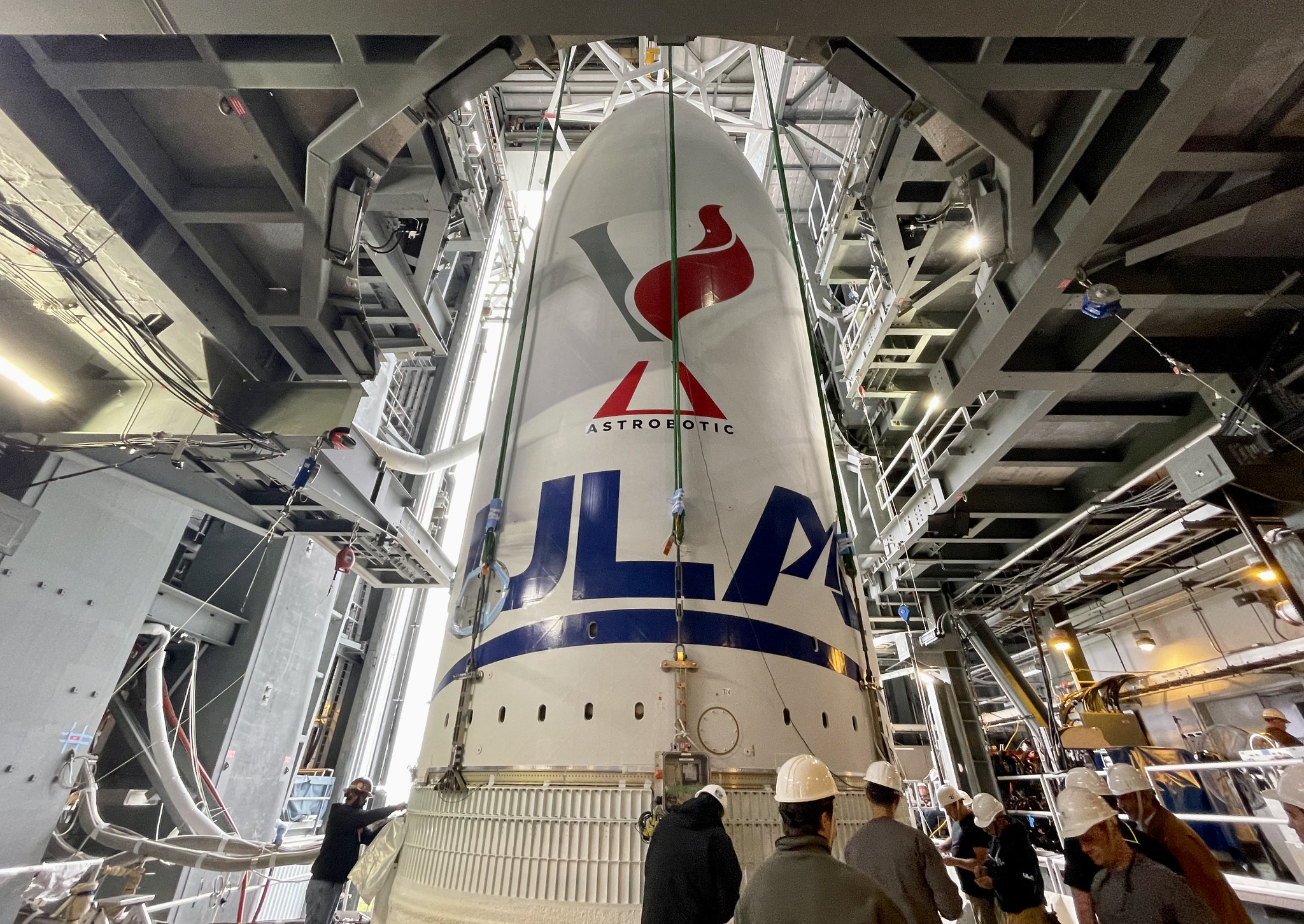
United Launch Alliance (ULA), a stalwart provider of launch services for U.S. national security and scientific missions, announced the resignation of its long-serving Chief Executive Officer, Tory Bruno, after a distinguished 12-year tenure. The departure, effective December 22, 2025, sees Bruno moving on "to pursue another opportunity," according to a company statement. This leadership change occurs at a pivotal moment for ULA, as the company navigates an increasingly competitive and rapidly evolving space launch market, characterized by the ascendancy of agile private ventures and a paradigm shift towards cost-efficiency and reusability.
A Veteran’s Departure Amidst Market Transformation
Tory Bruno, an aerospace industry veteran with a career spanning decades, took the helm of ULA in 2014, inheriting an organization built on a legacy of reliability but facing an existential challenge from a new breed of commercial space companies. Under his leadership, Bruno steered ULA through a period of significant strategic reorientation, most notably overseeing the ambitious development of the Vulcan Centaur rocket. His stated goal of completing his work and bringing Vulcan into service underscores a critical chapter in ULA’s history that has now concluded. ULA’s chairs, Robert Lightfoot and Kay Sears, expressed gratitude for Bruno’s extensive service to both the company and the nation, acknowledging his instrumental role during a transformative era. John Elbon, ULA’s Chief Operating Officer, has been appointed interim CEO as the joint venture initiates a search for a permanent successor.
The Genesis and Evolution of United Launch Alliance
To understand ULA’s current trajectory, it’s crucial to examine its origins. Formed in December 2006, ULA was a strategic joint venture between the aerospace giants Boeing and Lockheed Martin, consolidating their respective Delta and Atlas rocket programs. This unprecedented partnership was designed to create a single, efficient entity to provide launch services for the U.S. government, primarily the Department of Defense (DoD) and NASA. At the time, the rationale was clear: prevent the fragmentation of the national security launch market, reduce costs through economies of scale, and ensure assured access to space for critical government payloads.
For nearly a decade following its formation, ULA operated in a largely unchallenged environment, enjoying a virtual monopoly on government contracts. Its Atlas V and Delta IV rockets became the workhorses of U.S. space access, known for their exceptional reliability and precision. This era was characterized by a "cost-plus" contracting model, where reliability and mission assurance took precedence over aggressive cost-cutting. This stable ecosystem allowed ULA to mature its launch operations, maintaining an enviable record of successful missions, but also arguably fostered an environment less geared towards rapid innovation and market-driven cost efficiencies.
The Rise of Commercial Space and SpaceX’s Disruptive Force
The landscape began to shift dramatically in the late 2000s and early 2010s with the emergence of private spaceflight companies, most notably Elon Musk’s SpaceX. Founded in 2002, SpaceX entered the market with a fundamentally different philosophy: rapid development, vertical integration, and a relentless pursuit of reusability to drastically reduce launch costs. The introduction of the Falcon 9 rocket and its subsequent evolution, culminating in the routine recovery and reuse of its first stages, sent shockwaves through the traditional aerospace industry.
SpaceX’s disruptive innovation had a profound market impact. By offering launch services at a fraction of the cost of legacy providers, it began to win lucrative government contracts, particularly under the National Security Space Launch (NSSL) program, which ULA had historically dominated. This forced a significant reevaluation of procurement strategies within the DoD and NASA, shifting emphasis towards competitive bidding and incentivizing cost-efficiency. The social and cultural impact was also immense; SpaceX captured public imagination with its ambitious goals, frequent launches, and visually stunning rocket landings, fostering a renewed sense of excitement around space exploration and innovation. This competitive pressure became the primary catalyst for ULA’s own transformation efforts, leading directly to the Vulcan program.
The Vulcan Centaur: ULA’s Bet on the Future
One of Tory Bruno’s defining projects during his leadership was the conception and development of the Vulcan Centaur rocket. This next-generation launch vehicle was designed with two primary objectives: to replace ULA’s aging Atlas V and Delta IV fleets and, critically, to compete head-on with SpaceX’s Falcon series on cost and capability. Another significant driver for Vulcan was the geopolitical imperative to eliminate the U.S. government’s reliance on Russian-made RD-180 engines, which powered the Atlas V and became a point of contention following international sanctions.
The Vulcan program represented a strategic pivot for ULA, embracing a more cost-conscious design philosophy. It leveraged proven technologies and components from its predecessors, the Atlas and Delta rockets, to streamline development and reduce overall costs. However, a crucial decision was the selection of Blue Origin’s BE-4 engines for Vulcan’s first stage, a move that introduced a dependency on an external supplier still developing its own engine technology. This partnership, while strategically sound for fostering domestic engine production, contributed to numerous delays in Vulcan’s development timeline.
Indeed, the path to first flight was protracted, spanning a full decade after development commenced. These delays, often attributed to the complexities of engine development and stringent testing requirements, occurred precisely as SpaceX was accelerating its launch cadence and solidifying its market dominance. Despite the setbacks, Vulcan Centaur finally achieved its inaugural flight in January 2024, a significant milestone that validated years of engineering effort and investment. The successful maiden mission carried Astrobotic’s Peregrine lunar lander, marking a new era for ULA.
The Shifting Sands of Space Launch Market Dynamics
The successful introduction of Vulcan Centaur has been crucial for ULA to remain a viable player in the fiercely competitive launch market. The rocket has already secured significant commercial customers, notably Amazon for its Project Kuiper low Earth orbit internet satellite constellation. ULA announced its fourth successful Vulcan launch for Amazon, demonstrating the vehicle’s growing operational reliability and capacity to support large-scale constellation deployments. This success signals a renewed capability for ULA to capture a share of the burgeoning commercial satellite market.
However, the competitive landscape continues to evolve rapidly. While SpaceX’s Falcon 9 and Falcon Heavy rockets remain dominant, Jeff Bezos’s Blue Origin is emerging as a more formidable contender. Blue Origin’s New Glenn heavy-lift rocket recently conducted its mostly-successful inaugural missions, positioning it as another powerful option for demanding government and commercial payloads. This adds a new layer of complexity to ULA’s strategic planning, as it must now contend with two well-capitalized, innovative rivals.
Furthermore, the space industry’s broader trend towards reusability is undeniable. While Vulcan was designed with a more traditional expendable first stage, ULA has articulated plans to incorporate reusability through its "SMART" (Sensible Modular Autonomous Return Technology) concept, which aims to recover and reuse only the main engines rather than the entire first stage. This approach reflects an ongoing adaptation to market demands for lower costs and faster turnaround times, though it represents a different philosophy compared to SpaceX’s full-stage recovery. The ability to efficiently scale Vulcan production, reduce per-launch costs, and potentially implement reusability will be paramount for ULA’s long-term success.
Looking Ahead: ULA’s Future and the Interim Leadership
The departure of Tory Bruno leaves ULA at a critical juncture. The company has successfully brought its next-generation rocket online and secured vital contracts, but the challenges ahead are substantial. Interim CEO John Elbon, with his deep operational experience as COO, will be tasked with maintaining momentum while the search for a permanent leader unfolds. The ideal candidate will likely need a blend of technical expertise, business acumen, and a strong vision for navigating an industry that demands constant innovation and efficiency.
The new leadership will face pressure to optimize Vulcan’s operational cadence, reduce production costs further, and solidify ULA’s position in both the national security and commercial launch markets. This includes competing for future phases of the NSSL program, expanding its commercial customer base, and strategically investing in advanced technologies like more comprehensive reusability. ULA’s ability to adapt swiftly to technological advancements, market shifts, and evolving customer demands will define its trajectory in the coming years. As the space race intensifies and access to orbit becomes increasingly vital for national interests and global connectivity, ULA’s leadership transition marks a significant moment in its ongoing effort to secure its place in the future of spaceflight.