Amir Mahmud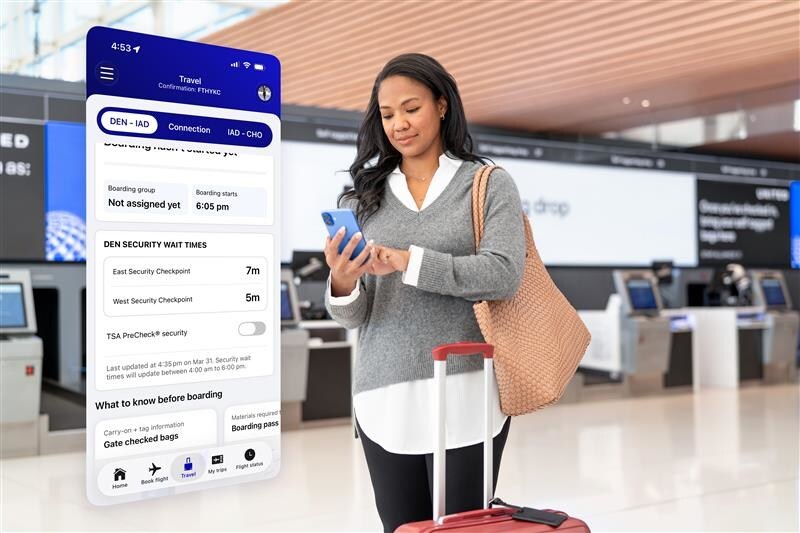
United Airlines has unveiled a significant suite of enhancements to its widely-used mobile application, introducing features designed to dramatically streamline the passenger experience from pre-departure planning through arrival. The updates, rolling out across both iOS and Android platforms, represent a strategic move by the airline to leverage digital innovation in addressing longstanding pain points in air travel, particularly in navigating airport complexities and unforeseen disruptions. Central to these improvements is the integration of real-time security wait times at key United hubs, offering travelers unprecedented transparency and control over their airport journey. This initiative arrives amidst a period where operational efficiency and passenger convenience are paramount, exacerbated by external factors such as government-related staffing challenges at security checkpoints, as highlighted by the airline in its announcement.
The Evolution of Air Travel and Digital Demands
The modern air travel experience, particularly since the early 2000s, has been profoundly shaped by evolving security requirements. Prior to September 11, 2001, airport security procedures were less extensive, and travelers could often arrive closer to their departure times with minimal concern for lengthy queues. The subsequent establishment of the Transportation Security Administration (TSA) and the implementation of more rigorous screening protocols, while vital for national security, fundamentally altered the pre-flight routine. Passengers have since navigated a complex balance between arriving early enough to clear security and minimizing idle time within the terminal. This challenge is frequently compounded by fluctuating passenger volumes, seasonal peaks, and occasional operational disruptions, including those stemming from broader governmental issues that can impact federal agency staffing.
Concurrently, the airline industry has undergone its own digital transformation. Early airline mobile applications primarily offered basic functionalities such as flight status updates and mobile boarding passes. Over time, these platforms expanded to include seat selection, baggage tracking, and in-flight entertainment options. However, the vision of a fully integrated digital travel assistant, capable of providing real-time, dynamic information crucial for navigating the airport environment itself, has remained a key area for innovation. As consumers increasingly rely on smartphones for managing nearly every aspect of their daily lives, the expectation for a seamless, informed, and proactive travel experience delivered via a single, trusted app has grown exponentially. United’s latest update directly addresses this escalating demand, aiming to consolidate various information streams into a cohesive and actionable interface within its proprietary application.
Real-Time Security Insights: A New Era of Airport Navigation
A cornerstone of United’s new digital offering is the provision of estimated security wait times directly within its mobile app. This feature is initially available at the airline’s major U.S. hub airports, including Chicago O’Hare (ORD), Denver International (DEN), George Bush Intercontinental (IAH) in Houston, Los Angeles International (LAX), Newark Liberty International (EWR), San Francisco International (SFO), and Washington Dulles International (IAD). For travelers departing from or connecting through these busy gateways, the app now displays projected wait times for both standard security lanes and TSA PreCheck lanes, offering granular detail by terminal where applicable. This functionality empowers passengers to make more informed decisions about when to proceed to security, potentially alleviating pre-flight stress and optimizing their airport schedule.
The impetus for such a feature is multifaceted. While enhancing customer service is a primary driver, the airline’s announcement also acknowledged the impact of external pressures. The context provided by United noted that the update was rolling out during an "ongoing partial government shutdown" that had reportedly left TSA checkpoints understaffed. Such governmental fiscal impasses have historically demonstrated their capacity to ripple through critical public services, directly affecting millions of travelers and leading to unpredictable operational challenges at airports. By integrating real-time data, United aims to mitigate the uncertainty arising from such situations, allowing passengers to adapt their plans dynamically. As Jason Birnbaum, United’s chief information officer, previously stated, the airline recognizes the dedication of TSA agents and the public’s need for current information, especially during periods of operational strain. This strategic integration positions the airline not merely as a transportation provider but as a proactive partner in helping travelers navigate the broader, often complex, airport ecosystem.
Beyond Security: Enhancing the End-to-End Journey
Beyond the immediate pre-security phase, United’s app enhancements extend to other critical touchpoints in the passenger journey, particularly for those with connecting flights. The updated application now offers personalized, turn-by-turn directions to connecting gates, complete with estimated walking times. This feature represents a significant improvement over generic airport maps, providing real-time status updates for the connecting flight and even offering practical tips for passengers with longer layovers, such as suggestions for amenities or lounge access. Critically, the app will also provide a "heads up" notification if United can potentially hold a connecting aircraft for passengers facing tight transfer windows, a level of proactive communication that can significantly reduce anxiety for travelers in transit.
Another major enhancement addresses the perennial challenge of flight disruptions. In the unfortunate event of delays or cancellations, the app now offers automatic rebooking assistance. This means travelers are no longer solely reliant on waiting in lengthy customer service lines or manually searching for alternative flights. United’s self-service tools will automatically present eligible passengers with rebooking options, alongside pertinent details like baggage tracking information and, where applicable, meal and hotel vouchers. This automated, proactive approach aims to transform a typically frustrating experience into a more manageable one, allowing passengers to regain control and minimize the impact of unforeseen events.
Furthermore, recognizing the growing prevalence of personal item trackers, United has integrated Apple’s "Share Item Location" feature for AirTag and other Find My network accessories. This allows passengers to share the real-time location of their luggage with United’s customer service team in the unfortunate event of lost baggage. This collaborative approach leverages consumer technology to enhance problem resolution, potentially speeding up the recovery process and providing a greater sense of peace of mind. Finally, the app will now deliver text updates featuring real-time radar maps, providing travelers with critical information on how severe weather in one region might affect their flight schedule or connections in another, fostering a more holistic understanding of potential travel impacts.
The Broader Impact: Reshaping Air Travel Expectations
These comprehensive updates from United Airlines are poised to have a ripple effect across the aviation industry, setting a new benchmark for what passengers can expect from an airline’s digital interface. The immediate impact is a tangible improvement in the customer experience. By demystifying the airport security process and proactively addressing common pain points like tight connections and flight disruptions, United aims to foster greater passenger satisfaction and loyalty. In an increasingly competitive market, airlines are constantly seeking differentiators beyond price, and superior digital tools that reduce stress and save time are powerful attractors.
Socially, the enhanced app features contribute to a broader trend of "passenger empowerment." Travelers are no longer passive recipients of information but active participants in managing their journey, equipped with data and tools that allow for greater autonomy and adaptability. This shift aligns with modern consumer expectations for personalized, on-demand services that integrate seamlessly into their digital lives. Culturally, the reliance on smartphones as indispensable travel companions is further solidified, making the airline app a central hub for all travel-related information and actions.
Operationally, these enhancements could lead to more efficient airport flows. If passengers can better time their arrival at security, it might reduce congestion during peak periods. Automated rebooking and proactive communication regarding connections could also lessen the burden on gate agents and customer service representatives, allowing them to focus on more complex issues. This synergy between digital tools and human support has the potential to optimize airline operations and improve overall on-time performance, benefiting both the airline and its passengers. The integration of location sharing for baggage also represents a move towards collaborative problem-solving, where customer-provided data can assist airline staff in resolving issues more swiftly.
Navigating the Future: Challenges and Opportunities
While the introduction of these advanced features marks a significant leap forward, their long-term effectiveness will hinge on several factors. The accuracy and real-time nature of TSA wait time data are crucial; passengers quickly lose trust if the information proves unreliable. Such data often relies on a combination of sensor technology, historical patterns, and crowdsourced input, all of which can have inherent variabilities. Similarly, the efficacy of automatic rebooking systems will depend on their ability to present optimal, personalized alternatives rapidly, especially during widespread disruptions. Data privacy, particularly concerning shared location information, will also remain a pertinent consideration, requiring transparent policies and robust security measures.
Looking ahead, the trajectory of airline digital innovation points towards even greater integration and predictive capabilities. Future enhancements could include AI-driven personalized travel assistants that anticipate needs, biometric identification for seamless airport passage, and augmented reality navigation within terminals. The challenge for airlines will be to continuously evolve their digital offerings to meet rising consumer expectations while ensuring the underlying infrastructure and data integrity are robust. United’s latest app overhaul positions it as a significant player in this digital transformation, demonstrating a clear commitment to leveraging technology not just for operational efficiency, but for fundamentally enhancing the human experience of air travel.
In conclusion, United Airlines’ comprehensive update to its mobile application signifies more than just a collection of new features; it represents a strategic vision for the future of air travel. By placing real-time data, proactive communication, and self-service tools directly into the hands of passengers, the airline is not only responding to current demands but actively shaping expectations for a more informed, less stressful, and ultimately, more enjoyable journey. This move underscores the critical role that digital platforms now play in defining the overall value proposition of a major airline in the modern era.