 Amir Mahmud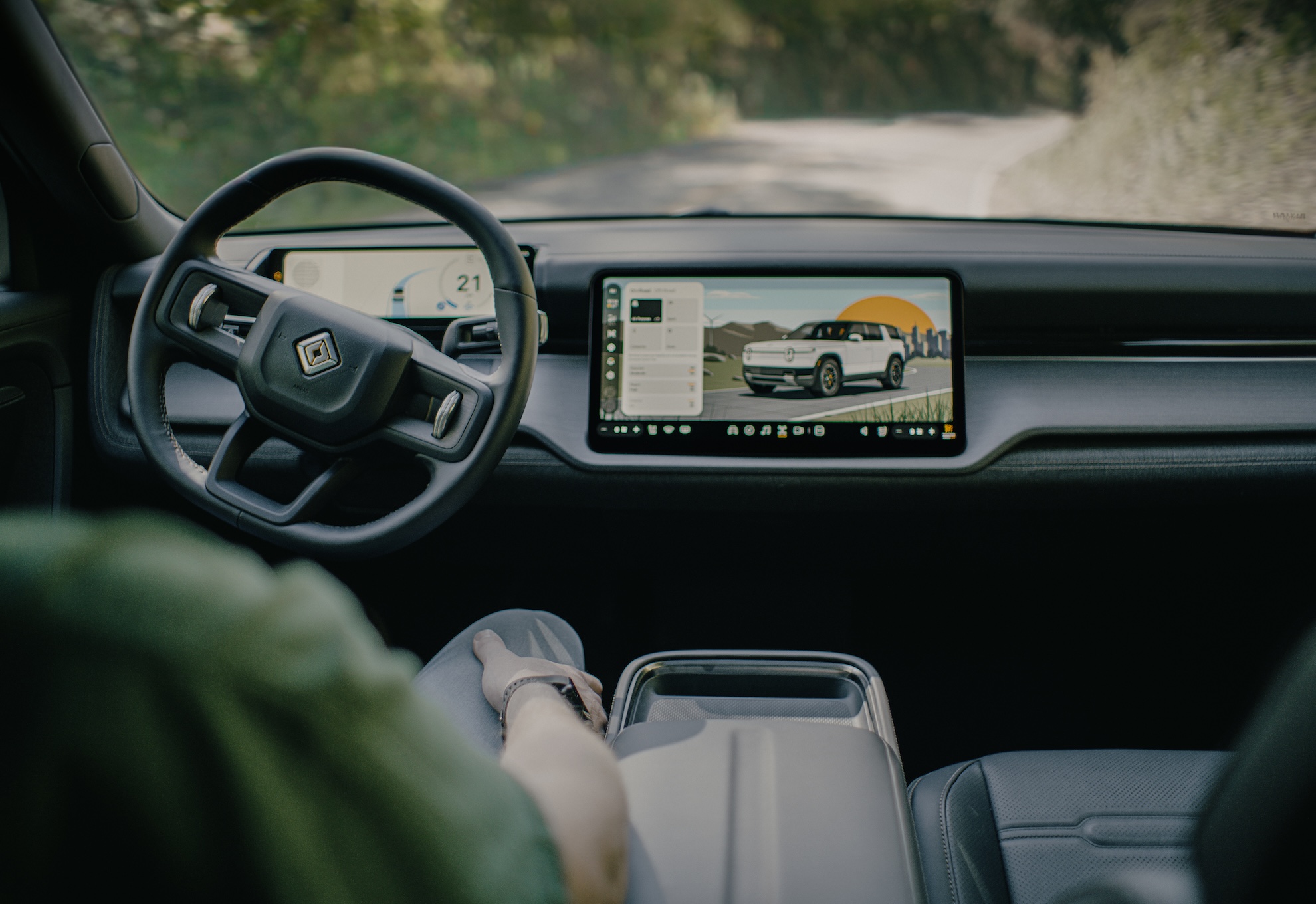
The landscape of autonomous mobility is witnessing a profound shift, with industry titans like Uber recalibrating their strategies to seize a dominant position. While the ride-hailing and delivery giant once pursued an aggressive in-house development path for self-driving technology, it has now firmly embraced a partnership-centric model, culminating in a significant alliance with electric vehicle manufacturer Rivian for a large-scale robotaxi deployment. This strategic pivot marks a crucial phase in Uber’s journey, signaling a commitment to integrating autonomous solutions across its vast global network.
Uber’s Evolving Autonomous Strategy
Uber’s engagement with autonomous vehicles (AVs) has been a saga of ambitious ventures and calculated retreats. Initially, the company invested heavily in its proprietary self-driving unit, Uber Advanced Technologies Group (ATG), viewing it as an indispensable component of its future business. This "moonshot" approach, characterized by substantial research and development expenditures, positioned Uber as a direct competitor to other vertically integrated AV developers like Waymo and Cruise. The underlying rationale was clear: controlling the entire stack, from software to hardware, offered the potential for optimized performance and a proprietary edge.
However, the financial realities and immense technical challenges of bringing fully autonomous vehicles to market soon became apparent. Developing a safe, reliable, and scalable self-driving system proved to be far more complex and capital-intensive than many initially anticipated. The industry grappled with issues ranging from sensor reliability and perception in diverse weather conditions to ethical decision-making algorithms and the sheer volume of real-world testing required. Amidst these challenges, and under pressure to achieve profitability in its core ride-hailing and food delivery businesses, Uber made a strategic decision in December 2020. It divested Uber ATG, selling it to Aurora, a leading autonomous vehicle technology company, while retaining a significant equity stake in the acquiring entity. This move allowed Uber to shed the immense R&D burden associated with direct AV development, redirecting its focus to its established revenue streams.
Despite offloading its internal AV development, Uber never abandoned its vision for an autonomous future. Instead, it meticulously crafted a new strategy centered on collaboration. Over the past two years, the company has diligently forged a web of partnerships with a diverse array of autonomous vehicle technology providers. These collaborations span multiple modalities, including last-mile delivery robots, long-haul autonomous trucking, drone delivery systems, and, most prominently, robotaxis. This distributed approach allows Uber to leverage specialized expertise and innovation from various partners, mitigating its own direct development costs and risks while maintaining a broad footprint across the nascent autonomous ecosystem. Notable among these alliances are agreements with Chinese AV companies to launch robotaxi services in Europe and the Middle East, as well as partnerships with innovative startups like the U.K.-based Wayve. This global perspective underscores Uber’s intent to be a universal platform for autonomous mobility, regardless of the underlying technology provider.
The Rivian Partnership: A Bold Bet on Vertical Integration
The latest and arguably most significant manifestation of Uber’s evolving strategy is its newly announced collaboration with Rivian, the American electric vehicle manufacturer known for its adventure-focused trucks and SUVs. This deal, potentially valued at up to $1.25 billion, represents a unique deviation within Uber’s partnership model. Unlike many of its other agreements where AV technology providers integrate their software into existing vehicle platforms, the Rivian deal sees the EV maker developing both the R2 robotaxi vehicle and its proprietary self-driving system from the ground up.
The core of the agreement entails an initial $300 million investment from Uber into Rivian, coupled with a commitment to purchase 10,000 fully autonomous R2 robotaxis. These vehicles are slated for deployment in San Francisco and Miami starting in 2028, exclusively operating on Uber’s expansive network. Furthermore, Uber holds an option to acquire an additional 40,000 R2 units beginning in 2030, signaling a long-term vision for a substantial autonomous fleet.
This partnership is particularly noteworthy because it is the sole instance where Uber has entrusted a single entity with both the vehicle manufacturing and the autonomous driving system development. Rivian, while having demonstrated considerable engineering prowess in electric vehicle design and production, has yet to mass-produce the R2 SUV, which will serve as the foundation for the robotaxi, nor has it publicly demonstrated a robust, commercial-ready self-driving system specifically designed for robotaxi operations. The R2 production is planned for Rivian’s new factory in Georgia, a facility that is still under construction. This convergence of hardware and software development, alongside a significant manufacturing ramp-up in a new facility, presents a formidable undertaking for Rivian.
Navigating the Risks and Rewards
From an analytical perspective, the Rivian-Uber deal presents a fascinating case study in risk distribution and strategic alignment within the rapidly evolving autonomous vehicle sector. While the total potential value of the agreement is substantial, Uber’s initial financial outlay is relatively modest compared to the scale of its operations and market capitalization. This structure strategically places a significant portion of the development and execution risk squarely on Rivian’s shoulders.
For Rivian, the deal represents both an immense opportunity and a considerable challenge. On the opportunity side, the guaranteed order of 10,000 (potentially up to 50,000) vehicles provides a crucial revenue stream and validates Rivian’s foray into the commercial autonomous space. The Uber partnership also injects capital and lends considerable credibility to Rivian’s autonomous ambitions, potentially attracting further investment and talent. Access to Uber’s vast ride-hailing network offers a ready-made market for deployment, bypassing the complexities of building a new customer base from scratch. This could accelerate the accumulation of real-world operational data, which is vital for refining and improving autonomous systems.
However, the risks for Rivian are equally pronounced. The company is committing significant resources to develop both a new vehicle platform and a sophisticated self-driving system simultaneously, a task that has proven exceptionally difficult even for established automotive giants and dedicated AV tech companies. This dual development path is capital-intensive and time-consuming, leading Rivian to publicly state that it no longer expects to meet its profitability goal in 2027 due to the substantial investments required for its autonomy efforts. This sacrifice highlights the immense financial strain and strategic reorientation the robotaxi project demands. Delays in factory construction, R2 production, or, most critically, in the development and validation of the self-driving software, could have significant repercussions for Rivian’s financial health and market perception. The competitive landscape for robotaxis is also intensifying, with well-funded players like Waymo and Cruise already operating in multiple cities. Rivian’s ability to enter this market successfully and on schedule will be a critical test of its engineering and operational capabilities.
For Uber, the partnership model, while reducing direct R&D burn, introduces its own set of complexities. Integrating disparate autonomous systems from various partners, each with its own operational nuances, presents significant logistical and technological hurdles. Ensuring a seamless user experience across different robotaxi providers will be paramount. The Rivian deal, specifically, carries the risk of relying on a single, relatively unproven entity for both vehicle and AV tech, potentially consolidating risk rather than diversifying it, if Rivian encounters unforeseen setbacks. Nevertheless, the potential reward of a dedicated, custom-built fleet optimized for its network could offer Uber a competitive advantage in cost-efficiency and service quality over the long term.
Nvidia’s Expanding Influence in Autonomous Development
Beyond Uber’s direct vehicle partnerships, the broader ecosystem of autonomous technology continues to evolve rapidly, with companies like Nvidia playing an increasingly central role. Nvidia, renowned for its graphics processing units (GPUs) that power artificial intelligence (AI) and high-performance computing, has strategically positioned itself as a foundational technology provider for the autonomous vehicle industry. Its "Drive Hyperion" platform offers a comprehensive, end-to-end solution for AV development, encompassing powerful hardware, advanced software, and robust simulation tools.
Nvidia’s strategy mirrors Uber’s partnership approach in its breadth, though focused on enabling, rather than directly operating, autonomous fleets. The company has made numerous investments, both direct capital injections and in-kind chip deals, into AV technology companies. Furthermore, it has actively pursued partnerships with major automakers worldwide. During its recent GTC conference, CEO Jensen Huang announced new or expanded deals with automotive giants like BYD, Geely, Hyundai, and Nissan to adopt its Drive Hyperion platform. These additions build upon existing agreements with GM, Mercedes-Benz, and Toyota, underscoring Nvidia’s pervasive influence across the global automotive sector.
Huang’s declaration that "The ChatGPT moment of self-driving cars has arrived" reflects a growing industry sentiment that the fundamental technological barriers to autonomous driving are being overcome, and the focus is now shifting towards refinement, scaling, and commercial deployment. By providing a standardized, powerful development platform, Nvidia aims to accelerate this transition for its automotive partners, allowing them to focus on vehicle integration and brand differentiation rather than building core AI infrastructure from scratch. This platform play could foster greater interoperability and accelerate the pace of innovation across the industry, although it also concentrates significant technological dependency on a single vendor.
Broader Innovations and Market Movements
The mobility sector is a hotbed of innovation, with investment flowing into diverse areas beyond traditional ride-hailing and robotaxis. Other notable developments include:
- Advanced Navigation, an Australian startup specializing in navigation and autonomous systems, secured $110 million in Series C funding. This highlights continued investor confidence in foundational technologies critical for precise and reliable autonomous operations across various domains.
- Arc Boat Company, a Los Angeles-based electric boat startup, raised $50 million in Series C funding. This indicates a growing market interest in the electrification of marine transport, extending the sustainability trend beyond land vehicles into commercial and defense applications.
- BusRight, a school bus routing and technology startup, raised over $30 million. This demonstrates the ongoing drive to modernize traditional transportation sectors through digital solutions, improving efficiency and safety.
- The reported effort by Jeff Bezos to raise $100 billion for a fund to acquire and transform major industrial firms with AI models developed by his new startup, Project Prometheus, signals a broader trend of leveraging advanced AI to revolutionize heavy industries, including automotive and aerospace manufacturing.
- Amazon’s acquisition of Rivr, a Zurich-based autonomous robotics startup known for its stair-climbing delivery robot, underscores the intense competition and strategic acquisitions in the last-mile delivery robotics space, where companies are seeking innovative solutions for complex urban environments.
- Even controversial figures like Trevor Milton, founder of the bankrupt Nikola, are attempting to re-enter the innovation scene, with reports of him seeking $1 billion for AI-powered planes, illustrating the speculative and high-stakes nature of emerging technologies.
- Zenobē Energy’s acquisition of Revolv, a San Francisco-based fleet charging startup, reflects the critical need for robust charging infrastructure and management solutions as commercial electric fleets expand.
Amidst these advancements, the industry also faces significant challenges. A recent cyberattack on Intoxalock, a U.S. vehicle breathalyzer company, left drivers stranded, highlighting the increasing vulnerability of interconnected vehicle systems to digital threats and the potential for widespread disruption. Regulatory scrutiny also continues to intensify, as evidenced by the National Highway Traffic Safety Administration (NHTSA) escalating its investigation into Tesla’s Full Self-Driving (Supervised) software over performance in low-visibility conditions. This "engineering analysis" is the highest level of scrutiny before a potential recall, emphasizing the ongoing safety concerns and regulatory oversight crucial for public acceptance of autonomous technologies. Meanwhile, Kodiak continues to expand its commercial autonomous freight operations, broadening its network to include corridors like Dallas-El Paso, demonstrating steady progress in the long-haul trucking segment.
The Future of Industrial Robotics
Complementing the advancements in autonomous vehicles is the evolving field of industrial robotics, an area of particular interest to Rivian CEO RJ Scaringe. Scaringe, who has founded a new startup called Mind Robotics, articulated a distinct philosophy on industrial automation. He argues that the current approach to industrial robotics often overemphasizes complex, human-like dexterity or flashy maneuvers, such as robots capable of backflips, which are largely irrelevant for the majority of manufacturing tasks.
Instead, Scaringe advocates for a focused development on the "hands" of a robot. He believes that the core functionality and value in industrial settings lie in a robot’s ability to precisely manipulate objects, perform intricate assembly, and interact effectively with various materials. "The work happens with the hands," Scaringe noted, emphasizing that "everything else, from a robotic system point of view, is to get the hands to the right place." This perspective suggests that resources should be concentrated on developing highly capable and versatile robotic end-effectors, while the rest of the robotic system serves primarily to position these "hands" accurately and efficiently. This pragmatic view could lead to more cost-effective, specialized, and ultimately more impactful robotic solutions for manufacturing and logistics, aligning with the operational efficiencies sought by companies like Rivian in its own production facilities. This vision underscores a broader industry trend towards practical, task-specific automation that prioritizes utility and efficiency over generalized, anthropomorphic capabilities, potentially reshaping how factories and supply chains operate in the coming decades.





 Azin Asro