Amir Mahmud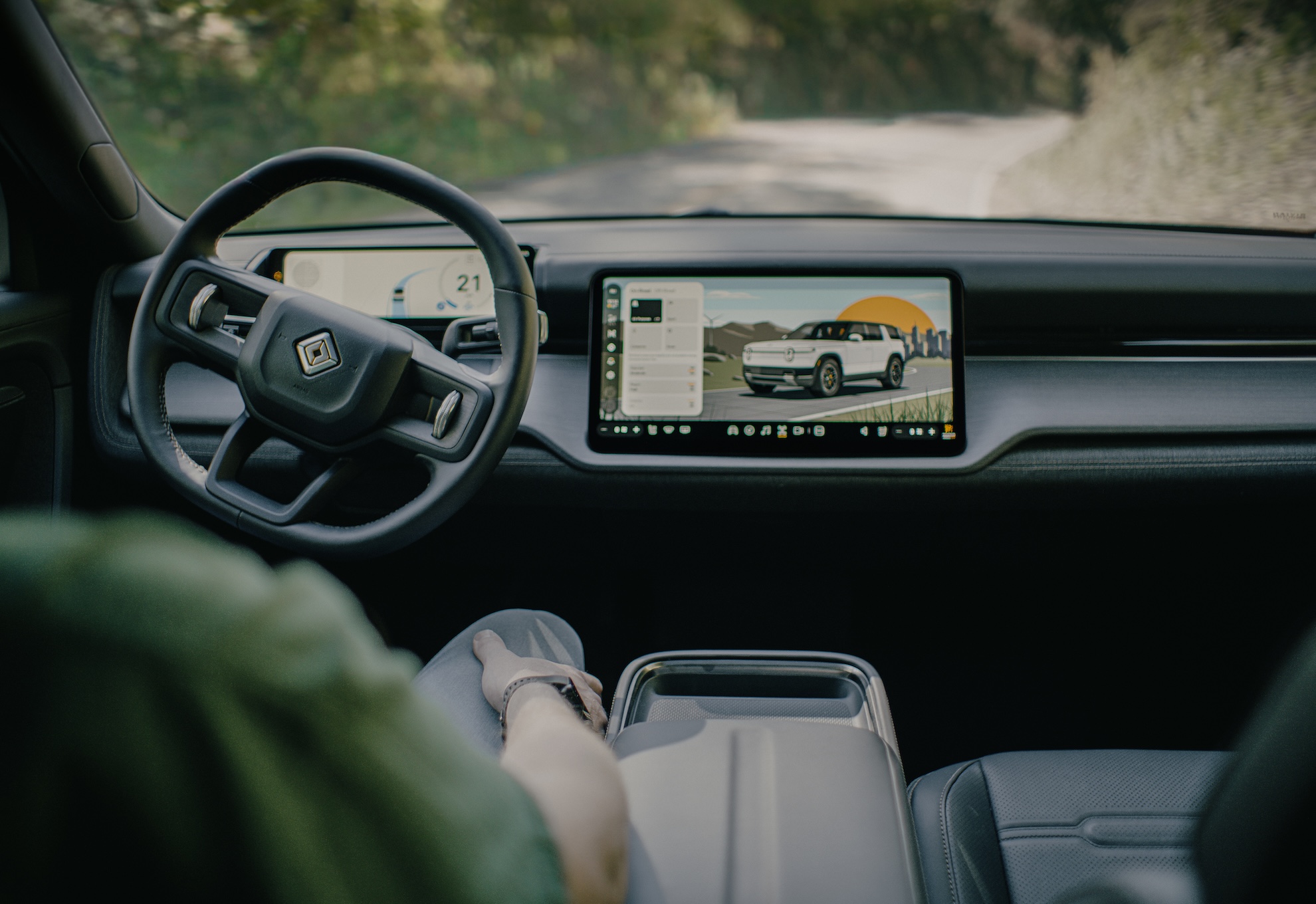
In a move poised to significantly reshape the future of urban mobility, electric vehicle manufacturer Rivian has announced a groundbreaking partnership with ride-hailing giant Uber. The collaboration aims to deploy thousands of fully autonomous robotaxis based on Rivian’s forthcoming R2 SUV platform, representing a potential deal value of up to $1.25 billion for the EV maker. This strategic alliance signals a major commitment from both companies to accelerate the adoption of self-driving technology within the lucrative ride-share sector, promising a transformative impact on how people commute and interact with transportation services.
A Transformative Alliance in Autonomous Mobility
The partnership kicks off with a substantial initial investment of $300 million from Uber into Rivian, underscoring the ride-hailing company’s confidence in Rivian’s technological capabilities and manufacturing potential. This initial capital injection is expected to pave the way for Uber to purchase 10,000 fully autonomous R2 robotaxis, with a planned commercial rollout commencing in key U.S. markets, specifically San Francisco and Miami, by 2028. The ambitious timeline suggests a rapid development and deployment phase, reflecting the urgency and competitive intensity within the autonomous vehicle (AV) industry.
Beyond the initial order, the agreement includes an option for Uber to acquire an additional 40,000 autonomous R2 SUVs from Rivian, starting in 2030. This long-term commitment highlights the scale of Uber’s vision for an autonomous future and Rivian’s potential role as a pivotal supplier. The two companies have articulated a bold expansion strategy, aiming to launch these self-driving vehicles in a staggering 25 cities across the United States, Canada, and Europe by the close of 2031. A crucial aspect of this deal is the exclusivity clause: the entire fleet of Rivian-built robotaxis will operate solely within Uber’s extensive ride-hailing network, solidifying Uber’s position in the autonomous mobility landscape.
This collaboration emerges against a backdrop of increasing consolidation and strategic alliances within the AV sector. As the technological and financial hurdles for developing and deploying Level 4 (L4) and Level 5 (L5) autonomous vehicles prove immense, companies are increasingly pooling resources and expertise. For Rivian, this deal represents a significant diversification of its business model beyond consumer and commercial electric trucks, tapping into the burgeoning robotaxi market. For Uber, it’s a calculated move to secure a dedicated, electric, and potentially highly cost-efficient autonomous fleet, reducing its reliance on human drivers and enhancing its long-term profitability prospects.
Rivian’s Ambitious Leap into Autonomy
While the potential financial rewards for Rivian are considerable, the venture is not without its share of significant risks and formidable challenges. At the time of the announcement, the R2 SUV, which forms the foundation of these robotaxis, had not yet entered production, with manufacturing projected to commence by June. Furthermore, Rivian has yet to publicly demonstrate or deploy a self-driving system specifically designed and validated for the complex demands of a robotaxi service. Adding another layer of complexity, the dedicated production facility for these robotaxis is slated to be Rivian’s Georgia factory, which remains under construction. These concurrent development and manufacturing timelines present a logistical and engineering gauntlet for the nascent automaker.
Despite these considerable obstacles, Rivian’s founder and CEO, RJ Scaringe, has consistently emphasized automated driving technology as a paramount strategic priority for the company. His commitment was evident during Rivian’s inaugural "Autonomy & AI Day" in December, where he broadly hinted at the company’s aspirations to "pursue opportunities in the ride-share space." This public declaration foreshadowed the current partnership, showcasing a deliberate, long-term vision.
Scaringe was instrumental in Rivian’s pivotal decision in 2021 to pivot away from a traditional rules-based framework for driver assistance systems. Instead, the company embraced an "AI-first" strategy, leveraging large language models (LLMs) to train its autonomous system in perceiving and navigating the intricate complexities of the real world. This AI-centric approach is designed to foster continuous learning from vast datasets collected by its fleet, allowing the system to progressively enhance its autonomy and capabilities over time.
The fruits of this strategic shift, branded as the Rivian Autonomy Platform, made their debut in 2024 within the automaker’s second-generation R1 vehicles. This platform forms the technological bedrock of Rivian’s incremental approach to autonomy, starting with hands-free driving functionalities on designated highways and progressing towards a more comprehensive "point-to-point" navigation feature, anticipated for late this year. This advanced feature aims to automate driving controls for entire journeys, from origin to destination.
Looking further ahead, Rivian envisions offering a "hands-off, eyes-off" system, a capability that would typically necessitate a hardware upgrade. This upgrade would include the integration of a lidar sensor, a crucial component for advanced environmental perception, and a dedicated "autonomy computer" engineered to process an astounding 5 billion pixels per second. This enhanced hardware suite is slated to launch in a specialized version of the R2 SUV by late 2026, marking a significant step towards higher levels of automation.
It is important to note, however, that even these advanced features, while highly capable, do not yet constitute a fully autonomous driving system (SAE Level 4 or 5), where human intervention is never expected or required. Rivian’s ultimate aspiration is to achieve this level of automated driving, which it refers to as "personal L4"—a clear nod to the Society of Automotive Engineers (SAE) standard that defines an autonomous vehicle capable of operating independently within specific operational design domains without human oversight. Scaringe reiterated this focus at SXSW 2026, stating that the company’s "path to get to hands-off, eyes-off in 2027 is something we’re spending more money on than anything else." His bullish stance on the pace of technological advancement suggests a belief that the exponential progress witnessed in recent years will only accelerate, fundamentally altering the trajectory of autonomous development.
Uber’s Evolving Robotaxi Strategy
For Uber, this partnership with Rivian represents a continuation of a refined strategy in the autonomous vehicle space. Historically, Uber invested heavily in its own in-house AV development unit, Advanced Technologies Group (ATG). However, after years of significant investment, technological hurdles, and a tragic fatal accident involving one of its test vehicles, Uber ultimately divested its ATG unit in 2020, selling it to Aurora Innovation. This pivot signaled a strategic shift: rather than bearing the enormous capital and R&D costs of developing AV technology from scratch, Uber opted to become a platform for various autonomous vehicle providers.
This "platform approach" allows Uber to hedge its bets across multiple technologies and partners, mitigating the risks associated with a single development path. Indeed, Rivian is not the first electric vehicle startup Uber has engaged for robotaxi development. Just last year, Uber announced a collaboration with Lucid Motors, which would see its Gravity SUV adapted by autonomous vehicle technology company Nuro for robotaxi deployment. Those Lucid-Nuro robotaxis are reportedly slated for commercial deployment in San Francisco by the end of this year, indicating Uber’s multi-pronged approach to securing AV supply.
Uber’s network of AV partnerships is extensive, encompassing more than 25 dedicated robotaxi or autonomous vehicle companies globally. Its most prominent partnership to date involves Waymo, the Alphabet-owned self-driving pioneer, whose robotaxis are already integrated into the Uber app and operating commercially in cities like Austin and Atlanta. Other notable collaborations include deals with Motional, a joint venture between Hyundai and Aptiv, Baidu in China, and a significant investment in the UK-based startup Wayve, with plans for a robotaxi service launch in Tokyo. This diverse portfolio of partnerships positions Uber to be a leading aggregator of autonomous mobility services, regardless of which underlying AV technology ultimately prevails.
The Broader Autonomous Vehicle Landscape
The broader autonomous vehicle industry is a complex ecosystem characterized by intense innovation, substantial capital expenditure, and persistent regulatory and safety challenges. While the promise of self-driving cars has been touted for years, the reality of widespread Level 4 and Level 5 deployment has proven more elusive than initially predicted. Companies like Waymo and Cruise have made significant strides, operating commercial robotaxi services in select cities, but even they face scrutiny over safety incidents, operational limitations, and the immense cost of scaling.
The regulatory environment remains fragmented, with different states and countries adopting varying approaches to autonomous vehicle testing and deployment. Public perception, often shaped by media reports of accidents or "ghost car" incidents, also plays a critical role in the pace of adoption. Building consumer trust in a technology that removes human control is paramount and requires a flawless safety record and transparent communication.
From a market perspective, the robotaxi sector holds immense potential. Projections suggest a multi-trillion-dollar market opportunity as autonomous fleets could drastically reduce operational costs (eliminating driver wages), optimize vehicle utilization, and potentially improve road safety by removing human error. The environmental benefits of all-electric robotaxis, like those planned by Rivian and Uber, are also significant, contributing to reduced urban emissions and improved air quality.
Potential Impacts and Hurdles Ahead
The Uber-Rivian partnership, if successful, could have far-reaching market, social, and cultural impacts. Economically, it could further disrupt the traditional taxi and ride-hailing industries, potentially leading to job displacement for human drivers, although new jobs in AV maintenance, remote operations, and fleet management could emerge. For consumers, it promises enhanced convenience, potentially lower fares over time due to reduced operational costs, and access to a novel transportation experience.
Socially, the widespread deployment of robotaxis could influence urban planning, reducing the need for personal vehicle ownership, parking spaces, and potentially easing traffic congestion in certain scenarios. Culturally, it signifies a continued shift towards a future where personal mobility is increasingly defined by on-demand services rather than private vehicle ownership, especially in dense urban environments.
However, the hurdles remain substantial. For Rivian, the simultaneous development of a new vehicle platform (R2), construction of a new factory, and the complex engineering of a robust L4 autonomous system is an ambitious undertaking. Any delays in manufacturing, software validation, or regulatory approval could jeopardize the 2028 rollout target. For Uber, while its partnership strategy diversifies risk, it still relies on the successful execution of its partners. Moreover, the sheer cost of acquiring and maintaining such a large fleet of advanced autonomous vehicles will be immense, requiring sustained capital investment.
The success of this venture will hinge on several critical factors: Rivian’s ability to deliver on its production and autonomy timelines, the robustness and safety of the Rivian Autonomy Platform in diverse real-world conditions, the evolving regulatory landscape, and public acceptance of autonomous services. If these challenges can be navigated effectively, the Uber-Rivian alliance could indeed mark a pivotal moment in the journey towards an autonomous, electric future for urban transportation.