Amir Mahmud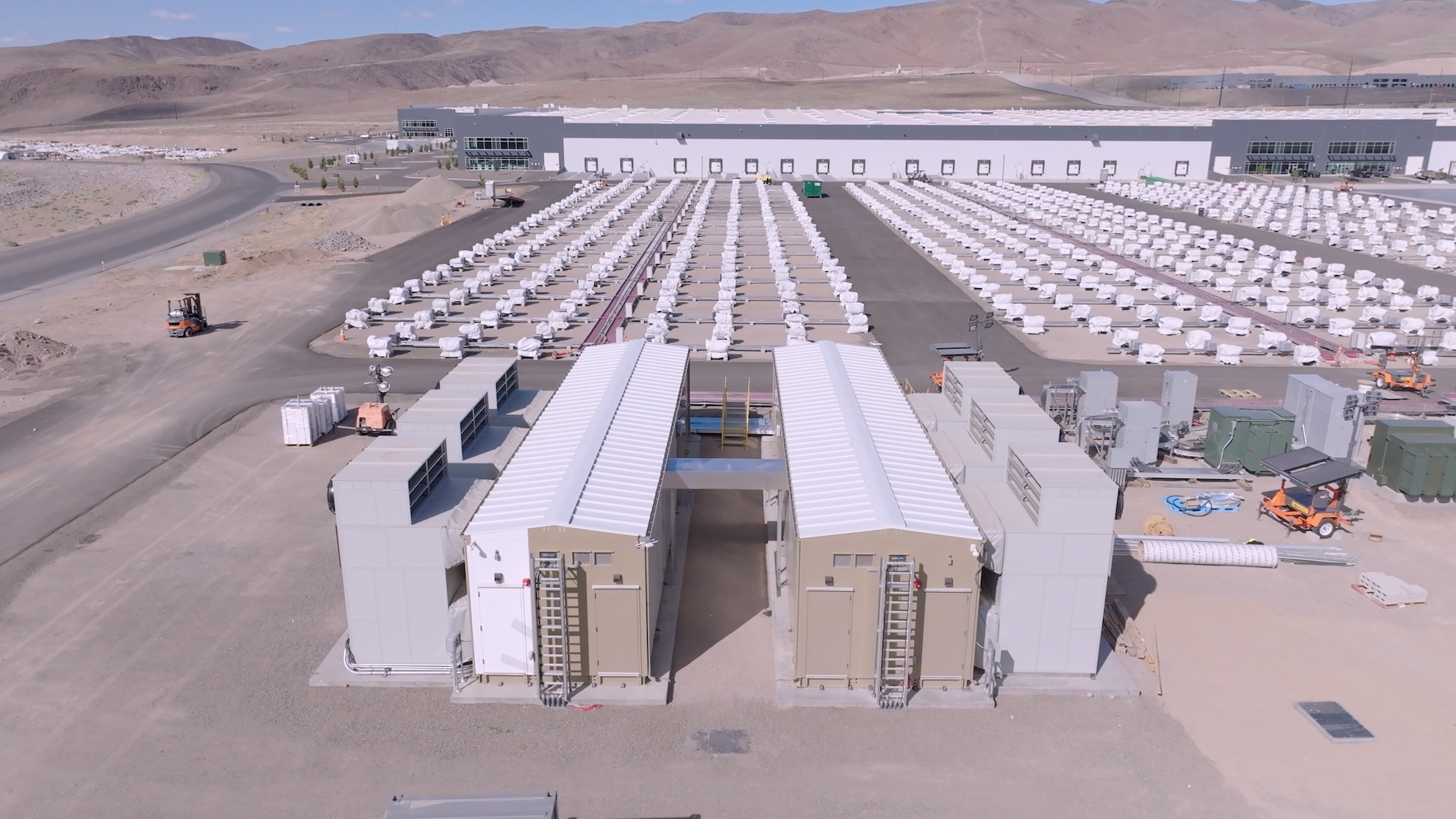
A remarkable milestone has been achieved in the American energy landscape, as the nation’s energy storage industry has dramatically surpassed its ambitious 2025 deployment goals, signaling a profound shift in how electricity is generated, stored, and distributed across the United States. Nearly a decade ago, when the concept of grid-scale battery storage was still in its nascent stages, industry organizations articulated a seemingly aspirational target: to deploy 35 gigawatts (GW) of battery capacity connected to the grid by the close of 2025. This vision, at the time, was seen by many as highly optimistic, given the technological immaturity and high costs associated with large-scale energy storage.
A Decade of Unprecedented Growth
However, the industry’s trajectory has far outpaced even its most fervent proponents. By the third quarter of the current year, a staggering 4.7 GW of new battery capacity was installed. Cumulatively, the U.S. has now deployed over 40 GW of energy storage, effectively crushing the 2025 target more than a year ahead of schedule, according to a report by Canary Media. This exponential growth transforms energy storage from a niche player into one of the most significant sources of new power capacity on the U.S. grid in a remarkably short span of eight years. The significance of this achievement is further underscored by the fact that the storage capacity deployed between July and September represented nearly half of all new renewable power added to the grid during that period. For the year to date, renewable energy sources have consistently been the leading contributors of new generating capacity, as reported by the Federal Energy Regulatory Commission (FERC), highlighting the symbiotic relationship between renewable generation and energy storage.
The Historical Context of Grid Storage
The journey to this point has been a long one, rooted in the fundamental challenge of matching electricity supply with demand. Historically, grid operators have relied on "peaker" plants—typically natural gas-fired facilities—to ramp up quickly during periods of high demand or when intermittent renewable sources like solar and wind falter. The earliest form of large-scale energy storage, pumped-hydro, has been in use for over a century, storing excess power by pumping water uphill to a reservoir and releasing it through turbines when needed. While effective, pumped-hydro projects are geographically constrained and have significant environmental impacts.
The modern push for grid storage gained momentum in the early 21st century with advancements in battery technology, particularly lithium-ion. Initially developed for consumer electronics and electric vehicles, lithium-ion batteries offered a more flexible, scalable, and rapidly deployable alternative to traditional storage methods. However, their cost, safety concerns, and relatively short duration for grid applications posed significant hurdles. Regulatory frameworks also needed to evolve to properly value and integrate storage into wholesale electricity markets. Key policy changes, such as FERC Order 841 in 2018, which required regional grid operators to establish rules for energy storage participation in wholesale markets, alongside federal tax incentives, provided crucial tailwinds. These policy shifts, combined with relentless technological innovation and manufacturing scale-up, led to a dramatic reduction in battery costs, making grid-scale deployment economically viable.
Driving Forces Behind the Surge
Several interconnected factors have fueled this rapid expansion. Firstly, the escalating penetration of intermittent renewable energy sources, primarily solar and wind, has created an urgent need for flexible resources that can store excess generation and discharge it when renewables are not producing. Energy storage addresses the variability inherent in these resources, allowing them to provide consistent, dispatchable power and thus enhancing grid stability and reliability.
Secondly, the increasing strain on existing grid infrastructure, exacerbated by rising electricity demand—particularly from new industrial loads like data centers and manufacturing facilities—and the intensifying frequency of extreme weather events, has made grid resilience a paramount concern. Older transmission and distribution networks often struggle to accommodate new loads or withstand severe weather, leading to outages. Energy storage systems offer a localized solution, providing backup power, reducing congestion, and deferring costly grid upgrades.
Thirdly, the dramatic decline in the cost of lithium-ion battery technology, driven by economies of scale from the electric vehicle industry and continuous research and development, has made storage an increasingly competitive option. The "learning curve" effect has seen battery pack prices plummet over the past decade, making projects that were once prohibitively expensive now economically attractive. This cost reduction has been a critical enabler for the widespread adoption seen today.
Strategic Deployment in Strained Grids
The geographical distribution of new storage capacity highlights its strategic importance. A significant portion of the new installations has been concentrated in states like Arizona, California, and Texas. These regions have experienced considerable grid stress in recent years, often grappling with record-breaking heatwaves that drive peak demand, coupled with rapid growth in renewable energy generation. California, in particular, has been a pioneer in mandating energy storage deployment to integrate its vast solar capacity and enhance grid reliability. Texas, with its independent grid operator ERCOT, has seen storage play a crucial role in mitigating the effects of extreme weather, such as the 2021 winter storm, and managing its burgeoning wind power fleet. Arizona faces similar challenges, balancing high solar penetration with summer peak demands.
Experts contend that the invaluable lessons gleaned from these early deployments in high-stress environments can serve as a blueprint for other regions across the country. Areas like the Midwest and the East Coast, which are now contending with their own unique challenges, including the immense power demands of new data center construction and the need to modernize aging infrastructure, stand to benefit significantly from adopting similar battery storage strategies. The ability of storage to provide localized power and reduce strain on transmission lines is particularly appealing in these contexts.
Innovation Beyond Lithium-Ion
While lithium-ion batteries currently dominate new installations due to their maturity and cost-effectiveness, the industry is not resting on its laurels. A vibrant ecosystem of startups and established companies is actively pursuing and developing a diverse array of alternative storage technologies. This diversification is crucial for several reasons: it can further drive down costs, address specific duration requirements (from seconds to months), improve safety profiles, and reduce reliance on critical minerals like lithium and cobalt, which face supply chain and geopolitical challenges.
One such innovator is Redwood Materials, co-founded by Tesla alumnus JB Straubel. Recognizing two converging trends—the increasing volume of used electric vehicle (EV) batteries retaining significant useful life and the explosive growth of the grid-scale storage market—Redwood Materials launched a new business line dedicated to repurposing these EV batteries for stationary applications. The company plans to deploy 20 gigawatt-hours (GWh) of battery storage by 2028, a substantial contribution that leverages existing battery assets and promotes a circular economy. Investors have enthusiastically endorsed this strategic pivot, injecting an additional $350 million into the company to accelerate this new venture.
Another innovative approach comes from Base Power, an Austin-based startup. Instead of large-scale grid deployments, Base Power focuses on the distributed energy model, leasing batteries directly to homeowners. These individual home batteries are then aggregated to form a large "virtual power plant" (VPP). A VPP can collectively provide grid services, such as peak shaving or frequency regulation, by intelligently coordinating the charging and discharging of many small, distributed units. This model empowers consumers while offering grid operators a flexible resource. Base Power’s vision has attracted significant investment, raising $1 billion to establish a battery factory and fuel its expansion beyond its initial deployment of over 100 megawatt-hours (MWh) in Texas.
Beyond these lithium-ion-centric solutions, other companies are exploring entirely different scientific principles. Sizable Energy is developing a novel method to store electricity in flexible reservoirs designed to float in the open ocean, harnessing hydrostatic pressure for energy storage. Fourth Power is advancing thermal battery technology, utilizing blocks of carbon to store heat at extremely high temperatures. The company aims for deployments by 2028, projecting costs potentially lower than both lithium-ion batteries and traditional natural gas peaker plants, offering long-duration, high-capacity storage. XL Batteries is deploying its flow-battery technology at existing petrochemical storage sites, a strategy that allows for hundreds of MWh of storage by repurposing readily available infrastructure. Meanwhile, Cache Energy has developed inexpensive pellets of calcium hydroxide, a material capable of storing energy for extended periods—potentially months—with minimal losses, offering a promising solution for ultra-long-duration storage that could displace coal and natural gas in base-load applications.
Broader Implications for the Energy Landscape
The exponential expansion of the energy storage industry, coupled with the continued cost reductions and deployment of solar and wind power—which remain the cheapest forms of new electricity generation—signals a fundamental transformation of global energy markets. This synergy between abundant, low-cost renewable energy and increasingly affordable, flexible storage has the potential to fundamentally rewire the U.S. grid and, by extension, influence energy transitions worldwide.
The market impact is profound. Energy storage helps stabilize electricity prices by reducing reliance on expensive peaker plants during peak demand. It enables greater integration of renewables, accelerating the decarbonization of the electricity sector. Socially, it enhances energy independence and resilience for communities, reducing the impact of grid outages and providing access to cleaner, more affordable energy. Culturally, it signifies a move towards a more dynamic and responsive energy system, where consumers can actively participate through distributed resources like VPPs. Economically, the growth of this sector is creating new jobs in manufacturing, installation, and software development, fostering innovation, and attracting significant capital investment.
Future Outlook and Remaining Challenges
While the current trajectory is undeniably impressive, the energy storage industry still faces challenges. Ensuring a resilient supply chain for critical raw materials, addressing potential environmental impacts of battery manufacturing and disposal, and managing the complexities of grid modernization and interconnection queues are ongoing hurdles. Regulatory frameworks will need to continue evolving to accommodate new technologies and market designs. However, the rapid pace of innovation, the influx of capital, and the clear economic and environmental benefits suggest that energy storage will continue to be a cornerstone of the future energy system, driving a cleaner, more reliable, and more resilient grid for generations to come. The journey from "dreamy goal" to surpassed reality in such a short period underscores the immense potential and transformative power of this vital sector.