Amir Mahmud
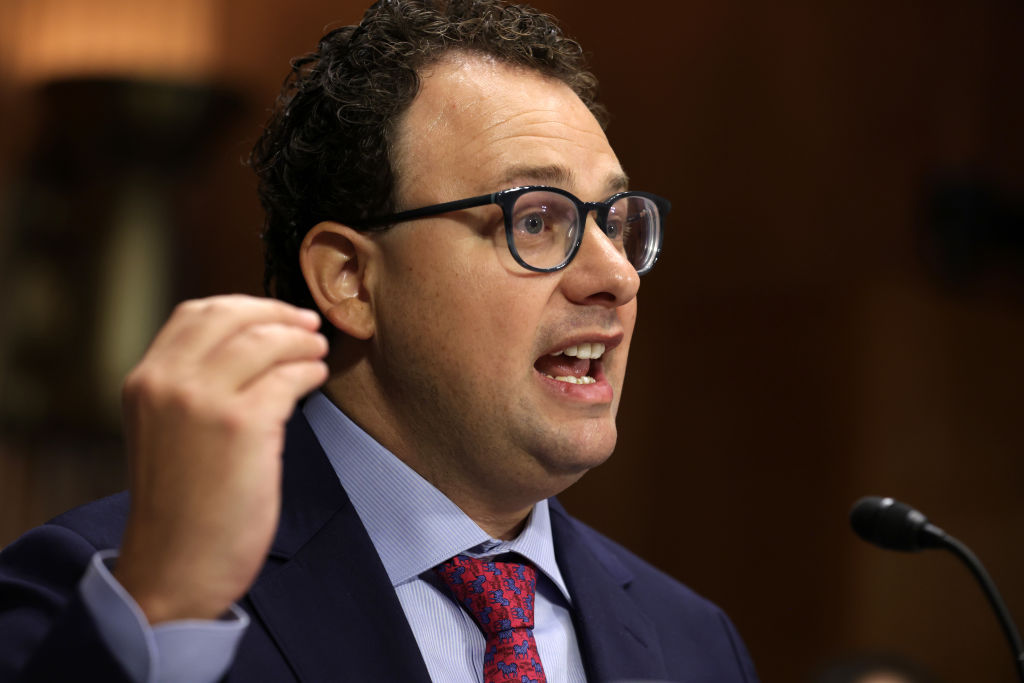
A federal judge has issued a temporary injunction, halting the Trump administration’s efforts to arrest or deport Imran Ahmed, the Chief Executive Officer of the Center for Countering Digital Hate (CCDH). The ruling marks a critical development in a case that pits the U.S. government against researchers scrutinizing online content, raising significant questions about academic freedom, immigration policy, and the ongoing national debate over digital speech and platform accountability. Ahmed, a prominent voice in the discourse surrounding online extremism and misinformation, is one of five individuals whom the U.S. State Department declared this week are barred from entering or residing in the United States, labeling them as figures involved in a "global censorship industrial complex."
A Judicial Intervention
The temporary block, reported by The New York Times, provides a momentary reprieve for Ahmed, a United Kingdom national who holds a U.S. green card and resides in the United States with his American wife and child. This judicial intervention underscores the complex legal and ethical challenges emerging from the government’s unprecedented move to target researchers engaged in public interest work related to digital platforms. The decision highlights the judiciary’s role in scrutinizing executive actions, particularly when they touch upon constitutional rights and established legal protections for residents.
Targeting Online Harm Researchers
The Center for Countering Digital Hate (CCDH), founded by Ahmed, is an international non-profit organization dedicated to disrupting the architectures of online hate and misinformation. Since its inception, CCDH has gained prominence for its detailed reports exposing the prevalence and amplification of harmful content across major social media platforms, including those related to anti-vaccine narratives, climate change denial, misogyny, and racial extremism. Their methodology often involves analyzing content, identifying key spreaders, and calling for platforms to enforce their own terms of service more rigorously. This approach has frequently put them at odds with tech companies and proponents of "absolute" free speech online, who argue that such efforts constitute censorship or attempts to control public discourse.
Ahmed himself has been a vocal advocate for greater platform accountability, frequently appearing in media to discuss the impact of disinformation on public health, democracy, and social cohesion. His work, and that of CCDH, often emphasizes the financial incentives driving the spread of harmful content, arguing that platforms profit from engagement, regardless of whether that engagement is fueled by truth or falsehood. The State Department’s action against him and four other unnamed individuals signals a stark escalation in the political battle over the internet’s regulatory future and the role of independent research in shaping it.
The Administration’s Stance on Digital Censorship
Secretary of State Marco Rubio, in an official announcement from the State Department, articulated the administration’s rationale for targeting Ahmed and his colleagues. Rubio characterized the targeted individuals as "radical activists and weaponized NGOs" who have "led organized efforts to coerce American platforms to censor, demonetize, and suppress American viewpoints they oppose." This language reflects a consistent theme within the Trump administration and its conservative allies, which posits that mainstream tech platforms and allied organizations are engaged in a systematic campaign to silence conservative voices and manipulate public opinion.
This narrative gained significant traction during the first Trump presidency and continued to evolve, particularly after major social media companies implemented more stringent content moderation policies in response to concerns about election interference, hate speech, and the spread of medical misinformation during the COVID-19 pandemic. The administration’s rhetoric often frames content moderation as a violation of free speech, rather than an exercise of private companies’ editorial discretion. The State Department’s move to employ diplomatic and immigration tools against researchers marks a significant expansion of this ideological conflict, extending it beyond domestic policy debates into the realm of international relations and individual residency rights.
The X Corp. Legal Battle
The current government action against Ahmed is not an isolated incident but rather unfolds against a backdrop of increasing legal challenges against organizations like CCDH. Notably, X, the social media platform formerly known as Twitter, filed a lawsuit against the CCDH in 2023. X’s lawsuit alleged that CCDH’s research, which often highlighted the persistence of hate speech and misinformation on the platform under its new ownership, constituted a breach of contract, unlawful data scraping, and economic harm. X claimed that CCDH’s reports deterred advertisers and damaged the platform’s reputation, contributing to significant financial losses.
CCDH vehemently defended its actions, asserting that its research was conducted lawfully, ethically, and in the public interest. The organization argued that its work was protected under academic freedom and free speech principles, and that the lawsuit was a strategic lawsuit against public participation (SLAPP) designed to silence critical commentary. In a significant victory for CCDH, the lawsuit was dismissed by a federal judge in 2024, citing anti-SLAPP statutes which protect individuals and organizations from meritless lawsuits intended to stifle speech on matters of public concern. However, X has appealed the dismissal, indicating its continued determination to challenge organizations that scrutinize its content moderation practices. This legal saga highlights the intense friction between platforms, researchers, and public interest groups over who defines acceptable online discourse and how such definitions are enforced.
Immigration Status and Legal Ramifications
Imran Ahmed’s status as a green card holder adds a critical layer of complexity to the government’s deportation efforts. Lawful permanent residents, while not citizens, possess significant rights and protections under U.S. immigration law. Deportation proceedings typically require the government to demonstrate specific grounds, such as criminal convictions, national security threats, or violations of immigration statutes. The State Department’s assertion that Ahmed and others are involved in a "global censorship industrial complex" appears to be an attempt to frame their research activities as a threat that could justify such drastic measures.
Legal experts have pointed out that targeting a green card holder for their research and advocacy work, particularly when that work is aimed at public good and transparency, could set a dangerous precedent. Such actions could be perceived as a chilling effect on academic freedom and an abuse of executive power to suppress dissent or inconvenient findings. The federal judge’s temporary injunction suggests that the court sees sufficient merit in Ahmed’s challenge to the government’s action, necessitating further review of the legal grounds for his proposed deportation. The outcome of this case could significantly impact the protections afforded to lawful permanent residents involved in politically sensitive research or advocacy.
Broader Implications for Research and Free Speech
The administration’s attempt to deport Imran Ahmed carries profound implications for the landscape of independent research into online harms and the broader global discourse on free speech. If successful, such a move could create a chilling effect, deterring other researchers, academics, and civil society organizations from critically examining the practices of powerful tech companies or government policies related to digital platforms. The fear of immigration consequences or other forms of state reprisal could stifle vital investigations into disinformation, hate speech, and algorithmic biases, thereby diminishing the public’s understanding of complex digital phenomena.
Moreover, this incident intersects with the enduring debate about the nature of free speech in the digital age. While some argue that platforms should be entirely unfettered, viewing any moderation as censorship, others contend that unchecked speech can lead to real-world harm, including incitement to violence, electoral interference, and public health crises. Research organizations like CCDH operate under the premise that understanding and mitigating these harms is crucial for a healthy democracy and society. The government’s actions, therefore, are not just about immigration policy but about defining the boundaries of acceptable inquiry and advocacy in an increasingly polarized digital environment.
A Shifting Landscape of Digital Governance
The broader context for these events includes a historical timeline of escalating concerns about online content. From early debates over Section 230 of the Communications Decency Act in the 1990s, which shielded platforms from liability for user-generated content, to the widespread alarm over foreign interference in elections and the proliferation of anti-vaccine misinformation during the COVID-19 pandemic, the question of who governs online speech has been a persistent challenge. Different administrations have approached this challenge with varying degrees of intervention and philosophical stances.
The current administration’s stance represents a significant pivot, moving from debates about platform responsibility to actively targeting those who advocate for greater accountability. This shift could have far-reaching market, social, and cultural impacts. For tech companies, it might embolden those who wish to resist external pressure for content moderation, potentially leading to less restrictive policies and an increase in harmful content. Socially, it could deepen the existing divides around truth, expertise, and the role of independent institutions. Culturally, it reinforces a narrative where critical analysis of powerful entities is framed as subversive, rather than beneficial.
The case of Imran Ahmed is more than an individual immigration matter; it is a flashpoint in a global ideological struggle over the future of the internet, the role of research in a democratic society, and the fundamental interpretation of free speech in the digital age. As the legal proceedings unfold, the world watches to see how the balance between government power, individual rights, and the pursuit of truth will be struck.