Amir Mahmud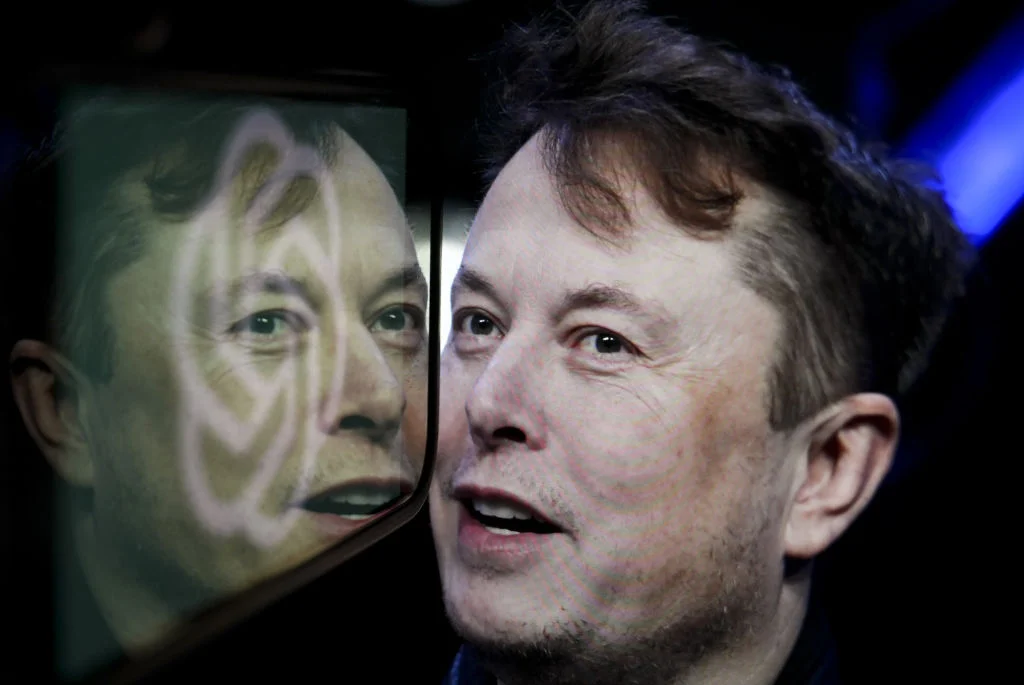
In a striking illustration of the complex, often paradoxical, alliances forming within the fiercely competitive artificial intelligence landscape, tech magnate Elon Musk has publicly lauded rival AI firm Anthropic, simultaneously promising that his infrastructure will remain a reliable host for their cutting-edge models. This unexpected pivot comes as Anthropic has secured a monumental deal to utilize compute resources from SpaceX’s xAI unit, a move that places one of the leading AI developers directly dependent on the hardware of a prominent competitor. The arrangement has sparked considerable discussion among industry observers, raising questions about trust, strategic vulnerabilities, and the evolving nature of collaboration in the race for AI supremacy.
The Intensifying AI Compute Arms Race
The backdrop to this unusual partnership is the ongoing, high-stakes arms race for artificial intelligence dominance. The development of advanced large language models (LLMs) and other sophisticated AI systems demands colossal computational power, primarily driven by specialized Graphics Processing Units (GPUs). These resources are scarce and incredibly expensive, leading to a global scramble among AI companies to secure access to the necessary hardware. Building and maintaining state-of-the-art data centers capable of supporting such operations requires immense capital investment and technical expertise, often beyond the immediate reach of even well-funded startups.
Against this backdrop, companies like Anthropic, despite their rapid growth and significant financial backing, frequently find themselves in a position where leveraging external infrastructure providers is a strategic imperative. The alternative—constructing their own hyperscale data centers from scratch—is a time-consuming and capital-intensive endeavor that could slow their pace of innovation in a rapidly moving field. This creates a critical dependency on a select few entities capable of supplying such vast compute, a dynamic that profoundly reshapes competitive landscapes.
Anthropic’s Ascent and Strategic Choices
Anthropic emerged as a significant player in the AI arena following its founding in 2021 by former senior members of OpenAI, including siblings Dario and Daniela Amodei. The company distinguished itself early on with a strong emphasis on AI safety, alignment, and responsible development, often championing a more cautious approach than some of its peers. Their flagship models, notably the Claude series, quickly gained recognition for their sophisticated reasoning capabilities and enterprise-grade performance. By 2025, Anthropic was already demonstrating considerable market traction, particularly within the enterprise sector, where its models were reportedly preferred by a substantial number of businesses over those offered by other leading AI labs, including OpenAI.
The company’s rapid development culminated in the release of models like "Mythos/Fable," which Musk himself has now acknowledged as a current leader in the field. This meteoric rise necessitated a commensurate increase in compute capacity, pushing Anthropic to explore ambitious infrastructure solutions. Their decision to commit to SpaceX’s xAI compute facilities, specifically the Colossus 1 data center, represents a strategic gamble: trading potential competitive friction for guaranteed access to critical resources. This move highlights the acute pressures facing AI developers, where the imperative to scale quickly often outweighs traditional concerns about competitive proximity.
Elon Musk’s Shifting Stance and AI Ambitions
Elon Musk’s relationship with the AI industry, and specifically with Anthropic, has been nothing short of mercurial. A co-founder of OpenAI, he later departed the organization amidst disagreements over its direction and commercialization, becoming one of its most vocal critics. In September 2025, Musk publicly expressed skepticism about Anthropic’s future, stating on X (formerly Twitter) that "Winning was never in the set of possible outcomes for Anthropic." This sentiment reflected a broader competitive animosity often characteristic of Musk’s interactions with rivals across his various ventures.
However, the financial realities and strategic opportunities presented by the burgeoning AI infrastructure market appear to have prompted a significant re-evaluation. Musk’s xAI, launched in 2023 with the stated goal of "understanding the true nature of the universe" and developing "truth-seeking AI," merged with SpaceX in February 2026. This merger effectively consolidated xAI’s compute capabilities under the broader SpaceX umbrella, transforming SpaceX into a significant player in the AI infrastructure space.
Now, Musk’s recent praise for Anthropic’s Mythos/Fable models and his assurance that he would "never cut them off" marks a dramatic reversal. This public endorsement, coupled with the massive compute deal, signals a pragmatic shift, prioritizing revenue generation and strategic positioning in the AI ecosystem over past rivalries. It underscores the commercial imperative driving many of Musk’s decisions, where financial opportunities often transcend ideological or competitive skirmishes.
The Mega-Deals: A New Frontier for SpaceX
The scale of these infrastructure deals is staggering, underscoring the unprecedented demand for AI compute. As of July 2026, Anthropic has become one of SpaceX’s largest customers, having signed an agreement in May to acquire 300 megawatts of compute from xAI’s Colossus 1 data center near Memphis, Tennessee. This commitment translates into an astonishing $1.25 billion per month through May 2029, projecting a total revenue stream of approximately $40 billion for SpaceX’s xAI unit over the three-year period.
Adding to this burgeoning revenue stream, tech giant Google also secured a deal to rent SpaceX infrastructure through June 2029, for $920 million per month. These agreements firmly establish SpaceX, traditionally known for rocket launches and satellite internet, as a significant, albeit unconventional, player in the hyperscale cloud computing and AI infrastructure market. This diversification offers SpaceX a robust new revenue channel, leveraging its substantial capital investments in data center development to support the insatiable demands of the AI industry. For Musk’s diversified portfolio of companies, it represents a shrewd strategic move, positioning SpaceX at the foundational layer of the next technological revolution.
Assurances Versus History: A Balancing Act
Musk’s public pledge not to "cut off" Anthropic from their compute resources, even as a competitor, is rooted in his assertion that such tactics are "not my style." He cited several historical examples to bolster this claim, including Tesla’s 2014 decision to open-source its patents (a policy now codified in its "patent pledge" to not initiate lawsuits against good-faith users of its technology). He also pointed to Tesla’s opening of its Supercharger network and charging port design to other electric vehicle manufacturers, as well as SpaceX’s practice of launching competing satellite systems without discriminatory pricing or unfair terms. Furthermore, he highlighted the relatively unfettered platform X provides, even for his detractors.
However, a neutral analytical perspective must acknowledge that Musk’s operational history is not entirely devoid of aggressive competitive tactics. His well-publicized lawsuit against OpenAI, for instance, underscores his willingness to engage in legal battles against entities he perceives as having deviated from their original mission or posing a competitive threat. These actions, while distinct from physically severing a contractual service, demonstrate a readiness to employ strategic pressure against rivals. This dichotomy creates a complex perception: while his current stance is conciliatory, the broader pattern of his business dealings often involves intense competition and a willingness to challenge established norms.
Contractual Safeguards and Underlying Risks
Fortunately for Anthropic, its reliance on Musk’s "style" is likely buttressed by robust contractual agreements. Deals of this magnitude and strategic importance would undoubtedly include stringent terms and conditions, outlining clear penalties and legal recourse for any breach of service. The financial implications for SpaceX of unilaterally terminating such a massive, multi-billion-dollar contract would be catastrophic, far outweighing any potential competitive advantage gained. Therefore, the immediate financial incentive for SpaceX to uphold its end of the bargain is enormous.
Beyond revenue, the partnership offers mutual benefits. For SpaceX, hosting Anthropic’s cutting-edge AI models provides invaluable experience in building and supporting the highly demanding infrastructure required for next-generation AI. Its engineers can gain insights into the specific performance, reliability, and scaling challenges presented by rapidly evolving AI workloads, similar to how Amazon’s engineers have deepened their expertise by supporting leading AI firms on AWS. This operational knowledge can then be applied to refine their services and attract more high-profile clients.
Conversely, significant risks remain. One of the most frequently cited concerns in the AI community is "distillation"—a process where one AI model maker covertly probes a competitor’s model through extensive prompting to learn its underlying mechanisms, architecture, or training data characteristics. Musk himself acknowledged the reality of AI distillation during his trial against OpenAI, stating that "Generally AI companies distill other AI companies." Anthropic, in February, had accused three Chinese model makers of engaging in such activities against its Claude models.
While Anthropic and Google undoubtedly have sophisticated safeguards in place to protect their intellectual property, hosting their core compute on a competitor’s infrastructure inherently presents a unique challenge. The level of operational visibility and potential access that a host like SpaceX might gain into Anthropic’s system architecture, usage patterns, and performance metrics could be greater than that available to an external competitor. This proximity, even if governed by strict confidentiality clauses, introduces a layer of vulnerability and trust that is atypical in standard client-vendor relationships, particularly when the vendor is also a direct rival.
Market Dynamics and Future Implications
This unprecedented partnership between Elon Musk’s SpaceX/xAI and Anthropic highlights several critical trends in the evolving AI ecosystem. Firstly, it underscores the intense compute scarcity driving unusual alliances. When access to essential resources is paramount, traditional competitive boundaries can blur. Secondly, it positions SpaceX as a significant new entrant in the foundational AI infrastructure layer, potentially challenging established cloud providers like AWS, Azure, and Google Cloud for specialized AI workloads. This could lead to increased competition and diversification of compute options, which could ultimately benefit the broader AI industry.
Culturally, this arrangement challenges conventional notions of corporate rivalry, suggesting a pragmatic shift towards interdependent ecosystems. The long-term impact on market dynamics remains to be seen. While the current three-year contracts provide stability, the question of what happens beyond 2029 looms large. Will Anthropic diversify its compute providers to reduce single-vendor risk? Will SpaceX leverage the insights gained from hosting Anthropic to further enhance its own xAI models, potentially escalating competitive tensions in the future?
For now, the alliance represents a fascinating, high-stakes experiment in collaboration within a fiercely competitive domain. It underscores the immense financial and strategic pressures shaping the AI landscape, where securing essential resources can necessitate uncomfortable compromises. While the immediate upside for SpaceX is clear—a massive revenue stream and invaluable operational experience—the long-term implications for Anthropic, and for the broader AI industry, will depend on the delicate balance of trust, contractual enforcement, and the unpredictable evolution of technological innovation and corporate ambition.