Amir Mahmud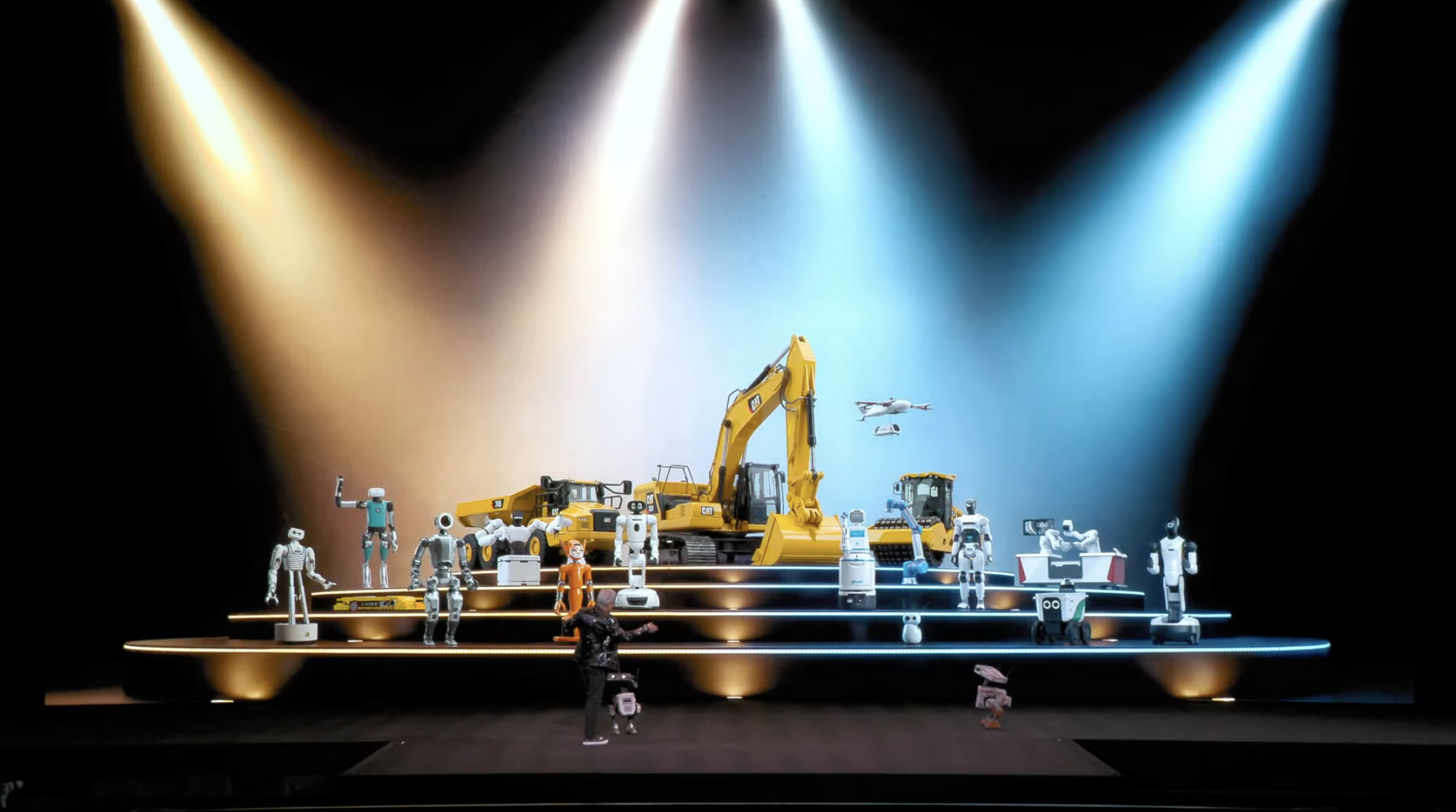
The annual Consumer Electronics Show (CES) has long served as a crucible for technological innovation, a vibrant spectacle where nascent ideas take their first public bows and established trends solidify their dominance. While past iterations have often been characterized by advancements in display technology, interconnected devices, or the burgeoning metaverse, CES 2026 marked an undeniable pivot. After years of artificial intelligence primarily manifesting as conversational agents, sophisticated algorithms for data analysis, and creative tools for generating text and images, the Las Vegas convention grounds bore witness to AI’s definitive emergence from the digital realm into the physical world. This paradigm shift, colloquially dubbed "physical AI," underscored a fundamental redefinition of what artificial intelligence can be and, more importantly, what it can do.
From Pixels to Presence: The Evolution of AI
The journey of artificial intelligence is a storied one, stretching back to the mid-20th century with pioneers envisioning machines capable of thought. Early AI efforts focused on symbolic reasoning and expert systems, struggling with the complexities of real-world environments. The 1980s saw a renewed interest in neural networks, laying theoretical groundwork that would only fully blossom decades later. The turn of the millennium brought about an explosion in data and computational power, fueling the rise of machine learning, and subsequently, deep learning. This era gave us the voice assistants that became commonplace in homes, the recommendation engines that shaped our online experiences, and the early autonomous driving systems that hinted at a future of intelligent machines.
The most recent wave, epitomized by large language models and generative AI tools that captivated the public imagination in the early 2020s, showcased AI’s unprecedented ability to understand, create, and interact with information on a purely digital plane. These advancements, while groundbreaking, often left a lingering question: when would this intelligence transcend the screen and truly engage with the tactile, unpredictable nature of our physical existence? CES 2026 provided a resounding answer. The halls buzzed not just with discussions of new algorithms, but with the whirring of motors, the precise movements of robotic limbs, and the tangible demonstration of AI systems performing tasks in the material world. This was no longer merely AI in a computer; it was AI as a physical entity, interacting with its environment.
The Embodied Intelligence Revolution Unveiled
The sheer breadth of physical AI on display at CES 2026 was staggering, painting a comprehensive picture of its potential applications across industries and daily life. From industrial giants showcasing their latest automation solutions to startups unveiling quirky yet functional consumer devices, the message was clear: AI’s next frontier is physical.
-
Industrial Transformation and Advanced Robotics:
Perhaps the most compelling demonstration of this shift came from the realm of industrial robotics. Boston Dynamics, a company long synonymous with cutting-edge, often viral, robotic demonstrations, unveiled its newly redesigned Atlas humanoid robot. While previous iterations of Atlas were celebrated for their astonishing agility and complex parkour routines, often serving as research platforms, the 2026 model presented a clear trajectory towards practical, industrial deployment. Enhanced with advanced AI-driven perception and dexterous manipulation capabilities, the new Atlas was showcased performing intricate tasks on an assembly line, demonstrating an unprecedented level of adaptability and precision in handling diverse components. This wasn’t just about speed; it was about intelligent decision-making in dynamic environments, a critical leap for industries grappling with labor shortages and the need for flexible automation. Other exhibitors demonstrated AI-powered robotic arms capable of sorting mixed recyclables with incredible accuracy, or autonomous mobile robots navigating complex warehouse floors, optimizing logistics with real-time data analysis. These systems promised not only increased efficiency but also enhanced safety by taking on hazardous or repetitive tasks. -
The Smart Home, Redefined:
The consumer sector also saw a surge in physical AI applications, albeit often in more whimsical or convenience-oriented forms. The much-discussed "AI-powered ice maker" was just one example. These devices moved beyond simple timers or water filtration, utilizing AI to analyze consumption patterns, predict optimal ice production schedules, and even suggest custom ice types (e.g., clear artisanal ice for cocktails, crushed ice for smoothies) based on user preferences and ambient conditions. Smart home devices, already prevalent, became even smarter. Robotic vacuum cleaners, once prone to getting stuck or missing spots, now incorporated advanced AI mapping and obstacle avoidance, learning the nuances of a home’s layout and adapting to changing furniture arrangements. AI-enabled kitchen appliances promised to automate meal preparation, while smart garden robots autonomously tended to plants, monitoring soil conditions and administering precise amounts of water and nutrients. These innovations heralded a future where everyday objects aren’t just connected, but truly intelligent, anticipating needs and performing actions autonomously. -
Specialized and Emerging Applications:
Beyond the mainstream, specialized physical AI solutions captured significant attention. Demonstrations included drone-catching robots equipped with net guns, designed for security applications in sensitive airspace. These systems combined advanced visual AI for target identification and tracking with precision robotics for interception. In agriculture, AI-driven robotic harvesters showcased their ability to identify ripe produce and pick it without damage, addressing labor challenges and reducing waste. Medical and elder care also saw promising prototypes, with assistive robots designed to help with mobility, administer medication, or provide companionship, leveraging AI for empathetic interaction and adaptive assistance. The presence of dancing robots in automaker booths, while seemingly superficial, served as a powerful testament to the advancements in motor control, balance algorithms, and human-robot interaction, showcasing the fluidity and expressiveness achievable by modern robotics.
The Enabling Technologies: Powering the Physical Shift
The explosion of physical AI at CES 2026 was not a sudden phenomenon but the culmination of years of relentless progress across multiple technological fronts. The foundational elements that brought these intelligent machines to life included:
- Advanced AI Models: The sophisticated deep learning architectures that powered generative AI for digital tasks were increasingly being adapted and optimized for real-world perception and action. These models, often trained on vast datasets of physical interactions, could process complex sensor data (visual, auditory, tactile) in real-time, enabling robots to understand their environment, predict outcomes, and make autonomous decisions.
- Edge Computing and Specialized Hardware: For physical AI to be truly responsive and operate independently, computation needed to move closer to the data source. Edge AI processors, often showcased by companies like NVIDIA and AMD at CES, allowed for powerful AI inference directly on the devices, reducing latency and reliance on cloud connectivity. These specialized chips were crucial for enabling robots to react instantly to unexpected changes in their physical surroundings.
- Sensor Fusion and Miniaturization: The integration of multiple sensor types—cameras, LiDAR, radar, ultrasonic sensors, haptic feedback—provided robots with a comprehensive understanding of their environment. Miniaturization efforts made these sensor arrays compact and robust enough for deployment in a wide range of robotic forms, from tiny inspection drones to large industrial manipulators.
- Battery Technology and Actuators: Advances in battery density and efficiency extended the operational range and uptime of autonomous robots. Concurrently, improved motor control systems and more precise, powerful actuators enabled robots to perform delicate manipulations and exert significant force when necessary, all while maintaining energy efficiency.
Societal and Economic Implications: A Glimpse into the Future
The widespread emergence of physical AI carries profound implications for society, the economy, and culture. Economically, the promise of enhanced productivity through automation is immense. Industries from manufacturing and logistics to healthcare and agriculture stand to benefit from increased efficiency, reduced operational costs, and the ability to perform tasks that are dangerous or beyond human capability. This could lead to a re-shoring of certain manufacturing processes and the creation of entirely new service sectors centered around the deployment and maintenance of intelligent robots.
However, the societal impact is more nuanced. The specter of job displacement, particularly in roles involving repetitive or manual labor, remains a significant concern. While proponents argue that physical AI will create new, higher-skilled jobs in design, programming, maintenance, and oversight, the transition will undoubtedly require significant investment in education and workforce retraining. The equitable distribution of these benefits and the management of potential disruptions will be critical policy challenges.
Culturally, the integration of physical AI into daily life marks a significant shift. As robots become more commonplace in homes, workplaces, and public spaces, human-robot interaction will evolve. Questions of trust, safety, and ethical boundaries will become increasingly pertinent. How will humans perceive machines that can not only think but also act and move with increasing autonomy? The presence of physical AI also raises ethical considerations around accountability for errors, potential biases embedded in their training data that could manifest in physical actions, and the extent to which we grant autonomy to these machines. Regulatory frameworks will need to adapt rapidly to address these complex issues, ensuring that the development and deployment of physical AI align with societal values and safety standards.
Challenges on the Horizon
Despite the undeniable excitement generated at CES 2026, the path to ubiquitous physical AI is not without its hurdles. Cost remains a significant barrier for many advanced robotic systems, limiting widespread adoption outside of specialized industrial applications. Energy consumption, especially for highly mobile and dexterous robots, is another challenge that battery technology continues to address but has not fully overcome. The robustness of these systems in unpredictable, unstructured real-world environments is still an area of intense research. Unlike controlled factory settings, homes and public spaces present an infinite array of variables that can confound even the most sophisticated AI. Public acceptance and psychological comfort with autonomous physical agents will also play a crucial role in determining their integration into society.
Conclusion: A New Era of Interaction
CES 2026 will undoubtedly be remembered as a watershed moment in the history of artificial intelligence. It marked a definitive turning point, signaling AI’s grand departure from the confines of digital screens and its triumphant entry into the physical world. The transition from abstract algorithms to tangible, interactive machines promises to redefine industries, reshape our daily routines, and fundamentally alter our relationship with technology. While significant challenges in cost, ethics, and widespread integration still lie ahead, the innovations showcased in Las Vegas painted a vivid picture of a future where intelligence is not just processed but embodied, ready to engage with and transform the world around us. The age of physical AI has not merely dawned; it has arrived with a palpable, tangible presence, forever changing the landscape of technological possibility.