Amir Mahmud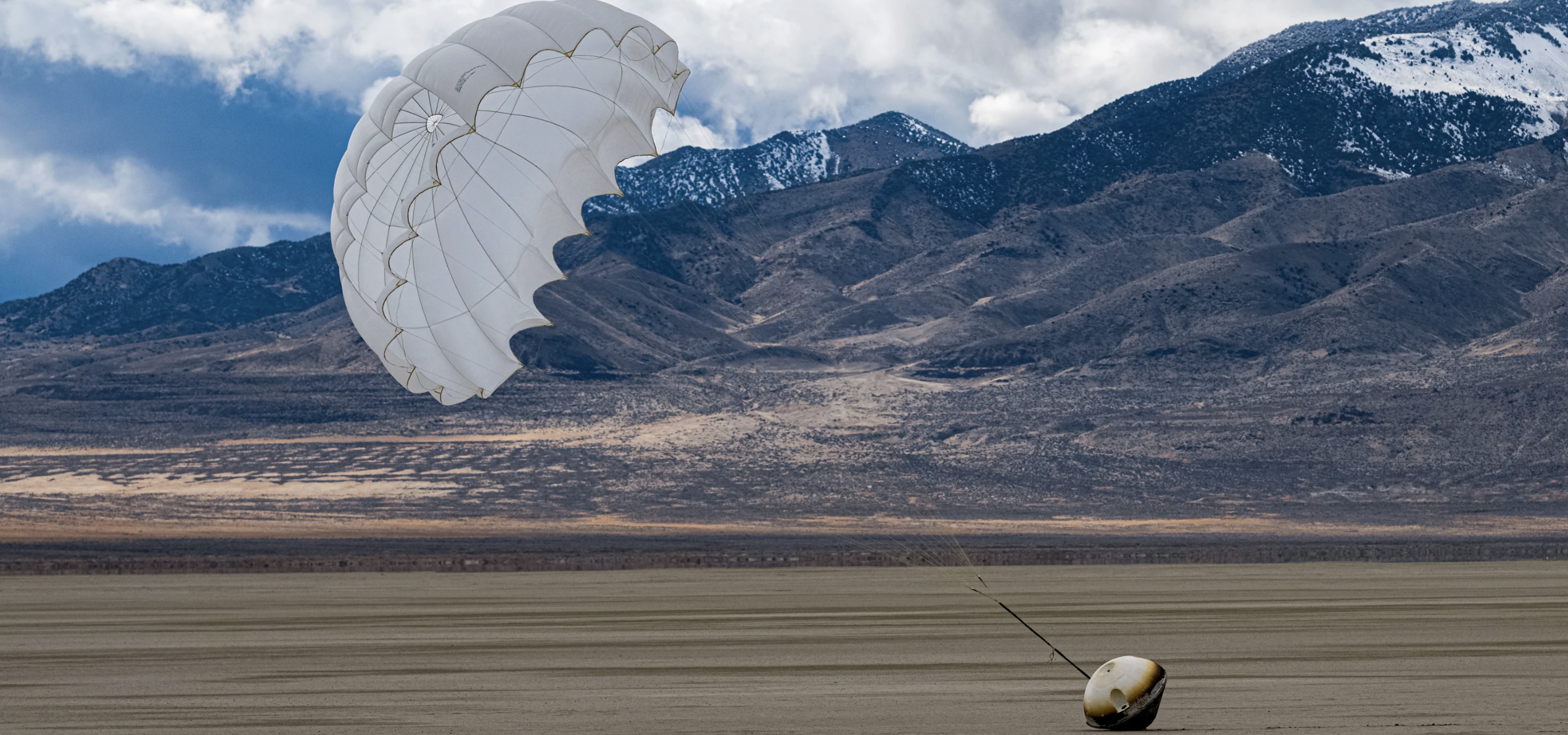
A transformative era in space exploration is dawning, moving beyond the realms of scientific discovery and national prestige into the tangible sphere of commercial industrialization. Varda Space Industries, a pioneering aerospace company, stands at the forefront of this shift, demonstrating the viability of manufacturing in the microgravity environment of Earth’s orbit and charting a course to make such operations as routine and unremarkable as terrestrial production lines. This ambition, articulated by CEO Will Bruey, envisions a future within a decade where specialized spacecraft routinely re-enter Earth’s atmosphere nightly, delivering pharmaceuticals crafted in space. Further into the future, perhaps within 15 to 20 years, Bruey projects that sending an individual into orbit for a month of work could become more economically feasible than maintaining their presence on Earth, signaling a profound redefinition of labor and industry.
The Dawn of In-Orbit Manufacturing
The concept of leveraging space for industrial processes is not entirely new. For decades, scientists have recognized the unique advantages offered by microgravity, primarily the absence of buoyancy, convection, and sedimentation, which profoundly influence material science. These conditions allow for crystal growth with unparalleled uniformity and purity, the creation of novel material structures, and the production of advanced alloys or fiber optics impossible to achieve on Earth due to gravitational interference. Early experiments on the International Space Station (ISS) and even preceding space laboratories like Skylab and Mir hinted at these possibilities, with pharmaceutical companies such as Bristol Myers Squibb and Merck conducting crystallization research in orbit for years. Their findings consistently validated the theoretical benefits of microgravity for enhancing drug formulations. Varda’s innovation lies not in discovering this scientific principle, but in its audacious pursuit of commercializing it, constructing the necessary infrastructure for scalable, reliable, and economically viable in-space manufacturing.
From Vision to Validation: Varda’s Breakthrough
Varda Space Industries cemented its position as a trailblazer in February 2024 when it successfully returned a capsule containing ritonavir crystals from orbit. This achievement marked a pivotal moment, making Varda only the third corporate entity, alongside aerospace giants SpaceX and Boeing, to accomplish such a feat. The payload, a specific crystalline structure of the HIV medication ritonavir (Form III), is notoriously challenging to produce consistently on Earth. Varda’s successful retrieval unequivocally demonstrated that the core concept of orbital pharmaceutical production is not only scientifically sound but also technologically achievable on a commercial scale. This milestone was not merely a technical demonstration; it was a powerful statement about the potential for a burgeoning in-space economy.
The company’s operational model involves launching compact, conical W-1 capsules, measuring approximately 90 centimeters across and 74 centimeters high, and weighing less than 90 kilograms. These capsules, roughly the size of a large kitchen trash can, hitch rides on SpaceX’s Falcon 9 rideshare missions. Once in orbit, they are hosted by a Rocket Lab spacecraft bus, which provides essential utilities like power, communication, propulsion, and orbital control. This modular approach leverages existing, increasingly affordable space infrastructure, underscoring Varda’s strategy of integrating proven technologies to accelerate its ambitious objectives.
Engineering the Return: The W-1 Capsule
The journey of a space-manufactured product culminates in its dramatic return to Earth. After weeks or months of processing in orbit, the W-1 capsule detaches from its host bus and embarks on a scorching descent through the planet’s atmosphere. Traveling at speeds exceeding 30,000 kilometers per hour – well over Mach 25 – the capsule endures extreme conditions. Protecting its valuable cargo is a sophisticated heat shield, crafted from NASA-developed carbon ablator material, designed to dissipate the immense thermal energy generated by atmospheric friction. Following the harrowing reentry phase, a parachute deploys, gently guiding the capsule to a soft landing. This complex sequence highlights the advanced engineering and materials science required to ensure the integrity of the delicate pharmaceutical cargo, showcasing Varda’s mastery of both orbital operations and precision atmospheric reentry.
The Economic Equation: Why Space-Made Drugs?
The fundamental driver behind Varda’s focus on space-based manufacturing is the unique environment of microgravity. In the absence of gravitational pull, phenomena like sedimentation and the stress gravity exerts on growing crystals disappear. This allows for unprecedented control over crystallization processes, enabling the creation of highly uniform crystals or even novel polymorphs – distinct structural arrangements of the same molecule. Such control offers tangible benefits for pharmaceuticals: enhanced stability, improved purity, and extended shelf life. For patients, this could translate into more effective treatments and fewer side effects. For pharmaceutical companies, novel polymorphs can lead to new intellectual property, extending patent protection and market exclusivity for existing drugs, thereby creating significant economic value.
Varda’s strategic choice to begin with pharmaceuticals is rooted in economics. The current high costs associated with space launches and orbital operations necessitate products with high intrinsic value. A drug commanding thousands of dollars per dose can absorb these transportation and manufacturing overheads, making the entire endeavor commercially viable. As the industry matures and costs inevitably decrease, the range of economically feasible space-manufactured products is expected to broaden considerably, opening doors for other high-value materials like specialized semiconductors, advanced fiber optics, or unique alloys that benefit from microgravity processing. Varda is not focused on discovering entirely new drugs but on optimizing the physical properties and formulations of existing, approved medications, a less risky yet potentially highly lucrative market segment.
Foundational Shifts: Enabling the Space Economy
The emergence of companies like Varda is intrinsically linked to two profound transformations in the space industry over the past decade. Firstly, access to space has become significantly more predictable and affordable. Historically, securing a launch slot was a complex and costly endeavor, often requiring chartered flights or being a primary mission payload. As Bruey notes, it was akin to "hitchhiking to get to orbit." Today, thanks largely to the innovations spearheaded by companies like SpaceX, particularly with reusable rocket technology, launches are booked years in advance, with a growing number of available slots. This transition from bespoke, government-driven launches to a commercial, scheduled service has drastically lowered barriers to entry for new space ventures.
Secondly, the proliferation of off-the-shelf satellite buses, exemplified by Rocket Lab’s Photon platform, has been a critical enabler. These standardized platforms provide the essential infrastructure – power, communications, propulsion – for orbital operations, allowing companies like Varda to focus their resources on their core manufacturing technology rather than developing an entire spacecraft from scratch. This modularity and commercial availability have significantly reduced the lead times and capital expenditure required to deploy orbital assets, accelerating the pace of innovation and commercialization in space.
The "Seven Dominoes" of Space Industrialization
Bruey often articulates Varda’s long-term vision through what he terms the "seven domino theory," a cascading sequence of developments that will culminate in widespread space industrialization. The first domino, reusable rockets, has already fallen, largely due to SpaceX’s efforts. The second, manufacturing drugs in orbit and successfully returning them, was demonstrated by Varda’s W-1 mission. The third, and arguably most critical, is achieving regulatory approval for a space-manufactured drug to enter clinical trials. This step, Bruey contends, will unlock "perpetual launch."
Varda’s business model fundamentally diverges from traditional space companies. Unlike satellite operators such as SiriusXM or Starlink, which deploy constellations and then primarily incur maintenance costs, Varda’s operations are inherently continuous. Each new drug formulation or production batch necessitates additional manufacturing runs, which in turn require more launches. This creates a scalable, potentially unlimited demand for launch services, transforming the economic calculus for providers. Instead of a finite number of launches for constellation deployment, launch companies gain a recurring customer whose demand grows with its commercial success, fostering a virtuous cycle that drives down per-launch costs.
The fourth domino triggers a powerful feedback loop: as Varda scales its operations, manufacturing and launch costs will continue to decrease. This reduction in costs will make an ever-broader range of drugs and other materials economically viable for space production. This expanding market will further increase demand, pushing launch costs "into the ground," as Bruey describes it. This positive feedback loop will not only benefit Varda but will also democratize access to space for other industries requiring microgravity, such as semiconductors, fiber optics, and advanced material science, which currently cannot justify the prohibitive expense. Ultimately, Bruey envisions a future where launch costs become so low that sending a human employee to an orbital factory for a month becomes more cost-effective than developing additional automation for specific tasks – a truly paradigm-shifting prospect that moves humanity beyond mere exploration to active industrial presence in space.
Navigating the Regulatory Frontier: A Test of Resilience
The path to this industrialized future has not been without significant challenges, as evidenced by Varda’s "near-death experience" with its inaugural W-1 mission. While the manufacturing process in orbit proceeded flawlessly, producing the desired ritonavir crystals within weeks, the capsule remained stranded in orbit for six months. The hurdle was not technical but regulatory: Varda struggled to secure approval for its capsule’s return.
The intended landing site, the Utah Test and Training Range (UTTR), is primarily a military facility for weapons testing and training. Space drugs did not fit neatly into its operational priorities, leading to Varda’s scheduled landing windows being repeatedly bumped by higher-priority military missions. Each delay, in turn, invalidated Varda’s reentry license with the Federal Aviation Administration (FAA), forcing the company to restart the complex approval process. This bureaucratic quagmire created immense uncertainty for the company, with its employees watching their pioneering spacecraft orbit indefinitely.
The situation was further complicated by the fact that this was the first commercial land reentry ever attempted. There was no established protocol for coordination between the UTTR and the FAA, and both agencies grappled with the unprecedented liability implications. Despite external perceptions of recklessness, the FAA had, in fact, encouraged Varda to launch without a finalized reentry license, aiming to foster the nascent commercial reentry industry. The intent was for Varda to coordinate the license and landing timings while in orbit. Varda explored alternatives, including risky water landings or international sites like Australia, but ultimately committed to landing on U.S. soil to establish the necessary regulatory precedents for future operations.
Through perseverance, and by actively engaging with regulatory bodies to forge new pathways, W-1 finally returned in February 2024. It successfully landed at the UTTR, becoming the first commercial spacecraft to land on a military test range and the first to do so on U.S. soil under the FAA’s Part 450 licensing framework. This framework, introduced in 2021, aims to streamline and enhance the flexibility of commercial space operations. Varda has since established landing sites in both the U.S. and Australia and holds the distinction of being the first company to receive an FAA Part 450 operator license, significantly simplifying future reentry approvals.
A Dual-Purpose Payload: Hypersonic Research
Out of necessity, Varda has also cultivated a valuable secondary business: hypersonic testing. The extreme conditions of Mach 25 atmospheric reentry – temperatures reaching thousands of degrees, the formation of plasma sheaths, and complex chemical reactions in the air – are virtually impossible to replicate accurately in ground-based facilities. Defense agencies and scientific researchers have a critical need to test materials, sensors, navigation systems, and communication equipment in these authentic hypersonic environments. Traditionally, such tests require dedicated, high-cost flights, often exceeding $100 million, and carry substantial risk.
Varda’s W-1 capsules offer an elegant and cost-effective solution. By embedding sensors, testing new thermal protection materials, or validating equipment directly within the reentry environment, Varda transforms each return mission into a hypersonic wind tunnel. This unique capability has attracted interest from entities like the Air Force Research Laboratory, for whom Varda has already flown experiments, including an optical emission spectroscopy payload that captured in-situ measurements of the shock layer during reentry. This dual-purpose utility not only diversifies Varda’s revenue streams but also positions the company as a critical contributor to national defense and advanced aerospace research.
Investment and Future Horizons
The compelling narrative and demonstrated capabilities of Varda Space Industries have resonated strongly with investors. As of its Series C round in July, the company had raised $329 million, with a significant portion allocated to developing its pharmaceutical laboratory in El Segundo, California. Varda is actively expanding its scientific team, hiring structural biologists and crystallization scientists to tackle increasingly complex molecules, including biologics like monoclonal antibodies. This market, estimated at $210 billion, represents a significant growth opportunity, albeit one that requires substantial advancements in orbital manufacturing capabilities.
While Varda’s commercial viability on a large scale remains to be fully proven, and no space-manufactured drugs are yet available in pharmacies, the groundwork has been laid. The company is actively building the infrastructure, overcoming regulatory hurdles, and demonstrating the technical feasibility required to transition space from a frontier of exploration to a domain of industrial production. If Bruey’s vision holds true, the future of space manufacturing – once a distant dream – is rapidly approaching, promising not just new medical solutions but a fundamental reshaping of Earth’s industrial landscape and humanity’s relationship with the cosmos.