Amir Mahmud
A new paradigm for artificial intelligence is emerging, shifting focus from individual task automation to complex human-AI collaboration. While contemporary AI chatbots excel at singular functions like answering inquiries, synthesizing extensive documents, or solving intricate mathematical problems, their utility has largely been confined to serving a single user in an assistant capacity. They currently lack the sophisticated design required to navigate the inherent complexities of genuine human collaboration—a realm characterized by disparate priorities, protracted decision-making processes, and the constant need for team alignment over extended periods.
The Current AI Landscape and a New Frontier
The journey of artificial intelligence has seen remarkable transformations, from the rule-based expert systems of the 1980s to the statistical machine learning models of the early 21st century, culminating in the deep learning revolution that underpins today’s advanced large language models (LLMs). The advent of models like GPT-3 and ChatGPT heralded a "first wave" of widespread AI adoption, making powerful natural language processing accessible to millions. These models demonstrated unprecedented capabilities in understanding, generating, and processing human language, fueling a surge in applications across various industries. However, their primary mode of interaction remains transactional, optimized for quick, accurate responses to discrete prompts. They operate largely in a vacuum, without an inherent understanding of ongoing projects, team dynamics, or the subtle social cues essential for effective group work.
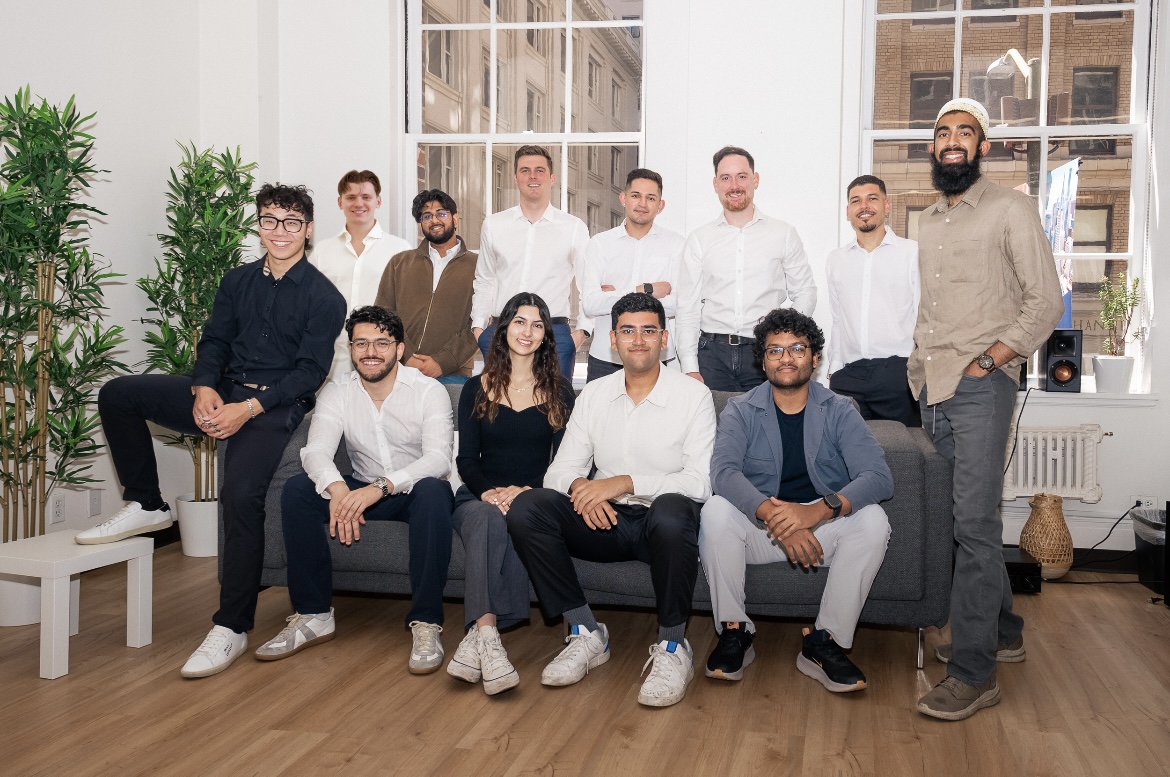
Against this backdrop, a new venture named Humans& has entered the arena, proposing that the next significant frontier for foundational AI models lies in bridging this very gap. Composed of a formidable team of alumni from pioneering AI organizations such including Anthropic, Meta, OpenAI, xAI, and Google DeepMind, Humans& recently secured an astounding $480 million in seed funding. This substantial investment underscores the market’s burgeoning confidence in their ambitious vision: to construct a "central nervous system" capable of orchestrating interactions within a hybrid human-plus-AI economy.
Andi Peng, a co-founder of Humans& and a former Anthropic employee, articulated this transition, observing, "It feels like we’re ending the first paradigm of scaling, where question-answering models were trained to be very smart at particular verticals, and now we’re entering what we believe to be the second wave of adoption where the average consumer or user is trying to figure out what to do with all these things." This "second wave," as envisioned by Humans&, moves beyond mere information retrieval or code generation, aiming instead for AI endowed with genuine social intelligence.
A Vision for Collaborative Intelligence
Humans&’s core proposition is to facilitate a smoother transition for individuals and organizations into this new era of AI, addressing widespread concerns about job displacement by emphasizing AI’s role in empowering human capabilities rather than supplanting them. This strategic framing arrives at a pivotal moment. Enterprises globally are exploring the transition from isolated AI chatbots to more integrated AI agents, yet the effectiveness of these sophisticated models is frequently hampered by the absence of robust, AI-driven workflow coordination. The challenge of aligning diverse teams and managing complex, multi-stakeholder projects remains a significant impediment, often leaving human workers feeling overwhelmed rather than augmented by AI.
Despite being a nascent, three-month-old company without a public product, Humans& has managed to attract significant capital, largely on the strength of its compelling philosophy and the esteemed backgrounds of its founding members. While specific product details remain under wraps, the team has indicated that their offering could evolve into a transformative replacement for existing multiplayer or multi-user communication and collaboration platforms, such as Slack, Google Docs, or Notion. Their intended scope encompasses both enterprise and consumer applications, signaling a broad ambition to redefine collaborative interactions across various contexts.
Eric Zelikman, CEO and co-founder of Humans&, who previously conducted research at xAI, elaborated on the company’s mission: "We are building a product and a model that is centered on communication and collaboration." He stressed the objective of enabling people to work together more effectively, not only with each other but also seamlessly with various AI tools. Zelikman humorously recounted the arduous process of reaching a consensus on a startup logo, illustrating the tedious, time-consuming nature of group decision-making that their AI aims to alleviate. He envisions a future where the AI model engages in a more nuanced, empathetic form of questioning, akin to a friend or colleague striving to understand, rather than the current generation of chatbots programmed solely to optimize for immediate user satisfaction or factual correctness. This deeper engagement stems from an understanding of the inherent value and context of a question, moving beyond superficial interaction.
The Evolution of Digital Collaboration
The history of digital collaboration tools provides essential context for Humans&’s disruptive potential. From the early days of email and rudimentary bulletin board systems, through the emergence of sophisticated groupware like Lotus Notes in the 1990s, to the more recent proliferation of cloud-based platforms like Slack, Microsoft Teams, Google Workspace, and Notion, the trajectory has consistently aimed at streamlining communication and enhancing collective productivity. Initial integrations of AI into these platforms were often limited to basic functions like automated responses, meeting summaries, or simple task assignments. While useful, these features largely served to enhance individual workflows or provide superficial assistance, rather than fundamentally redesigning the collaborative process itself.
Humans&, however, seeks not merely to integrate AI into existing applications but to "own the collaboration layer" entirely. This signifies a more profound ambition: to provide the foundational architecture upon which future collaborative endeavors—both human and human-AI—will be built. This strategic divergence positions them uniquely in a market that is rapidly recognizing the value of AI-powered collaboration. The startup Granola, for instance, recently raised $43 million for its AI note-taking app with collaborative features, reflecting the growing investor appetite for innovation in this space. Prominent figures like LinkedIn founder Reid Hoffman have also publicly championed the idea that the true leverage of AI lies not in isolated pilot projects, but in its capacity to revolutionize the coordination layer of work—the very mechanisms through which teams share knowledge, conduct meetings, and make decisions. Hoffman posits that "AI lives at the workflow level, and the people closest to the work know where the friction actually is. They’re the ones who will discover what should be automated, compressed, or totally redesigned." This perspective perfectly aligns with Humans&’s ambition to create a "connective tissue" within any organization, from a large corporation to a family unit, capable of understanding and balancing individual skills, motivations, and needs for the collective good.
Technological Underpinnings: Social Intelligence and Advanced Reinforcement Learning
Achieving this level of sophisticated collaboration necessitates a radical rethinking of how AI models are trained. Yuchen He, a co-founder of Humans& and a former OpenAI researcher, highlighted their innovative approach: "We’re trying to train the model in a different way that will involve more humans and AIs interacting and collaborating together." This involves moving beyond static datasets to dynamic environments where AI learns through continuous interaction.
Specifically, the startup intends to employ long-horizon and multi-agent reinforcement learning (RL). Long-horizon RL is critical for enabling the model to engage in sustained planning, action execution, iterative revision, and follow-through over extended periods, moving beyond the generation of isolated, one-off responses. This capability is paramount for managing complex, multi-stage projects where context, memory, and sequential decision-making are crucial. Multi-agent RL, conversely, trains the AI to operate effectively within environments populated by multiple interacting agents—be they other AIs, humans, or a combination thereof. Both methodologies are gaining significant traction in academic research as the AI community endeavors to push LLMs beyond their current chatbot functionalities toward systems capable of orchestrating actions and optimizing outcomes across numerous steps and diverse participants. He emphasized the importance of memory in this context: "The model needs to remember things about itself, about you, and the better its memory, the better its user understanding." This persistent memory is vital for building trust and maintaining context in long-term collaborative relationships.
Market Implications and Competitive Arena
Despite the formidable talent driving Humans&, the path ahead is fraught with significant challenges. Developing and scaling a new foundational AI model is an extraordinarily capital-intensive undertaking, demanding vast sums of cash for research, development, and, crucially, access to high-performance computing resources. This places Humans& in direct competition with established technology giants that possess virtually limitless financial and computational assets.
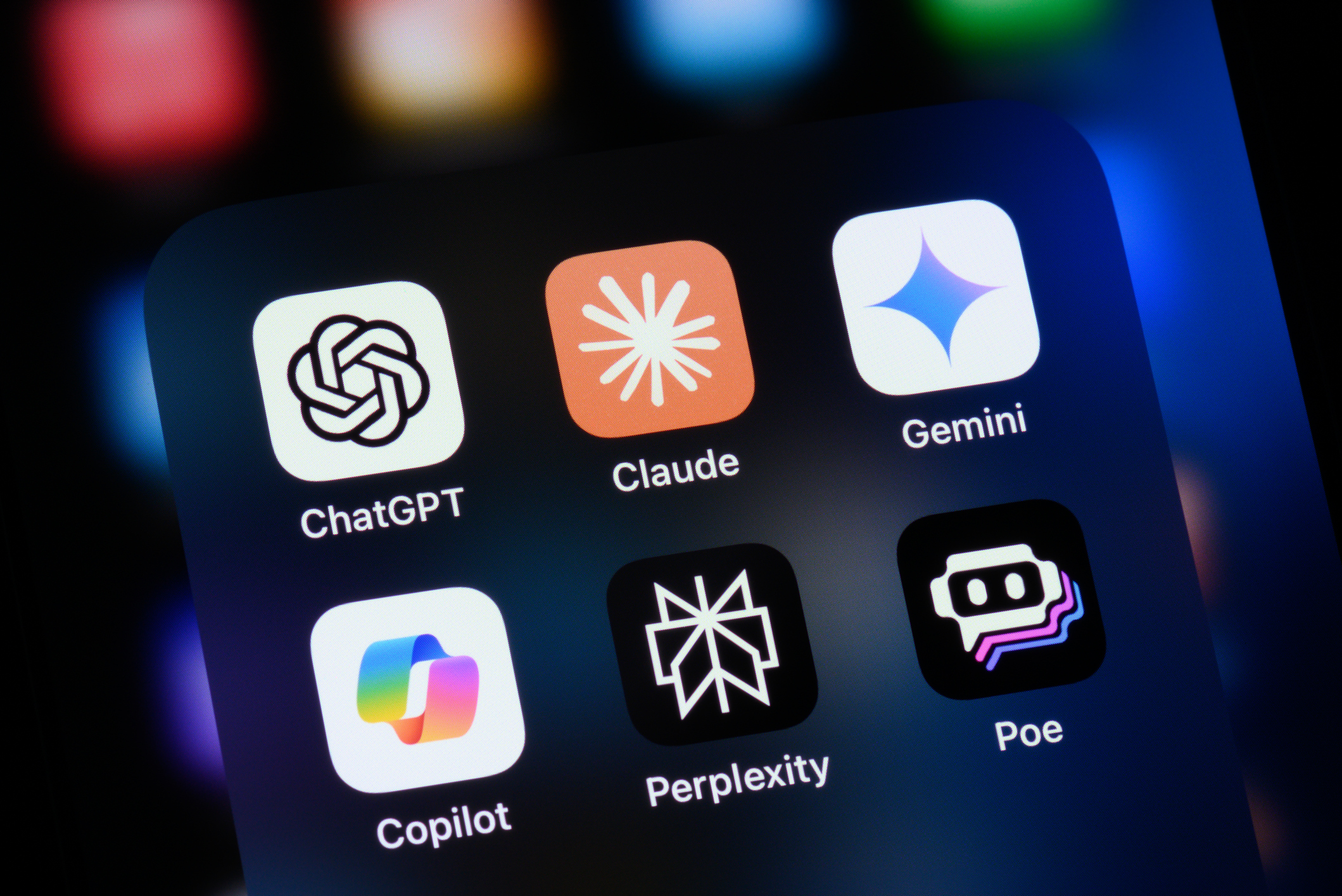
The most formidable risk, however, extends beyond competing with existing collaboration tools like Notion or Slack. Humans& is positioning itself to challenge the very titans of the AI industry. Major players such as Anthropic, Google, and OpenAI are not dormant; they are actively investing in and integrating advanced human collaboration features within their own platforms. Anthropic’s Claude Cowork aims to optimize work-style collaboration, while Google’s Gemini is deeply embedded into its Workspace suite, facilitating AI-enabled collaboration directly within widely used tools. OpenAI, meanwhile, has been actively promoting its multi-agent orchestration and workflow capabilities to developers.
Crucially, while these industry leaders are enhancing collaboration within their existing ecosystems, none appear to be undertaking the fundamental rewrite of a core AI model specifically engineered for social intelligence, as Humans& proposes. This strategic differentiation could either provide Humans& with a unique competitive advantage or render it an attractive acquisition target for larger entities seeking to integrate this specialized expertise. Given the intense competition for top AI talent, particularly from cash-rich companies like Meta, OpenAI, and DeepMind, the threat of an acquisition remains a tangible concern.
However, Humans& has reportedly rejected overtures from interested parties, steadfastly asserting its commitment to independence. Zelikman articulated this resolve, stating, "We believe this is going to be a generational company, and we think that this has the potential to fundamentally change the future of how we interact with these models. We trust ourselves to do that, and we have a lot of faith in the team that we’ve assembled here." This declaration reflects a profound conviction in their mission to redefine the landscape of human-AI interaction and collaborative work. The success of Humans& will hinge not only on its technological prowess but also on its ability to navigate the complex interplay of market dynamics, investor expectations, and the relentless pace of innovation in the rapidly evolving field of artificial intelligence.