Amir Mahmud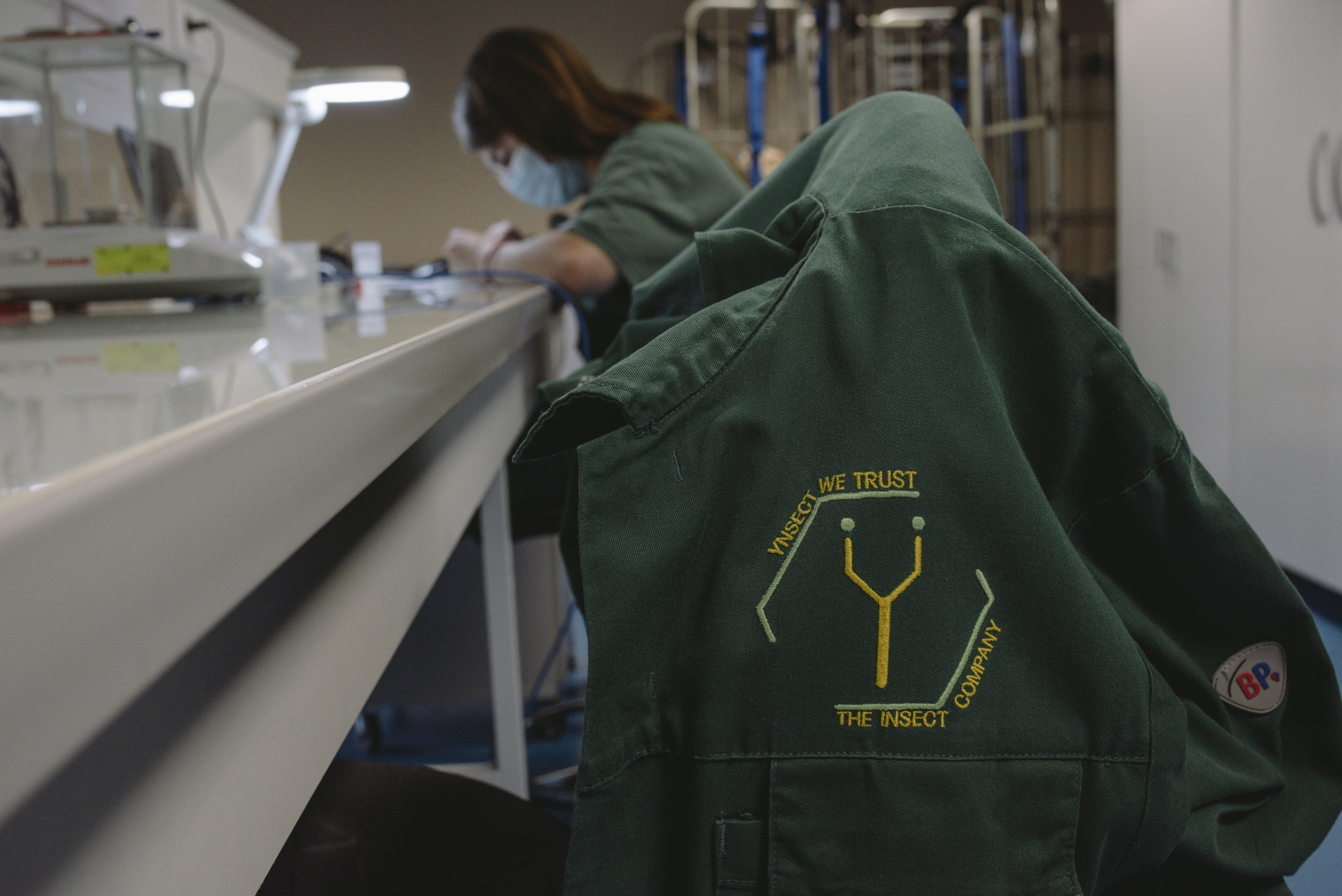
The audacious vision of revolutionizing global food systems through insect farming, once championed by celebrity investor Robert Downey Jr., has encountered a significant setback with the judicial liquidation of French startup Ÿnsect. Nearly four years after gaining widespread attention, the company, which had attracted over $600 million in funding, including from Downey Jr.’s FootPrint Coalition and substantial taxpayer contributions, has been declared insolvent. This dramatic downfall serves as a stark reminder of the immense challenges inherent in scaling deep technology ventures, particularly those operating at the intersection of environmental sustainability and complex commodity markets.
The Grand Vision and Initial Ascent
Ÿnsect emerged onto the global stage at a time of burgeoning concern over climate change, food security, and the environmental footprint of conventional agriculture. Founded in 2011 by Antoine Hubert, Alexis Angot, Jean-Gabriel Levon, and Fabrice Berro, the company positioned itself as a pioneer in industrial-scale insect farming, specifically focusing on the cultivation of mealworms (Tenebrio molitor). The core premise was compelling: insects offer a highly sustainable and efficient alternative protein source, requiring significantly less land, water, and feed than traditional livestock. By converting organic byproducts into high-value protein and fertilizer, Ÿnsect promised a circular economy model that could address critical environmental issues while bolstering food supply chains.
The early 2020s saw a surge of interest and investment in alternative proteins and sustainable agriculture, driven by a confluence of factors including population growth projections, the increasing demand for animal protein, and a growing consumer and investor appetite for environmentally friendly solutions. Ÿnsect’s narrative resonated deeply within this context, attracting a diverse array of investors ranging from venture capital firms specializing in impact investing, such as Astanor Ventures, to public investment banks like Bpifrance, which plays a crucial role in supporting French technological innovation. The company’s promise of a "carbon-negative" footprint and its ambition to construct the "largest vertical farm in the world" captivated imaginations and unlocked substantial capital.
The pinnacle of its public relations success arrived in February 2021 when Hollywood icon Robert Downey Jr. publicly endorsed Ÿnsect on "The Late Show" during Super Bowl weekend. Downey Jr., through his FootPrint Coalition, a venture fund dedicated to investing in sustainable technologies, became a high-profile backer, lending significant credibility and visibility to the burgeoning insect farming sector. This celebrity endorsement underscored the broader cultural shift towards sustainability and the belief that technological innovation could solve pressing global challenges. At this juncture, Ÿnsect appeared to embody the future of food, poised to disrupt established industries and lead the charge toward a more sustainable planet.
A Pivot to Protein: The Market Realities
Despite its lofty ambitions and impressive fundraising, Ÿnsect’s journey was plagued by strategic ambiguities and a fundamental misunderstanding of the market dynamics it sought to enter. The company initially focused on producing insect protein primarily for animal feed and pet food, rather than direct human consumption. This distinction is critical, as these markets operate under vastly different economic principles.
The animal feed market, particularly for aquaculture and livestock, is a colossal, multi-billion dollar industry characterized by razor-thin margins and extreme price sensitivity. Producers prioritize cost-effectiveness above almost all else, with sustainability often taking a backseat to immediate economic viability. Traditional feed ingredients like fishmeal and soy have established supply chains and economies of scale that make them incredibly difficult to displace. Ÿnsect’s initial pitch to investors emphasized its insect protein as a superior, sustainable alternative to these resource-intensive options. However, the reality of industrial-scale insect production revealed significant challenges. While the ideal scenario involved feeding insects on food waste that would otherwise go to landfills, practical implementation at factory scale often necessitated the use of cereal byproducts already suitable for animal feed. This meant that insect protein, rather than offering a cheaper, more sustainable alternative, often became an additional, more expensive step in the feed production process, making the "math" for animal feed simply unworkable in a commodity-driven market.
The pet food market, by contrast, presented a somewhat more forgiving landscape. Consumers in this segment are often willing to pay a premium for specialized, high-quality, or ethically sourced ingredients for their companion animals. This market is less price-driven than animal feed and offered a better potential avenue for insect protein, even with emerging competition from other novel ingredients like lab-grown meat or plant-based alternatives. However, Ÿnsect’s strategic focus remained muddled for too long, delaying a decisive shift towards higher-margin segments.
Strategic Ambiguity and Costly Expansion
The lack of a clear market focus was further compounded by Ÿnsect’s merger and acquisition strategy. In 2021, at the height of its expansion, the company acquired Protifarm, a Dutch startup specializing in mealworm production for human food applications. This acquisition introduced a third, highly complex market segment into Ÿnsect’s portfolio. While the move hinted at diversification, then-CEO Antoine Hubert acknowledged at the time that human food applications would likely constitute only a marginal portion (10% to 15%) of Ÿnsect’s revenue for several years. This decision to invest in a market segment with a long runway to profitability, while simultaneously struggling to generate meaningful revenue in its core markets, raised questions about the company’s strategic coherence.
Indeed, revenue generation proved to be a persistent Achilles’ heel. Publicly available data indicated that Ÿnsect’s main entity peaked at approximately €17.8 million (around $21 million) in revenue in 2021. This figure was reportedly inflated by internal transfers between subsidiaries, suggesting that organic sales were even lower. By 2023, the financial picture had deteriorated significantly, with the company racking up a net loss of €79.7 million (approximately $94 million). The chasm between the hundreds of millions raised and the paltry revenue generated highlighted a critical disconnect between investor confidence and operational performance. The company was burning through capital at an alarming rate without demonstrating a viable path to profitability or even substantial market penetration.
The "Giga-Factory" Gamble
The most significant strategic misstep, and ultimately a fatal blow to Ÿnsect, was its commitment to Ÿnfarm. Billed as a "giga-factory" and the "world’s most expensive bug farm," this massive, capital-intensive facility in Northern France was designed for industrial-scale insect production. Hundreds of millions of dollars were poured into its construction and operationalization. The gamble was enormous: building out vast infrastructure before fully proving the business model or optimizing unit economics for its target markets.
This "build it and they will come" approach, while sometimes successful in established industries with predictable demand, proved disastrous for a nascent technology in a volatile market. The sheer scale of Ÿnfarm meant colossal fixed costs, high energy consumption (especially problematic amidst rising energy prices in Europe), and significant operational complexities. The facility was designed to produce protein for a market (animal feed) that ultimately couldn’t bear the cost structure, rendering the initial investment inefficient and unsustainable.
By 2023, facing escalating economic pressures, including inflation in energy, raw materials, and the cost of capital, Ÿnsect finally recognized the urgent need for a strategic shift. The company announced a refocusing of its business towards pet food and other higher-margin segments, acknowledging the unviability of heavily investing in the least remunerative animal feed market. This pivot, however, came too late. The immense capital already sunk into Ÿnfarm, built for a different market reality, had created an insurmountable financial burden.
In an attempt to stabilize the company, Shankar Krishnamoorthy, a former executive from French energy giant Engie, was brought in to oversee Ÿnfarm’s launch and subsequently replaced Antoine Hubert as CEO. Under new leadership, Ÿnsect took drastic measures, including shutting down the production plant acquired from Protifarm and implementing job cuts. These efforts, while necessary, could not fundamentally alter the trajectory of a company burdened by a massive, underperforming asset built for the wrong market.
Beyond Ÿnsect: Broader Implications for Deep Tech
Ÿnsect’s collapse is more than just the story of one failed startup; it offers profound lessons for the broader deep tech and sustainable innovation sectors. Professor Joe Haslam, who teaches scaling strategies at IE Business School, succinctly frames the situation as "a mismatch between industrial ambition, capital markets, and timing, compounded by some execution and strategy choices."
The failure does not necessarily spell doom for the entire insect farming industry. Competitors like Innovafeed, for instance, appear to be navigating the market more successfully. Their strategy reportedly involves starting with smaller production sites and scaling incrementally, allowing them to refine their business model and unit economics before committing to colossal capital expenditures. This contrasts sharply with Ÿnsect’s "moonshot" approach, which prioritized massive scale from the outset.
Professor Haslam also views Ÿnsect as emblematic of a broader "scaling gap" prevalent in Europe. He argues that European venture capital and public funding mechanisms are adept at funding early-stage innovation and ambitious "moonshots" but often fall short in supporting the capital-intensive, arduous process of industrialization. He draws parallels with other struggling European deep-tech ventures, such as the Swedish battery maker Northvolt, the German air taxi startup Volocopter, and the electric aircraft company Lilium, all of which have faced significant hurdles despite substantial initial funding. This pattern suggests a systemic challenge in translating groundbreaking scientific and technological advancements into commercially viable, large-scale industrial operations within the European ecosystem.
Lessons Learned and the Path Forward
The demise of Ÿnsect underscores several critical lessons for startups, investors, and policymakers alike. First, the allure of a compelling sustainability narrative must be rigorously balanced with sound unit economics and a clear understanding of market realities. "Impact" investments, while vital, are not immune to the fundamental laws of business. Second, rapid, large-scale capital expenditure in unproven markets can be incredibly risky. Incremental scaling, allowing for iterative learning and adaptation, often proves a more sustainable path. Third, strategic focus is paramount. Startups, particularly in capital-intensive sectors, often cannot afford to simultaneously pursue multiple, disparate market segments, especially when facing tight financial constraints.
In a poignant recognition of these systemic challenges, former Ÿnsect CEO Antoine Hubert has co-founded Start Industrie, an association dedicated to advocating for policies that support French industrial startups. This initiative highlights a growing awareness that Europe needs more than just initial funding to foster the next generation of deep-tech companies; it requires a robust ecosystem that supports industrialization, risk management, and market-driven strategic development. The journey of Ÿnsect, from a celebrated pioneer to a cautionary tale, will undoubtedly shape future investment strategies and policy decisions across the global sustainable technology landscape. The promise of insect protein remains, but the path to commercial viability is proving far more complex and unforgiving than initially envisioned.