Amir Mahmud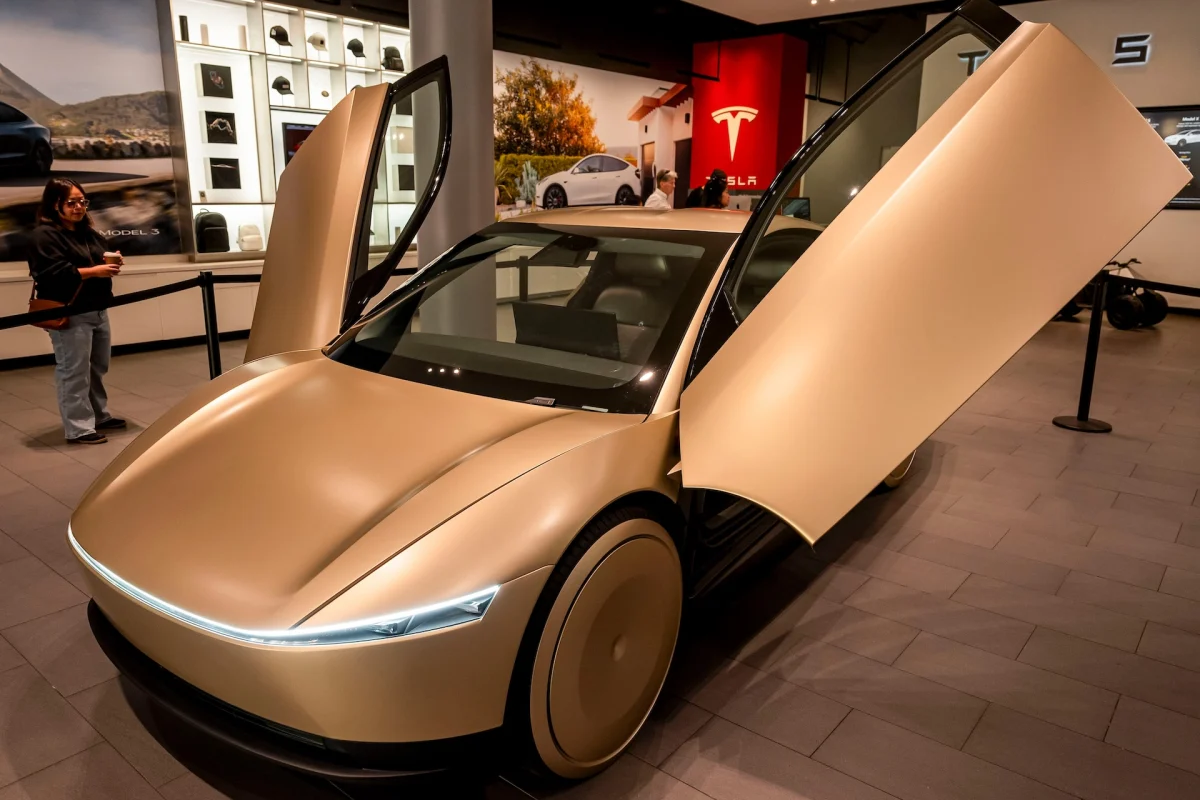
A significant leap in autonomous vehicle development has begun in Austin, Texas, where Tesla is conducting initial tests of its groundbreaking Cybercab, a two-seater vehicle devoid of traditional controls like a steering wheel or pedals. This pivotal phase of testing involves a safety monitor present in the right passenger seat, overseeing the vehicle’s operations, as evidenced by a recently circulated video shared on social media. The deployment of this production-version Cybercab marks a crucial step in Tesla’s long-held ambition to revolutionize urban transportation through a fully autonomous robotaxi network.
A New Era of Autonomous Mobility
The concept of autonomous vehicles, or self-driving cars, has captivated the imagination of technologists and the public for decades. From early theoretical discussions to advanced prototypes, the journey toward truly driverless transportation has been fraught with both immense promise and formidable challenges. Tesla, under the leadership of CEO Elon Musk, has been a particularly vocal proponent of this future, consistently articulating a vision where personal car ownership might become obsolete, replaced by on-demand robotaxi services. This latest development in Austin brings that vision closer to tangible reality, showcasing a vehicle specifically engineered for autonomy, stripped of the interfaces traditionally required for human operation. The removal of a steering wheel and pedals is not merely an aesthetic choice; it underscores a profound philosophical shift in automotive design, emphasizing that the vehicle itself is the driver, not a human occupant.
The Vision Behind the Cybercab
The Cybercab’s design was initially revealed nearly two years ago, presented as the cornerstone of a planned robotaxi service that would allow users to summon vehicles via a dedicated Tesla application. This current testing phase follows earlier iterations, including a period roughly a year ago when Tesla initiated a robotaxi service in Austin utilizing modified Model Y SUVs. These earlier vehicles, while autonomous, still retained their conventional controls and occasionally operated with human safety drivers, serving as an intermediate step in the company’s development pipeline. More recently, Tesla had been testing prototype Cybercabs equipped with conventional steering wheels and pedals in various U.S. cities, often parking hundreds of these vehicles in lots, which fueled widespread speculation about an imminent large-scale launch of its robotaxi network. The transition to a control-free design signals a move towards a production-ready, dedicated autonomous platform, distinct from retrofitted consumer vehicles.
Regulatory Landscape and Industry Hurdles
One of the primary legislative obstacles to deploying vehicles without human controls is on the cusp of being addressed. The National Highway Traffic Safety Administration (NHTSA) recently unveiled a proposal that would exempt "vehicles designed to be driven exclusively by automated driving systems" from mandates requiring brake pedals. This proposed rule change, currently in its public comment period, is widely anticipated to be finalized later this year. Such a regulatory update would be instrumental for companies like Tesla, enabling them to legally deploy purpose-built autonomous vehicles that are truly devoid of human driving interfaces.
The regulatory environment for autonomous vehicles remains complex and fragmented globally, with different regions adopting varying stances on testing, deployment, and liability. In the U.S., states have largely taken the lead in establishing frameworks, leading to a patchwork of rules. Federal intervention, such as the NHTSA proposal, is crucial for standardizing requirements and facilitating broader deployment. However, regulatory approval is just one facet of the challenge. Public acceptance, data privacy concerns, and the ongoing development of robust safety protocols are equally vital for the widespread adoption of autonomous mobility. The industry is navigating a delicate balance between innovation and ensuring public safety and trust.
Competing Visions: Tesla’s Camera-Centric Approach
Tesla’s approach to achieving full autonomy fundamentally diverges from many of its leading competitors, most notably Waymo, a subsidiary of Alphabet. Elon Musk and other Tesla executives have consistently argued that their company will be able to outcompete existing robotaxi leaders for several strategic reasons. Foremost among these is Tesla’s integrated strategy: it designs and manufactures both the vehicle hardware and the autonomous driving software. This vertical integration is projected to offer unparalleled control over costs, a significant advantage over competitors like Waymo, which relies on partnerships with established automakers such as Jaguar and Zeekr for their vehicle platforms.
Furthermore, Tesla’s technological philosophy centers on a camera-only system for achieving full autonomy. Its vehicles are equipped with an array of cameras that provide a 360-degree view, processed by sophisticated neural networks to perceive and interpret the driving environment. This stands in stark contrast to Waymo and many other AV developers, who employ a more complex suite of sensors, including lidar (light detection and ranging) and radar, in addition to cameras. Lidar systems create highly detailed 3D maps of the environment, while radar excels at detecting objects and their velocities, particularly in adverse weather conditions. Tesla’s reliance solely on cameras is touted as a cost-effective and scalable solution, mimicking human vision more closely. However, critics argue that a multi-sensor approach provides greater redundancy and robustness, especially in challenging scenarios like heavy rain, fog, or direct sunlight, where camera performance can be degraded. This debate over sensor suites represents a core philosophical divide within the autonomous vehicle industry, with each approach presenting its own set of advantages and disadvantages regarding development cost, hardware complexity, and overall system resilience.
The Broader Robotaxi Race: Lessons from Competitors
The journey to scaled autonomous deployment has been protracted and challenging for all players. Tesla, along with Musk, has spent years promising the advent of a fully autonomous car, yet widespread deployment at scale remains elusive. The closest the company has come is the aforementioned robotaxi service in Austin, which has experienced fluctuations in its operational size during its year-long existence. These vehicles, primarily Model Ys, have been involved in a number of minor incidents, with at least two documented cases attributed to remote operators.
Competitors like Waymo have also encountered their share of obstacles and learning experiences as they have scaled their operations. Waymo’s robotaxis have been involved in minor collisions and have grappled with a variety of "edge cases"—unusual or challenging scenarios that test the limits of autonomous systems. For instance, Waymo’s vehicles currently cannot operate on highways, as they have struggled to safely navigate construction zones, leading to a recall that aimed to avoid highways rather than fix the underlying issue. The Alphabet-owned company has also faced recalls due to its vehicles struggling to avoid flooded areas during heavy rainfall and documented problems with legally maneuvering around school buses. These incidents highlight the immense complexity of programming vehicles to safely and reliably operate in the unpredictable real world, where human behavior, weather conditions, and infrastructure quirks present an endless array of variables.
A key difference in visibility has also impacted how these incidents are perceived. Tesla’s initial Austin robotaxi network utilized lightly modified consumer Model Y SUVs, which blended in more readily with regular traffic. Consequently, some of their operational "growing pains" might have gone relatively unnoticed by the wider public. In contrast, Waymo’s sensor-laden Jaguar I-Pace SUVs and their distinctive light-blue Zeekr vans are far more conspicuous, making any operational anomalies or mistakes more readily identifiable and scrutinized. The introduction of the gold-colored, two-seater Cybercabs will undoubtedly place an even greater spotlight on Tesla’s efforts, making both its triumphs and its tribulations in the pursuit of a nationwide robotaxi network significantly more visible to the public and regulators alike.
Economic and Societal Transformation
The successful deployment of fully autonomous robotaxis, like the Cybercab, holds the potential for profound economic and societal transformation. Economically, it could disrupt traditional car ownership models, significantly reduce traffic congestion, and reshape urban planning. Ride-hailing services could become dramatically cheaper and more accessible, potentially leading to a decline in private vehicle sales in dense urban areas. The logistics industry could also see immense benefits through autonomous delivery vehicles, optimizing supply chains and reducing labor costs. However, this transformation also raises critical questions about job displacement, particularly for professional drivers, and the need for new economic models and social safety nets.
Culturally, autonomous vehicles could redefine our relationship with transportation, turning travel time into productive or leisure time. The accessibility benefits for elderly, disabled, or non-driving populations are immense, offering greater independence and mobility. Yet, there are also societal concerns regarding the ethical implications of autonomous decision-making in accident scenarios, data privacy related to vehicle tracking, and the potential for increased urban sprawl if car-free living becomes easier. The transition to an autonomous future is not merely a technological challenge but a complex societal one, requiring careful consideration of its broader impacts.
The testing of Tesla’s pedal-free, steering-wheel-less Cybercab in Austin represents a tangible step forward in the company’s ambitious vision for autonomous transportation. While significant technical, regulatory, and societal hurdles remain, this development underscores the relentless pursuit of a future where vehicles navigate our roads independently, promising to reshape how we move, work, and live. The eyes of the world, and indeed the entire automotive and tech industries, will be watching closely as Tesla attempts to turn its long-held promises into a scaled, operational reality.