Amir Mahmud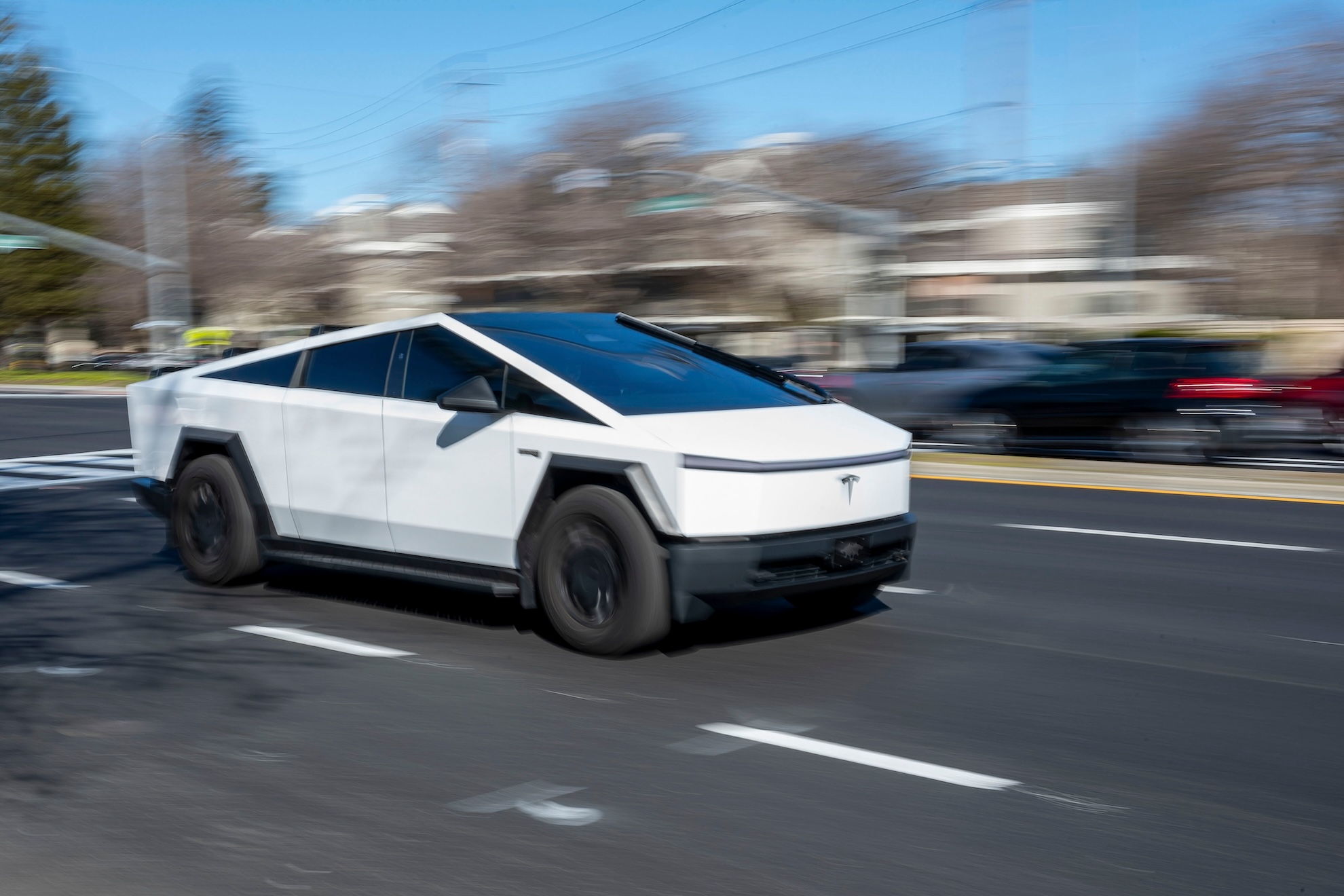
A recent announcement by Tesla CEO Elon Musk regarding an update to the company’s Full Self-Driving (Supervised) software has ignited a fresh wave of debate surrounding driver safety, regulatory compliance, and the evolving landscape of automotive technology. Musk stated via a social media post that the latest iteration of the driver-assistance system now permits vehicle occupants to engage in texting while driving, a practice widely prohibited across the United States due to its documented risks. This assertion immediately drew attention to the significant divergence between technological capabilities and established legal frameworks designed to prevent distracted driving.
The revelation emerged when Musk responded to a user on X (formerly Twitter) who had observed that the updated FSD software no longer displayed a warning when they were using their phone behind the wheel. The Tesla CEO’s reply indicated that the system now allows such activity "depending on context of surrounding traffic," a phrase that offers little technical detail or clarification. This lack of specificity, coupled with Tesla’s well-known absence of a public relations department, leaves many questions unanswered for regulators, safety advocates, and the general public regarding the functionality and safety protocols of this new feature.
A Landscape of Laws and Liabilities
The practice of distracted driving, particularly texting, has been a significant focus of highway safety campaigns and legislative efforts for over a decade. The dangers are well-documented: studies consistently show that texting while driving impairs a driver’s ability to react, maintain lane position, and process critical information, often to a greater extent than driving under the influence of alcohol. Consequently, nearly all 50 U.S. states have enacted bans on texting while driving, with roughly half extending these prohibitions to include any handheld mobile phone use. These laws reflect a broad societal consensus that the risks associated with diverting attention from the road are unacceptable.
Musk’s statement directly challenges this established legal and safety paradigm. Even with an advanced driver-assistance system engaged, the fundamental legal responsibility for operating a vehicle safely rests with the human driver. Should a driver utilize this new Tesla feature to text while driving in a jurisdiction where it is illegal, they would likely face citations, fines, and potentially more severe legal consequences in the event of an incident. This creates a complex liability scenario where a vehicle’s software ostensibly permits an action that is illegal for its human operator, raising questions about potential manufacturer responsibility and the interpretation of existing laws in the context of emerging automotive technology.
Understanding Full Self-Driving (Supervised)
To fully grasp the implications of this new feature, it’s crucial to understand what Tesla’s Full Self-Driving (Supervised) software actually is, and more importantly, what it is not. Despite its ambitious name, FSD (Supervised) is classified as a Level 2 driver-assistance system according to the Society of Automotive Engineers (SAE) international standard for driving automation. This means the vehicle can perform certain driving tasks under specific conditions, such as steering, acceleration, and braking, but the human driver must remain actively engaged, supervise the system at all times, and be prepared to take immediate control. It is not an autonomous system capable of operating a vehicle without human intervention.
Tesla vehicles equipped with FSD (Supervised) employ a suite of cameras and sophisticated artificial intelligence algorithms to perceive the environment. To ensure driver attentiveness, these systems typically integrate in-cabin cameras and steering wheel torque sensors. These mechanisms are designed to detect if a driver’s eyes are on the road or if their hands are off the wheel for an extended period, often prompting visual and auditory warnings, and in some cases, disengaging the system if the driver remains unresponsive. The potential for the FSD software to allow texting suggests a significant alteration to these driver monitoring protocols, or a highly nuanced interpretation of "attentiveness" when the system is active.
A critical challenge with Level 2 systems is the phenomenon of "driver complacency" or "automation bias." As systems become more capable, drivers may become overly reliant, allowing their attention to wander, even though they are legally and functionally still responsible for driving. This complacency can lead to the "handoff problem," where a driver is unable to re-engage quickly and safely when the system encounters a situation it cannot handle, a factor implicated in numerous incidents involving driver-assistance technologies. Musk himself has previously acknowledged that Tesla’s standard Autopilot system, a less advanced precursor to FSD, sometimes made drivers "too complacent and confident."
Historical Context: Tesla’s Autonomy Journey and Past Incidents
Tesla’s pursuit of autonomous driving has been a hallmark of the company’s identity, often characterized by ambitious timelines and a direct-to-consumer approach to software development. The journey began with Autopilot, introduced in 2014, which offered features like adaptive cruise control and lane keeping. From its inception, the naming convention itself has been a source of controversy, with critics arguing that "Autopilot" misleadingly suggests a higher level of autonomy than the system actually provides.
Over the years, Tesla has incrementally rolled out more advanced features, culminating in the "Full Self-Driving" package, which has been in beta testing with a growing number of customers. This iterative development, often accompanied by public statements from Musk about the imminent arrival of true autonomy, has fostered both excitement and skepticism.
However, this rapid advancement has not been without significant safety concerns and regulatory scrutiny. There have been numerous high-profile crashes involving Tesla vehicles where Autopilot or FSD was reportedly active, some resulting in fatalities. Regulators, including the National Highway Traffic Safety Administration (NHTSA), have investigated more than a dozen fatal crashes where Autopilot was engaged, seeking to understand the role of the driver-assistance system and driver behavior. These incidents have highlighted the complex interplay between advanced technology, human supervision, and the need for robust safety oversight.
Regulatory Bodies Take Notice
The latest FSD software update arrives amidst ongoing and intensifying investigations by federal and state authorities into Tesla’s driver-assistance systems. The National Highway Traffic Safety Administration (NHTSA), the primary federal agency responsible for vehicle safety, has been actively probing FSD for a range of reported issues. These investigations include more than 50 reports of the software allegedly running red lights or veering into incorrect lanes, as well as separate inquiries into reported crashes occurring under low-visibility conditions. NHTSA’s role is to ensure that vehicles and their features meet safety standards, and its ongoing investigations could lead to recalls, fines, or mandates for software modifications if safety defects are identified.
Concurrently, Tesla is embroiled in a protracted legal dispute with the California Department of Motor Vehicles (DMV), a state agency that regulates vehicle sales and driver licensing. The DMV has accused Tesla of misleading consumers for years through its marketing of "Full Self-Driving" and "Autopilot," arguing that the company’s advertising exaggerates the capabilities of its vehicles. During a series of hearings, the DMV presented evidence suggesting that Tesla’s marketing implies a level of autonomy that its systems do not possess, thereby potentially endangering the public. The agency has sought significant penalties, including a proposed suspension of the company’s sales and manufacturing licenses in California for at least 30 days. A decision in this high-stakes case is anticipated by the end of the current year, and it could set a precedent for how advanced driver-assistance systems are marketed and regulated across the nation.
Social and Cultural Ramifications
The introduction of a feature that seemingly condones texting while using a driver-assistance system carries substantial social and cultural ramifications. It risks normalizing a dangerous behavior that public safety campaigns have worked tirelessly to eradicate. For years, educators and law enforcement have emphasized that "hands-free" is not "risk-free," acknowledging the cognitive distraction inherent in phone conversations, let alone active texting. Allowing a vehicle’s software to facilitate texting, even "depending on context of surrounding traffic," could send a confusing and potentially dangerous message to drivers about acceptable behavior behind the wheel.
Furthermore, this development highlights a broader societal tension between technological innovation and public safety. While consumers often desire more convenient and advanced features, there is a fundamental expectation that these advancements will enhance, not compromise, safety. The public perception of autonomous technology, already shaped by a mix of awe and apprehension, could be further complicated by features that appear to contradict common-sense safety regulations. The ethical implications for automotive manufacturers are also considerable: should companies introduce features that enable actions widely considered illegal and dangerous, even if the technology theoretically manages some of the driving tasks?
The Broader Automotive Industry and Future Outlook
Tesla’s aggressive approach to deploying and marketing its driver-assistance features stands in contrast to many other traditional automakers and technology companies. While most major automotive players are also investing heavily in advanced driver-assistance systems (ADAS) and autonomous driving, they often adopt a more cautious, incremental rollout, frequently limiting functionality to specific geo-fenced areas or under strict conditions. This divergence in strategy underscores the differing philosophies on innovation, risk, and regulatory engagement within the industry.
The ongoing regulatory scrutiny and public debate surrounding Tesla’s FSD software are likely to have a ripple effect across the entire automotive sector. The outcomes of the NHTSA investigations and the California DMV case could influence how future ADAS features are developed, tested, marketed, and regulated, potentially leading to clearer industry standards and more robust oversight for Level 2 and higher autonomous systems. As the race for truly autonomous vehicles continues, striking the right balance between technological advancement, user convenience, and paramount public safety remains the ultimate challenge.
Ultimately, the controversy surrounding Tesla’s latest FSD update underscores the complex and evolving intersection of technology, law, and human behavior. As vehicles become increasingly capable, the lines of responsibility and acceptable conduct become blurred, demanding careful consideration from manufacturers, regulators, and drivers alike. The decisions made in the coming months by regulatory bodies will be pivotal in shaping not only the future of Tesla’s autonomous ambitions but also the broader trajectory of driver-assistance technology and road safety for years to come.