Amir Mahmud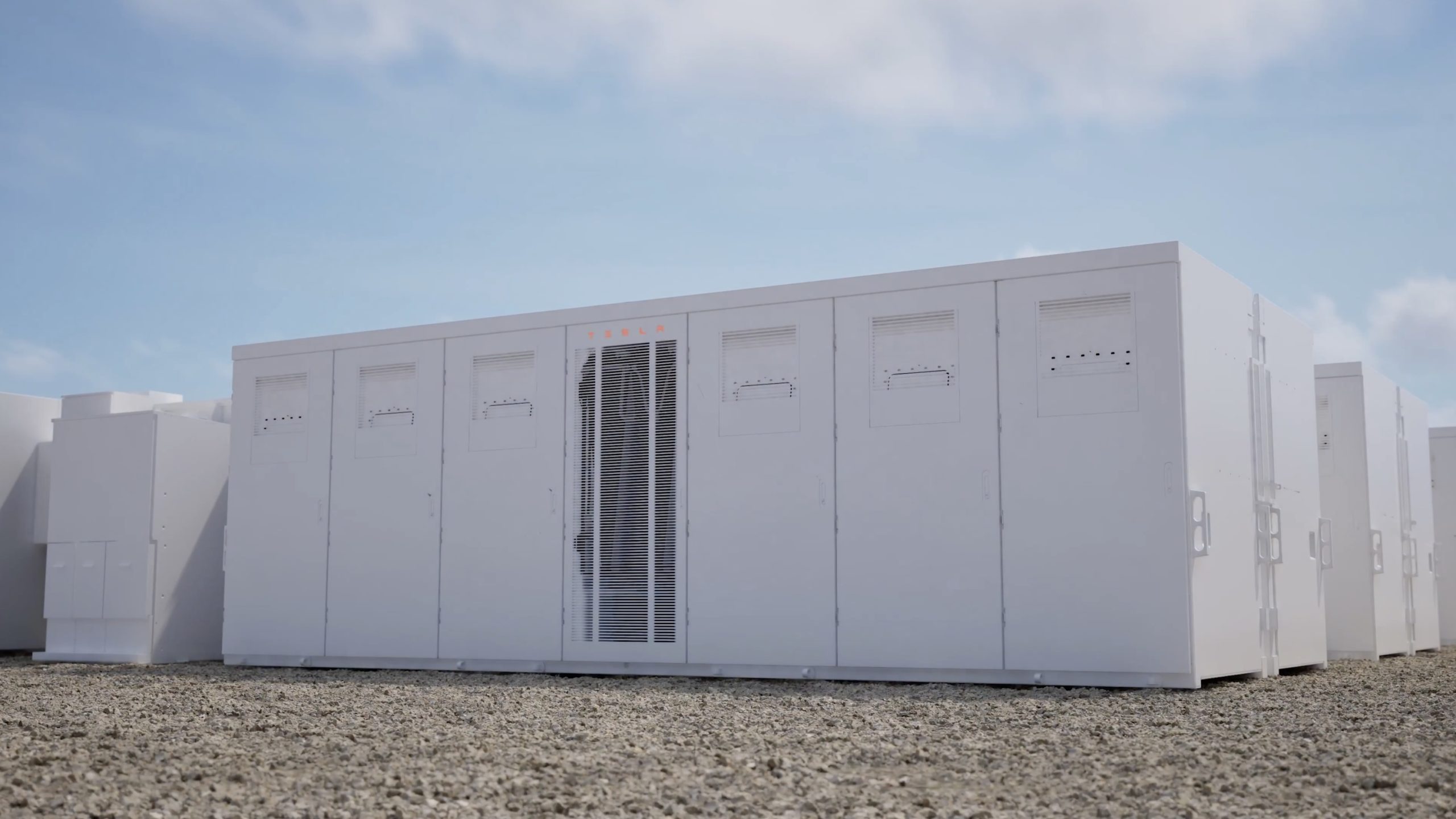
While Tesla Inc. has long been synonymous with electric vehicles, its burgeoning energy storage business has emerged as an unexpected, yet formidable, financial powerhouse, rapidly outperforming other segments of the company. This strategic pivot, or perhaps more accurately, a long-anticipated realization of its broader mission, provided a crucial buffer against a challenging period for its automotive sector, mitigating what could have been a far more severe quarterly financial report. The impressive growth in energy storage deployment and profitability underscores a significant rebalancing of Tesla’s revenue streams and strategic focus.
A New Pillar of Profitability
The fiscal year 2025 proved to be a mixed bag for the Austin-based technology giant. While the company’s overall profit experienced a substantial 45% decline compared to 2024, largely attributable to a slowdown in electric vehicle sales and increasing market competition, Tesla managed to surpass Wall Street’s earnings and revenue expectations. This resilience was almost entirely driven by the extraordinary performance of its energy storage and generation division.
In a landmark year for the segment, Tesla deployed an unprecedented 46.7 gigawatt-hours (GWh) of energy storage products throughout 2025, marking an impressive 48% increase over the previous year’s figures, as detailed in the company’s official financial disclosures. These deployments, encompassing large-scale stationary battery systems like the Megapack, residential Powerwall units, and solar installations, are not merely growing in volume but are also profoundly impacting Tesla’s bottom line. The energy division now accounts for nearly a quarter of Tesla’s gross profit. Specifically, the Megapack, a utility-scale battery solution, played a pivotal role, contributing $1.1 billion to the storage business’s gross profit in the last quarter alone, contributing significantly to the $3.8 billion in gross profit for the entire year from the storage segment. Overall, revenues from storage and energy generation soared by 26.5% to reach $12.8 billion.
What truly sets this division apart is its exceptional profitability. With a gross margin of 29.8%, the energy storage and solar products boast nearly double the profitability of Tesla’s core automotive sales, a stark indicator of the market’s demand and the company’s efficiency in this sector. This high margin, coupled with the projected recognition of $4.96 billion in deferred revenue from ongoing storage projects in 2026—more than double the amount recognized in 2025—signals a deepening commitment and an even larger role for energy storage in Tesla’s near-term financial future.
The Genesis of Tesla Energy
Tesla’s foray into energy storage is not a recent development but rather a long-held vision deeply intertwined with its mission to accelerate the world’s transition to sustainable energy. The roots of Tesla Energy trace back to 2015 with the unveiling of the original Powerwall, a home battery system designed to integrate with solar panels and provide backup power. This was followed by the controversial but strategically significant acquisition of SolarCity in 2016, a move that fully integrated solar generation capabilities into Tesla’s portfolio, transforming it from merely an EV manufacturer into a comprehensive clean energy provider.
The introduction of the Megapack in 2019 marked another crucial milestone, signaling Tesla’s intent to tackle utility-scale energy challenges. These massive battery installations, capable of storing and dispatching hundreds of megawatt-hours of electricity, were designed to support grid stability, integrate large-scale renewable energy projects, and defer costly grid upgrades. The subsequent establishment of "Megafactories" dedicated to the production of these large-scale batteries underscores the company’s commitment to scaling this segment rapidly. From early pilot projects, such as the Hornsdale Power Reserve in South Australia, which famously demonstrated the Megapack’s rapid response capabilities, Tesla has steadily built a reputation for reliable and efficient energy storage solutions. This historical trajectory reveals a deliberate, long-term strategy rather than a reactive pivot, positioning the company to capitalize on the burgeoning global demand for grid-scale energy solutions.
Driving the Green Transition
The rapid expansion of the energy storage market is driven by several critical factors, making Tesla’s strong position particularly relevant. Globally, the imperative to transition away from fossil fuels towards renewable energy sources like solar and wind power has created an urgent need for efficient energy storage. Renewables, while clean, are inherently intermittent; the sun doesn’t always shine, and the wind doesn’t always blow. Battery storage solutions address this intermittency, storing excess energy when production is high and releasing it when demand peaks or generation dips, thereby stabilizing the grid and maximizing the utility of renewable assets.
Beyond grid stability, energy storage plays a crucial role in enhancing energy resilience. As extreme weather events become more frequent and power outages disrupt communities, both residential (Powerwall) and commercial/utility (Megapack) battery systems offer critical backup power, ensuring continuity for homes, businesses, and essential services. This social impact extends to empowering consumers with greater energy independence and potentially reducing electricity costs through peak shaving and demand response programs.
Culturally, the shift towards decentralized energy generation and storage reflects a broader societal movement towards sustainability and self-sufficiency. Tesla’s brand, synonymous with innovation and environmental consciousness, resonates strongly within this evolving cultural landscape, further accelerating adoption. Moreover, the accelerating development of Artificial Intelligence (AI) infrastructure is creating an unprecedented surge in electricity demand. Data centers, the backbone of AI, require immense, stable, and uninterruptible power supplies. Energy storage solutions like Megapack are becoming indispensable for these facilities, not only to ensure continuous operation but also to manage the massive load fluctuations and integrate renewable energy sources into their operations, a key opportunity highlighted by Tesla in its earnings report.
Market Dynamics and Competitive Landscape
Tesla operates in an increasingly competitive, yet rapidly expanding, energy storage market. Key competitors include established players like Fluence (a joint venture between Siemens and AES), LG Energy Solution, Samsung SDI, BYD, and various smaller, specialized firms focusing on specific market niches or technologies. Each competitor brings its own strengths, whether in manufacturing scale, system integration expertise, or geographical focus.
Tesla’s differentiation strategy hinges on several factors: its vertically integrated approach (from battery cell production in partnership with Panasonic and others, to software management systems, to installation), its strong brand recognition, and its advanced battery management software. The "Gigafactories" and "Megafactories" allow for economies of scale, while proprietary software ensures optimal performance and longevity of its battery systems.
However, the market is not without its pressures. The original content notes a decline in the average selling price of a Megapack, even as volumes increased. This suggests an intensifying competitive environment where players are vying for market share, potentially through price reductions, or it could reflect Tesla’s own manufacturing efficiencies allowing for lower production costs. This trend is typical of maturing technology markets where initial high margins gradually compress as competition increases and production scales. For Tesla, maintaining its competitive edge will require continuous innovation, cost optimization, and potentially exploring new applications and markets for its storage solutions.
Navigating Regulatory and Supply Headwinds
Despite the robust growth, Tesla’s energy storage division faces specific hurdles, notably from evolving legislative landscapes and potential supply chain disruptions. The "One Big Beautiful Bill Act" (OBBBA), as cited by Tesla, represents a mixed bag of incentives and challenges. While it reportedly phased out tax credits for residential energy storage systems like the Powerwall, it concurrently extended commercial tax credits for larger-scale products such as the Megapack and Megablock through the mid-2030s. This legislative nuance suggests a strategic shift in government incentives, prioritizing large-scale grid modernization and industrial applications over individual home installations, which could influence Tesla’s product development and sales strategies.
Furthermore, provisions and tariffs within the OBBBA, or similar regulatory frameworks, threaten to increase the cost of critical battery cells. Battery cell prices are a major determinant of the overall cost of energy storage systems, and any upward pressure could impact profitability or force price increases, potentially slowing adoption rates. Managing these supply chain costs, particularly concerning raw materials like lithium, nickel, and cobalt, will remain a critical challenge. Global geopolitical tensions, commodity market volatility, and logistical constraints also contribute to an unpredictable supply environment. Tesla’s efforts to diversify its battery suppliers, localize production, and explore alternative battery chemistries (like LFP for certain applications) are strategic responses to these complex challenges.
Future Outlook and Strategic Implications
Looking ahead, Tesla’s optimism regarding its energy storage business appears well-founded, despite the acknowledged headwinds. The company explicitly states, "Despite these challenges, as AI infrastructure drives rapid load growth, we see opportunities for our energy storage products to stabilize the grid, shift energy when it is needed most and provide additional power capacity." This statement encapsulates the profound strategic importance of its energy division. The intersection of massive energy demand from AI, the ongoing global transition to renewables, and the increasing need for grid resilience creates a vast and growing market for Tesla’s solutions.
This robust performance also has significant strategic implications for Tesla’s overall corporate identity and financial stability. By diversifying its revenue streams and demonstrating strong profitability outside of its core automotive business, Tesla strengthens its position as a multi-faceted technology company rather than solely an automaker. This diversification can cushion the company against cyclical downturns in the automotive market, provide capital for further innovation across its segments, and enhance its appeal to a broader range of investors. The future of Tesla, therefore, is not just about the vehicles on our roads but increasingly about the invisible infrastructure powering our homes, businesses, and indeed, the very grid that underpins modern society. The energy storage division is rapidly becoming not just a profitable segment, but a fundamental cornerstone of Tesla’s long-term vision.