Amir Mahmud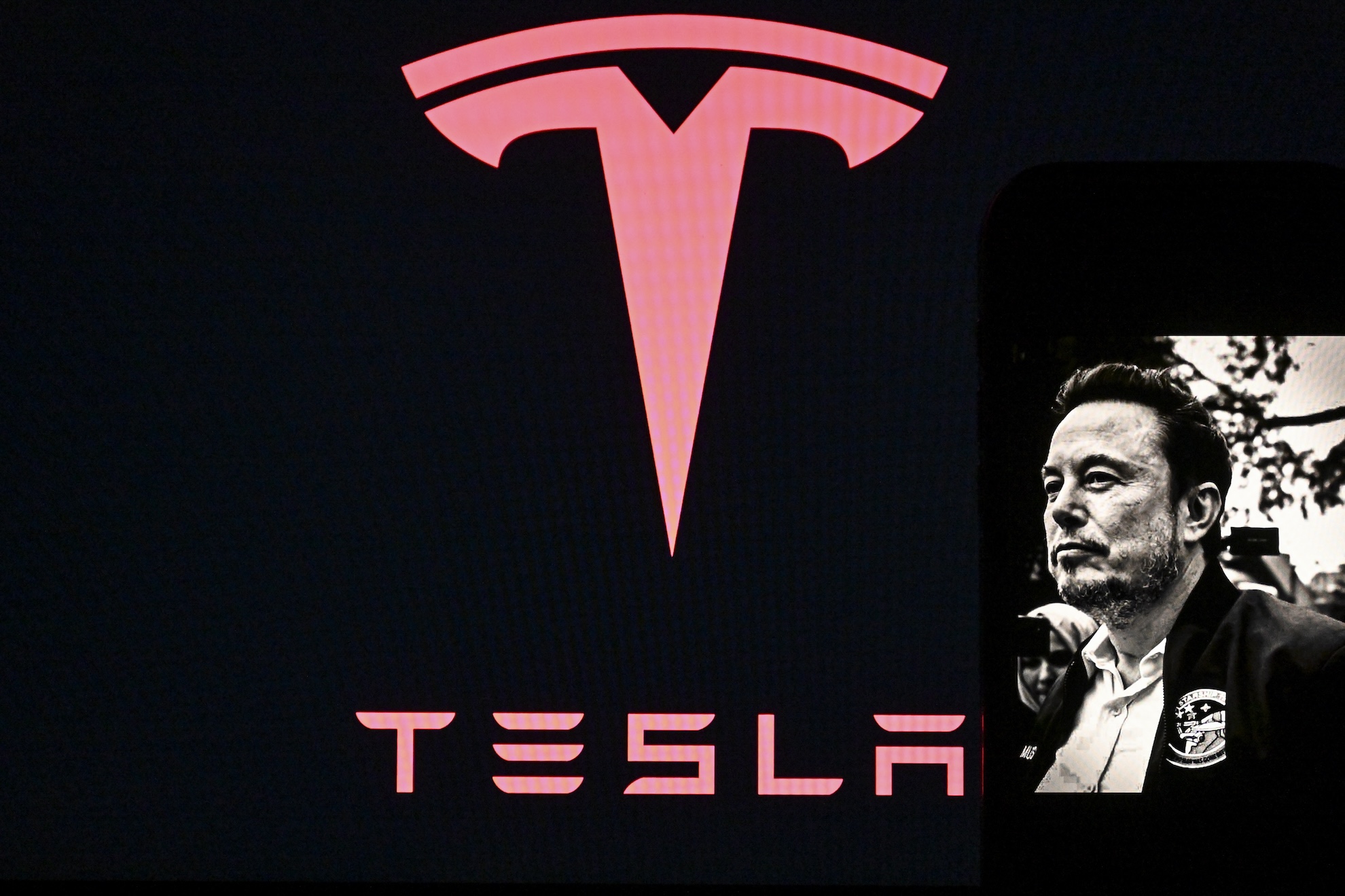
Tesla, the electric vehicle pioneer, is embarking on a profound strategic pivot, moving aggressively to reframe its corporate identity beyond its foundational automotive business. For years, CEO Elon Musk has articulated a vision for Tesla as a broader "sustainable energy company" and, more recently, an "AI and robotics powerhouse." This aspirational branding, however, now confronts a stark financial reality, as the company grapples with declining electric vehicle (EV) sales and a substantial drop in profitability. The latest earnings report for 2025 underscores this challenge, revealing a company heavily reliant on its automotive segment while simultaneously committing to massive capital expenditures aimed at diversifying its future.
The Shifting Sands of Tesla’s Identity
Since its inception, Tesla has been synonymous with electric cars, revolutionizing the automotive industry and accelerating the global transition away from internal combustion engines. Its Model S, introduced in 2012, was a watershed moment, demonstrating that EVs could be desirable, high-performance vehicles. Over time, Musk expanded this narrative, notably with the 2016 acquisition of SolarCity, positioning Tesla as an integrated energy provider offering solar generation and battery storage solutions. More recently, the discourse has increasingly centered on artificial intelligence and robotics, with projects like the Optimus humanoid robot and advanced autonomous driving systems taking center stage in public announcements.
However, the financial results for 2025 paint a clear picture of where Tesla’s revenue predominantly originates. Of the $94.8 billion in total revenue, a substantial $69.5 billion stemmed directly from the sale and leasing of electric vehicles, including associated regulatory credits. The remaining $25 billion was nearly evenly split between its energy generation and storage business and a "services and other" category, which encompasses Supercharger network revenue, parts sales, and Full Self-Driving software subscriptions. This heavy reliance on vehicle deliveries means that fluctuations in EV sales directly impact Tesla’s bottom line. The company reported a significant 46% year-over-year decline in profits for 2025, a clear indicator of the pressures facing its core business amidst increasing competition and evolving market demand.
Navigating Market Headwinds and Doubling Down on Diversification
The automotive industry, particularly the EV segment, has witnessed a dynamic shift. After years of explosive growth, the market is maturing, with new entrants and established automakers alike vying for market share. Price wars, evolving consumer preferences, and infrastructure challenges have contributed to a more challenging sales environment. Tesla, which once enjoyed a near-monopoly in premium EVs, now faces fierce competition from a multitude of manufacturers globally. This backdrop provides crucial context for Musk’s intensified push to grow Tesla’s non-EV businesses.
The fourth quarter and full-year earnings report for 2025, along with the subsequent investor call, signaled a move beyond rhetoric and towards concrete, albeit expensive, action. Musk emphasized that 2026 would be a monumental year for capital expenditure (CapEx), with plans to more than double spending to an unprecedented $20 billion. This aggressive investment strategy is projected to put Tesla in negative-cash-flow territory, a significant departure for a company that has often prided itself on financial discipline. Such a substantial outlay of capital underscores the company’s commitment to building out its future vision, even at the cost of immediate profitability.
One symbolic, yet impactful, decision announced was the cessation of production for the Model S and Model X. While these flagship models represent only about 2% of Tesla’s total sales volume, their discontinuation marks the end of an era. The Model S, in particular, was instrumental in establishing Tesla’s credibility and forever altered perceptions of electric vehicles upon its launch in 2012. Its retirement, though minor in sales volume, carries significant weight in the company’s historical narrative and signals a pivot towards new manufacturing priorities.
The Future Beyond Cars: Robots, Robotaxis, and the ‘Musk-Verse’
Tesla’s more material strategic moves revolve around filling the production void left by the Model S and X with its Optimus humanoid robots, which are slated for manufacturing at its Fremont, California, factory. This initiative represents a tangible step into the robotics sector, a long-held ambition for Musk who envisions a future where intelligent robots assist humanity in various capacities. Furthermore, Tesla intends to significantly scale its robotaxi operations to more cities throughout 2026, advancing its full self-driving technology towards a fully autonomous ride-hailing service. Musk also hinted at the necessity of constructing a "TerraFab" factory to bolster its chip supply, highlighting the critical role of semiconductor independence in its advanced technology ambitions.
Perhaps the most intriguing development, and a testament to Musk’s interconnected business philosophy, is Tesla’s plan to invest $2 billion into xAI, another company founded by Musk. This investment signals a closer alignment between the two entities, potentially leveraging xAI’s artificial intelligence research for Tesla’s automotive and robotics applications. Adding another layer of complexity, reports have emerged detailing discussions about a potential merger, in some form, of three of Musk’s high-profile companies: SpaceX, Tesla, and xAI. Such a consolidation, if it materializes, would create an unprecedented conglomerate spanning space exploration, electric vehicles, AI, and robotics, embodying a true "circular economy" where innovation and resources could theoretically flow between disparate but strategically linked ventures.
This vision of a sprawling, interconnected "Musk-verse" raises both excitement and analytical questions. While proponents argue for the synergistic benefits of shared AI expertise, advanced manufacturing capabilities, and capital allocation across these ventures, critics point to the potential for conflicts of interest, increased regulatory scrutiny, and the immense complexity of managing such diverse operations under a single umbrella. The market and cultural impact of such a super-entity would be profound, potentially reshaping multiple industries simultaneously.
Broader Trends in Autonomous Mobility and Electrification
Beyond Tesla’s internal machinations, the wider mobility sector continues to evolve rapidly, characterized by significant investment, technological breakthroughs, and persistent challenges.
Waymo’s Fundraising and Regulatory Scrutiny: Waymo, Google’s pioneering self-driving car company, is reportedly seeking to raise up to $15 billion in a new funding round. While a substantial portion is expected to come from its parent company, Alphabet, there’s significant external investor interest, including potential participation from an original equipment manufacturer (OEM). Waymo has been a frontrunner in autonomous technology for over a decade, and such a large capital injection would fuel its aggressive expansion plans. However, this growth comes with increased scrutiny. Waymo recently received approval to operate its robotaxi service to and from San Francisco International Airport (SFO), a significant operational milestone. This achievement is tempered by ongoing investigations by the National Highway Traffic Safety Administration (NHTSA) and the National Transportation Safety Board (NTSB) following an incident where one of its robotaxis reportedly struck a child in Santa Monica. These investigations highlight the critical importance of safety and public trust in the deployment of autonomous vehicles. Separately, the San Francisco Police Department is investigating a collision involving an Amazon-owned Zoox autonomous vehicle crashing into a parked car. These incidents underscore the complex challenges and liabilities inherent in scaling autonomous operations.
Dynamic Autonomous Vehicle Deals:
The autonomous vehicle landscape also saw notable deals shaping its future:
- Waabi’s Multi-Vertical Ambition: Autonomous vehicle startup Waabi secured $750 million in a Series C round, co-led by Khosla Ventures and G2 Venture Partners. An additional $250 million in milestone capital from Uber will support the deployment of 25,000 or more Waabi Driver-powered robotaxis exclusively on Uber’s platform. This deal signifies Waabi’s expansion beyond its initial focus on self-driving trucks into the robotaxi domain, aiming to leverage a single technology stack across multiple verticals. This approach contrasts with others like Waymo, which shuttered its trucking program, and Aurora, which opted to focus solely on big rigs after attempting both.
- Gatik AI’s Middle-Mile Success: Gatik AI, specializing in autonomous trucks for "middle-mile" logistics, secured a deal with a major, unnamed consumer-goods company projected to generate $600 million in revenue over five years. Crucially, these deliveries are fully driverless, operating 24 hours a day, moving ambient, refrigerated, and frozen goods. Gatik reports completing 60,000 fully driverless orders without incident since mid-2025, demonstrating the commercial viability and safety of autonomous solutions in specific, controlled environments.
Lidar Market Consolidation and E-Bike Challenges:
The sensor technology crucial for autonomous driving also saw movement:
- Luminar’s Lidar Sale: Luminar, a prominent lidar technology developer, sold its lidar business to Redmond, Washington-based MicroVision for $33 million. This transaction reflects the ongoing consolidation and competitive pressures within the lidar sector, as companies strive for technological dominance and market share. The sale process reportedly included last-minute intrigue with a mystery bidder offering a larger sum, highlighting the value and strategic importance of advanced sensing technologies.
The broader personal mobility market also faced shifts:
- Rad Power Bikes’ Bankruptcy and Sale: Rad Power Bikes, once a leader in the e-bike market with a valuation of $1.65 billion and having raised $329.2 million, filed for bankruptcy and reached a deal to sell itself to Life Electric Vehicles Holdings (Life EV) for approximately $13.2 million, totaling $14.9 million including liabilities. This outcome illustrates the challenges faced by some e-bike companies after a pandemic-fueled boom, including increased competition, supply chain disruptions, and a tighter funding environment.
Advancements in Sustainable Energy Infrastructure:
- Redwood Materials’ Funding for Battery Recycling: Redwood Materials, a company focused on battery recycling and circular supply chains for electric vehicles, secured $425 million in a Series E funding round. New investors include Google and Nvidia’s venture capital arm, NVentures, alongside existing investors like Capricorn and Goldman Sachs. This investment underscores the growing recognition of battery recycling’s critical role in building a sustainable EV ecosystem and securing domestic supply chains for essential materials. The involvement of tech giants like Google and Nvidia also highlights the increasing demand for sustainable energy solutions, particularly in light of the energy-intensive needs of artificial intelligence infrastructure.
As Tesla embarks on its ambitious transformation, and the broader mobility sector continues its rapid evolution, the coming years promise a dynamic interplay of technological innovation, strategic diversification, and intense market competition, all under the watchful eye of investors and regulators alike.