Amir Mahmud
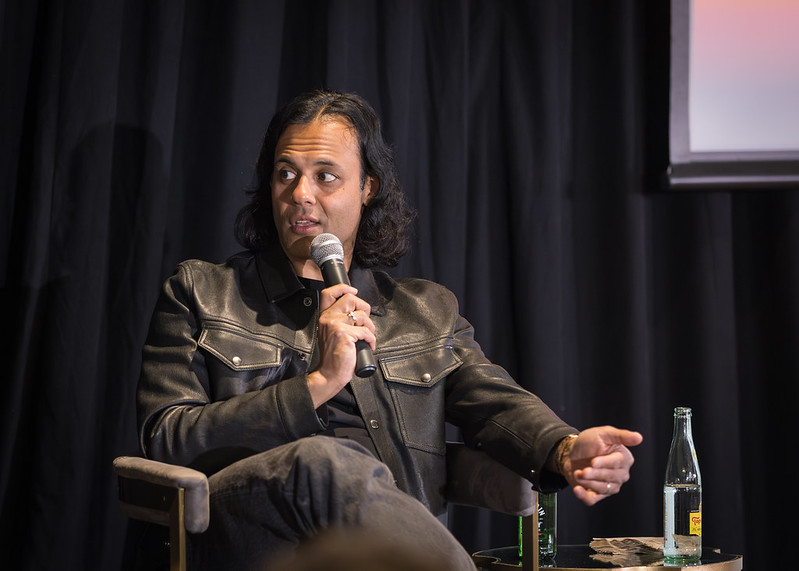
A formidable political challenge is brewing in the heart of Silicon Valley, as tech entrepreneur Ethan Agarwal officially declared his candidacy for California’s 17th congressional district. This announcement sets the stage for what is anticipated to be one of the most intensely funded and closely watched primary contests of the 2026 election cycle, pitting a rising progressive star against a challenger backed by a segment of the very industry that once championed the incumbent. Agarwal, a 40-year-old with a background in technology startups and no prior political office, is directly targeting Representative Ro Khanna, a 49-year-old Democrat whose escalating national profile and increasingly left-leaning policy stances have irked some of the wealthiest figures in the tech world.
A Battle for California’s 17th: The Tech Capital’s Political Crossroads
California’s 17th congressional district encompasses a significant portion of Silicon Valley, including cities like Santa Clara, Sunnyvale, Cupertino, and Fremont. It is a region synonymous with innovation, immense wealth, and a highly educated populace, often viewed as a bellwether for technological advancements and their societal implications. The district’s unique demographic and economic landscape makes any political contest here a microcosm of broader national debates surrounding technology, wealth distribution, and the role of government.
Representative Ro Khanna, first elected in 2016 after a previous unsuccessful bid in 2014, has steadily built a reputation as a prominent voice within the Democratic Party. His early political career was notably buoyed by substantial financial support from leading figures in the tech industry, including venture capitalists and executives who saw him as a pragmatic, tech-savvy representative. Khanna successfully unseated long-time incumbent Mike Honda, campaigning on a platform that blended economic progressivism with a strong understanding of the tech sector. Over the years, however, Khanna’s political trajectory has shifted, embracing a more pronounced progressive agenda. He is now widely regarded as a potential candidate for the 2028 presidential election, frequently appearing on national media and collaborating with prominent progressive figures like Senator Bernie Sanders.
The primary catalyst for the current political friction appears to be Khanna’s vocal support for a one-time wealth tax in California and his co-sponsorship of national legislation with Senator Sanders. This proposed federal bill aims to impose a 5% annual wealth tax on all Americans with a net worth of $1 billion or more, a measure their offices estimate could generate an astounding $4.4 trillion over a decade. While proponents argue such a tax could address growing economic inequality and fund crucial public services, it has drawn fierce opposition from many of the state’s wealthiest founders and investors, who view it as an punitive and potentially counterproductive levy that could stifle innovation and encourage capital flight. For many in Silicon Valley’s elite, Khanna’s embrace of such policies represents a significant departure from the more fiscally conservative, pro-growth ethos they initially believed he embodied.
Ethan Agarwal: The New Tech Challenger
Stepping into this politically charged environment is Ethan Agarwal, a quintessential Silicon Valley success story. A graduate of the Wharton School of the University of Pennsylvania, Agarwal honed his business acumen at McKinsey before venturing into entrepreneurship. He founded Aaptiv, an audio fitness company that he successfully sold in 2021, and more recently co-founded Coterie, a financial services startup backed by the influential venture capital firm Andreessen Horowitz. Agarwal’s resume is a testament to his deep immersion in the tech ecosystem, positioning him as a representative voice for the industry’s entrepreneurial spirit and its underlying economic philosophies.
Agarwal’s entry into the congressional race signals a palpable discontent among certain factions of Silicon Valley’s billionaire class. For months, whispers circulated about efforts to recruit a candidate to challenge Khanna, reflecting a broader frustration with California’s perceived anti-business policies, high taxation, and increasing regulatory burdens. These sentiments have often been articulated by tech leaders who argue that the state’s political climate is becoming less hospitable to innovation and wealth creation. Agarwal, with his background and policy stances, is being positioned as the ideal standard-bearer for this segment of the tech community, someone who understands their concerns from an insider’s perspective.
The impending campaign is expected to be extraordinarily well-funded, potentially setting records for primary spending. Agarwal has already garnered the backing of prominent figures such as Y Combinator CEO Garry Tan and DoorDash co-founder Stanley Tang, with more endorsements from influential members of the tech community anticipated in the coming weeks. This financial muscle is crucial in a district where media markets are expensive and voter engagement requires significant outreach. The ability to quickly mobilize substantial financial resources underscores the seriousness of this challenge and the depth of the ideological divide it represents within the tech industry itself.
Policy Platforms: A Stark Contrast
Agarwal’s platform offers a distinct counterpoint to Khanna’s progressive agenda, particularly on economic issues. While Khanna champions wealth redistribution, Agarwal proposes alternative approaches to generate revenue and address economic disparities without resorting to a direct wealth tax. One of his key ideas, which has been circulating in wealthy circles and notably espoused by figures like venture capitalist Chamath Palihapitiya and hedge fund manager Bill Ackman, involves taxing loans taken out against assets. This proposal targets a long-standing strategy where ultra-wealthy individuals secure low-interest loans against their stock holdings or other assets, allowing them to access significant liquidity without selling their assets and thus deferring or avoiding capital gains taxes. Agarwal argues that treating these loans as taxable events could generate substantial revenue while closing a perceived loophole.
Furthermore, Agarwal suggests re-evaluating California’s capital gains tax, currently at 13.4%, and considering an increase. He also advocates for significantly higher property taxes on homes held as investments rather than primary residences. This latter proposal aims to both generate revenue for local services and ease pressure on housing affordability for families seeking to own their primary homes, a critical issue in the high-cost Bay Area. These economic proposals reflect a philosophy that seeks to raise revenue through targeted adjustments to existing tax structures and disincentives for speculative real estate holdings, rather than through direct wealth taxation.
Beyond economic policy, Agarwal emphasizes government reform and ethics. He advocates for a ban on stock trading for members of Congress and their families, a prohibition on corporate PAC money, and the implementation of term limits for federal elected officials. These proposals resonate with a broad public sentiment of distrust in government and concerns about undue influence from special interests. Agarwal has also highlighted a commitment to addressing local issues, specifically mentioning the approximately 5,000 children in the 17th district living below the poverty line. He envisions making the 17th district the first in history to completely eradicate childhood poverty, a lofty goal that underscores a focus on tangible, local impact.
Debating Congressional Ethics and Tech Regulation
The campaign is not shying away from direct attacks, particularly concerning congressional ethics. Agarwal has publicly accused Khanna of being a "prolific stock trader," alleging that Khanna has engaged in more stock trades than any other Democratic congressman in history, often in sectors like tobacco, oil and gas, and big tech. He points to Khanna’s co-sponsorship of legislation to ban congressional stock trading while reportedly making thousands of trades himself. Khanna’s office, however, has consistently countered these claims by stating that he does not personally own or trade individual stocks. Instead, the trades in question belong to his wife, whose pre-marital assets are managed by an independently managed trust. Khanna argues this arrangement eliminates any conflict of interest under Office of Government Ethics rules. This distinction, however, may not fully satisfy voters concerned about the appearance of impropriety, regardless of legal compliance.
On the complex issue of tech regulation, Agarwal offers a nuanced perspective. Regarding Section 230 of the Communications Decency Act, which currently shields social media platforms from liability for user-generated content, Agarwal acknowledges its original intent in 1996 was sound for fostering nascent online platforms. However, he believes the law needs revisiting in light of how platforms have evolved to use algorithms that actively curate and push content, particularly concerning the long-term mental health impacts on teenagers. While he opposes making companies entirely liable due to the sheer volume of content and the subjective nature of "harmful" determinations, he suggests a targeted re-evaluation focused on algorithmic responsibility and its societal effects.
When it comes to artificial intelligence, an industry literally thriving in his potential backyard, Agarwal adopts a national security-focused approach. He asserts that the United States must prioritize building and strengthening the most powerful AI models to maintain a competitive edge globally, particularly against rivals like China. While acknowledging the need for certain restrictions to prevent AI from being used for harmful purposes, he largely opposes limiting companies’ ability to innovate and develop these models, viewing it as critical for America’s strategic interests. He is open to the idea of an independent, apolitical "FDA for AI" with rotating terms, provided its mandate is to strengthen national security rather than serve political agendas. He also views existing regulations for prediction markets like Kalshi and Polymarket, overseen by the CFTC, as generally adequate, attributing confusion to the fragmented regulatory landscape of sports betting apps.
The "Local vs. National" Narrative
A central theme of Agarwal’s campaign strategy is to draw a stark contrast between his local focus and Khanna’s national ambitions. Agarwal emphasizes a "ground game" approach, committing to immerse himself in the diverse cultural fabric of the 17th district. He plans to attend local community events, engage with small businesses, and connect with residents from various ethnic and cultural backgrounds, framing himself as a representative solely dedicated to the district’s needs. His campaign narrative suggests that Khanna, by pursuing a national profile and potentially higher office, has become detached from the everyday concerns of his constituents.
This narrative taps into a broader cultural shift within Silicon Valley politics. While the region has historically been a hub of libertarian-leaning innovation, it has also witnessed growing calls for social responsibility and equitable economic practices. The ideological struggle between Khanna’s progressive vision and Agarwal’s more tech-industry-aligned, yet still reform-minded, platform reflects the internal debates shaping the future of the Democratic Party and the role of technology in society. It highlights how the tech community, once relatively unified in its political influence, is now grappling with internal ideological divisions, particularly as its wealth and power become subjects of national scrutiny.
Historical Echoes and Future Implications
The current contest carries a powerful sense of historical irony. When Ro Khanna first challenged incumbent Mike Honda in 2014, he was very much the tech-backed outsider, seen as a fresh voice eager to shake up Washington. Now, a decade later, Khanna finds himself in the shoes of the incumbent, facing a challenger who embodies the very "outsider" archetype Khanna once personified, complete with substantial backing from a similar, albeit now ideologically fractured, tech donor class. This cyclical nature of political challenges underscores a recurring theme in American politics: the constant tension between established power and disruptive ambition.
This primary race is more than just a contest for a single congressional seat; it is a proxy battle for the future direction of economic policy, the regulatory landscape for technology, and the political identity of one of the world’s most influential regions. The outcome in California’s 17th district could serve as a bellwether for how effectively progressive economic policies can withstand challenges from well-funded, tech-aligned opposition, and how the Democratic Party navigates its relationship with the powerful and increasingly polarized tech industry. As both candidates gear up for what promises to be an expensive and fiercely contested primary, the political landscape of Silicon Valley and potentially the nation hangs in the balance.