Amir Mahmud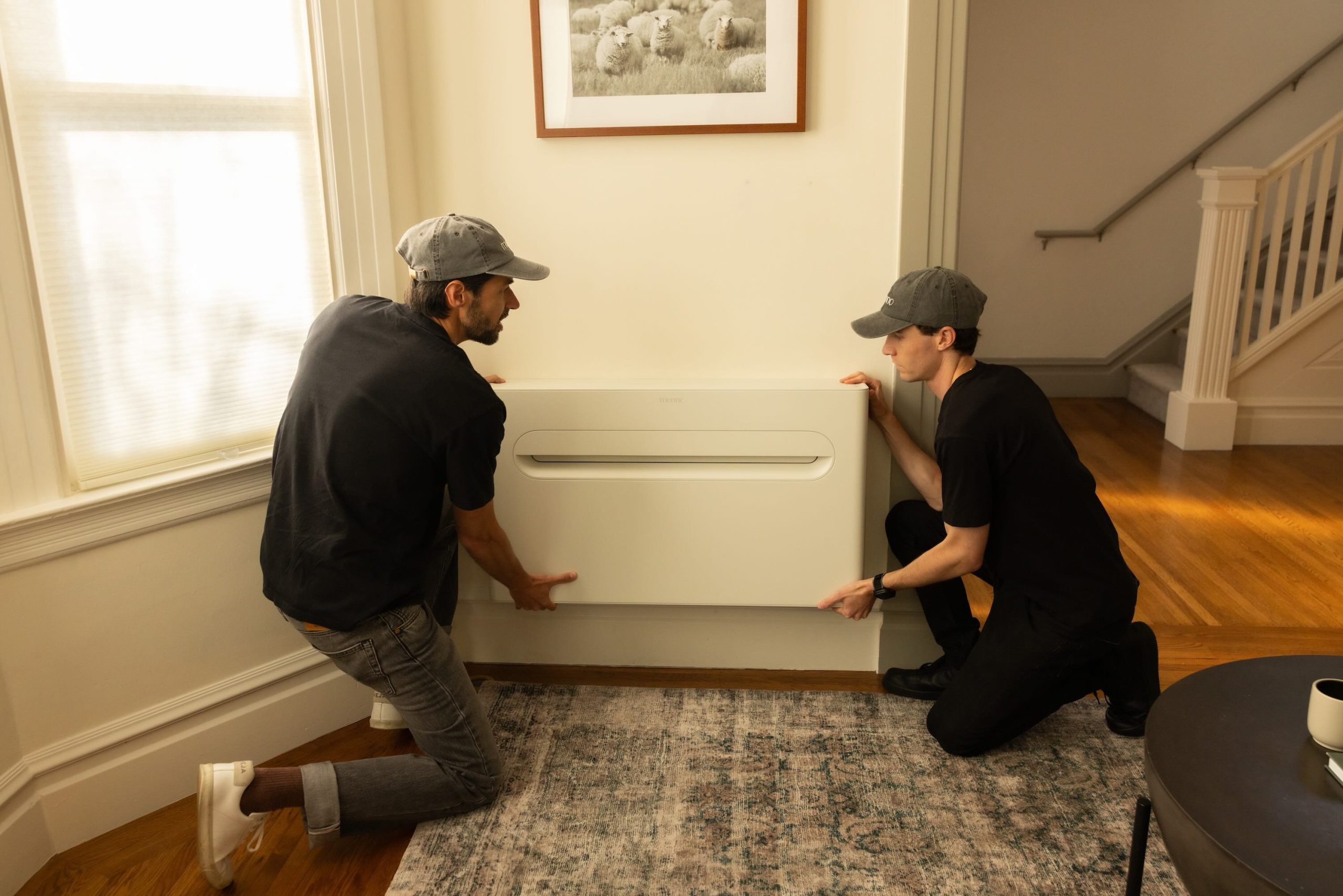
California, a global vanguard in climate policy, has set an ambitious target to install six million heat pumps by the close of 2030, a monumental undertaking designed to electrify buildings and drastically reduce greenhouse gas emissions. However, the journey toward this goal has proven challenging, with approximately 2.3 million installations completed to date. To meet its aggressive timeline, the state would need to accelerate its efforts dramatically, averaging roughly 2,000 new heat pump installations daily for the next five years. This pace presents a significant hurdle, considering that conventional mini-split systems typically demand a full day for installation and incur costs ranging from $4,000 to $6,000 per zone, according to data compiled by EnergySage. Acknowledging this critical bottleneck, Mary-Ann Rau, co-founder and CEO of the innovative startup Merino Energy, asserts, "We’ve got to do something different."
Merino Energy, operating discreetly until now, is poised to unveil a solution that could fundamentally alter the economics and logistics of heat pump deployment. The company recently offered an exclusive preview of its groundbreaking product, the Merino Mono, a streamlined system priced at $3,800, which notably includes a projected installation time of just one hour. This integrated approach tackles both the financial and logistical barriers that have historically impeded widespread adoption of these energy-efficient devices.
The Electrification Imperative: California’s Ambitious Vision
California’s commitment to building electrification is deeply rooted in its comprehensive climate strategy, which aims for carbon neutrality by 2045. Buildings are a substantial source of greenhouse gas emissions, primarily due to the combustion of natural gas for heating, water heating, and cooking. Shifting these processes to electricity, especially when powered by renewable sources, is considered a cornerstone of decarbonization efforts. The state has implemented various policies and incentive programs, such as the California Public Utilities Commission’s decarbonization initiatives and rebates offered through entities like the California Energy Commission, to encourage the transition to electric appliances. The ambitious six-million-unit target by 2030 underscores the urgency and scale of this transformation, positioning heat pumps as a central technology in the state’s fight against climate change.
Historically, heating and cooling technologies have evolved from rudimentary fireplaces to complex forced-air systems. The concept of the heat pump itself dates back to the mid-19th century, but it wasn’t until the mid-20th century that practical applications for residential heating and cooling began to emerge. Early models faced challenges with efficiency in extreme temperatures and high upfront costs. However, advancements in refrigerant technology, compressor design, and control systems over the past few decades have transformed heat pumps into highly efficient, reliable, and versatile HVAC solutions capable of both heating and cooling across a wide range of climates. Their ability to move heat rather than generate it makes them significantly more energy-efficient than traditional furnaces or electric resistance heaters.
Decarbonizing Homes: The Role of Heat Pumps
At its core, a heat pump operates on the same principle as a refrigerator or air conditioner, but with the added capability to reverse the process. In heating mode, it extracts heat from the outside air (even in cold temperatures) and transfers it indoors. In cooling mode, it pulls heat from inside the home and releases it outdoors. This "heat transfer" mechanism makes them incredibly efficient, often providing three to four times more energy in heating or cooling than they consume in electricity.
Beyond their energy efficiency, heat pumps offer significant environmental advantages. By replacing fossil-fuel-burning furnaces and boilers, they eliminate on-site combustion emissions, directly contributing to cleaner air and a reduction in carbon footprints. As electricity grids increasingly rely on renewable energy sources like solar and wind, the environmental benefits of heat pumps only grow. Furthermore, modern heat pumps often utilize refrigerants with lower global warming potential (GWP) compared to older HVAC systems, further minimizing their ecological impact. For consumers, this translates to lower energy bills, improved indoor air quality (as there’s no combustion by-product), and enhanced comfort through precise temperature control.
The Cost and Complexity Conundrum
Despite their clear benefits, the widespread adoption of heat pumps has been hampered by several critical barriers. High upfront costs, often exacerbated by the need for extensive electrical panel upgrades in older homes, represent a significant financial hurdle for many homeowners. Moreover, the installation process for traditional split-system heat pumps is inherently complex and labor-intensive. These systems typically involve two main components: an indoor unit (air handler or furnace coil) and an outdoor unit (condenser). Connecting these requires specialized skills, including brazing copper refrigerant lines, evacuating the system, and charging it with refrigerant, a process that can take a skilled technician many hours, if not a full day. This complexity drives up labor costs and can deter contractors, who might prefer simpler, more familiar installations.
Mary-Ann Rau’s own experience underscores this challenge. Before founding Merino Energy, she amassed considerable experience in product development, notably at Apple, where she was involved in introducing new AirPods, and later at Quilt, another heat pump startup. While electrifying her San Francisco home—installing solar panels, an induction stove, and an EV charger—she encountered "total sticker shock" when it came time to address her heating and cooling needs. "That’s when I realized that if it was inaccessible for me—right, I’m privileged—it’s out of reach for the vast majority of Californians and Americans," she reflected. This personal encounter with the prohibitive costs and complexity of existing solutions catalyzed her mission to create a more accessible alternative.
Merino Energy’s Disruptive Approach: The Mono Unit
Merino Energy’s innovation lies in its radical simplification of the heat pump design. Traditional systems separate the heat exchange components (indoor air handler) from the heat rejection/absorption components (outdoor condenser). The Merino Mono ingeniously integrates both into a single, compact unit. This self-contained design allows the Mono to be installed under a window, occupying a footprint comparable to a standard radiator.
Perhaps the most significant design breakthrough is the Mono’s ability to operate on a standard 120-volt outlet. This eliminates the frequent necessity for expensive and time-consuming electrical panel upgrades, a common barrier in older homes. Rau emphasizes the ease of integration: "If you can plug in a microwave and it works on that outlet, then the Merino Mono is gonna work on that outlet." This plug-and-play functionality is a paradigm shift, drastically reducing the ancillary costs and logistical headaches associated with heat pump installation. The unit is also equipped with modern conveniences, including Wi-Fi connectivity for remote control, room occupancy sensors for optimized operation, and the ability for multiple units within a household to coordinate for enhanced efficiency and comfort. Looking ahead, Merino Energy is even exploring innovative integrations, such as with Oura Rings, enabling the heat pump to subtly adjust room temperature during specific sleep cycles like REM sleep, promising a new level of personalized comfort.
Simplifying Installation: A Game Changer for Adoption
The installation process for the Merino Mono starkly contrasts with that of conventional split systems. Workers need only cut two small holes in the exterior wall – one for air intake and another for exhaust – and install a condensate pipe. The internal components, including the condenser coils, refrigerant lines, and heat exchanger, are all pre-assembled within the single unit. Air from the room circulates over the heat exchanger coils for heating or cooling, while the condenser loop draws in and exhausts air directly through the wall ports. From the exterior, only the discreet intake and exhaust vents, along with a small condensate drain, are visible.
This integrated design eliminates the most labor-intensive and technically demanding aspects of traditional heat pump installation. There’s no outdoor unit to mount, no need to run lengthy copper refrigerant lines through walls or attics, no specialized brazing required to connect pipes, and no on-site refrigerant charging. These steps, which demand highly trained HVAC technicians and specialized tools, are precisely what make conventional installations "very expensive from a labor perspective," as Rau notes. By internalizing these complexities within the factory-assembled unit, Merino Energy dramatically reduces installation time and labor costs, making the technology far more accessible to a broader range of homeowners and contractors. This simplification is critical for scaling adoption to meet ambitious targets like California’s.
Balancing Efficiency and Accessibility
While the Merino Mono represents a significant leap in installation simplicity and affordability, it does involve a strategic trade-off in raw efficiency compared to larger, more powerful traditional split systems. The Mono boasts a SEER2 (Seasonal Energy Efficiency Ratio 2) rating of 15.2. For context, some high-performance two-zone systems, like those offered by Quilt, can achieve SEER2 ratings around 25. This difference stems from the fundamental physics of heat exchange: larger outdoor condensers generally offer superior heat transfer capabilities.
However, Merino Energy’s design philosophy prioritizes accessibility and applicability for specific market segments. For smaller living spaces, apartments, and condominium buildings in dense urban environments, where outdoor unit placement can be challenging or prohibited, the Mono’s compact, all-indoor design becomes highly advantageous. The company recognizes that a one-size-fits-all approach to HVAC doesn’t serve the diverse needs of the market. Rau articulates this strategic positioning: the Mono "is a solution where the cost is proportional to the problem that we’re trying to solve." For many urban dwellers or those in apartments, a slightly lower efficiency rating is a worthwhile compromise for significantly reduced upfront costs, minimal installation disruption, and the ability to electrify without complex structural or electrical modifications. This targeted approach could unlock a massive untapped market segment for heat pump adoption.
Targeting the Market: California and Beyond
Merino Energy is initially concentrating its efforts on California, leveraging the state’s aggressive electrification goals and supportive policy landscape. The company is currently engaged in a pilot project, installing 48 Merino Mono units at the Civic Center Apartments, a low-income housing development situated in Richmond, California. This initiative highlights the potential social impact of Merino’s technology, making advanced, energy-efficient heating and cooling solutions accessible to communities that might otherwise be priced out of the electrification movement.
The success of such projects is crucial for demonstrating the viability and benefits of the Mono in real-world, diverse settings. As of now, six installers across the Bay Area and Los Angeles have partnered with Merino Energy, indicating growing interest from the contracting community in this simplified installation model. The company is actively accepting pre-orders, with deliveries anticipated later this year. Following its initial focus on California, Merino Energy has outlined plans for expansion into other climate-forward states, including Hawaii, Oregon, and Washington, regions that share similar electrification goals and a demand for innovative climate solutions.
The Broader Market Impact and Challenges Ahead
Merino Energy’s entry into the heat pump market has the potential to be genuinely disruptive. By drastically lowering the entry barrier for consumers through reduced costs and simplified installation, the company could accelerate the adoption rate of heat pumps, especially in underserved segments like rental properties, multi-family dwellings, and older homes requiring minimal electrical upgrades. This innovation aligns perfectly with the broader decarbonization trend, making building electrification more democratic and scalable.
However, challenges remain. While the technology simplifies installation, Merino Energy will still need to build a robust distribution network and expand its installer base significantly to meet demand, especially as it scales beyond California. Educating both consumers and contractors about the benefits and unique features of the Mono will be paramount. Furthermore, the competitive landscape includes established HVAC giants with deep pockets and extensive market penetration, as well as other innovative startups also vying for a share of the burgeoning heat pump market. Sustaining the balance between efficiency, cost, and ease of use while ensuring long-term product durability and customer satisfaction will be critical for Merino Energy’s enduring success. The push for smart home integration, as exemplified by the Oura Ring concept, also points to a future where HVAC systems are not just functional but seamlessly integrated into a holistic, intelligent living environment, adding another layer of complexity and opportunity.
Ultimately, innovations like the Merino Mono are vital for achieving ambitious climate targets. By tackling the core issues of cost and complexity, companies like Merino Energy are not just selling a product; they are offering a tangible pathway toward a more sustainable, electrified future for homes across America. As Mary-Ann Rau aptly concludes, "If we can reduce the amount of time and complexity of installing a heat pump, then we can scale adoption." The urgency of climate action demands precisely this kind of inventive problem-solving, transforming a daunting task into an attainable reality.