Amir Mahmud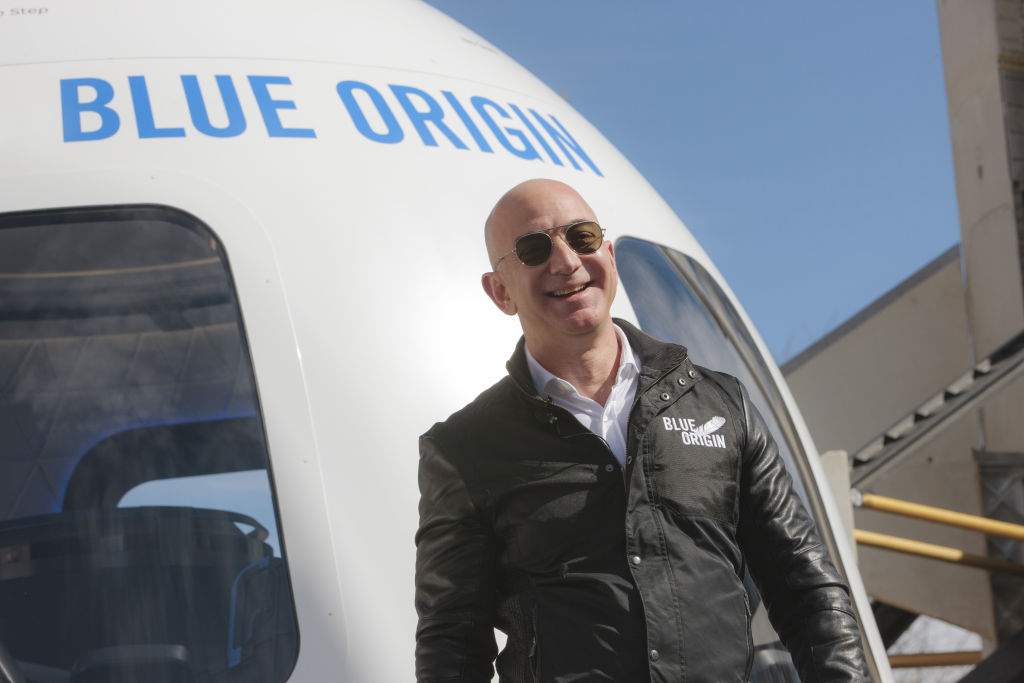
Blue Origin, the private space company founded by Amazon’s Jeff Bezos, has announced a significant re-prioritization of its operational focus, electing to pause its suborbital space tourism flights for a minimum of two years. This strategic decision will redirect substantial resources and engineering talent toward an accelerated commitment to upcoming missions aimed at the moon, signaling a pivotal moment in the company’s trajectory and the broader commercial space industry. The temporary cessation of human spaceflight operations for its New Shepard program underscores a renewed dedication to deep space exploration, specifically in support of national and international lunar ambitions.
The Strategic Rationale Behind the Pivot
This calculated pivot by Blue Origin is not merely an operational adjustment but a deep-seated strategic realignment. The company explicitly cited its commitment to the nation’s overarching goal of returning humanity to the moon and establishing a permanent, sustained lunar presence. This objective aligns closely with NASA’s ambitious Artemis program, which aims to land the first woman and person of color on the lunar surface, and subsequently build a long-term human presence there. The previous presidential administration had notably intensified pressure on NASA to expedite these lunar missions, creating a fertile ground for private companies to compete for lucrative government contracts that underpin these ambitious endeavors.
For Blue Origin, this shift represents a move from the relatively nascent and niche market of suborbital space tourism to the more foundational and government-backed realm of lunar infrastructure development. While tourism offers brand visibility and some revenue, the scale of investment required for deep space missions often necessitates large-scale contracts, primarily from agencies like NASA. By concentrating its engineering expertise and manufacturing capabilities on lunar landers and heavy-lift rockets, Blue Origin is positioning itself as a critical enabler of humanity’s next chapter on the moon, a role that promises long-term strategic importance and financial stability. This decision reflects a maturation in the commercial space sector, where foundational infrastructure and exploration often take precedence over purely experiential ventures when significant governmental support is available.
New Shepard’s Pioneering but Interrupted Journey
The New Shepard program, named after Alan Shepard, the first American in space, has been Blue Origin’s flagship for human suborbital spaceflight. Launched over a decade ago, the New Shepard rocket achieved a significant milestone in 2015 by becoming the first rocket to journey to space and successfully execute a vertical landing back on Earth. This pioneering feat demonstrated the viability of reusable rocket technology, a capability that later became a hallmark of the burgeoning commercial space industry. However, unlike SpaceX’s Falcon 9, the New Shepard was never engineered to achieve Earth orbit. Its design was optimized for suborbital trajectories, allowing passengers to cross the Kármán line—the internationally recognized boundary of space at an altitude of 100 kilometers (62 miles)—experience approximately four minutes of exhilarating weightlessness, and witness the curvature of Earth against the blackness of space, before returning safely.
Over the past five years, New Shepard has successfully carried 98 humans beyond the Kármán line, including company founder Jeff Bezos and other notable figures, firmly establishing Blue Origin as a key player in the nascent space tourism market. Beyond tourism, the reusable vehicle has also served a vital role in scientific research, transporting over 200 scientific and research payloads for various institutions and experiments, providing a unique microgravity environment for critical studies.
However, the program has not been without its challenges. In September 2022, a New Shepard booster experienced an anomaly mid-flight during an uncrewed research mission, leading to the automatic and successful ejection of the capsule, which landed safely under parachutes. This incident, while demonstrating the efficacy of its safety systems, led to a prolonged grounding of the New Shepard fleet. Blue Origin dedicated over a year to investigating the cause of the anomaly, implementing corrective measures, and undergoing rigorous safety reviews before the program triumphantly returned to flight in late 2023. The subsequent pause in tourism flights, following a period of resumed operations, suggests that the company is now making a more profound and strategic shift rather than merely addressing technical setbacks.
The Intensifying Lunar Race and National Priorities
The backdrop to Blue Origin’s decision is the burgeoning "new space race" centered on the moon. After the Apollo missions of the 20th century, lunar exploration largely receded from the forefront of national space programs. However, the last two decades have witnessed a dramatic resurgence of interest, driven by scientific curiosity, resource potential, and geopolitical considerations. NASA’s Artemis program stands at the forefront of this renewed push, aiming to establish a sustainable human presence on the moon, which would serve as a stepping stone for future missions to Mars and beyond.
The current political landscape further amplifies this urgency. President Donald Trump, since retaking office, has consistently emphasized the imperative for NASA to accelerate its timetable for returning astronauts to the moon, ideally before the conclusion of his second term. This executive mandate has created an unprecedented opportunity for private aerospace companies, as NASA increasingly relies on commercial partners to develop the necessary hardware and services for lunar missions. This shift away from traditional, government-led contracting models to public-private partnerships has opened the door for innovative companies like Blue Origin, SpaceX, and others to compete fiercely for multi-billion-dollar contracts, transforming the dynamics of space exploration. The prospect of securing these long-term, high-value contracts provides a compelling incentive for companies to align their development priorities with national space objectives, even if it means temporarily sidelining other ventures.
Blue Origin’s Lunar Endeavors: New Glenn and Blue Moon
Blue Origin’s strategic pivot directly supports its ambitions for lunar exploration, primarily through its heavy-lift orbital rocket, New Glenn, and its lunar lander program, Blue Moon. The New Glenn, a massive, reusable rocket named after John Glenn, the first American to orbit Earth, is designed to be a workhorse for orbital missions, satellite launches, and deep space exploration. Its development has been a significant undertaking for the company, and its third launch is reportedly scheduled for late February, a crucial step in validating its capabilities. While earlier suggestions hinted at using a New Glenn launch to send its robotic lunar lander to the moon, the lander is still undergoing extensive testing at NASA’s Johnson Space Center in Texas, indicating the complexity and meticulousness required for lunar-capable hardware.
The Blue Moon lunar lander is a cornerstone of Blue Origin’s lunar strategy. While Blue Origin initially faced a setback when SpaceX’s Starship was selected for the first Human Landing System (HLS) contract under Artemis III, the company successfully secured a subsequent contract. In May 2023, NASA awarded Blue Origin a contract to develop a human landing system for the Artemis V mission, making it the second company, alongside SpaceX, to provide a lunar lander for the Artemis program. This Blue Moon lander is designed to transport astronauts from lunar orbit to the surface and back, a critical component for establishing a sustained presence. This second HLS contract solidifies Blue Origin’s role as a major player in the lunar return, making the decision to reallocate resources from suborbital tourism to these demanding lunar projects a logical, if not essential, move. The company envisions not just landing astronauts but also establishing foundational infrastructure, potentially including habitats and resource extraction capabilities, aligning with a long-term vision of off-Earth living and resource utilization.
Market and Industry Implications of the Pivot
The decision to suspend suborbital space tourism has broader implications for both the nascent space tourism market and the commercial space industry at large. For space tourism, the pause by Blue Origin, one of only two major players alongside Virgin Galactic offering suborbital experiences, temporarily reduces options for aspiring space tourists. While Virgin Galactic continues its operations, the absence of Blue Origin’s New Shepard for an extended period could slow the growth of this niche market or even consolidate its competitive landscape. It might also signal to potential investors that while experiential spaceflight is captivating, the immediate and most substantial financial opportunities remain in government contracts for infrastructure and exploration.
From an industry perspective, Blue Origin’s pivot underscores a crucial reality: government contracts, particularly those tied to ambitious programs like Artemis, represent the most significant and stable revenue streams for large-scale commercial space ventures. Developing capabilities for deep space exploration—heavy-lift rockets, lunar landers, in-space refueling—requires immense capital and long development cycles. The returns from a limited number of tourist flights, while not insignificant, are dwarfed by the multi-billion-dollar contracts offered by space agencies. This strategic shift highlights a common trajectory in the commercial space sector where initial ventures might include accessible, high-profile projects, but the long-term viability and growth are often anchored in foundational infrastructure and exploration partnerships with governments. It also demonstrates the flexibility and adaptability required for these companies to respond to evolving national priorities and funding opportunities.
The Future of Space Travel: A Shifting Paradigm
Blue Origin’s strategic realignment reflects a broader paradigm shift in space exploration. The era of government-exclusive space races has given way to a hybrid model where private enterprises are increasingly central to achieving national and international space goals. Companies like Blue Origin are not merely contractors but partners, bringing innovative engineering, commercial efficiency, and long-term vision to complex challenges. This pivot from suborbital tourism to lunar development is a testament to the immense, long-term ambitions driving the modern space industry.
Ultimately, Blue Origin’s decision marks a critical juncture, prioritizing its foundational contributions to humanity’s return to the moon. While the allure of brief trips beyond the Kármán line captivated public imagination, the strategic imperative of establishing a sustained lunar presence now takes precedence. This move positions Blue Origin as a key architect in the next epoch of deep space exploration, underscoring the dynamic and evolving nature of humanity’s journey beyond Earth. The next few years will be crucial in demonstrating whether this strategic focus on lunar programs will solidify Blue Origin’s position at the forefront of humanity’s ambitious return to the celestial neighbor.