Amir Mahmud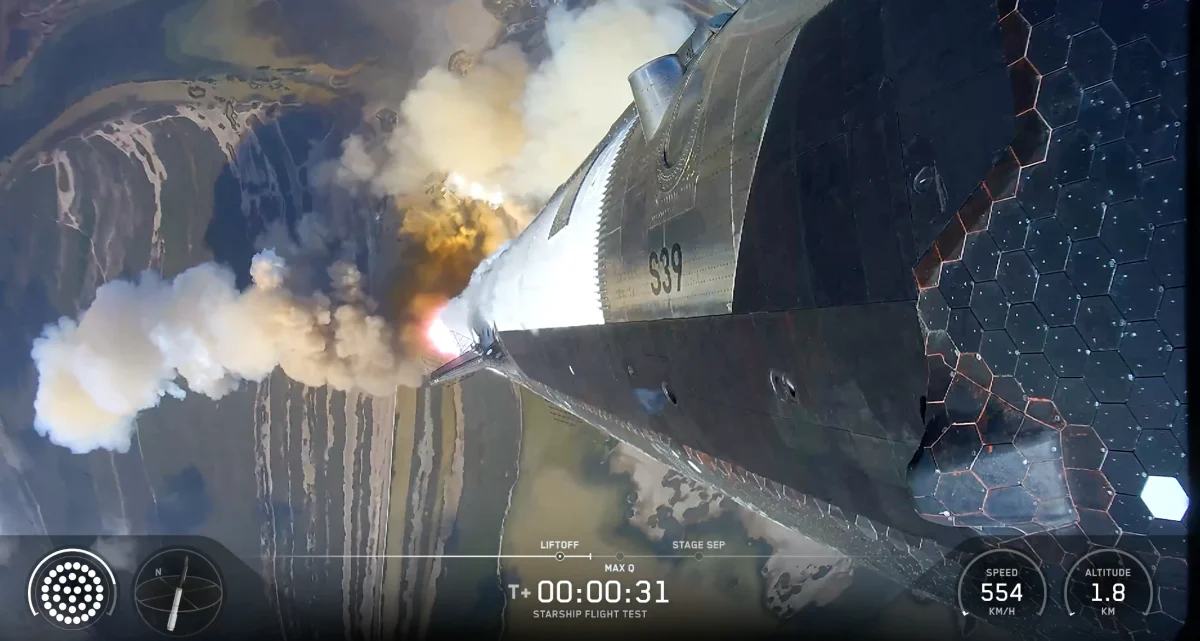
The upgraded third iteration of SpaceX’s monumental Starship rocket embarked on its maiden test flight recently, a critical step in the company’s ambitious quest to redefine space travel, though the mission unfolded with a mix of groundbreaking success and expected engineering challenges. This towering vehicle, conceived as the cornerstone of humanity’s multi-planetary future, lifted off from the company’s dedicated Starbase facility in Boca Chica, Texas, marking a significant, albeit imperfect, stride in its rigorous development program.
A New Era of Spaceflight Begins
At approximately 5:30 p.m. local time, the colossal 407-foot Starship system, comprising the Super Heavy booster and the Starship upper stage, ignited its array of powerful Raptor engines, ascending skyward with a thunderous roar. This integrated launch vehicle stands as the most powerful rocket ever constructed, a testament to modern engineering and the audacious vision of SpaceX. Just minutes into its ascent, the critical stage separation maneuver was successfully executed, with the Starship upper stage detaching from its Super Heavy booster and continuing its programmed trajectory into the vastness of space.
However, the journey back for the Super Heavy booster diverged from the optimal flight plan. Following separation, the booster commenced its controlled descent back towards Earth, where it was slated to perform a simulated landing over the Gulf of Mexico. This maneuver, a crucial component of SpaceX’s fully reusable rocket architecture, requires precise re-ignition of its engines for a controlled, sustained burn to decelerate and guide the booster to its designated landing zone. During this test, the Super Heavy’s engines failed to properly re-ignite for the necessary landing burn. Consequently, the booster lost controlled flight, tumbling uncontrollably before impacting the water, where it is presumed to have been destroyed.
Meanwhile, the Starship upper stage, despite losing one of its six Raptor engines during its ascent phase, continued its journey into space. This remarkable resilience in the face of an engine anomaly underscored the system’s robust design and ability to adapt to unexpected conditions. The ship proceeded on its planned path, aiming for a targeted splashdown in the Indian Ocean, demonstrating the immense power and redundancy built into the Starship system.
The Iterative Development Philosophy
For SpaceX, a company known for its "fail fast, learn faster" ethos, such test flights are not merely demonstrations but vital data-gathering exercises. This latest launch was specifically designed as the inaugural "shakedown" of the Starship V3 hardware, which has been under intensive development and refinement for many months. Each flight, regardless of its ultimate outcome, provides invaluable telemetry, performance data, and real-world operational experience that engineers meticulously analyze to identify weaknesses, implement improvements, and iteratively advance the design. This contrasts sharply with traditional aerospace development, which often favors extensive ground testing and conservative, incremental steps, making each launch a high-stakes, all-or-nothing endeavor. SpaceX, having pioneered reusable rocket technology with its Falcon 9 and Falcon Heavy programs, applies a similar, aggressive iterative approach to Starship, acknowledging that groundbreaking innovation often involves pushing boundaries and accepting a higher tolerance for partial successes and "rapid unscheduled disassemblies" in the pursuit of ultimate triumph.
Beyond the rocket itself, this test also served as a crucial proving ground for an entirely new launchpad system at Starbase. This complex infrastructure, developed and constructed over several years, is integral to the rapid turnaround and fully reusable aspirations of the Starship program, featuring advanced cryogenic fueling systems and the towering "Mechazilla" launch and catch tower designed for unprecedented operational efficiency.
Engineering Marvels: Starship V3’s Upgrades
The Starship V3 represents a significant leap forward in the system’s evolution. A core enhancement lies in its third-generation Raptor engines. These sophisticated propulsion units feature increased thrust capabilities and a notably simpler design compared to their predecessors. The Raptor engine itself is an engineering marvel, utilizing a full-flow staged combustion cycle, a highly efficient yet complex design that maximizes performance by fully gasifying both fuel and oxidizer before combustion. The V3 iteration’s simplification aims to enhance reliability, reduce manufacturing costs, and streamline operations, all critical factors for achieving the high flight rates envisioned for Starship.
The Super Heavy booster, too, incorporates advanced design elements aimed at faster takeoffs and, eventually, easier "catches" by the launch tower’s robotic arms—a concept known as "chopsticks." While this particular test involved a simulated water landing, the ultimate goal is for the booster to be caught by the tower upon return, enabling near-instantaneous reusability and significantly reducing turnaround times and operational costs, a paradigm shift from traditional rocket launches.
A Giant Leap for Humanity or a Stepping Stone for Starlink?
Starship’s long-term objectives are nothing short of transformative: enabling human missions to the Moon, establishing a sustainable lunar presence, and ultimately, facilitating the colonization of Mars. SpaceX views Starship as the indispensable vehicle for making life multi-planetary, a vision that has captivated global imagination. NASA has already selected Starship as the Human Landing System (HLS) for its Artemis program, tasking it with returning astronauts to the lunar surface for the first time since the Apollo era. This pivotal role underscores Starship’s recognized potential to revolutionize deep space exploration.
However, in the near-to-medium term, Starship has a more immediate, commercial imperative: deploying the next generation of Starlink satellites. Starlink, SpaceX’s burgeoning satellite internet constellation, is currently the only consistently profitable segment of the company’s diverse operations. The sheer volume and mass of the advanced Starlink satellites planned for future deployment necessitate Starship’s massive payload capacity. The ability to launch hundreds of satellites in a single mission dramatically accelerates the constellation’s expansion, enhancing global internet coverage and solidifying Starlink’s market position, thereby providing crucial revenue streams that indirectly fuel Starship’s ambitious development.
Historical Context and Previous Attempts
The journey to this Starship V3 launch has been protracted and punctuated by numerous tests, setbacks, and triumphs. SpaceX began developing the Starship architecture in earnest in the mid-2010s, initially under the "BFR" (Big Falcon Rocket) moniker. Early prototypes, such as Starhopper and a series of "SN" (Serial Number) test articles, underwent extensive ground and flight testing at Starbase, often culminating in spectacular "rapid unscheduled disassemblies" that became synonymous with SpaceX’s aggressive testing methodology. These earlier tests, though sometimes ending in explosions, provided invaluable data on everything from cryogenic fuel handling to engine performance and landing mechanics.
The path to V3 was not without its recent challenges. This launch was the first Starship flight since October 2025. SpaceX had initially targeted an earlier launch window for Starship V3, but a significant setback occurred in November of the preceding year when one of the first upgraded boosters suffered an explosion during testing. Furthermore, the very day before this successful launch, a previous attempt on Thursday had to be scrubbed due to a hydraulic pin on the launch tower arm failing to retract, as confirmed by Elon Musk. These delays and incidents, while frustrating, are an inherent part of developing a system of this unprecedented complexity and scale.
The Broader Market and Societal Impact
The development of Starship has profound implications for the global space industry and society at large. Its potential for full reusability and unprecedented payload capacity promises to drastically reduce the cost of access to space, fundamentally altering the economics of space exploration and commercial ventures. This cost reduction could unlock new markets, from space tourism to orbital manufacturing and asteroid mining, fostering a vibrant space economy.
Culturally, Starship inspires a new generation, reigniting public interest in space exploration and positioning humanity on the cusp of truly becoming a spacefaring civilization. It also puts pressure on competitors, driving innovation across the aerospace sector. Companies like Blue Origin, with its New Glenn rocket, and national space agencies developing heavy-lift vehicles like NASA’s Space Launch System (SLS), are keenly watching Starship’s progress, understanding that its success or failure will shape the competitive landscape for decades to come.
SpaceX’s Financial Orbit: The IPO and Future Funding
This landmark test launch arrives at a critical juncture for SpaceX as a corporate entity. The company’s long-anticipated Initial Public Offering (IPO) filing was recently made public, signaling its intention to list on the Nasdaq exchange in mid-June. The IPO is reportedly projected to raise an astonishing $75 billion, a war chest intended to fuel the company’s ambitious future. A significant portion of these funds is earmarked for continued Starship development, a capital-intensive endeavor.
Furthermore, the IPO proceeds are also slated to support SpaceX’s massive ambitions in artificial intelligence, particularly through investments in xAI, Elon Musk’s AI venture, and to help pay down some of the substantial debt associated with Musk’s social media platform, X (formerly Twitter). This intertwining of SpaceX’s financial future with its technological advancements means that subsequent Starship test flights will likely unfold under the watchful eye of public market investors, adding another layer of scrutiny and expectation to each launch.
The Road Ahead: Challenges and Aspirations
The Starship V3’s inaugural flight, despite the booster anomaly, represents a significant forward step. It validated critical systems, confirmed the performance of the upgraded Starship upper stage, and provided invaluable data for the Super Heavy’s return sequence. The challenges encountered, particularly with the booster’s re-ignition, are precisely the kind of engineering hurdles that iterative testing is designed to identify and overcome.
The path to achieving fully reusable, rapid-turnaround Starship flights, capable of supporting lunar missions and eventually sending humans to Mars, remains long and arduous. It will require many more test flights, further design refinements, and continuous innovation. However, with each launch, SpaceX moves closer to realizing its audacious vision, pushing the boundaries of what is possible in space exploration and bringing humanity one step closer to its multi-planetary destiny. The world watches keenly as Starship continues its journey, a testament to human ingenuity and the enduring dream of reaching for the stars.






 Azin Asro