Amir Mahmud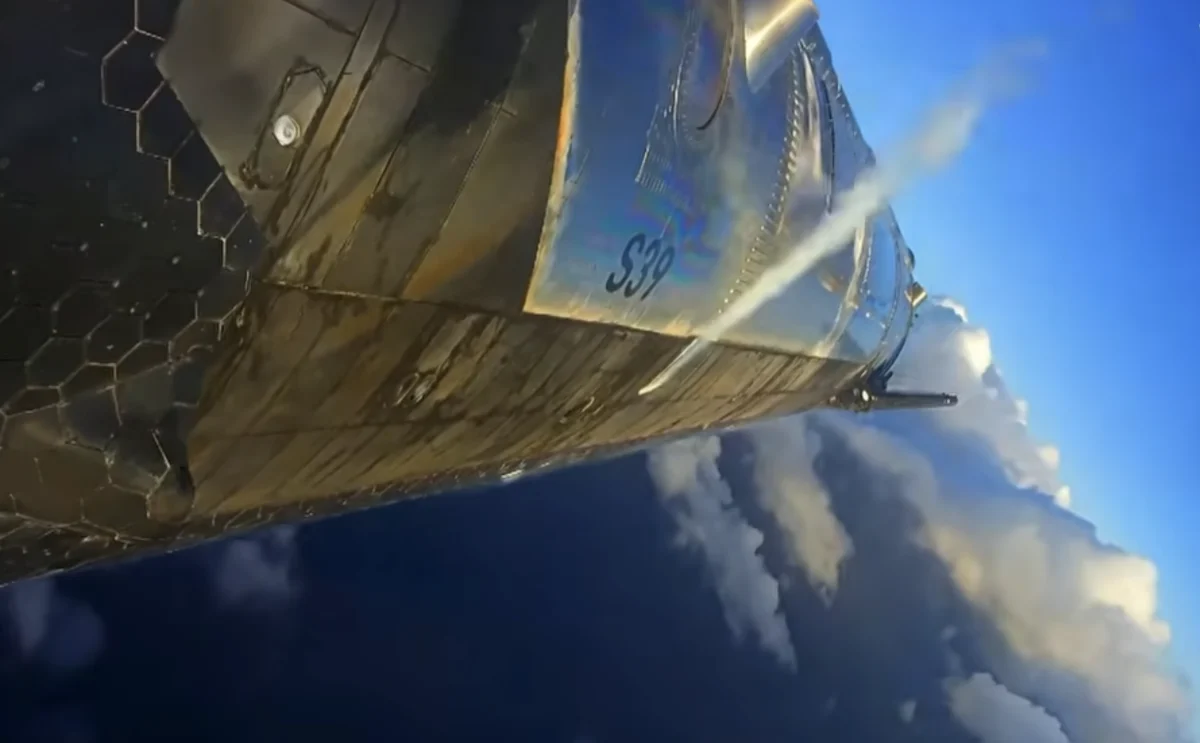
The recent confluence of SpaceX’s S-1 filing with the U.S. Securities and Exchange Commission and its latest Starship test flight has cast a revealing light on the company’s immediate future, offering a nuanced perspective that might temper the most ardent boosters while providing pause for its critics. Far from the revolutionary promises of widespread artificial intelligence enterprise profits and the establishment of lunar outposts, a more pragmatic reality emerges: the potential for an expendable Starship to sustain SpaceX’s current operations, albeit at the expense of the radical cost reductions and audacious frontier business models that CEO Elon Musk has long championed. This dichotomy highlights a critical juncture for the aerospace giant, balancing the colossal capital demands of its satellite internet constellation, Starlink, with the ambitious, yet technically elusive, goal of fully reusable space transport.
The Genesis of Ambition: SpaceX’s Journey to Starship
SpaceX was founded in 2002 by Elon Musk with the ambitious long-term goal of reducing space transportation costs and enabling the colonization of Mars. Its initial successes with the Falcon 9 and Falcon Heavy rockets revolutionized the launch industry by introducing partial reusability of first stages, dramatically lowering the cost of access to orbit. This pioneering spirit set the stage for Starship, a fully reusable, super heavy-lift launch system designed to transport both crew and cargo to Earth orbit, the Moon, Mars, and beyond. Musk’s vision for Starship transcends mere rocket development; it represents a fundamental shift in space exploration, promising an order-of-magnitude reduction in launch costs through rapid, complete reusability, akin to how commercial airplanes operate. This paradigm shift is considered essential for establishing sustainable off-world colonies and facilitating large-scale space infrastructure, including vast satellite constellations.
The Reusability Conundrum for Starship
The recent third test flight of the integrated Starship and Super Heavy booster system, while achieving significant milestones such as the successful deployment of dummy Starlink satellites and test vehicles in space, simultaneously underscored the formidable challenges inherent in achieving full reusability. A critical hurdle encountered during the flight involved the relighting of Raptor engines on both the booster and the Starship upper stage, a maneuver essential for a controlled return and landing. The booster’s attempt at a controlled descent burn, crucial for a soft splashdown, did not fully succeed, nor did the Starship’s engine relight during its atmospheric re-entry, leading to the loss of both stages. These technical snags illustrate the complexity of mastering atmospheric re-entry and precision landing for a vehicle of Starship’s unprecedented size and power.
This technical reality aligns with a significant disclosure within SpaceX’s S-1 filing: the acknowledgment that full reusability of Starship may not be immediately necessary for launching the next generation of Starlink satellites. While this provides a potential workaround for rapid deployment, it introduces a substantial financial implication. Industry analyst Tim Farrar, in a recent note to clients, highlighted this concern, stating that without full reusability, "the cost of launch on Starship may not be much lower than Falcon 9, even if the full 100 ton capability is realized." He projected launch costs could be as high as $100 million, or $1,000 per kilogram, with launch tempo constrained by manufacturing rates for second stages and refurbishment timelines for first stages. This analysis directly challenges the core economic premise underpinning Starship’s long-term value proposition and its ability to unlock new "frontier business models" beyond mere launch services, such as orbital fuel depots or space-based data centers, which are predicated on ultra-low-cost, high-cadence access to space. The historical context of space travel reveals that high launch costs have always been the primary barrier to broader exploration and commercialization, and full reusability was SpaceX’s answer to this foundational problem. If Starship cannot deliver on this, the economics of many future space ventures become far less attractive.
Starlink: The Current Revenue Driver
While Starship captures headlines with its spectacular launches and futuristic aspirations, it is Starlink, SpaceX’s burgeoning satellite internet constellation, that currently serves as the financial bedrock of the company. The S-1 filing revealed Starlink generated an impressive $11.4 billion in revenue last year, constituting the vast majority of SpaceX’s earnings. This high-throughput, low-latency broadband service aims to provide global internet access, particularly to underserved rural and remote areas, and is increasingly targeting enterprise, maritime, and aviation markets. Its social impact has been significant, bridging the digital divide in many regions, providing crucial communication infrastructure during natural disasters, and even playing a strategic role in geopolitical conflicts.
However, beneath this impressive top-line revenue lies a substantial capital expenditure treadmill. Maintaining and expanding a constellation of thousands of satellites in low Earth orbit (LEO) requires continuous investment. SpaceX must replace approximately one-fifth of its operational satellites annually simply to sustain its current service levels. The S-1 filing underscores this demand, indicating that SpaceX has invested more in its satellite business—$11.4 billion since the beginning of 2023—than it has in the development of Starship and its associated launch infrastructure, which accounted for $8.4 billion during the same period. This considerable investment highlights the ongoing operational costs of maintaining a sprawling LEO constellation and the intricate balance required to keep a capital-intensive business model viable. While the S-1 forecasts continued cost growth, it optimistically projects that technological advancements will allow these costs to decrease as a percentage of overall revenue over time.
Decelerating Subscriber Growth and Evolving Revenue Streams
Despite Starlink’s impressive revenue, the S-1 filing also signals a slowdown in its subscriber growth rate, a development that warrants close scrutiny. Starlink currently boasts over 10 million subscribers globally, making it the largest satellite communications network of its kind. However, Tim Farrar’s analysis noted a decline in the rate of new user acquisition during the first quarter of 2026. This trend stands in contrast to earlier projections, such as those by space consulting firm Quilty Space, which anticipated SpaceX ending the year with 16.8 million subscribers. Achieving such a target would necessitate a near-doubling of Starlink’s current quarterly growth rate, a challenging feat, particularly following recent price adjustments in various markets.
A further challenge emerges from the shifting economics of Starlink’s user base. The average revenue per user (ARPU) has seen a noticeable decline, falling from $99 in 2023 to $66 in the first quarter of 2026. This reduction is largely attributable to Starlink’s strategic expansion into new international markets, particularly in developing economies where pricing structures must be more competitive to attract subscribers. While expanding into these markets increases Starlink’s global reach and addressable market, it simultaneously means that each new satellite launched generates less revenue on average, impacting the overall profitability per unit of infrastructure. This dynamic underscores the critical importance of a rapidly expanding user base to offset declining ARPU and maintain the constellation’s financial viability.
SpaceX’s total addressable market (TAM) calculation, which posits the ability to offer service to every fixed-broadband subscriber or mobile handset globally, is viewed by some analysts as overly ambitious. Starlink’s service, while invaluable in areas lacking terrestrial infrastructure, generally does not compete on price with established fiber optic networks in developed urban areas. The S-1 document itself suggests that SpaceX increasingly views its direct-to-device capabilities as a complementary service to terrestrial mobile providers, rather than a direct replacement, indicating a more realistic, albeit potentially smaller, market penetration strategy.
Competitive Landscape and Future Outlook
The burgeoning satellite internet market is also becoming increasingly competitive, posing an additional threat to Starlink’s dominance. Amazon’s Project Kuiper, a rival low Earth orbit constellation, is rapidly progressing towards operational scale. While Kuiper is currently awaiting an extension from the Federal Communications Commission (FCC) to meet a deadline requiring the launch of 1,600 internet satellites by July, its impending entry represents a significant competitive pressure point for SpaceX. Other players, such as OneWeb (now part of Eutelsat), are also actively deploying their own constellations, contributing to a crowded market.
The data presented in SpaceX’s S-1 filing and the subsequent analytical commentary paint a nuanced picture of the broader space broadband market. Tim Farrar suggests that if SpaceX, which is significantly ahead of its competitors in terms of deployment and subscriber numbers, is already experiencing slowing demand, it may indicate that the overall market for space broadband is smaller than many industry players, including rivals like Blue Origin, initially anticipated. This market reality could necessitate a re-evaluation of long-term growth projections and investment strategies across the entire sector.
The Balancing Act: Ambition Versus Pragmatism
SpaceX stands at a critical juncture, navigating the tension between its visionary aspirations and the pragmatic realities of scaling a capital-intensive, technologically complex business. The strategic dilemma is clear: Should the company prioritize the immediate needs of Starlink, potentially by accepting initial expendable Starship launches, to quickly deploy its next-generation satellites and shore up revenue? Or should it steadfastly pursue the elusive goal of full, rapid reusability for Starship, knowing that this alone can unlock the truly transformative cost reductions needed for lunar bases, Martian colonization, and other far-future endeavors?
The "Musk timeline" phenomenon, characterized by ambitious pronouncements and often delayed but ultimately groundbreaking achievements, looms large over Starship’s development. While Starlink provides a robust revenue stream, its slowing growth and declining ARPU underscore the imperative for Starship to deliver on its promise of ultra-low-cost access to space. Without full reusability, Starship risks becoming an incredibly powerful, but financially constrained, launch vehicle. The coming years will reveal whether SpaceX can bridge this gap, transforming Starship from a testament to engineering ambition into the economic engine capable of powering humanity’s multi-planetary future. The company’s trajectory, and indeed the future of private space exploration, hinges on successfully resolving this intricate balancing act.